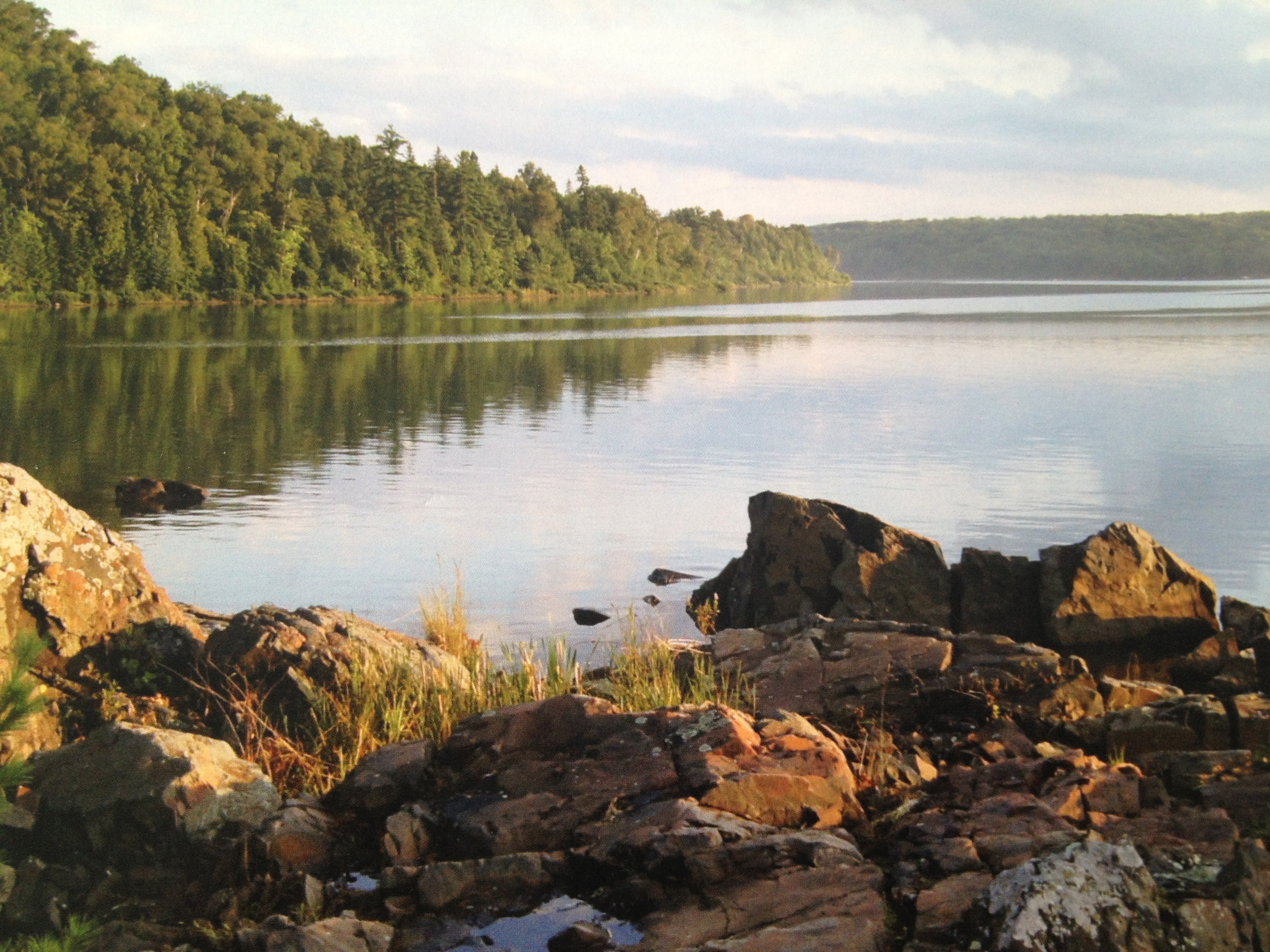
Desbarats on the Ste. Mary’s River, Ontario…
There’s a doctor livin’ in your town There’s a lawyer and an Indian, too… [popular song from 1945]
My Grandfather Proxmire, my mother’s father, was a DOCTOR. The man my mother married, John Baker, was a LAWYER, as was his father. And then there was the INDIAN CHIEF. These three men had a great effect on my mother’s life.
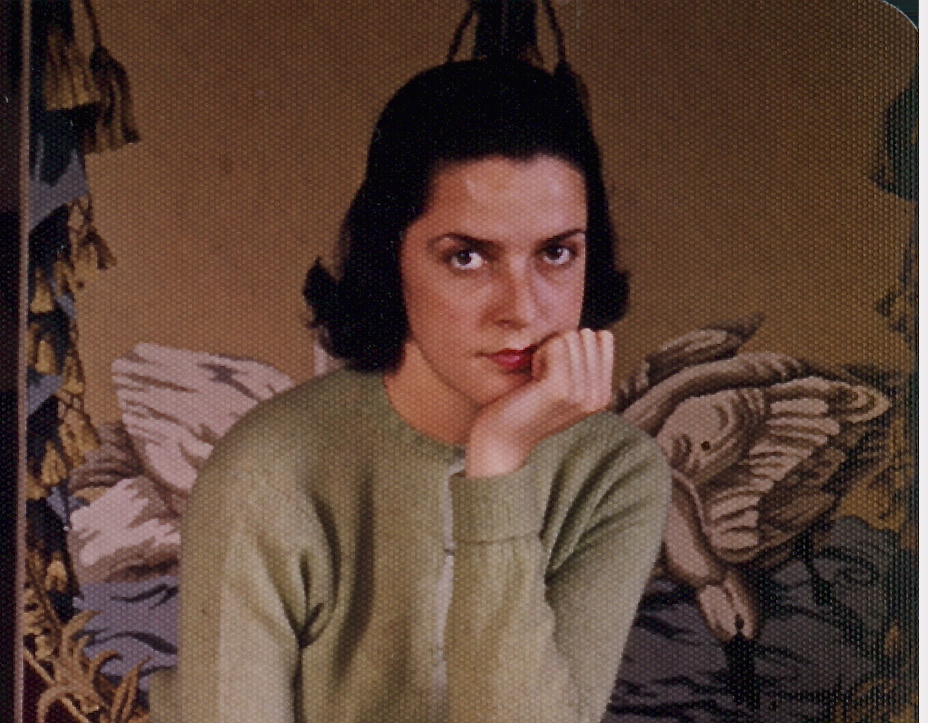
my mother, Adele
The Lawyer, John Baker, my father
There was a mystery around “the indian,” an exceptional man who bridged two worlds, who lived a fifteen-minute walk in the woods from the cabin past the blueberry meadow, near the place called Killaly Point, South-east of Sault Ste. Marie, Ontairo, where my mother spent her childhood summers (and so did I). Her brothers used to tease her about Dr. Eastman. I’ve looked all over for the tiny black and white photo of her eldest brother, Ted, wearing Dr. Eastman’s feathers. The ones he is wearing in his portrait shown here. Can’t find it.
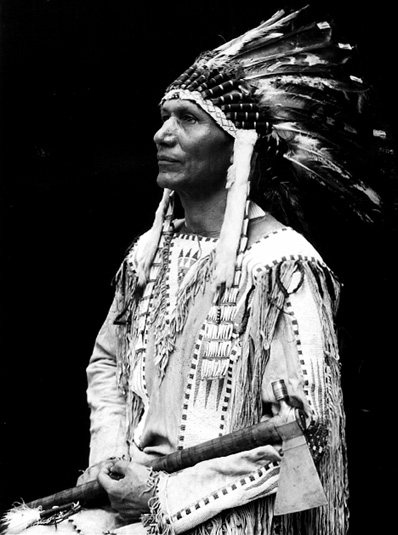
Dr. Charles Eastman, Ohiyessa
Dr. Charles Eastman, also named Ohiyesa, (pronounced O eee su), “the Winner,” was born near Redwood Falls, Minnesota in 1858, great-grandson of Dakota Sioux Chief Cloud Man. His grandmother (Stands Sacred), was the chief’s daughter. Eastman’s grand-father was a well-known Army officer, Seth Eastman. Their daughter, Mary Eastman, died soon after giving birth to Charles. Eastman’s own father was a full-blooded Sioux, Many Lightnings. The boy was raised by his grandmother, who fled with the 4-year-old to Canada, and gave him traditional training. Many Lightnings returned for him when the boy was 15 and took him into the white culture. Charles cut his hair, was raised in Mission Schools, and went to Dartmouth, graduating in ’87. He became a medical doctor with a degree from Boston University in 1889 and was sent back to Pine Ridge Reservation in South Dakota as a government doctor there. — the same year as Wounded Knee, 1890. He was close by the massacre and was the first doctor to reach the “blood-soaked field,” and treat the wounded. He experienced the horrible tragedy first hand. Three hundred Lakota died that day. He was never the same after that day.
<> He began to work to bridge the far-apart-worlds, wrote eleven books, numerous articles, lived in many places with his wife, social worker, Elaine Goodale. They even lived in D.C. where he worked at lobbing congress for his Indian Nation from1897-1902. Dr. Eastman believed that the teachings and spirit of his adopted religion of Christianity and traditional Indian spiritual beliefs were essentially the same, a belief that was controversial to many Christians, including his wife. They separated.
In 1928, Eastman purchased land near Desbarats, Ontario, within walking distance of the cabin, with a view of the North Chanel of the Ste. Mary’s River. For the remainder of his life, when he was not traveling and lecturing, he lived there in his simple wood cabin in the nature that he loved so dearly. He died in 1939 at age 80.
My mother was 10 when he moved there. Her brothers used to tease her about
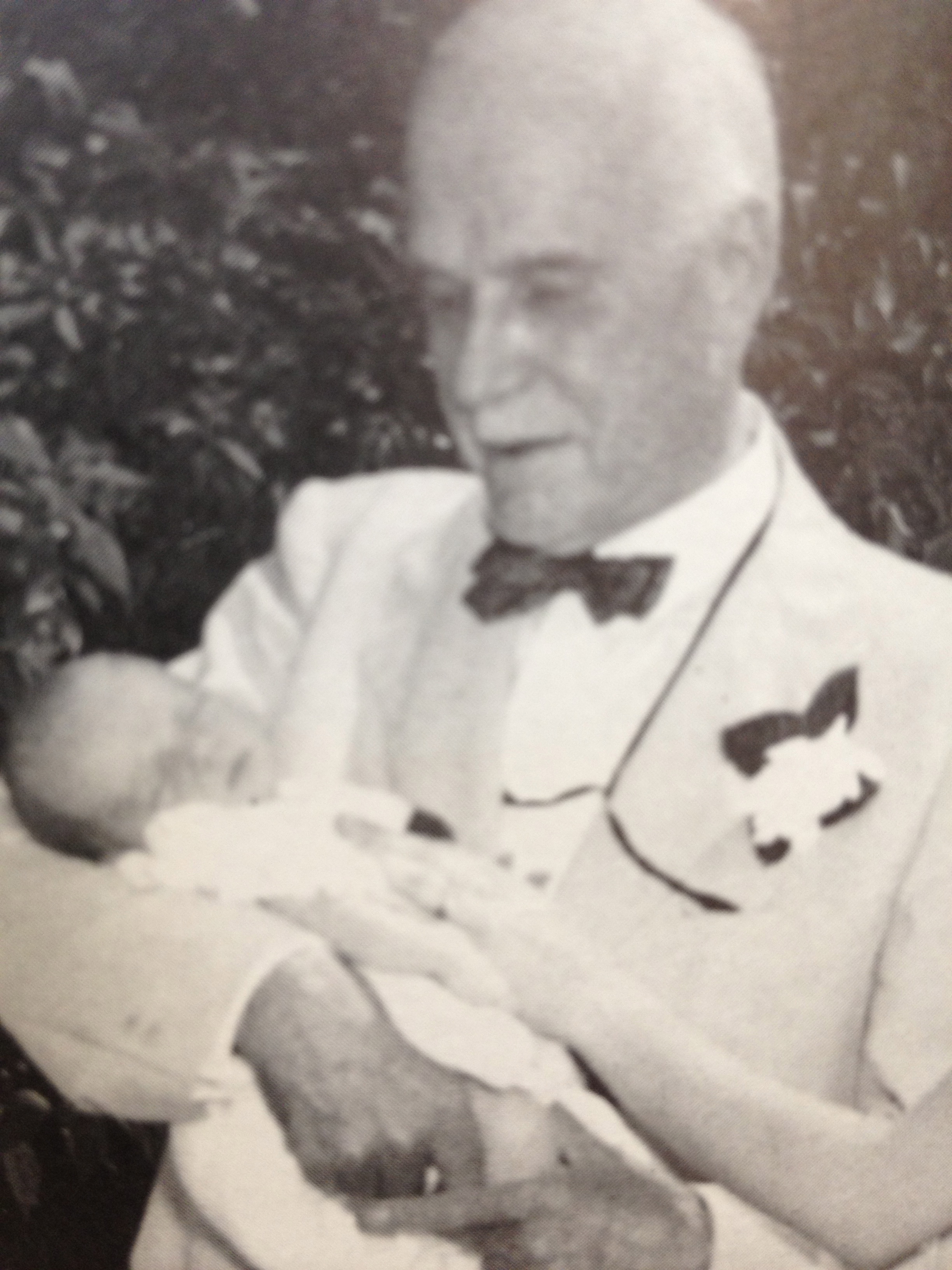
Doctor Proxmire with a baby he delivered, 1955
“the Indian” My mom was a teenager who wanted answers about life and the world. She never shared with me what he told her because she gradually lost her ability to speak or move much, due to severe M.S, so I never had those conversations with her that a girl would have with her mother. All I know is Eastman was in her early life and impressed her deeply. And Mother wanted to know about the Dalai Lama. She read Seven Years in Tibet, by Hendrich Harrer, when it came out in 1954.
When I met His Holiness the Dalai Lama with Shabda and my son, Ammon (age 5) in Dharmsala in 1976, he wanted to know why I was had come to see him. I said: because my mother always wanted to meet you. His Holiness was a real chief of all his people. I had grown up with the doctor and the lawyer, here was the Greatest Chief, who, like Dr. Eastman, had to deal with two worlds, the one of a dominant race holding power and assumption of superiority, and the other of his own people… in this case, the Tibetans.
I just spent 32 days at a writing residency in the town where both my mother and father grew up, where I was born. One morning the phrase: Doctor, Lawyer, Indian Chief was running through my head. That is the story.

I’m on the porch roof just down the river from Dr. Eastman’s cabin
<> <> May all beings treat each other with sincere dignity! <> <>
.
 CompleteWord
The beauty makes me cry
LikeLike
Thank you Sierra… What an amazing human being, wish I had been able to meet Dr. Eastman.
LikeLike
Thank you Tamam, for giving a voice to the stories that need to be told, whether they are of the wives of Mohammed, or stories of our home towns and of the pain and ugliness that has happened there. THANK YOU my dear for the sincerity in your heart, for ALL people. Love Light Joy and Gratitude, ZubinNur xxx ❤ ❤ ❤
LikeLike
Thank you for taking the time to read this! Love to you…..
LikeLike
Always happy to hear from you! Much love, T’m
LikeLike
~~ and they live on in you. Thank you for your sharing.
LikeLike
Wow Basira, I haven’t thought of that grandfather-grandson connection. Looking forward to our reunion…
love, T’m
LikeLike
I like that… live on. May it be so! Thanks, Malika.
LikeLike
amazing story Tamam!
I see Solomon in your father!
See you in a few weeks out at Keanae
Love,
Basira
LikeLike
A deeply moving story, Tamam, with many threads coming together to weave a brilliant tapestry!
LikeLike
Thank you Mirabai! Good writing to you, dear one.
LikeLike
Thank you for your story. I’m just now reading it, thanks to a Desbarats friend who forwarded it to me. You and I were neighbors once and my family have memories of Dr. Eastman- and photos, too. In fact, I’m sitting on our Range Lights porch remembering our fathers friendship, too. I’m reading Ohiyesa’s “Old Indian Days” and wishing I had known him. At least my grandparents did! Gratefully, Cici Bell
LikeLiked by 1 person