
The Good Wife’s Guide – 1955

My friend had this article on his fridge, suggestions from the Housekeeping Monthly, 5/13/55. Before you read know –– this is America, the land of the “good wife.” Warning: This may make you queasy.

The Good Wife’s Guide

“Have dinner ready. Plan ahead, even the night before to have a delicious meal ready, on time for his return. This is a way of letting him know you have been thinking about him and concerned about his needs…

Prepare yourself. Take 15 minutes to rest so you’ll be refreshed when he arrives. Touch your make-up, put a ribbon in your hair and be fresh looking.
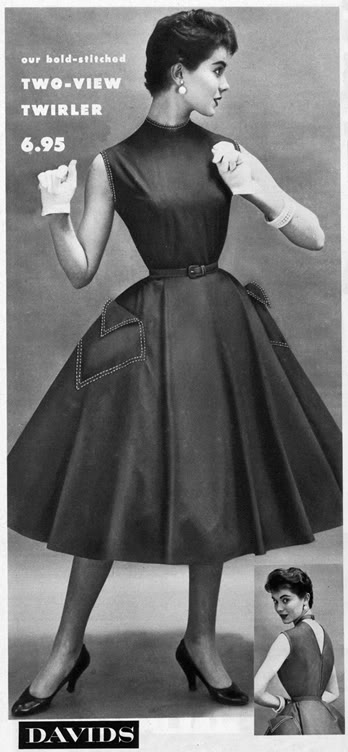
Be a little gay and a little more interesting for him. His boring day may need a lift and one of your duties is to provide it…

Prepare the children. Take a few minutes to wash the children’s hands and faces (if they are small), comb their hair, and if necessary, change their clothes. They are little treasures and he would like to see them playing the part. Minimize all noise…. try to encourage the children to be quiet.

Be happy to see him.  Great him with a warm smile, and show sincerity in your desire to please him.

Listen to him. You may have a dozen important things to tell him, but the moment of his arrival is not the time. Let him talk first – remember, his topics of conversation are more important than yours.

Make the evening his. Never complain if he comes home late or goes out to dinner…  without you. Instead, try to understand his world of strain and pressure and his very real need to be at home and relax…

Make him comfortable… Have a cool or warm drink ready for him. Arrange his pillow and take off his shoes. Speak in a low, soothing, and pleasant voice.

Don’t ask him questions about his actions or judgment or integrity. Remember, he is the master of the house and as such will always exercise his will with fairness and truthfulness. You have no right to question him.

A good wife always knows her place.”

aimed straight at his heart...

hmmmmmmmmmm………

With this ethic published in the USA within my lifetime, who are we to criticize other cultures? How dare we take a critical view of patriarchal societies? At the same time, American Women, you’ve come a long way!

May liberation from this blatant sexism reach women everywhere! <>
Untold & the Book Awards


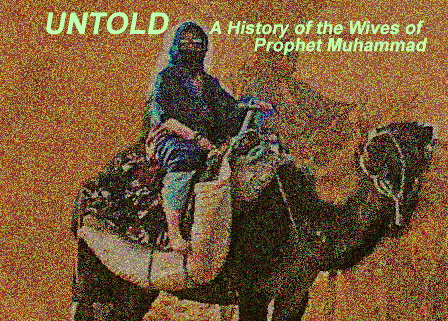
the author on a camel in the Moroccan Sahara

I am curious to find an award category for my book: Untold. Never mind actually winning, I’m just looking for a match.  In the words of the late Ogden Nash, the book is a churkendoose – chicken, turkey, duck and goose. It is poetry, but it’s not a poetry book. It is biography and academic history, and yes, women’s studies. The alchemy is powerful and forges it into a what? Non-fiction  women’s historical biography.

The words “Prophet Muhammad” are in the title. That makes it  a bit edgy like Black History, only Martin Luther King is more PC with many Americans.

I love this book because it moves toward easing tension between the Islamic world and the USA. Is there a slot for that important job in the arena of awards? Then there is the chapter on the Jewish wives. Wouldn’t it be great if everyone acknowledged that Prophet Muhammad had two Jewish wives? Israel, for instance? You can  see how this book may be sitting alone somewhere.

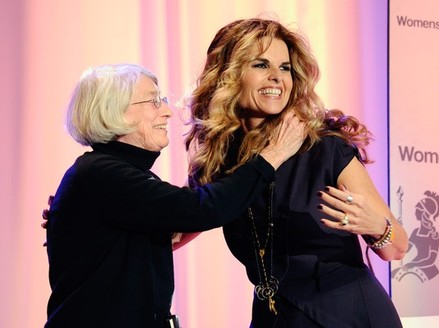
California first lady Maria Shriver introduces Pulitzer Prize and National Book Award winning poet Mary Oliver (Photo by Kevork Djansezian/Getty Images)

There’s always big American prizes for literature and poetry, with Mary Oliver hugging Maria Shriver on the right. Here are some less well known acknowledgements:

FAB Book Award (Burntwood Secondary school award – winner chosen by the students). I love the name of the award and wish I could talk to them.

Brass Crescent Award (this promotes the best writing of the Muslim Webblogs). That’s good, but then there’s The Frederick J. Streng Book Award, limited to Buddhist – Christian books.

The esteemed Anisfield-Wolf Book Prize…”understanding of racism and our appreciation of the rich diversity of human cultures…” But I’ll bet you need to be a person of color to even be considered for that.

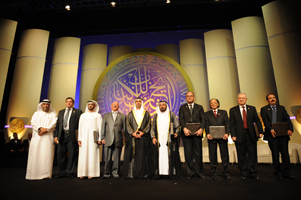
Here’s one that I’m sure has never been won by a woman: The Sheik Zayed Book Award, “one of the most prestigious and well-funded prizes in the Arab world,” named after the deceased ruler of Abu Dhabi. Last year’s literature winner was  Dr. Ibrahim al-Kawni, Libyan author of The Call of What Was Far.

The Humbolt Research Award is for an academic. The Middle East Studies Association (MESA from University of Arizona) listed more than thirty books on topics that seemed similar to Untold, but every single book had a University Press behind the title, like the poetry prizes awarded only to MFA graduates. Forget it.

For The Arab American Book Award you need to be an Arab – it’s not books on Arab themes in America.

The only possible thing I found was IBA International Book Awards, “Honoring Knowledge, Creativity, Wisdom  & Global Cooperation through the Written Word.”  That sounds good. The deadline is April 30, 2011.

Sometimes it feels good to dare to dream.  <>

dedicated to four little girls

Tags

,

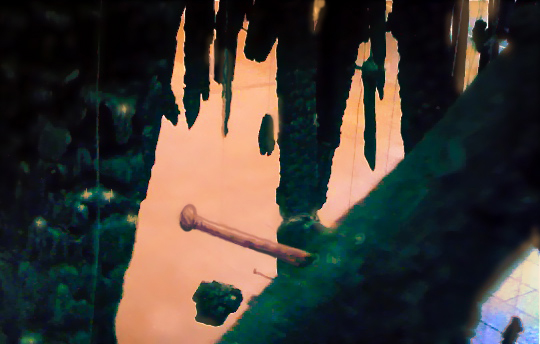
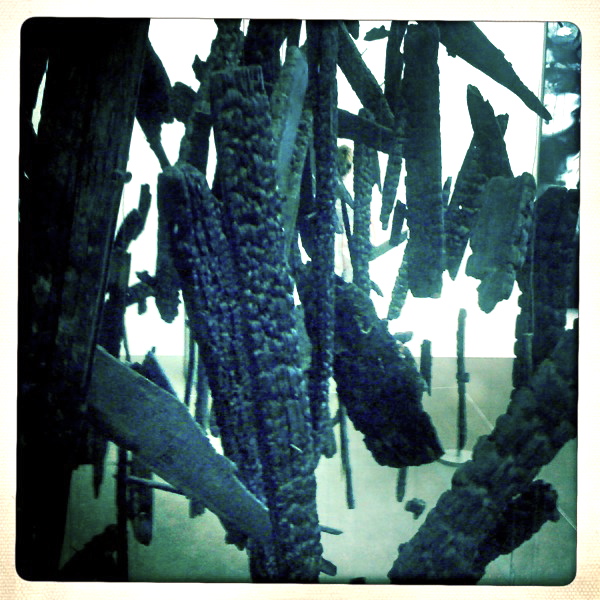
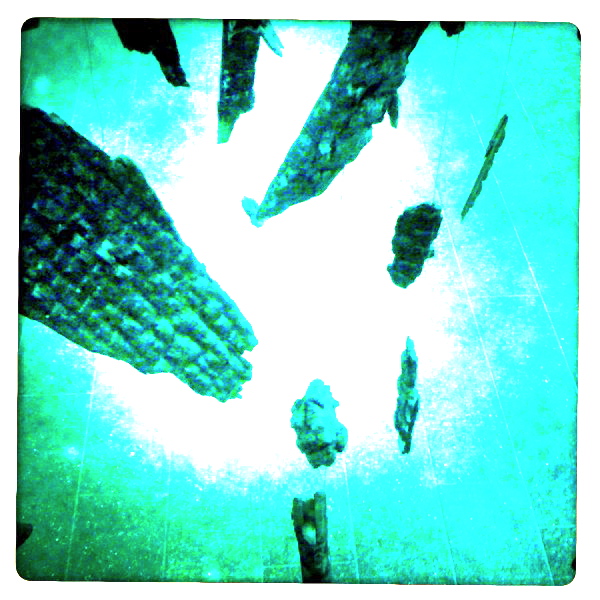
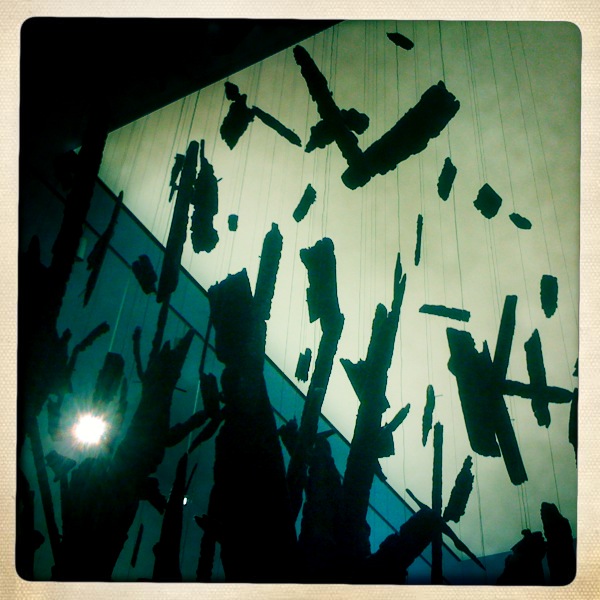
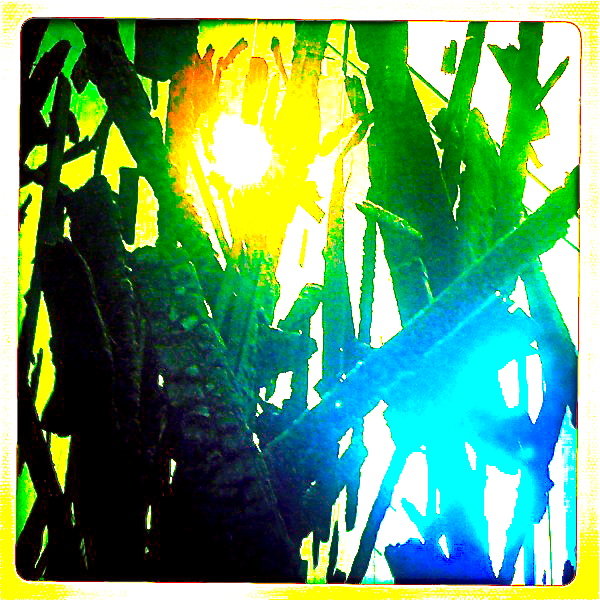
This morning I snapped pictures of a sculptural installation in the de Young Museum in San Francisco. The sculpture is composed of strangely beautiful pieces of burned wood hanging on colorless string. The window light and the spotlights increase the magnetism. Each photo taken with my small phone-camera was strangely evocative, of what? Some sadness I’ve been carrying lately, perhaps.

for Denise McNair

A tall, African American guard in a dark suit came up to me briskly, but his face was open, vulnerable even. It used to be against the rules to photograph in museums, but now that is a useless effort, especially with discrete cell-phone pics. He asked if I knew what these hanging fragments were. I said I did not. Maybe it was my dreadlocks that drew him into my artistic reverie with the sculpture.

He began. “It is the church, the Baptist Church in Birmingham Mississippi that was bombed in sixty-three.”  Spike Lee’s images flooded my head. I felt a jolt of rawness I’ve come to know in the vulnerable moments since my husband was in the hospital a couple weeks ago.  I looked at him. “Four  young girls died that day.

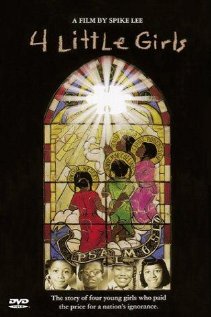
Spike Lee's film

Is this the remains of the building? God.” He nodded. Spike Lee’s documentary 4 Little Girls released in 1997 hurt my heart. I could hardly watch it after the moment of the bomb.

The press carried words something like this: On a quiet Sunday morning, September 15, 1963, four little black girls prepared their Sunday School lessons in the basement of the church. In the same basement sat a bomb placed by segregationists, designed to kill and maim in protest of the forced integration of Birmingham’s public schools….

for Addie McCollins


These photos are dedicated to Denise McNair (11), Addie McCollins (14), Carole Robinson (14), and Cynthia Wesley (14), the four young girls whose death marked a turning point for Civil Rights in America.  Never forgotten.

From: Birmingham Sunday by Langston Hughes

Four little girls

Who went to Sunday School that day

And never came back home at all—

for Carole Robinson

… Four little girls

Might be awakened someday soon

By songs upon the breeze

As yet unfelt among

Magnolia trees.

<>   <>   <>   <>   <>   <> <>   <>   <>

dedicated to Cynthia Wesley

<> ~ <> ~ <>  <> ~ <> ~ <><> ~ <> ~ <> <> ~ <> ~ <>

Sally Magdy Zahran ~ 1988-2011

Sally Magdy Zahran

…I would smooth your life in my hands,

Pull you back. Had I stayed in your land,

I might have been dead too

For something simple like staring

Or shouting what was true….

Words from  a poem by Naomi Shihab Nye “For the Five-Hundredth Dead Palestinean, Ibtisam Bozieh”

It’s one thing to see videos of the square in Cairo, but another to put a face to the violence which flashes like a lightning storm here and there, taking precious human life.

There is just one letter in Arabic that separates the words “witness” and “martyr.” Let’s imagine Egypt as a country of witness for democratic change instead one whose streets splash red with the blood of martyrs!  ~May it be so.

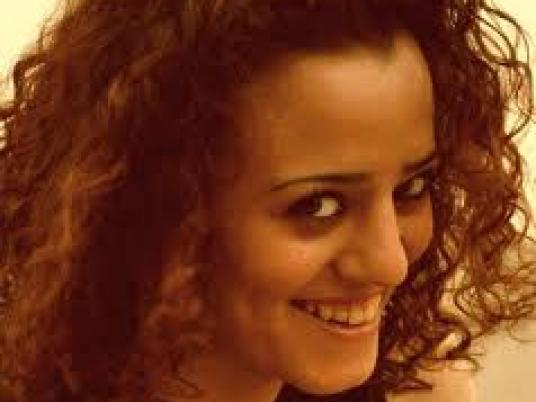
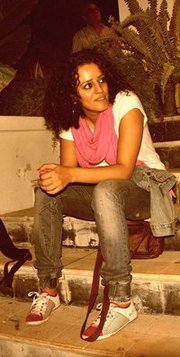
I stared at the vibrant photo – the face of Sally Zahran, age 23, smashed on the back of the head with a baseball bat in Egypt on Friday evening, January 28th by political thugs. That would be Friday morning California time, during the time I drove to the hospital to visit my husband who was recovering from surgery. Or maybe I’d arrived and bent down to kiss my living, breathing beloved (who grows stronger every day.)  My attention was not in Egypt.

Sally grew up in Cairo and was working as a translator there. During the unrest she had traveled far south to Sohag, where her father is a university professor. The small city on the west side of the Nile gets 3,804 hours of sunshine a year according to Wikipedia.

She was never an activist, and had not taken part in political protest. Sohag has both Coptic Christians and Muslims. Magdy may be a Coptic name, connecting Sally to this tradition which links to Prophet Muhammad  by means of his beloved Mariya, the Copt, mother of his son, Ibraham.

“She felt it would be safe to join the protests. So many others were going out on Friday,” said her friend Aly Sobhy.  “She was loved by all who knew her.”

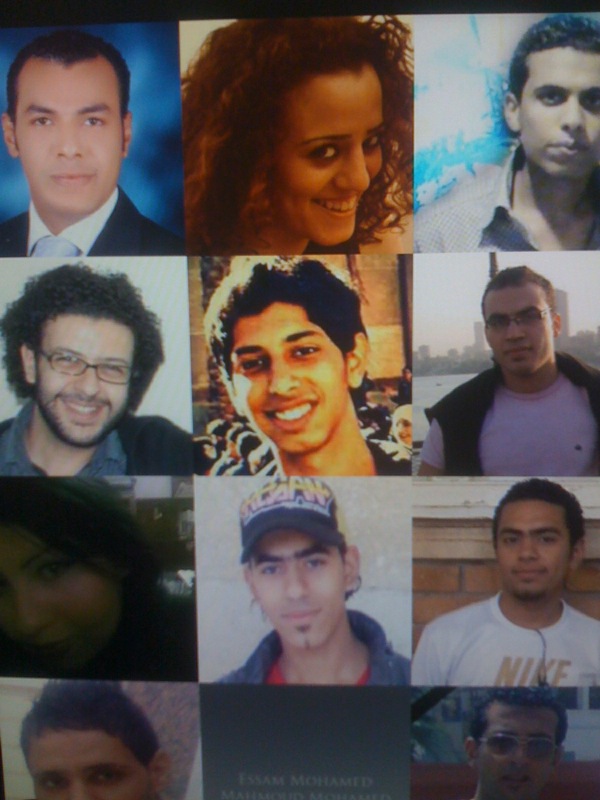
some who have died in Egypt

See “Egypt Remembers” page on line:  <http://1000memories.com/egypt> shows photos and a word or 2 about the dead – nearly all under the age of 30, now martyrs to the cause of democratic change in Egypt.

May this terrible situation be resolved soon.

<>   <>   <>

Joe Milford Poetry Show – Tamam Kahn guest poet!

Saturday afternoon I was lucky to be the guest poet on a podcast of The Joe Milford Poetry Show. I am honored to be listed in the show archive with poets I admire: Forrest Gander, CD Wright, Tony Hoagland, Robert Pinsky, Mark Strand, Jo McDougall, Franz Wright and others.

Joe has an easy-going manner that makes it feel like the two of us were having a cup of something at a southern coffeehouse with comfortable chairs. Actually, I was in my office in California and he was in Georgia. The podcast is available to download, but since it is long –– an hour and a half –– I’ll share some highlights here.

I mentioned that I had spent the last year speaking about the wives of Prophet Muhammad and the misconceptions about Islam held by many Americans. Now I had a chance to read from the 70 poems in my book, Untold, and talk about poetry.

I spoke of the “prosimetrum,” a mysterious word very few people know. This word was a gift from Fred Chappell, when I needed a format for my book: a narrative with lyric poems dropped into the prose. Joe mentioned the Japanese version. I brought up author, Boethius.

I was glad to mention that the hadith (incidents and anecdotes of Arabic history about Prophet Muhammad and his companions) is full of what poets call “prompts,” vivid keys that open the container which holds back the flow of words in many of us. I started this part with a poem I’ve never read publicly. The prompt is: “I have no urge for husbands, but I want Allah to raise me up as your wife on the Day of Rising.” These are the words of Sawda. Here’s the poem:

up until the Day Of Rising

Sawda dreamed Muhammad

stepped on her neck; his instep

soft, the pressure firm

and it meant yes, this seal, this stamp

of God’s Prophet. They say

that his grief that year ran deep

his need, a woman who could

keep his house and school his girls —

the widow Sawda?

Oh Lord, she thought, am I to marry such as he!

Dawn does not come twice

to wake any woman

but once she woke, Sawda came

to rule his hearth,

the big, unmigratory wife

with the sloshy walk. She left a wake.

Her footprints pressed down

deep into the soil when she walked out.

She’d puff her cheeks with effort,

find a doorframe she could lean on.

Her nights-with-Muhammad

lessened, moved to storage,

and were abandoned to ‘A’isha

as she lagged behind.

The word divorce swam                                  

in her brain; she feared

a life apart from him.

As for her faith, she held it,

made ablution from a pail,

drew her wet hands over her hair,

but bowing down? Well then,

her knees might fail her

or a nosebleed start. She trembled,

sucked on dates and rolled her eyes:

I have no urge for husbands, but I want Allah

to raise me up as your wife on the Day of Rising.

Muhammad laughed. He saw

she was on her laborious way up,

and who would wish to stop her?        <>     <>     <>

I spoke of my good friend, poet Wendy Taylor Carlisle, who read every word of my book and offered many suggestions – which made the writing much better. I read a poem she is fond of – owner’s manual: the howdah: <https://completeword.wordpress.com/poems/>.

I think Joe and I did an good poetry show, especially under the circumstances. He admitted to a sore throat and a migraine, and I had just left my husband recovering from surgery, at a hospital in San Francisco. Thankfully he is home now and healing well. My thanks to Joe for making this happen.  Here’s the link : <http://joemilfordpoetryshow.com/&gt;

Daisy Khan meets Roshi Joan Halifx

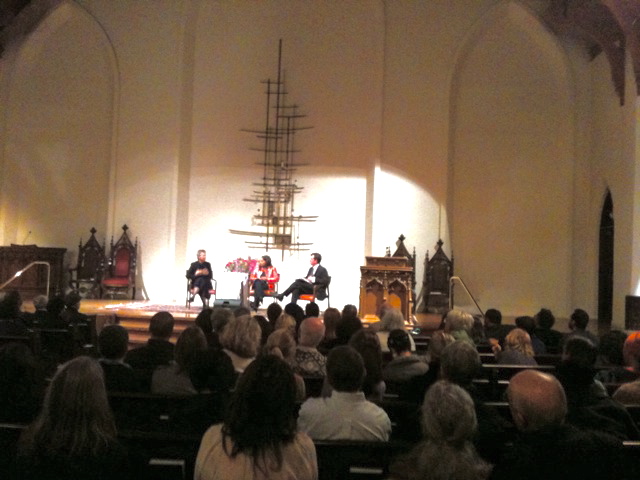
January 17, 2011 Daisy Khan and Roshi Joan Halifax met for a Muslim-Buddhist dialog at the Unitarian Church in San Francisco.  There were two occasions when they reached across a small table that stood between them to clasp hands. These are women who work to make the world a kinder more compassionate place.

Roshi Joan and Daisy

Karim Baer, moderator, and Director of Public Programs for CIIS, stated that he hoped to have more than just interfaith conversation; that this discussion was meant to look at places where prejudice and fear evoke some hard questions, social issues swept under the carpet.

After the women spoke about themselves and their relationship to religious issues,  Daisy mentioned that religious differences tearing people apart was nothing new.  Joan replied: “Can we drop into values that tolerate and appreciate differences? The extremist world is trying to make us a monotheistic religion.” Daisy: “There’s a verse from the Qur’an that goes: If we (God) wanted, we would have made you all the same.” Diversity is part of the Divine plan. If I do not see myself in you the differences can be endless: black/white, male/female, immigrant/local, etc.”

As for her endless job speaking for the Muslim communities in America and  addressing press propaganda referring to Muslims as “terrorists,” Daisy said: “If I don’t do anything about it who will?” She and her husband, Imam Faisal Rauf, have been doing their work in NYC for more than 25 years. They came up with the idea for the New York Intercultural Center known as The Cordoba Initiative. “When we started the CI,” she continued, “we wanted to prove pluralism is always in Islam. It goes into decline in nation-states, but at the time of the Golden Age in Cordoba, Spain, the cultures co-existed –– Christian, Jew, and Muslim. But the multi-faith center was distorted into a 13 story mosque at Ground Zero.”

During the last 6 months in the crisis (of CI) I was made to feel like an outsider. People told me, “Leave our country.” The Father of a firefighter who died in 9/11 said, “If you just move this site it will make me happy.” Daisy replied, “Will you allow me to accept this tragedy? You don’t know what it was like to be a Muslim after 9/11. For me it’s an enormous tragedy –– my country and religion attacked.”  The man said, “I never imagined what you are saying.”

A woman named Alice, who lost a son in one of the flights of 9/11 stood up in the audience to ask Daisy, “Why are you doing this so close to the site?” It was a moving and tender moment, with Alice gazing at Daisy, saying she respected her but not the decision.

Daisy told us all that she and her husband, Imam Faisal, were listening to what people said so they can make a good decision. “What we, the American audience see is just part of an enormous picture involving Muslims world-wide, who are watching to see how this plays out.”
And Joan seemed to emanate a calm and kind attention, witnessing Daisy’s words. She said: “Buddhism has 84,000 Dharma doors. I think extremism is a Dharma door. I need to listen to individuals who polarize and bridge that gap inside my heart. The question for me is: How can I create a situation where extremism does not lead to destruction? “Fight” extremism may not be the right word. I don’t know how to do this. I think we need to look deeper into the peacemaking process.”

For Daisy Khan there is an unexpected gift in this work as a speaker. Mainstream media spent months last summer attacking her and her husband, never looking to them for an answer. Recently, as she travels and address audiences, the local news media are turning up to interview her and asking her to tell her side of  Muslim issues. And they are listening.

Here is inspiration for this!

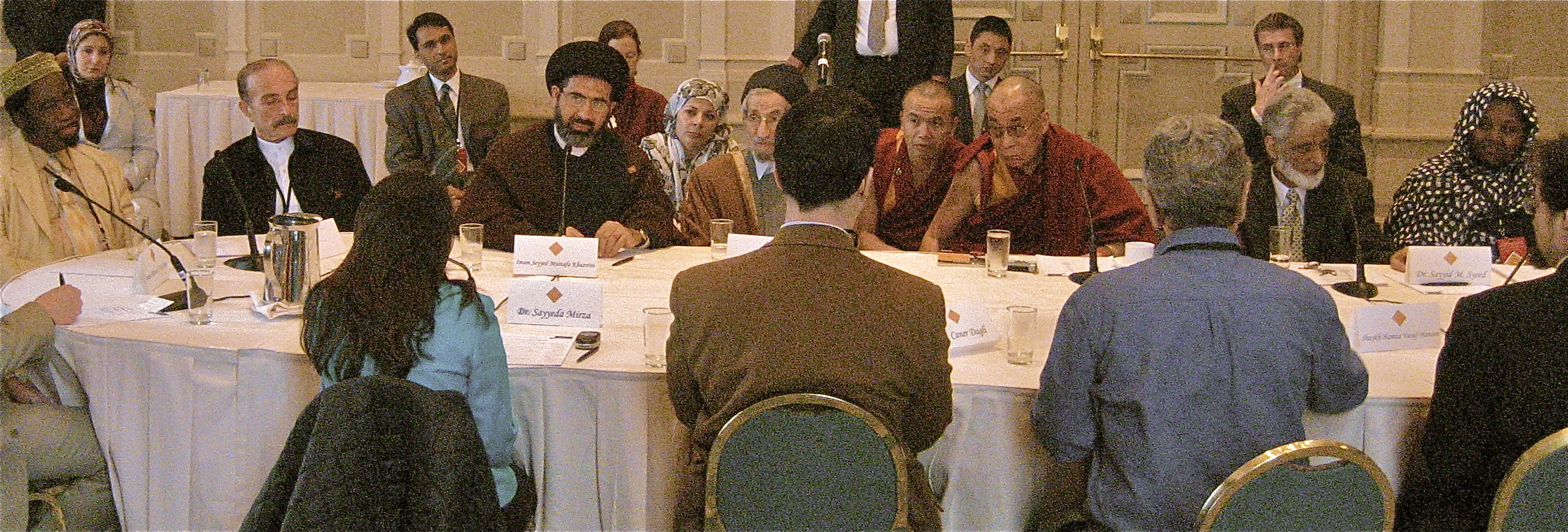
April 15, 2006 His Holiness Dalai Lama met with Muslim leaders in San Francisco and said, ”I want to be known as the defender of Islam.”

Mentioned by Marcia Z. Nelson

Something would not let me celebrate until I saw the words in print, the list. I’m a person who trusts my eyes more than my ears. For over 24 hours I thought I was an author on the top 10 list of religion books of 2010 from Publisher’s Weekly! I did mention it to my husband, Shabda, who announced it to 60 or more people. They cheered. But it didn’t feel right. Today I found page 5 with the real list. Untold is not listed. I’m reminded of my friend, song-writer Robbie Long, who had a song picked up by Whitney Houston in the day when she was nearly as popular as Lady Gaga. He could buy a house and go on vacation with the money that came with this kind of exposure. At the very last moment a decision was made to cut the song from the album, the song Whitney Houston had already lent her voice to…

The title of the radio show: A year in Books: What’s Hot (December 30, 2010.)

Here’s what happened. My friend, author Lea Terhune, heard a program called “Interfaith Voices” out of Washington DC. She wrote me that Untold was mentioned so I found the podcast.

Host, Maureen Fiedler, was interviewing Marcia Z. Nelson, Religious Review Editor of Publisher’s Weekly. “How do you decide on the top 10?” She is asked. “Twenty-five reviewers offer a review of merit, a starred review of the best from 250 or so books reviewed by PW over the last year.” The book must be “distinctive, well-written, and surprising.” Nelson goes on to mention three or four of the chosen books. This is followed by Fiedler’s questions about trends, then books on Islam. Without the list to refer to, I wrongly assumed we were still on the subject of top ten books. The next question was: “How about books on Islam?” Deepak Chopra’s Muhammad “was an interesting pairing of subject and author.” “Untold, A History of the Wives of Prophet Muhammad –– what was remarkable about it was how the writer incorporated poetry as part of her narrative. The book was really very distinctive.”     I’d call that an honorable mention, especially those words from Marcia Z. Nelson.

As for this… dream on!

The Publisher’s Weekly Top Religious Books of the Year 2010

Tattoos on the Heart: The Power of Boundless Compassion ~ Gregory Boyle

Nine Lives: In Search of the Sacred in Modern India ~ William Dalrymple

Fishers of Men: The Gospel of an Ayahuasca Vision Quest ~ Adam Elenbaas

The Tenth Parallel: Dispatches the Fault Line Between Christianity and Islam ~ Eliza Griswold

Hannah’s Child ~ Stanley Hauerwas

Christianity: The First Three Thousand Years ~ Diarmaid McCulloch

American Grace: How Religion Divides and Unites Us ~ Robert Putnam and David Campbell

Bread of Angels: A Journey to Love and Faith ~ Stephanie Saldaña

Hillel: If Not Now, When? ~ Joseph Telushkin

Made for Goodness: And Why This Makes All the Difference ~Desmond M. Tutu and Mpho A. Tutu

Lesley Hazelton – the Qur’an – with standing ovation

I have rarely anticipated a video, no – I have to say NEVER looked forward to a video more than this one! Let me take you back to the middle of September. I was in Seattle on my book tour, and was invited to spend an evening with author Lesley Hazelton at her houseboat on Lake Union. While preparing a soufle, my friend read me the script she was working on for this nine-minute talk to the forthcoming TED x Ranier event at Seattle’s elegant Benaroya Hall on 10/10/10. She is speaking on the Qur’an. As of today, this video has more than 114,000 hits on youtube!

The Qur’an seems to magnetize more twenty-first century misinformation, rage, and fear than any other book. I have been among those people –non-Muslims as well as Muslims – who long for well-considered, intelligent, subtle, as well as universal thoughts on this sacred Scripture. It is a puzzle to so many of us.

Lesley draws us into her discoveries, confronting the stereotypes: “Part of the problem, I think, is that we imagine that the Qur’an can be read as we usually read a book, as though we can curl up with it on a rainy afternoon with a bowl of popcorn within reach as though God …were just another author on the bestseller list.”

She set about reading four English translations side by side, with a transliteration and the original Arabic. “Every time I thought I was beginning to get a handle on the Qur’an, that feeling of ­– I get it now! – it would slip away overnight, and I’d come back in the morning wondering if I was lost in a strange land.”

She speaks of paradise. Forget the virgins. “It’s fecundity, it’s plenty. It’s gardens, watered by running streams.” Her delightful and brilliant talk is received with – yes – a standing ovation.

May the way open for careful, and respectful discussion of this sacred book. I invite you to join me in spreading the word of  lesley’s excellent video.

Lesley Hazelton

Lesley Hazelton is author of several books including After the Prophet, the epic story of the Shia Sunni Split and Mary, A Flesh and Blood Biography of the Virgin Mary. Visit Lesley’s blog: < http://accidentaltheologist.com/

Untold and After the Prophet are both discussed here on Bill’s Faith Matters” weblog Kansas City Star:

<http://billtammeus.typepad.com/my_weblog/2010/12/12-1-10.html>

Author Interview

Monkfish Publishing House interviews Tamam Kahn on her new book:
Untold: A History of the Wives of Prophet Muhammad

Q: What prompted you to write about the wives of Muhammad?

Tamam Kahn: As I traveled in North Africa and the Middle East, I felt authority and earthy power from the women who recited sacred words and sang poetry about Muhammad and his family. I wanted to discover if Muhammad’s wives had that same fierce, elegant energy. I began to read about them. I found that – according to traditional history – they did.

Q: Why do you feel this information is valuable or necessary at this time? What does it have to teach us?

Tamam Kahn: This book is meant to balance History and Her-story.  My wish is that the women in these pages may emerge as vivid individuals vocalizing the first years of what came to be Islam; that they will replace the stiff and submissive stereotypes the media often displays. In this book, we see that Muhammad was married to women born into Jewish, Christian and pagan faiths. “Untold” may inspire us to be curious and keep a flexible attitude, and if we do, we may discover all people have the same hopes, dreams, fears, and disappointments.

Q: Do you consider yourself a Muslim?

Tamam Kahn: I would call myself a spiritual seeker who regards Islam as the path of peaceful surrender to the One. For me, a Muslim is a person who walks that path. This was the “Islam” embraced by the women I write about. I am a follower of the Message of Divine Unity as exemplified by the great Sufis such as Rumi, Hafiz, and Rabi‘a of Basra. They carry a sacred outlook not limited to the form, the time, or the place.

Q: How have Muslims responded to your research and publication?

Tamam Kahn: A California Muslim woman hosting a local radio show wrote me that Untoldbrought these women to life in a way that no standard biography did. Through the poetry, she now imagined them as real flesh and blood women who were courageous, jealous, and fierce – in a very human way. For those who question my right to write about the Prophet’s wives, I would say I have great respect for each woman and admiration for the life they shared. That respect has opened doors that made this book possible.

Q: Does your book have a message for Muslims?

Tamam Kahn: As-salaam ‘alaykum. This book greets you on the path of peace. Come and enjoy the stories of your Prophet and his family.

Q: Does your book have significance for non-Muslims?

Tamam Kahn: This book is about a forgotten piece of history that needs to be brought out and honored. But for me it is not about Muslim and non-Muslim. It’s about our human family and the strength of women. This book may bring ease to a mother whose children attend school with Muslim children, the shopper served by a grocery checker in a scarf, the office worker whose boss has a Muslim name. CNN tells us that nearly one in four people in the world today is a Muslim, although Fox Network said it was one in five.

Q: How has the process of researching, writing, and publishing Untold changed your life?

Tamam Kahn: I’ve spent my life changing my life, so this is just another chapter.  There is a big difference between holding a manuscript and reading from your own book. This book seems to have “a life of its own.” I feel like I’m just tagging along. The directive that these women need to be known is an important one. From the opening poem: “I am here with a message: conversation with these women will never end.”

Q: Can you tell us about the research for Untold?

Tamam Kahn: I was hooked as soon as I began to read contemporary authors, Karen Armstrong and Martin Lings. From there I went to the oldest sources such as Ibn Ishaq. I traveled to Syria and received my own library card from the Al-Azar National Library in Damascus. When I’d researched and written a few chapters, I met with Islamic Scholar Arthur Buehler back in America, and he was moved by what I was doing and offered to help, not only by correcting the Arabic, but also suggesting early scholarly material that was respected in the genre of what is called “the hadith literature.” In that way I had the advantage of an academic checkpoint.

Q: Talk about the form you use in this book – narrative prose interspersed with poetry.

Tamam Kahn: At one point I had seventy poems and notebooks of research on the wives and daughters of Prophet Muhammad. I thought I’d find someone to write the back-story. I asked the wonderful master writer and Poet Laureate of North Carolina, Fred Chappell, what he would do if he were in my place. He suggested a “prosimetrum.” No one I knew was familiar with that term. It was used by Boethius in the fifth century – in his Latin Consolation of Philosophy. Boethius placed poems – each like a tiny well – in the prose narrative thread. The Consolation influenced Western Medieval thought, Dante and Chaucer. The form is generally not in use today, but it served my purpose beautifully!

Q: Who should read this book?

Tamam Kahn: This book is for anyone who wants to transcend stereotypes about Islam. Untoldpaints this early history with a bold, broad stroke, including Prophet Muhammad’s close and colorful contact with Pagan, Jewish, and Christian women who became his wives. Like Reading Lolita in TehranUntold depicts Muslim women in a new light, with focus on their intelligence and creative outlook. Book clubs will find this is an optimistic book that empowers women –– the ones who are in it and the ones reading from it! After studying Untold in an Islamic Studies class, one student was inspired to write a term paper about the first wife, Khadija. I leave a trail of research markers, so the book can be enjoyed as simple biography or questioned and investigated further.Untold is for people who discover that they want to know –– who are these women?

For more information or to arrange an interview with Tamam Kahn, please contact: Linda Woznicki at 845-417-8811 or linda@monkfishpublishing.com.


Poet Sarah Lindsay

Twigs and Knucklebones has not arrived yet. I was supposed to pick up Sarah’s poetry book after my reading at Quail Ridge Books & Music in Raleigh, but I forgot, so they are sending it. I want to offer a couple of Sarah Lindsay’s wonderful poems and promote her yet-unread book because I love the writing. She is a very modest individual. When I asked what she did to celebrate winning the Lannan Poetry Award in 2009 (which came with a sizable honorarium) and she told me she and her husband went out for Chinese food and she took one work day off a week. We met at my Barnes and Noble book reading in Greensboro the beginning of November. She sat in the audience and smiled at me. I didn’t know who this woman was, but my friend, Fred Chappell had brought her to the reading to meet me. We had tea afterward. Here is a poem.

In Angangueo

She was in Mexico for some paper chain of reasons,

same way she landed anywhere in her days of plenty—

so many languages to pick up, countries to travel through,

mouths to consider kissing, and she could

walk all day, eat anything, add hot sauce,

ask for money from home without reckoning,                    

wake at noon and stretch without pain.

Then after one ridiculously cold night—

“It’s never like this,” the guide said—

she stood knee-deep in monarch butterflies

and shivered, once. Not from cold; maybe

from acres of crepe wings stiff in a low breeze,

antennae against her shins.

Little boys in drifts of dulling orange were trying

to pack balls of wings to throw at each other;

she thought perhaps she wouldn’t have children.

Or guides, like this one who soothingly repeated,

“The monarchs are sleeping.”

Sarah talks about her writing time in an audio “From the Fishhouse.” “I write on weekend afternoons. Before I write, I wash dishes… something regulated and low key that… keeps my body busy so that the mind can settle into hearing only the poem. I get all of the notes together that I’ve accumulated over a week or two, then I start washing dishes, going over what I’ve got in my head and more lines start coming. …I have to dry my hands and make slightly damp notes on the paper and by the time all of the dishes are done I go to the desk and there is no question of confronting a blank piece of paper…”

Small Moth

She’s slicing ripe white peaches

into the Tony the Tiger bowl

and dropping slivers for the dog

poised vibrating by her foot to stop their fall

when she spots it, camouflaged,

a glimmer and then full on—

happiness, plashing blunt soft wings

inside her as if it wants

to escape again.

Born in Cedar Rapids, Iowa, in 1958, the poet Sarah Lindsay works as a copy editor and proofreader in Greensboro, North Carolina. She is the author of Primate Behavior (Grove Press Poetry Series, 1997) which was a finalist for the National Book Award; Mount Clutter (Grove Press Poetry Series, 2002); and Twigs and Knucklebones (Copper Canyon Press, 2008). She plays the cello with friends in a quartet that is sometimes a trio or quintet, and lives with her husband and small dog among toppling piles of books. <>