This time of year I generally spend ten days on a hill in Sonoma County alternating between meditation and playing the djembe, a large drum.
There are fifty to eighty of us who gather and create a held space which can allow the world to unwind out of the head and nervous system, so the heart have room to experience and express feeling – to clear. The mind can open, and there it is! Nature and other brothers and sisters on the path of waking up and serving love, harmony, and beauty – here we are in this place. New challenges and old rise like bread, to be noticed tasted, and released. Over and over. And the meals. Did I say the food was wonderful? Great cook!
This morning, after three days, I did some poetry writing and was amazed at the clarity and power of the words that appeared on my computer screen. I have been working on a piece for several weeks, but during this couple hours each line of words flew toward completion.
So now I go back to five more days of sitting on the cushion, twenty minutes at a time, and then rising to drum, feeling complex rhythms in my body as I play alongside the master drummer. <> May the way continue to open! <>
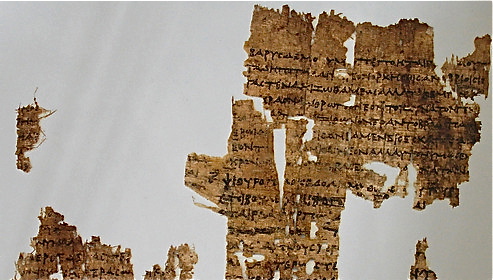
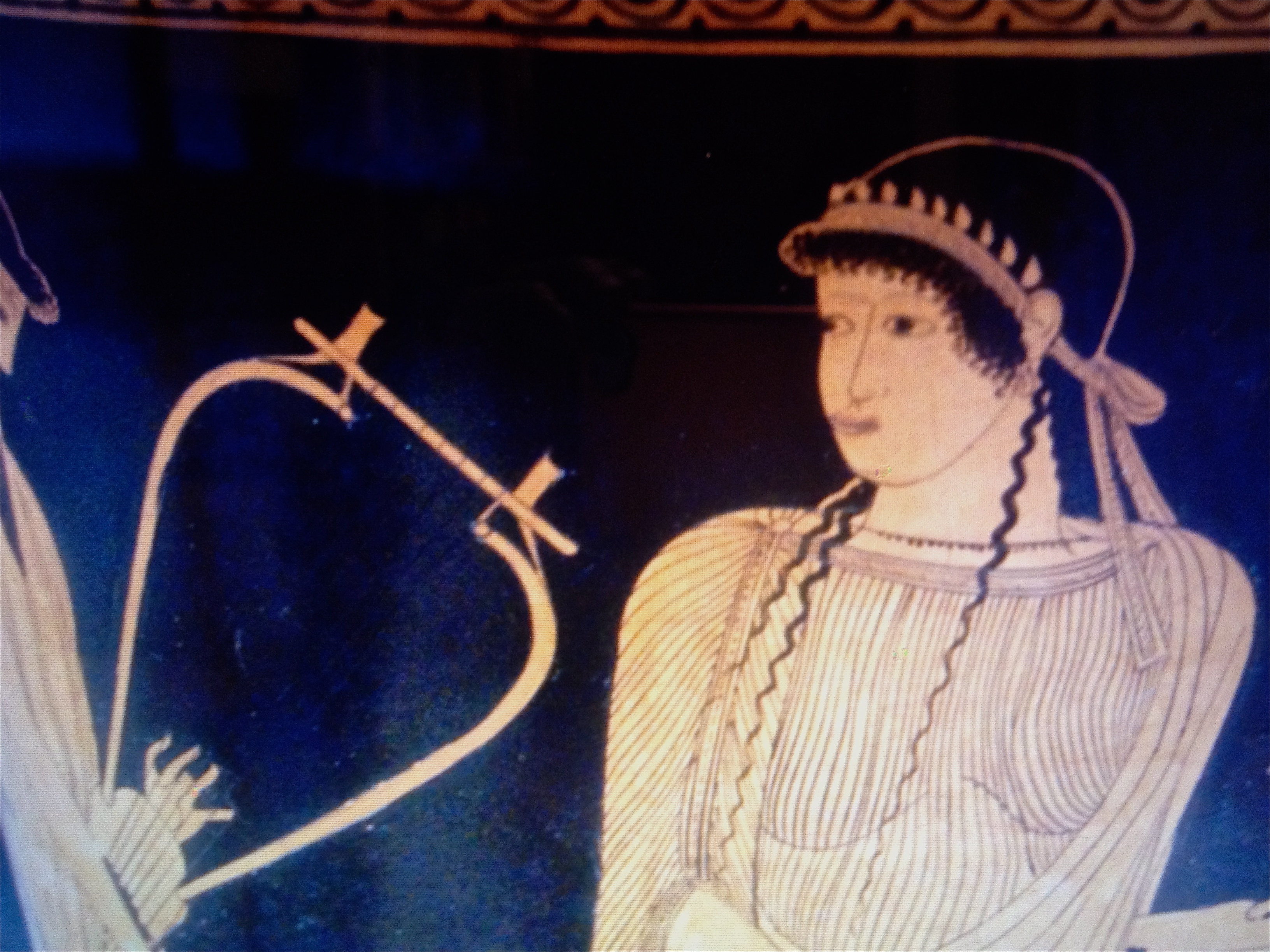
fragment of Sappho's poem on old age, assigned to Book IV, based on its meter
Papyrus strips with bits of Sappho’s poems used to wrap mummies, stuff sacred animals, and wrap coffins in Egypt… What?
The so-called sapphic stanza or strophe snagged me as I read along the other day. Poems by Marilyn Hacker started it.
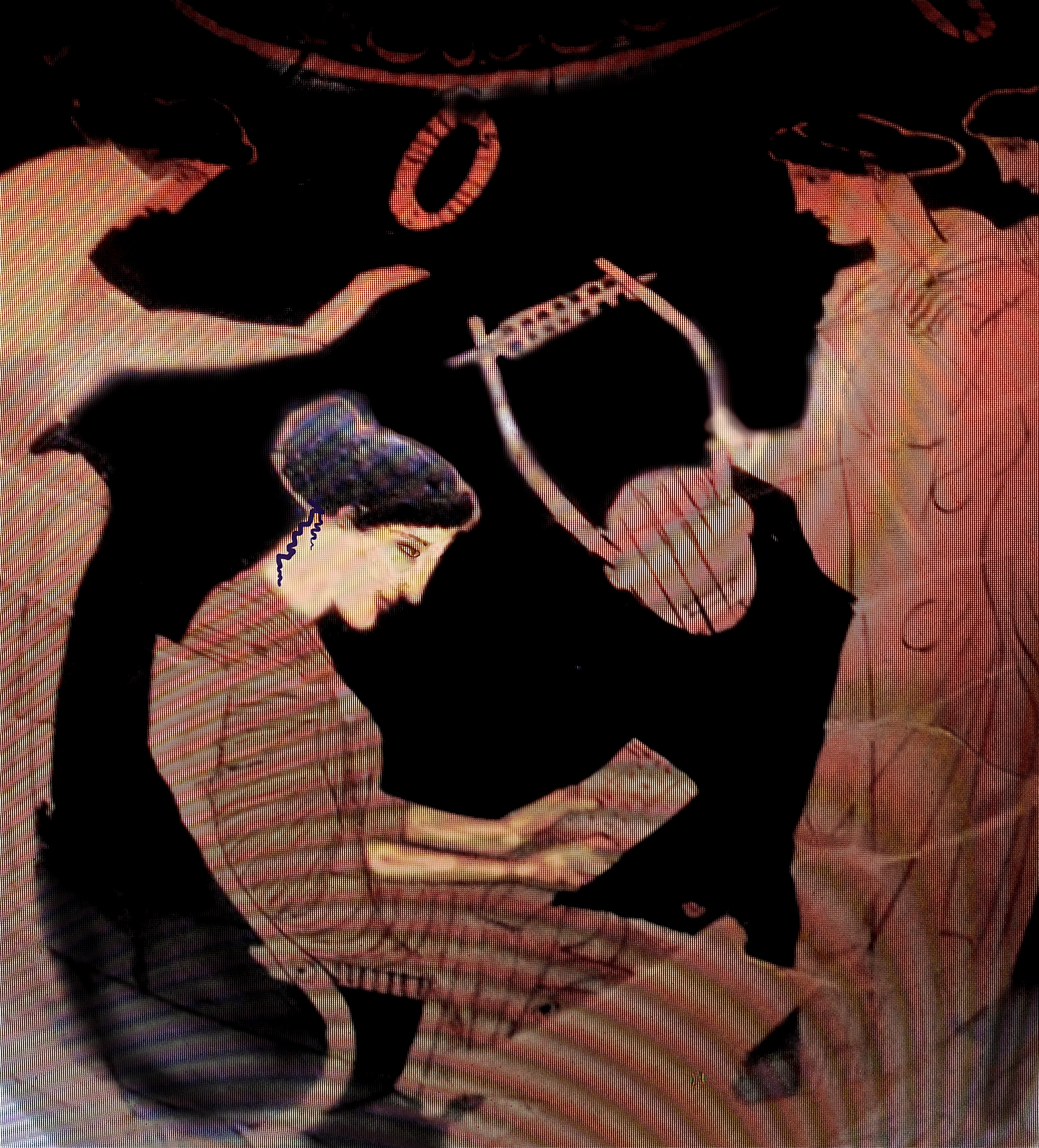
Sappho. They say there once were nine (poetry) books of hers at the Alexandrian library. She was called “the tenth muse.”
One of the great Greek lyrists of the ancient world, Sappho was born some time between 630 and 612 BC… Given the fame that her work has enjoyed, it is somewhat surprising to learn that only one of Sappho’s poems is available in its entirety–all of the rest exist as fragments of her original work… Late in the 19th century, however, manuscripts dating back to the eighth century AD were discovered in the Nile Valley, and some of these manuscripts proved to contained Sappho’s work. In the excavations that followed, strips of papyrus–some containing her poetry–were found in number… The work to piece these together and identify them has continued into the twentieth century. From < http://www.sappho.com>
“Sappho fascinates us because she is there at the beginning of literature, rooted as deeply into the history of human imagination as any other writer. …she is a slate upon which anything can be written, about whom anything can be imagined, and from whom anything, therefore, is possible. Of her 189 fragments, twenty are only one word long, thirteen are only two words long, thirty-three are under five words long, and fifty-nine are under ten. There is in fact so little we know about the poet that upon approaching her work we must at least first acknowledge the extraordinary predicament of having neither text nor context with which to read it.” This is from John D’Agata, “Stripped Down Sappho,” his review of Anne Carson’s book: If Not, Winter: Fragments of Sappho.
I once spent an hour with Carson’s book. I think it was at Poetry at Round Top Festival in Texas. Pages are etched in my mind. Here’s one:
Fragment 92 (The bracket marks a lost line, torn apart or full of holes):
]
]
]
]
robe
and
colored with saffron
purple robe
cloaks
beautiful
]
purple
rugs
]
]
But this is a side track – the remarkable historical figure and her mysterious writing.
SAPPHICS: the definition from Timothy Steele ~
“Sapphic Stanza: in ancient poetry, a stanza of four lines, the first three of which have eleven syllables… and the last of which has five syllables. The stanza’s named after its most famous practitioner, Sappho of Lesbos.”
Here is the pattern./x /x /xx /x /x, three times, then /xx /x No end rhymes.
I offer one section of a poem I’m working on. Four lines of blank verse followed by a sapphic stanza. The metrics are in contrast, the plodding camel moves in iambic pentameter: x/ 5 times; while interruption and danger speak in trochees /x, and dactyls /xx.
…Detained, a caravan could be at risk,
but he’s not brisk with her, and keeps her close.
She rides behind him on his mount; the way
is toward a vital well and next night’s camp. Fatima sees the dust up ahead, a worry. Clouds like that can mean that the well is held and thirsty travelers slapped with a hefty tribute. Outlaws and water…
<>
Marilyn Hacker writes powerful Sapphic verse. This from “A Braid of Garlic.”
At the end of elegant proofs and lyric,incoherent furious trolls in diapers.Fragile and ephemeral as all beauty:The human spirit–
With great respect to the Miracle of the Lights, which is Hanukkah, I post this good review of my book, UNTOLD, by Pamela Frydman. The review appeared in Tikkun Magazine March 2, 2011: http://tinyurl.com/4vvwvxb.
Part of the new material this book brings out is the relationship between Prophet Muhammad and his two Jewish wives Rayhana and Safiyya. This is a story that rarely is mentioned, but can lead to a more universal view of the early days of Islam. Here is an excerpt of the review:
A Refreshing Perspective on the Wives of Muhammad
by Pamela Frydman March 2, 2011
Untold: A History of the Wives of Prophet Muhammad by Tamam Kahn, Monkfish, 2010
With ease and beauty, Untold gives readers a different perspective of Islam and its beginnings. As author Alicia Ostriker writes: “Untold should be read with joy by any reader who hopes to transcend current stereotypes about Islam. It is a bridge between worlds.”
….Muhammad had two Jewish wives among the eleven he married after Khadija’s death. Kahn begins her chapter about them by comparing the stories of Sarah and Hagar as they are told in the Torah and the Qur’an. She then shares her research about the Jewish communities in Arabia in the seventh century. Following an early battle during which Muhammad is betrayed by a Jewish tribe, he chooses Rayhana from among the captives as a wife, and he begins to learn from Rayhana about Jewish customs. When Muhammad brings home Safiyya, his next Jewish wife “from the family of Sarah,” Safiyya takes an unfortunate spill off Muhammad’s camel just as she rides through a crowd of “Hagar’s descendents.” Kahn described the scene in poetry:
…They keep looking at the unconcealed
woman, spilled out, bruised. They stare at her ankle, cheek,
leg, shoulder, arm, neck, all the shock of luxurious curls,
at the trickle of blood down her arm. Safiyya will
spend the rest of her life dusting herself off, getting up
again and again as if tripped by the shadow –
Sarah’s words to Hagar — I’ll stay, you have to go.
The last line of the poem refers to Sarah, who asks her husband Abraham to send away Hagar, his other wife or concubine, together with Abraham and Hagar’s son Ishmael. The story of the Hebrew Sarah and her son Isaac, and the Egyptian Hagar and her son Ishmael, are recounted in both Torah and Qur’an and figure prominently among the stories of the founders of Judaism and Islam. In Kahn’s poem, she reverses the image, alluding to two of Muhammad’s Muslim wives who apparently taunted Safiyya for being Jewish. In the prose surrounding the poetry, Kahn writes that she suspects that Safiyya nevertheless created friendships with other wives of Muhammad and with Muhammad and Khadija’s daughter Fatima. As evidence of this, Kahn recounts that Safiyya is said to have offered Fatima precious gold earrings.
Kahn quotes author Reza Aslan from his book No god but God in which he states: “If Muhammad’s biographers reveal anything at all, it is the anti-Jewish sentiments of the prophet’s biographers, not of the Prophet himself.” In fact, positive stories about Muhammad’s Jewish wives seem to be missing from the Hadith — a compilation of stories from the community that expound on the Qur’an and the life of Muhammad and his wives and others important to the founding of the Muslim faith. Nevertheless, according to Kahn, Moroccan Sufis regard Safiyya as a murshida (spiritual teacher), who taught Torah to the women and girls in the inner circle of Muhammad’s family….
Rabbi Pamela Frydman, the director of the Holocaust Education Project, Academy for Jewish Religion, California, helped to found Or Shalom Jewish Community in San Francisco and OHALAH, international trans-denominational Association of Rabbis for Jewish Renewal.
Last night I had the privilege of reading my recently finished poems in Santa Cruz. It was a fortunate thing, since quite a few writers-of-poetry were in attendance, as well as old, dear friends and new. Thanks to Len Anderson for attending and giving me his book of poems, Invented by the Night.
I learned which material strong and heard the ones which need some power or clarification. It felt like I’m at the beginning of a new writing time. With the poems that have classic meter – like iambic pentameter – I’m not sure that rocking motion translates verbally as well as it does for the eye on the page. Here is new one about Fatima, the daughter of Prophet Muhammad, that surprised me with its directness, given the strange, surreal subject.
Written there
One fool for love wrote words where none should be.
Just scribbled on the leg of God’s own throne:
Fatima, guide for women of the worlds ~
This writing: could it be a dream or dare?
Dare mark the throne? Audacious, wild conceit!
A place so deep, so high, what eye can read?
The hadith tells the words but not the scribe.
The throne – it is the heart: and poetrythe pen. Fatima, they say, can intercede
for every woman at her time of death;
demise from childbirth, sickness, or a fall,
each bone-yard bride who asks her – please – please help.
She is the guide, a mercy seen as if
she rides a pure white horse across death’s bridge
to lead the supplicant to Judgment Day
and intercede with God on her behalf.
She’s Best of Women, Adam told Rasoul,
the taste of universes on his tongue.
NOTES: Hadith (the source of this material on Prophet Muhammad and his family) : Arabic source from a paper on Fatima by Christopher P. Clohessy. Rasul ~ a title for Prophet Muhammad. Adam refers to the first man or “Prophet Adam.”
Just added: excerpt of my Radio interview with Joe Milford, see tab “PRESS” at the top of this page.
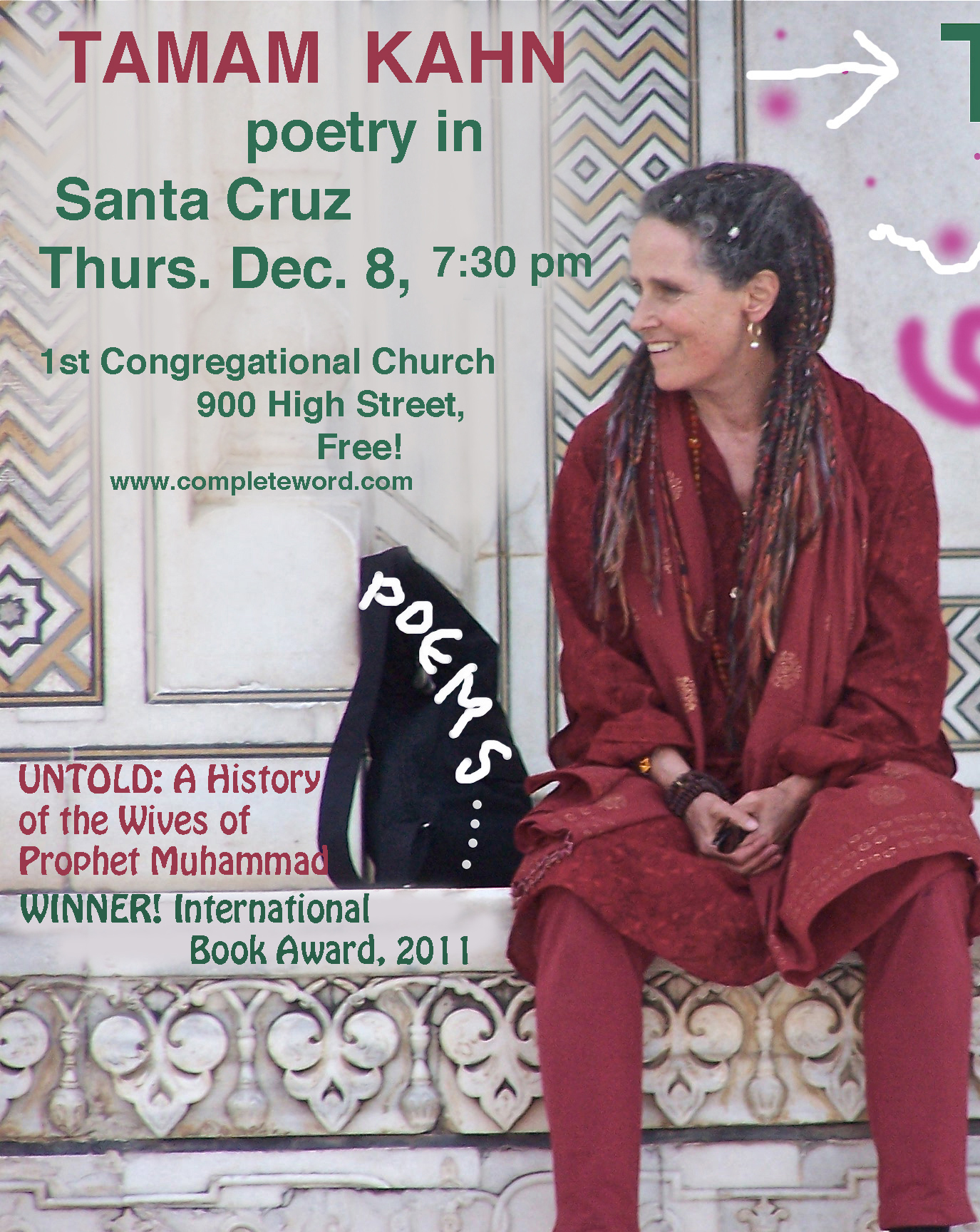
This Thursday evening I’ll talk about poetry and read the new material I’ve been writing.. Over the last year I’ve spoken frequently to promote my book, Untold, which is going into its second Christmas season. I just sent one book to Western Australia, one to Reading, England, and two to Rabat, Morocco, and I still love to talk about the stories and read poems about the first women of Islam.
Here’s a new poem about Fatima, the famous daughter of Prophet Muhammad. I’ve taken a description which comes from a hadith [canonized conversations by Muhammad and his inner circle].
“Fatima would glow. Her (other) name, Zahra, means radiant. Three times each day she shone: on those in morning prayer and on the people in their beds. Their Medina walls turned white. They asked the Prophet why, and he sent them to Fatima’s house where she prayed. The light radiated out from her. The light of her face shone on the people of the heavens and the people of earth… When she lined up for noon prayer her face shone yellow and all those in the line shared that glow. At sunset, her face took on a reddish color, entered the rooms and the walls glowed pinkish red. The light did not leave her face until Husayn (her youngest son) was born.” Fatima, Daughter of Muhammad, Christopher P. Clohessy, Gorgias Press, 2009.
Shine, a sonnet
~After Robert Frost’s The Silken Tent
The shining happened every day, in tent
And hut, in every room. It seemed the breeze
would linger there, as Zahra’s glow relent-
lessly lit up those praying, those at ease.
That light reached sky and earth just like a pole
star, glowing here and gleaming heavenward.
Her face. At dawn so white, it bleached the soul
of doubt. By noon-prayer yellow plucked a cord
of joy. As if the women there were bound
in Zahra’s golden ties of love and thought.
And when the swallows flew as sun’s round
ball turned red and sank below the taut
line of the earth, red stayed in land and air;
Zahra’s face shone conscious and aware.
Robert Frost’s poetry t is entwined with this poem. Look at the last words, all 14 of them. If you get a good last word, it helps with the process of a sonnet and in this case each end-word is found in Frost’s famous and beautiful Silken Tent. There may be a term for that kind of poetic borrowing. I don’t know. But writing inside Frost like that felt like moving down a playground slide. It’s a gratifying exercise.
The other poetry I’ve been working with is Blank Verse. I talk about it in my last review G. Schnackenberg’s Heavenly Questions. You can read my new poem in iambic pentameter, Bequest, at the on-line Literary Journal, Scythe: Fall, 2011 –Tamam Kahn <http://scytheliteraryjournal.com/>
I’ve moved the reviews I’ve been writing to a tab at the top of this site called, “REVIEWS.” I hope you will visit the authors I am sharing there. <>
You don’t have to be brilliant to read Gjertrude Schnackenberg’s poetry – but you do need to surrender to her word music! Her new book, Heavenly Questions, Farrar, Straus, and Giroux, New York, 2011 (paperback), is a set of six linked long poems written in iambic pentameter – a pulsing drumbeat of syllables – blank verse enriched by occasional rhyme. She comments: “…poetry is an effort to communicate meaning. It’s doing it through feeling and emotion rather than through the ideas it presents.”*
“It is perhaps the most powerful elegy written in English by any poet in recent memory, and it is a triumphant consummation of Schnackenberg’s own work.” Carl Kirchway
The emphasis in the Web reviews is her stunning elegy for her husband. For me the real beauty is in her confident stride even more than the content; it is the way she travels with words– entrancing the reader by means of iambic pentameter, that –/ –/ –/ –/ –/ rhythm, which does to the mind what riding a camel or a horse does to the body. Schnackenberg’s poems avoid both the archaic as well as distortion in the natural order of words, which – in less skilled hands – leads to the feeling of ‘manufactured’ lines.
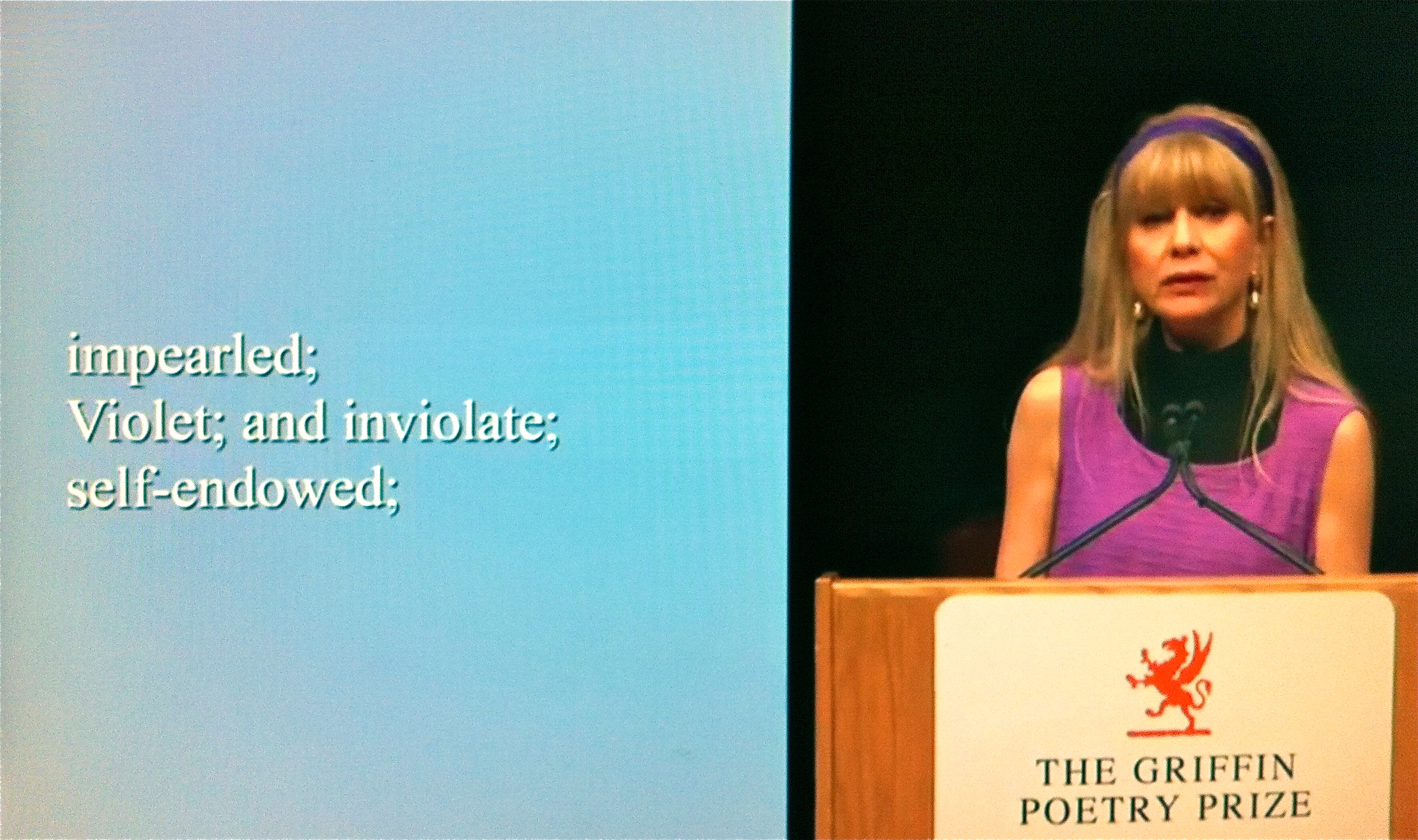
…Reading this book is like reading the ocean, its swells and furrows, its secrets fleetingly revealed and then blown away in gusts of foam and spray or folded back into nothing but water. Heavenly Questions demands that we come face to face with matters of mortal importance, and it does so in a wildly original music that is passionate, transporting, and heart-rending... Judges Citation, Griffin Poetry Prize.
She carries an invisible inherited poetry: the blank verse vehicle of Shakespeare’s plays, of Wordsworth’s “Tintern Abbey,” and Milton’s “Paradise Lost.” I’ve been in the light rain of meter and occasional rhyme most of this year now, and all but well-written free verse strikes my ear as dry or un-musical. What happened to that ancestral rhythm and rhyme that rocks us? Musicians and Spoken Word artists have picked it up in this dominant culture of un-formal poetry, but now with Schnackenberg and AE Stallings too, here is poetry in form, a read that’s fresh, yet carries the ancestral link forward. Here is a taste of the nearly 6 page poem “Fusiturricula Lullaby,” from Heavenly Questions. (Fusiturricula is pronounced few-see-tur-IK-ula – a sea snail).
A shell appears––Fusiturricula––
And uses its inherited clairvoyance
To plot a logarithmic spiral round
An axis of rotation evermore
And evermore forevermore unseen….
This triple repetition coils the reader through the shell. She often uses repetition as a climactic devise in her long poems. She says: “Repetition can be hypnotic.”* Trance-like. In the poem of her husband’s death, “Venus Velvet No. 2,” six pages into the poem she begins the negation –no one, nothing, never, never again, and not, not; then the negative goes further with unscrolling, unwheeling, historyless, and nothing less. You can see her life with her husband unwinding to its conclusion, without the least bit of sentimentality. The result is paradoxically beautiful and haunting. Blank verse serves the longer poems well. • If you are a poetry lover, read Heavenly Questions. It’s elevated enchantment. <>
The following are links to other Web sites with information about poet Gjertrud Schnackenberg. (Note: All links to external Web sites open in a new browser window.)
It’s time for my third annual LEGO blog. There was a recent announcement of a forthcoming Lego Movie by Warner Brothers. [More on that below.]
This year I received a piece of beautiful Lego jewelry – a necklace from Jacqueline Sanchez<http://www.jacquelinesanchez.com/> When I wear it, small Lego fans put their tiny guys on the little plastic rectangle. “Cool,” they say.
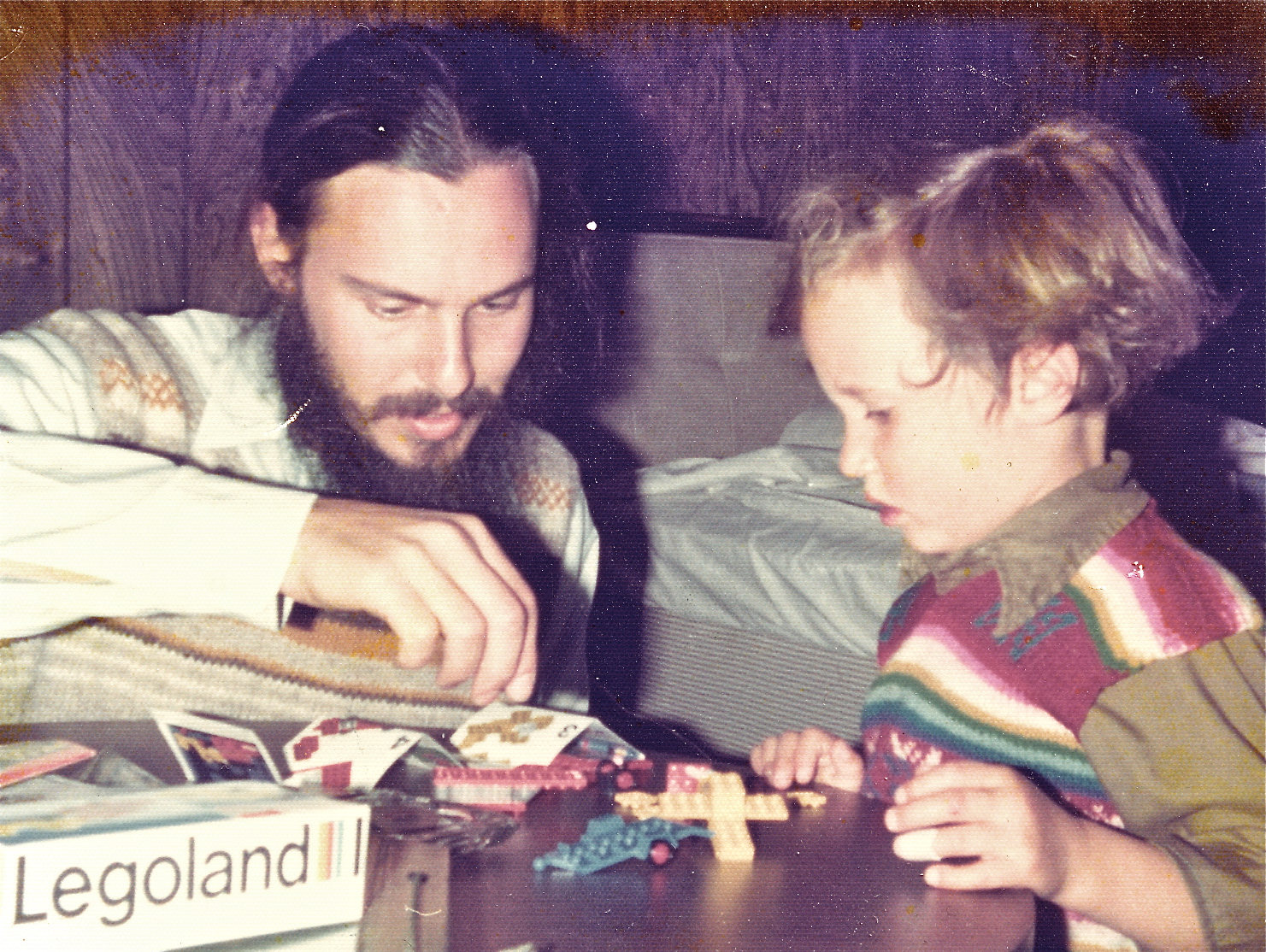
Shabda and Ammon around '76
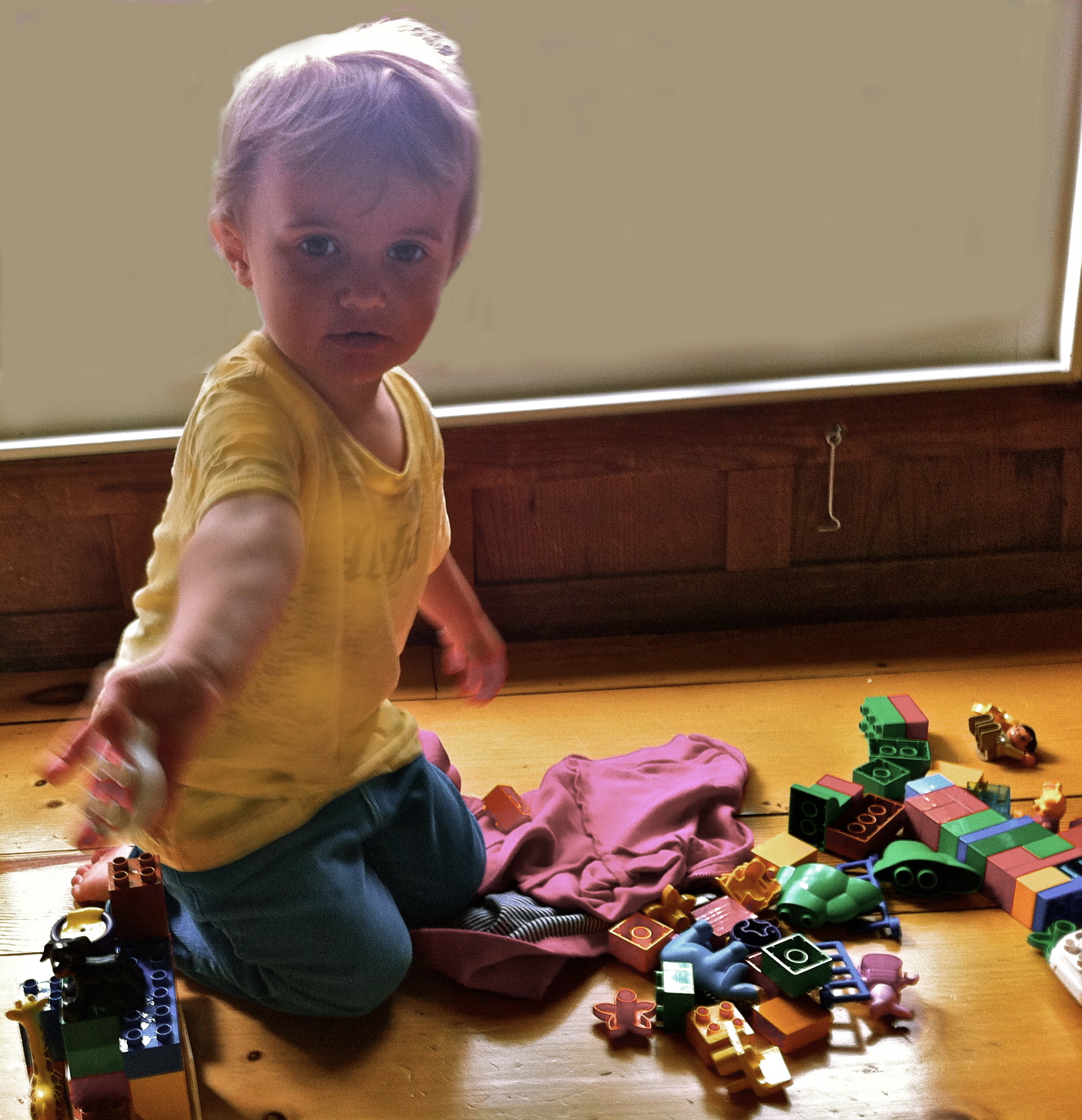
Our family has a heritage of lego builders. Now there are two generations. I used to get down on the floor with my eldest for restful half-hour of architecture time. Now he builds with daughter Oona, who is nearly two and a half. They play with a Winnie-the- Poo DUPLO set, the “junior” lego blocks, bigger and easier.
Oona and Duplo blocks
A snipet of a lego poem….
Lego, lego, all over the floor,Blocking the bed and blocking the door.Building towers with little people inside,To get through your room just push it aside… FlaminFuse
Mark Twain by Morgan 19
LEGO GUYS: Now this is amazing: a breathtaking set of a couple hundred historical figures from the “Flicker Historical Figure Contest contest in 2007 from 2004-2007.
Lego the story. How did this begin, anyway? According to the Guardian, UK, “Charlotte Simonsen, the company’s spokeswoman, says more than 400 million people will play with Lego this year. After 50-odd years of production, there are apparently 62 Lego bricks for every man, woman and child on the planet.”
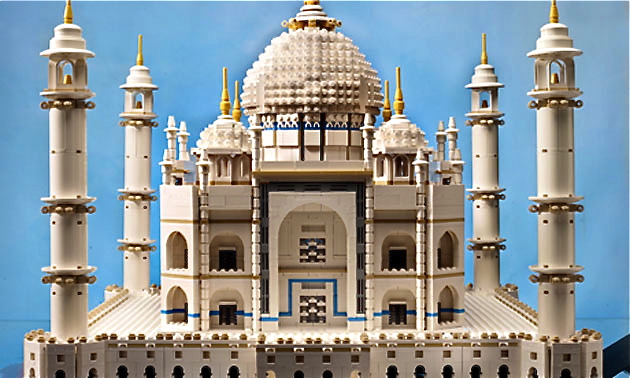
Lego Taj Mahal!
Ole Kirk Christenson (1891–1958) INVENTED LEGOS. He came up with the name LEGO from the Danish leg godt (“play well”) and the company grew to become the the Lego Group. (“lego” coincidentally means “I put together” in Latin. Christenson was the 10th son of an impoverished farmer family in western Denmark. He started making wooden toys and in 1947 moved onto using plastics. The Lego System of Play was born in the small town of Billund in 1955, but it wasn’t until the famous studs-and-tubes platform was launched in 1958 that the toy really took off. His descendants still own the company today. A toy that grasps simply, brilliantly even, what millions of children (and their parents) want, that today sells seven sets a second and has twice been named Toy of the Century.
Lego: the Movie: November 14, 2011 ~ Warner Bros has given the green light to a CGI/live action film based on the much-loved children’s building blocks, after toying with the project since 2008. The Danish toy company has historically been fiercely protective of its property in the face of regular Hollywood overtures, but warmed to the idea of a family-oriented flick embracing its key values of fun, creativity and boundless imagination. Warner Bros has asked Australian firm Animal Logic, which worked on the Oscar-winning Happy Feet and its forthcoming sequel, to take charge of the animation for the movie.
(History info. And film announcement from the Guardian UK Monday November 14, 2011 and March, 2009 <> <>
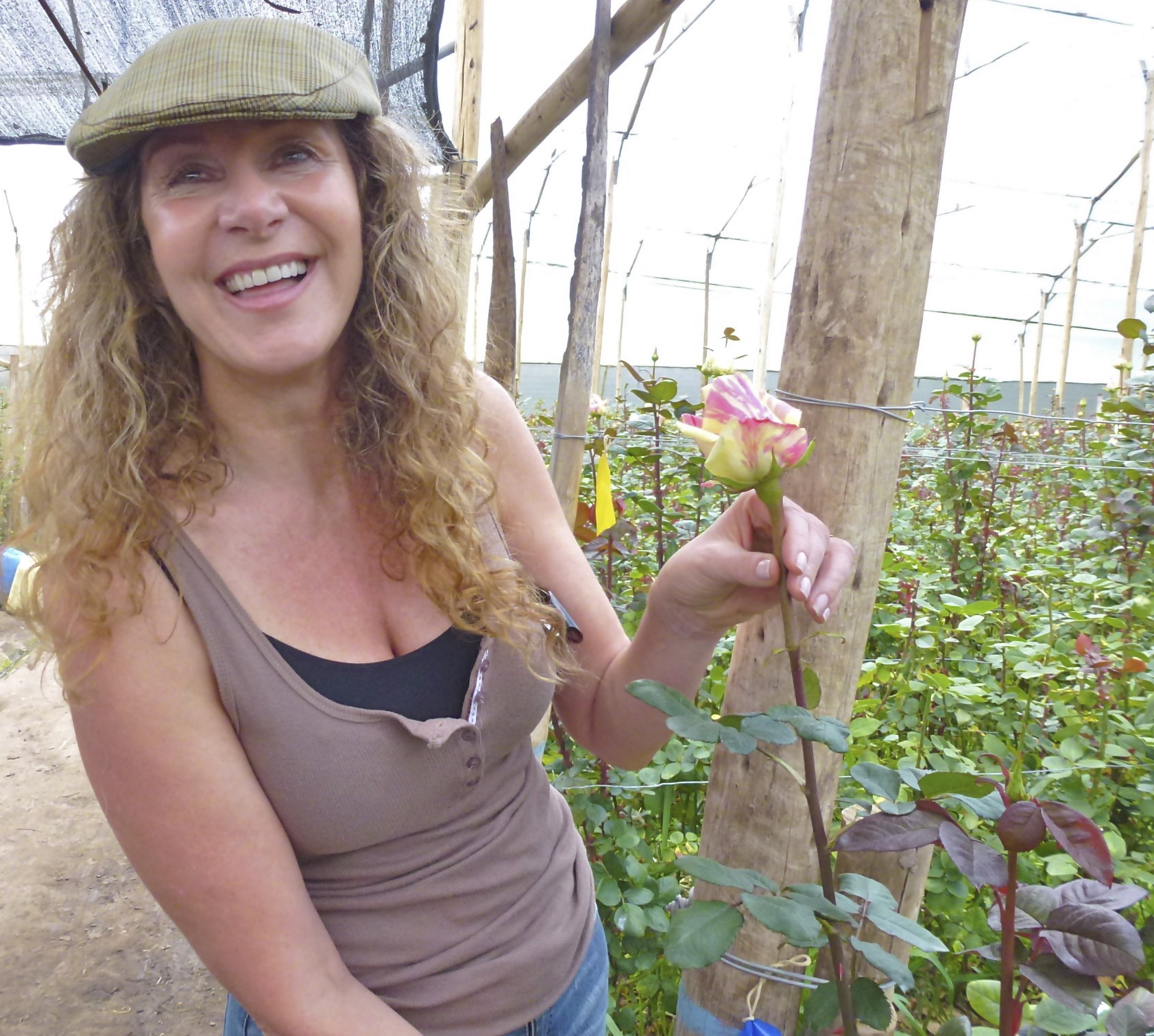
ROSES & ROSES is an enormous organic rose farm in Cayambe, Ecuador, with seven hectares in production, owned and operated by Maria Gloria (Magoly) Espinosa, a beautiful Ecuadorian, whose family held the land for over four centuries. In Ecuador there are 720 rose farms that ship first quality long-stem roses world-wide. But in this country, only four are organic. That makes the farm a brave, green sanctuary.
What about bugs, disease and fertilizer? When the farm switched over from conventional treatment, several plant enginers quit, because they could not imagine a large operation without chemical support. The community of workers is happy because all the symptoms and effects of chemical poisoning are absent. The business takes good care of employees; they are highly valued. The packing room felt spacious and cheerful. There is a soccer field outside the dining hall. The greenhouses smell minty, with only slight rose fragrance. I savored the moist earthy air.
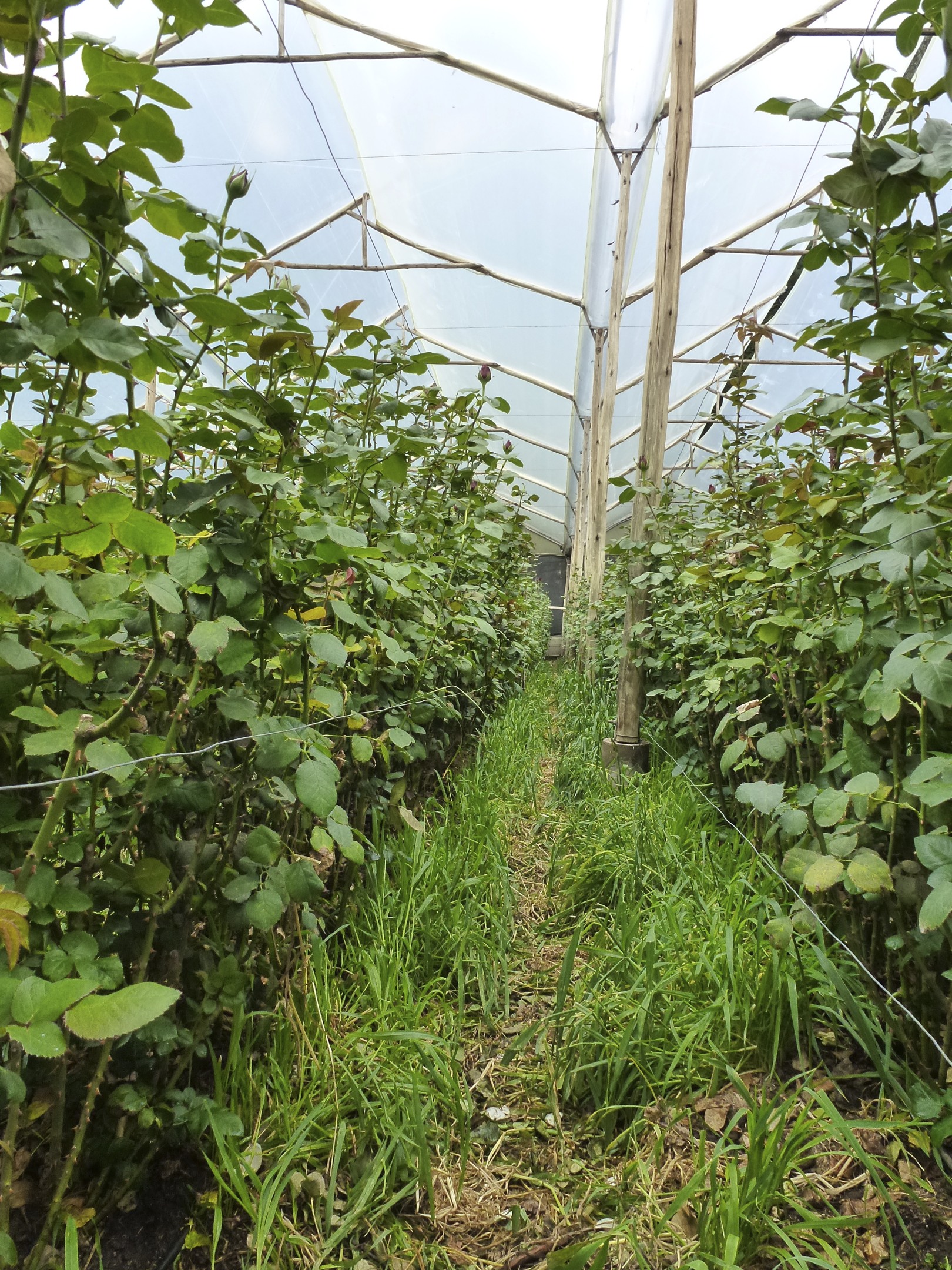
Magoly took us on a tour. As a rose-lover, I was enchanted. There are shamanic herbs at the entrance of each greenhouse and many plants with essential oils placed throughout. Mint is planted and the ends of the rows, a special herb provides a barrier along the walls of the giant greenhouses to keep ants away. Each walking space between the rows is grass, mulch and herbs. Small birds do some damage, but are tolerated.
We walked down the rows topped with plentiful blooms named Anastasia, Pink Finesse, Malibu, Proud, Circus, Forever Young (red), Esperansa, Ambiance, Latina. A yellow rose, Fiesta is loved by the Russians – who are good customers of many varieties. Bloody Mary was changed to Freedom and sold lots more.
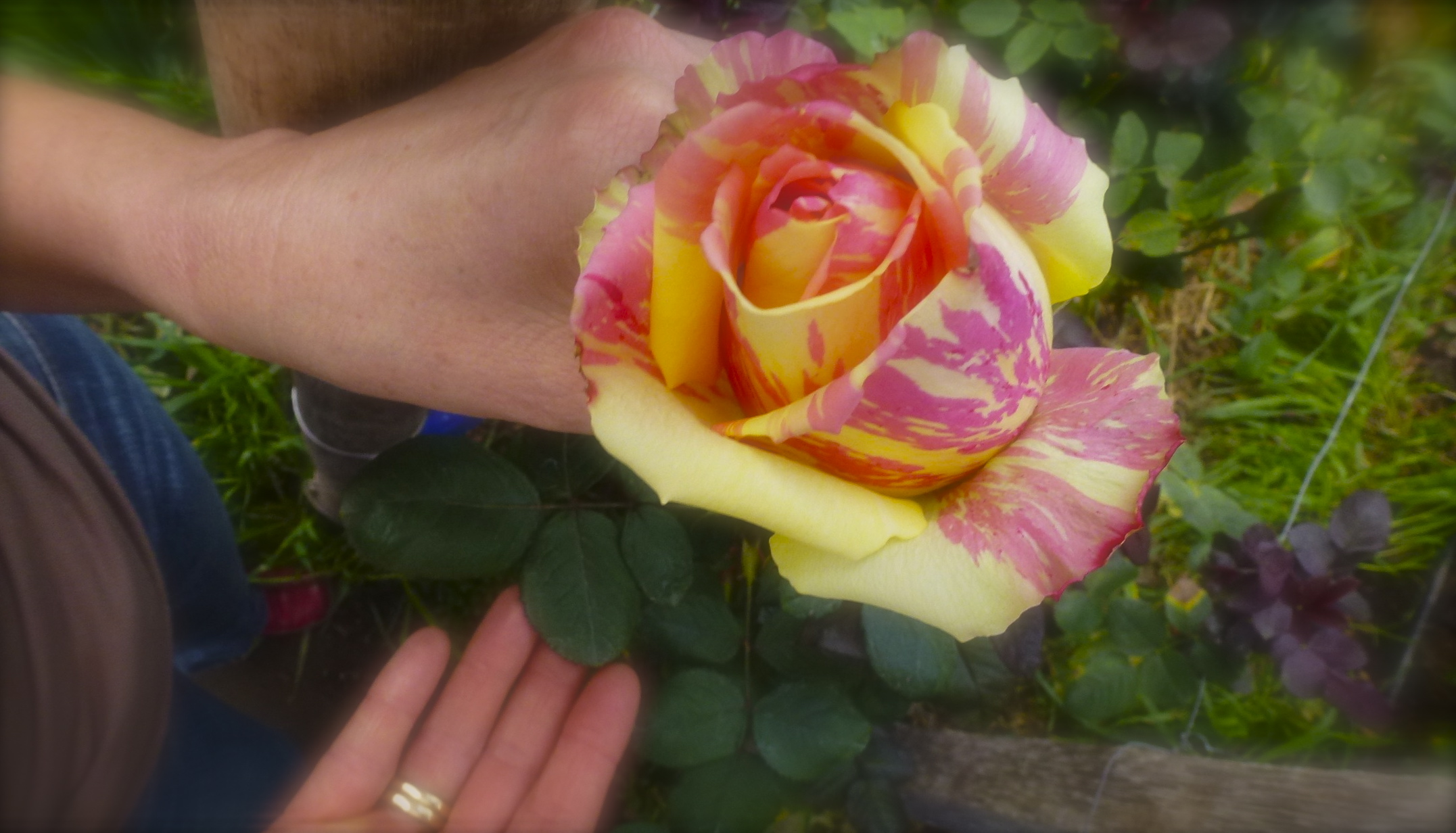
"Finesse," with 3 hearts!
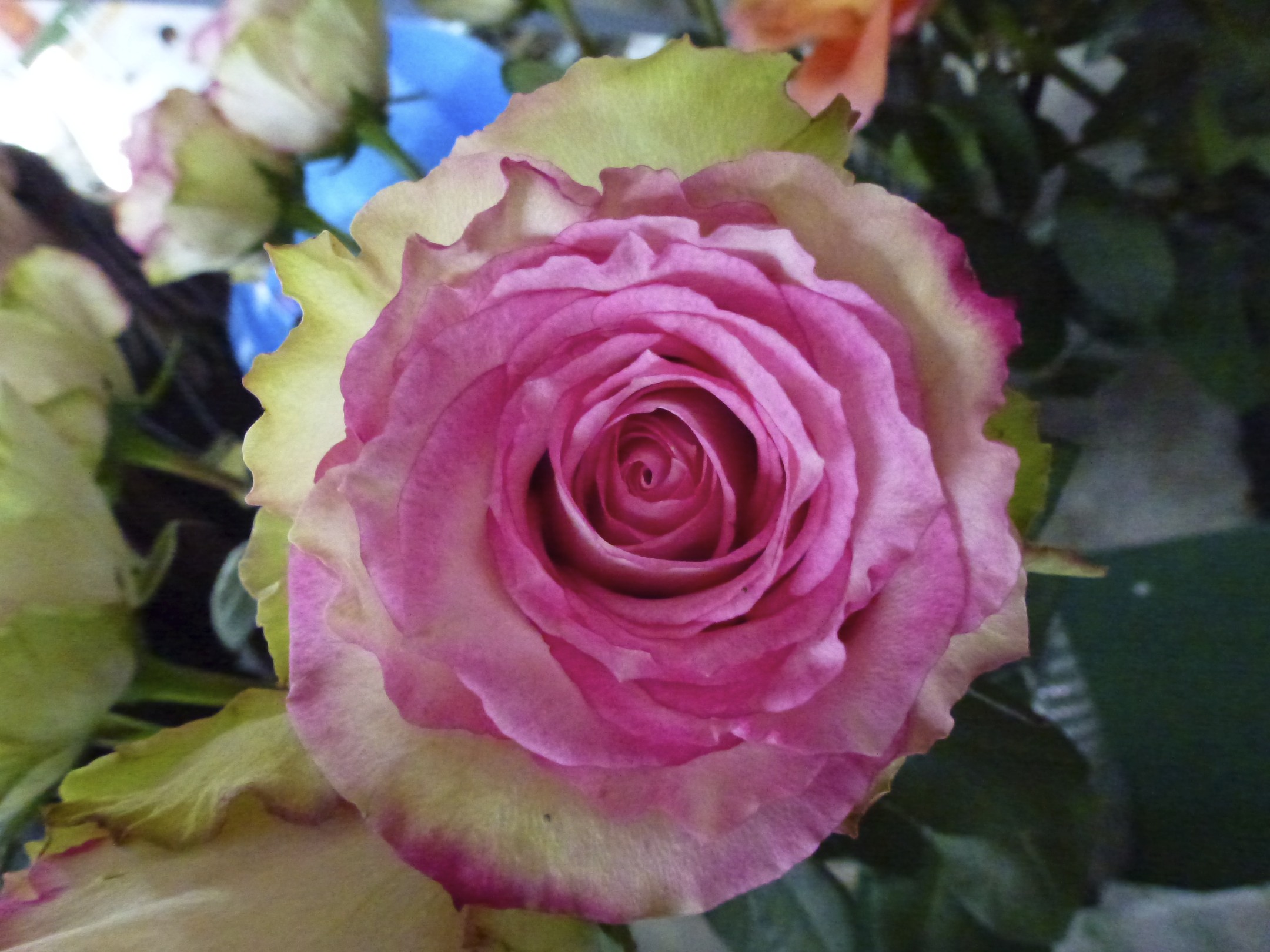
The roses are not bred for smell, because they travel better with less scent. There’s a beautiful rose called Finesse, with “three hearts” inside the bloom.
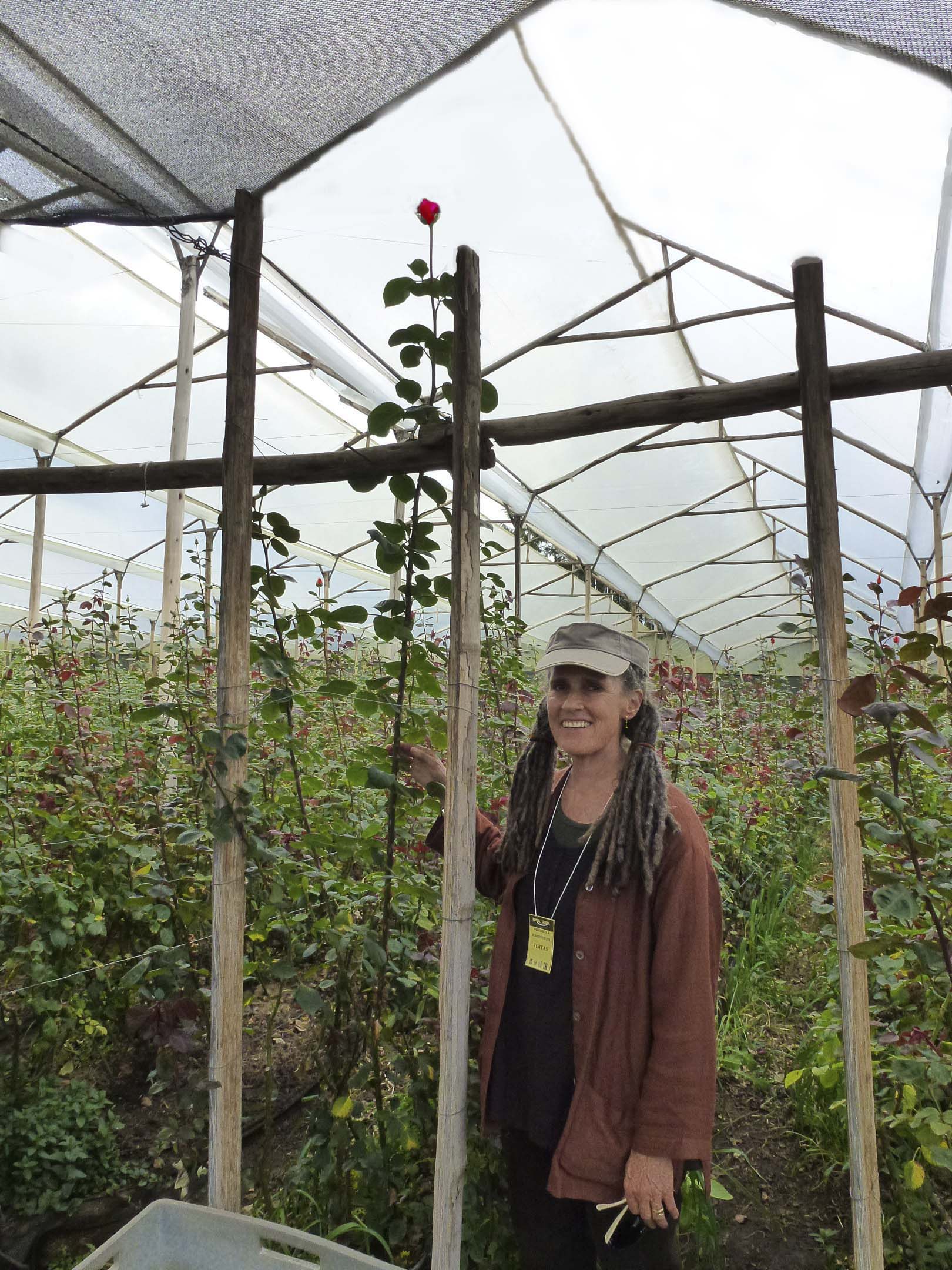
Israel and Holland provided original rootstock, now the farm grows their own. We visited the greenhouses with fresh grafts onto the rootstock, saw plants that were just getting started. In another building I stood by a towering red rose. Amazing.
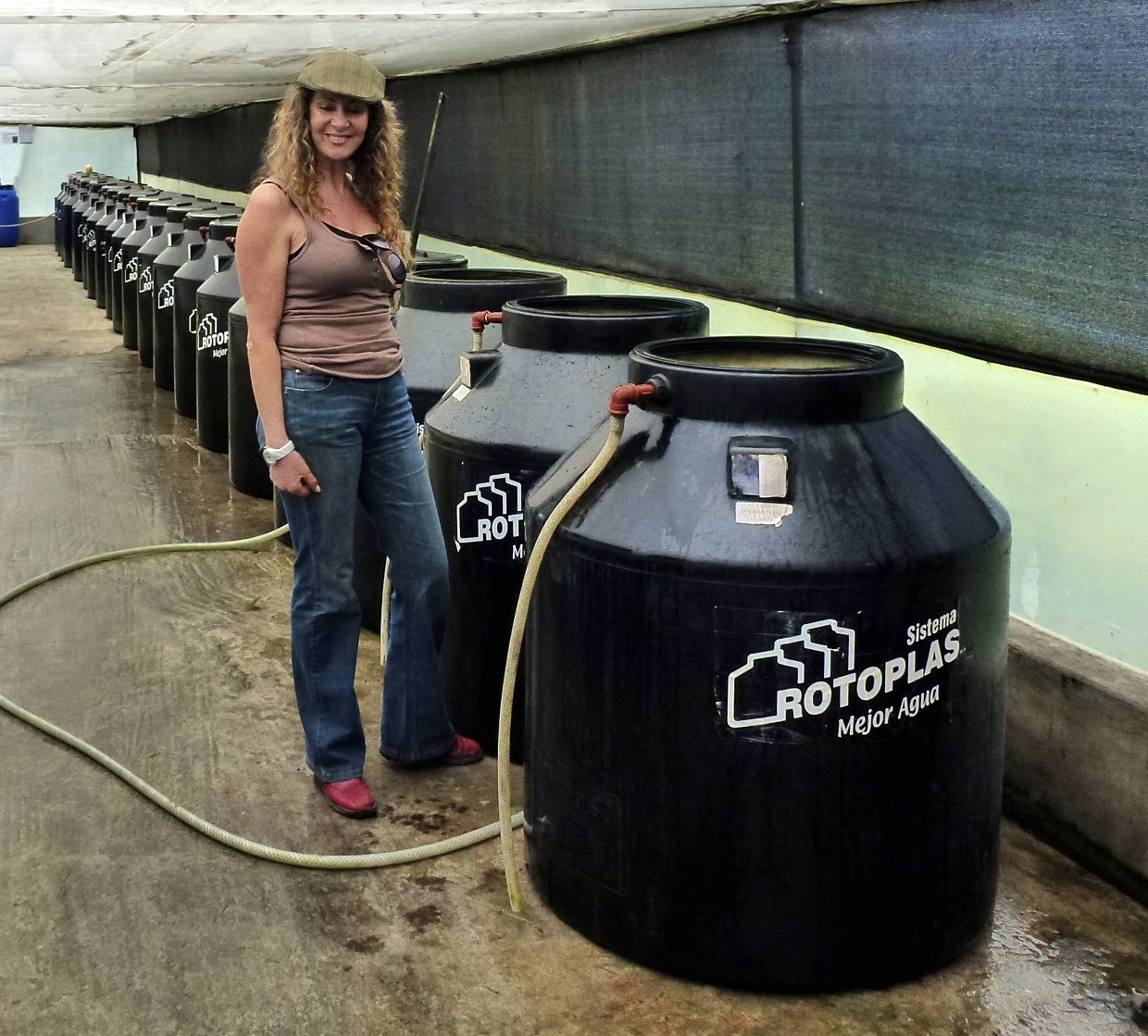
Workers spray roses with the same fungus that is used to make yogurt, also use 87 tons of sugar cane residue for organic material. They have a kind of distillery with a rich rose-spray tea that keeps bugs away. For fertilizer, fermented tibicos, a mixture of molasses and fungus plus iron (from horseshoes) is made and stored in a room of black barrels. All the water used in the farm is recycled.
The tallest red rose...
Small teabags cover the blooms from moisture of the spray, or in the case of the red roses, from blackening sunburn. The structures are plastic translucent sheeting which create a beautiful light. The high ceilings are ventilated from the outside with long horizontal openings.
There are walls of trees around the greenhouses to prevent the wind from damaging structures. As I write this in our friends’ house several hours south, thunder and black clouds and wind accompany a cool rain. An hour ago I walked here in the high altitude equatorial sun. This is the climate that roses love.
The flowers at this Ecuadorian farm are some of the most beautiful and sought-after roses anywhere. When carefully picked and wrapped, they can last up to three weeks. This place blends productive capacity with nurture, in the best sense of the word. Imagine if every flower grower farmed with this conscious and careful approach!
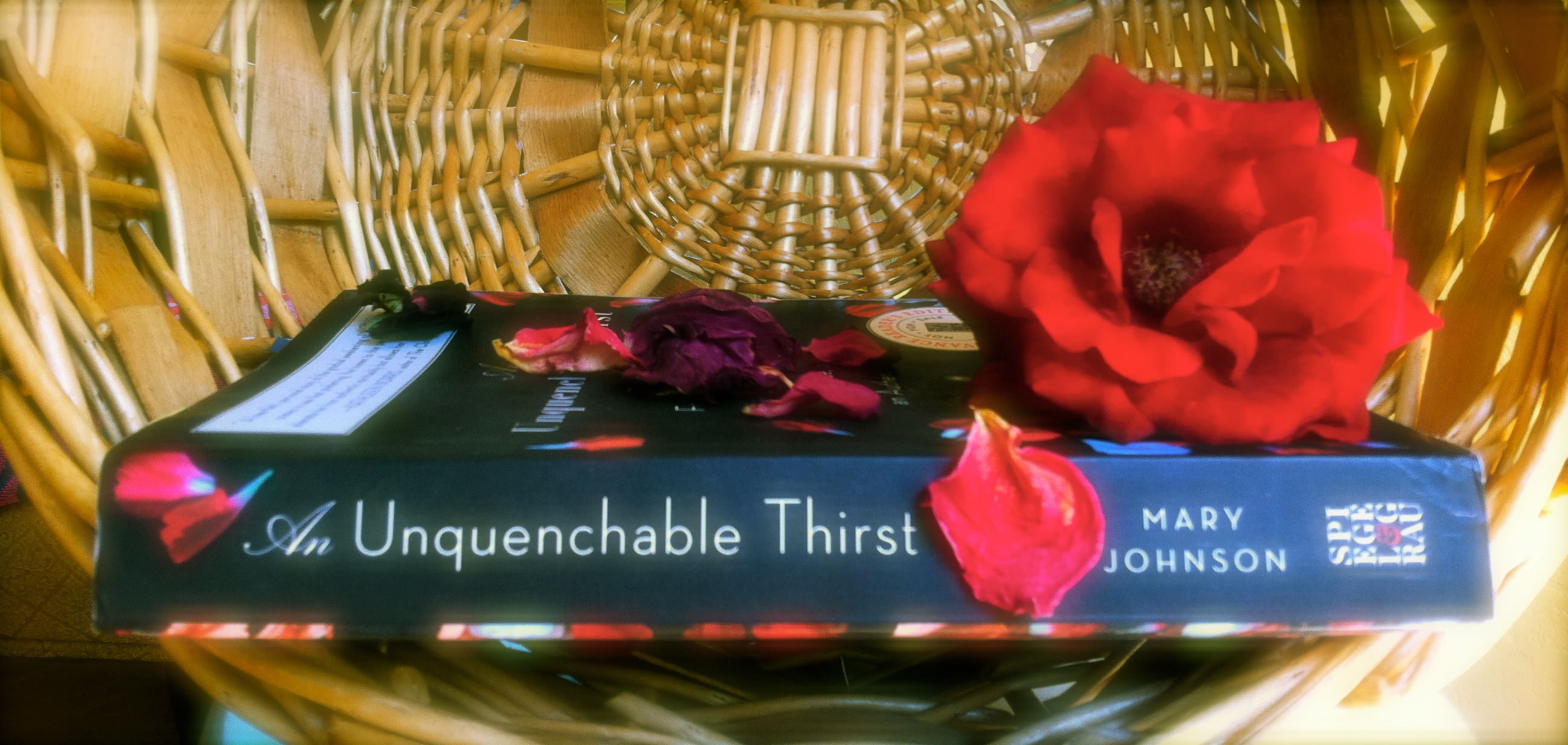
An Unquenchable Thirst: Following Mother Teresa in Search of Love, Service, and an Authentic Life by Mary Johnson. Spiegel and Grau, an imprint of Random House, 2011. <>
In an interview Mary Johnson said, “Even when you enter a convent you are still a human being with all sorts of things happening. We have to start talking about that.”
Her publisher, (Spiegal & Grau) was overjoyed with the book, “We all marveled at how it – Unquenchable Thirst – spoke to us, no matter what our religious background, age or gender… Mary was a rigorous and learned thinker on the most vexing and mysterious and essentially spiritual questions.” Words by publisher, Julie Grau in “First,” a 6-page article by Eryn Loeb in Poets and Writers, Sept/Oct. 2011.
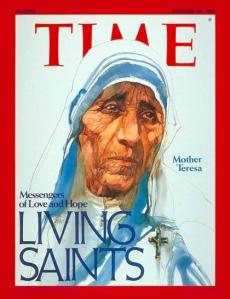
The picture that began the journey...
The bar is set high. Mary – who comes to be known as known as a Missionary of Charity (MC) named Sister Donata – is longing for an authentic life. She stays on her point. But how much authenticity can an enormous organization carry? Mother Teresa was the embodied inspiration linking multiple mission houses to help the poor all over the world. By 1996, at age 86, she was operating 517 missions in more than 100 countries, each run by sisters aiming to be devoted brides of Jesus.
Sister Donata is in the matrix of the activities. “ I looked at the shoes outside the door –– Mother’s ragged, repeatedly mended sandals next to (Princess) Diana’s shiny black pumps.”
The author gets you to care about how she will continue against the difficult circumstances that are present from her first days as an Aspirant. She sheds each skin so naturally that you, the reader, are now in New York City, now in Washington DC, now in Rome and this girl from Texas has become fluent in Italian and is helping the Romany (Gypsy) children there. You are applauding on the sidelines, but then she is too happy with her work educating those children who had never been taught anything but street-life, so her superiors take that away from her. Being humble and holy is more important to these nuns than using knowledge to help the poor. Pride. Sin. Sister Donata is up against the formidable hierarchy within the organization, which makes authentic life very challenging.
The unkind high-ranking sisters create stern distance between themselves and the newer women, a distance, she says she will erase in favor of being kind and compassionate – if she is ever in that position. But when she becomes the “mistress” some students take advantage of her kindness.
Earlier on, there is the moment she is working with the wild inner-city kids in D.C. She has 60 of them. She asks who has been in a fight, and nearly everyone raises a hand: “And what do you do when someone else picks a fight?” “Kick their ass,” a boy in front shouted… And who knows what Jesus said about fighting?” All faces went blank….” Jesus said, ‘When someone slaps you on the right cheek, turn the left.’” “…we have to be peacemakers even if it’s hard. The point is if someone’s mean to us we don’t fight back and make it worse.” Derrick looked at me as though I were crazy. Most of the little kids looked blank. They would need time to digest this.”
Then in the middle of this fragile, nonviolent work she is introducing, one of the other sisters starts covertly hitting the children when they misbehave…
Most difficulties encountered in the daily life of a MC did not seem to have the support of the superiors. Rules and more rules, punishment and taking yourself to task were regular fare. A sympathetic priest suggests a Twelve Step program to Sister Donata, and offers to introduce it as the subject of his weekly talks to the sisters. “The twelve steps use sound spiritual principles – they’re good for anyone who is trying to grow,” he tells her. Conscious growth is not a topic Sister Donata has encountered. She divides her sisters she is guiding into groups called, “Sinners Anonymous.” This seems to be a useful tool, next to the path of striving for spiritual perfection – and repeatedly failing. She bravely shares with the reader her discoveries, as a young nun, of her own sexuality and how she is on her own dealing with it.
It is shocking how the system fails to make use of knowledge and natural gifts. Sister Donata is great with children and young novices. She has spent 3 years studying Theology at prestigious Regina Mundi, part of Gregorian University, just blocks from the Vatican in Rome. After that she was assigned to work on Mother Teresa’s writings for a short time. Then there are political moments, and she is re-assigned as ground level organizer arranging visas and travel tickets, buy and pack supplies for the missions and deal with “hordes of sisters newly professed from Calcutta and Africa and Rome, sometimes even from the Philippines and the States –– it was a zoo.”
The grit in this book is in every chapter, but it becomes tactile as she begins to see the distance between her idealistic, expansive view and the wedge of strict, small minded people who influence Mother Teresa. Then there is disappointment in the woman who was her inspiration for years – Mother, herself.
“I can’t do this anymore. I couldn’t be the spouse of Jesus crucified. I wanted to be Mary Magdalene discovering the empty tomb in the garden, hearing the Lord call her name. I wanted to be the spouse of the One who said, I came that you may have life, and have it to the full.”
This is after her powerful dream of the potter as Creator, who breathed life into each of her creations and set them out in the world. The last one was a girl with glasses. The potter decided to keep her on the shelf – after breathing life into her – and that little person was Sister Donata, who shouted and began to cry, “I want to go (into my life)…” But she was ignored.
“Sometimes I dreamed of helping the Society return to Mother’s emphasis on love, but I didn’t want to settle for being a good influence on individual sisters in a bad system.”
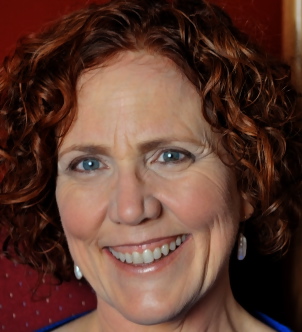
Mary Johnson
So after 20 years as a Missionary of Charity, Sister Donata leaves the world of Mother Teresa’s Missionaries of Charity and re-enters secular life as Mary Johnson. Her careful reflections on that time became this beautiful, though-provoking book. I marked UnquenchableThirst with over 60 markers, each page-flag an indication of something that might be good to share in a review. Sadly, I had to make difficult choices. You’ll have to get the book to read the rest.
May the words in this book reach far and wide! <> <>
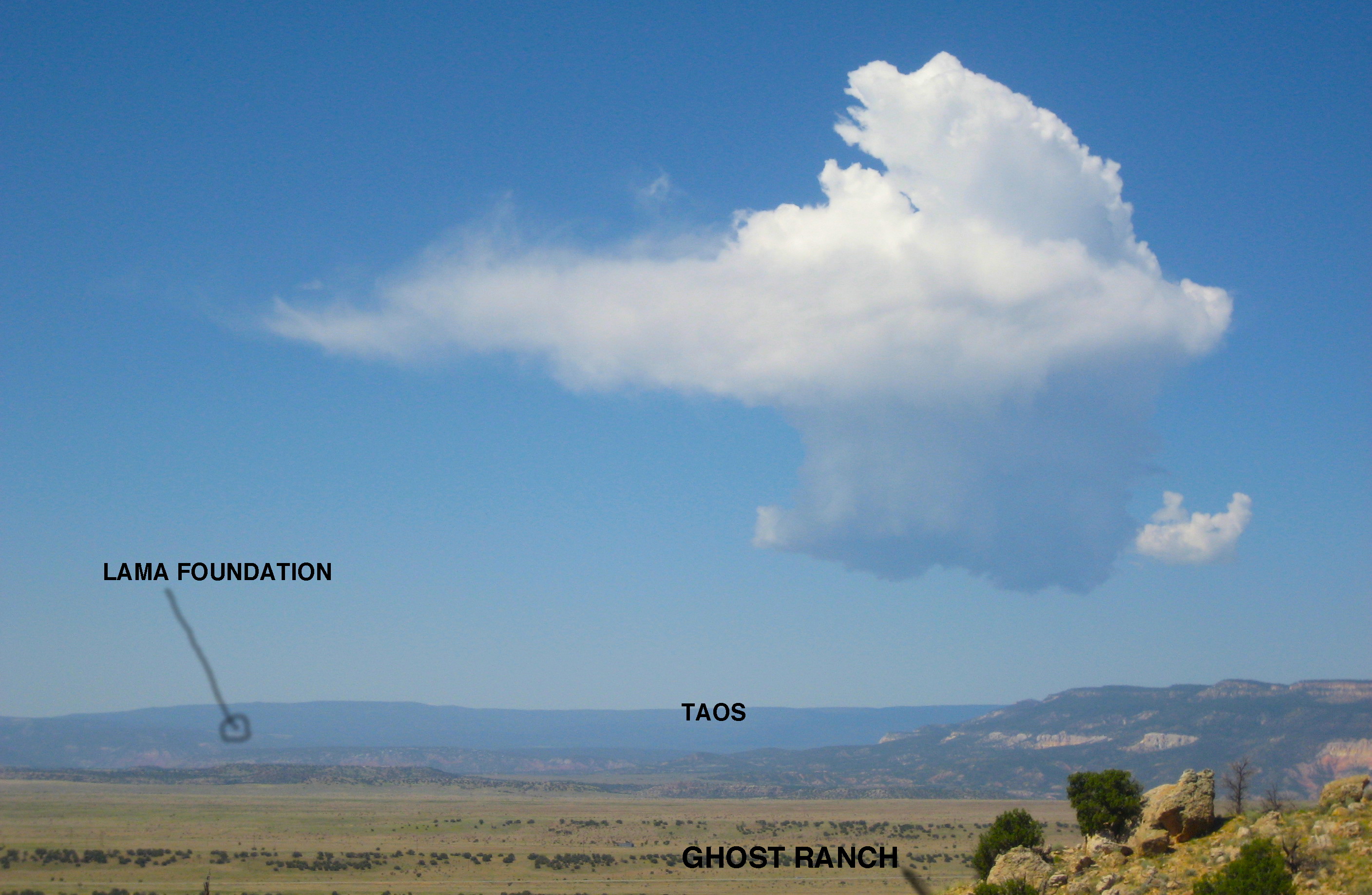
View over the Rio Grande looking West from the Dome at Lama
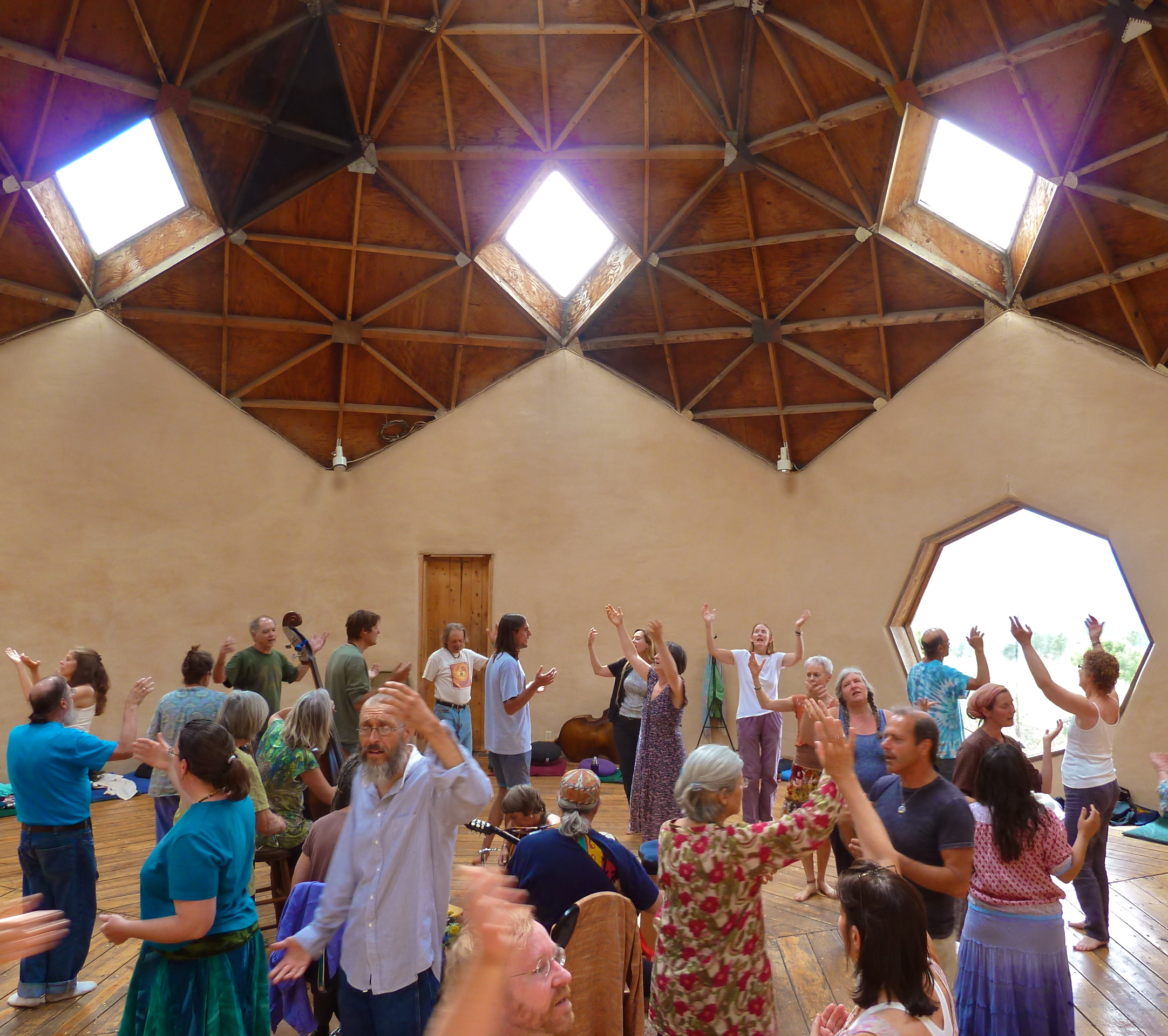
I’m back from nine thousand feet up in the Sangre de Christo Mountains above the Rio Grand River. My body feels strong and balanced. It seemed a bit survival-like up there at cloud level. My brain seemed quiet and breath labored as I climbed the trail to the grave site of Murshid Sam Lewis, to pay my respects.I’ve been doing this since 1975. This year there was time for long meditations in the DOME, where I sat on an old-board floor with adobe walls crafted in eight facets. The room wrapped me in an earth blanket of calm and certainty. The dome arched above with its glass star at the top. This architectural jewel is over 40 years old and survived a fire that took most of that mountain some fifteen years ago. It feels like home.
Back in California, I pick up Kazim Ali’s wonderful book Fasting for Ramadan: Notes from a Spiritual Practice. Today I read the chapter: Twenty-Second Day.
I have always loved that a “day” in the Islamic calendar begins with the setting of the sun and continues through to the following sunset…. The body is like a day: it begins with the darkness of evening, ends with the ebbing of light.
Mmmmm. This kind of discovery tastes better than the fresh tomatoes in the garden.
The Dances of Universal Peace
Arabic writing goes from right to left, and its history is defined by a line of ancestors beginning with Grandmother Eve down to those who live on earth today, so the past streams out in front of us and the future flows behind us. Now there is the pattern of a day beginning at sunset and my brain is playfully awake with possibilities. I could work this into a poem and feel the patterns of the ancient desert people as they seem draw close, while I tap into this view of the day and night seen through this new lens.
Lama Foundation
While on Lama mountain I read a wonderful new book of poems by Robert Bly. I savored it. I gave it away and am now waiting for the next copy to arrive so I can’t check the poem I offer here for accuracy – the title poem from this beautiful and masterful collection:
TALKING INTO THE EAR OF A DONKEY by Robert Bly
I have been talking into the ear of a donkey.I have so much to say! And the donkey can’t waitTo feel my breath stirring the immense oatsOf his ears. “What has happened to the spring,”I cry, “and our legs that were so joyfulin the bobblings of April?” “Oh never mindAbout all that,” the donkeySays. “Just take hold of my mane, so youCan lift your lips closer to my hairy ears.”













 CompleteWord