• About Tamam
  • Poems
  • NEW BOOK! Reviews & Praise
  • UNTOLD: Book Trailer & Blurbs
  • Fatima’s Touch
  • Reading Schedule

CompleteWord

CompleteWord

Category Archives: word-dancing

Jabberwocky and Oona-the-Brave

19 Saturday Jan 2013

Posted by Tea-mahm in Jabberwocky, Poetry, word-dancing

≈ 2 Comments

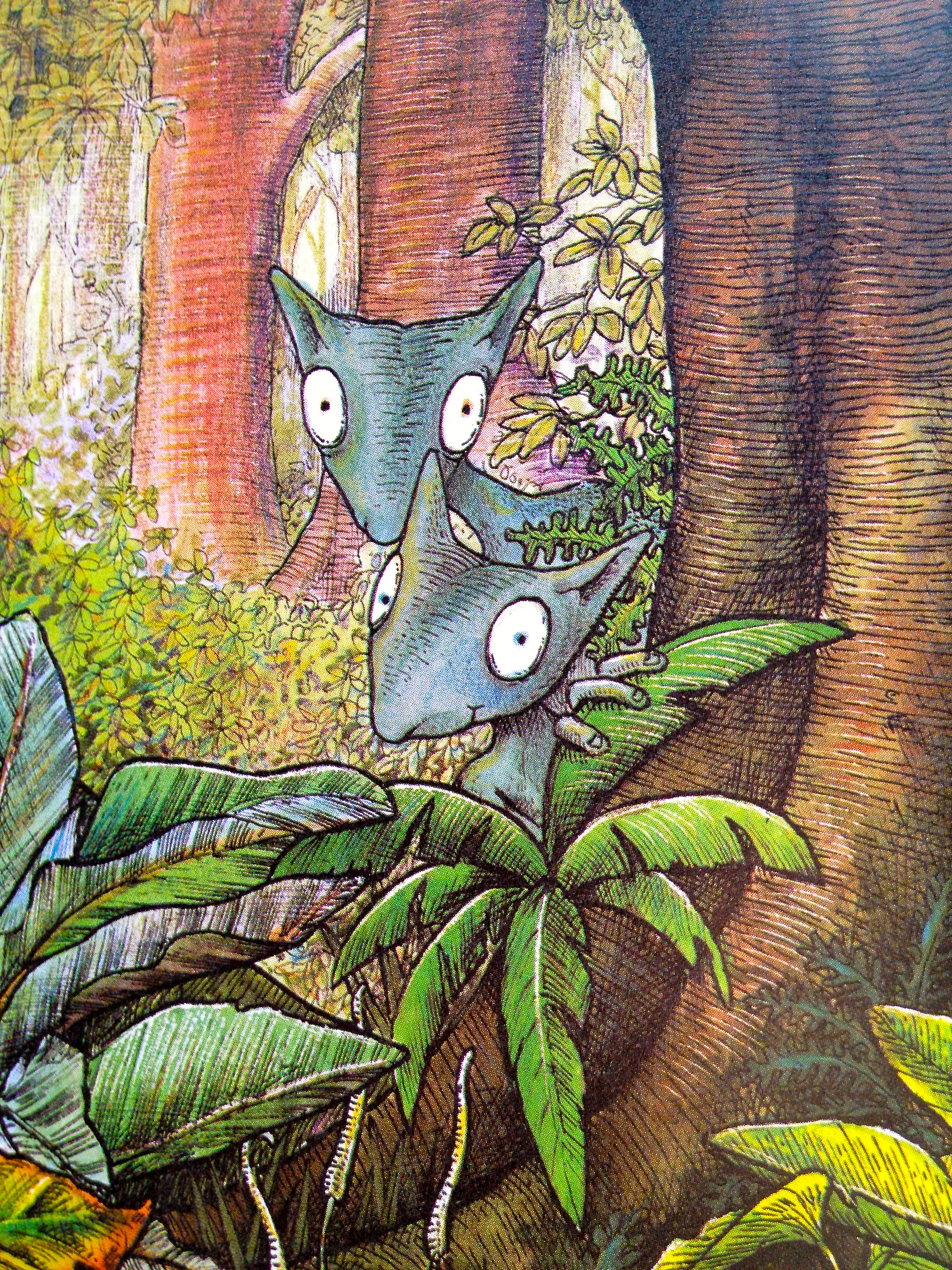
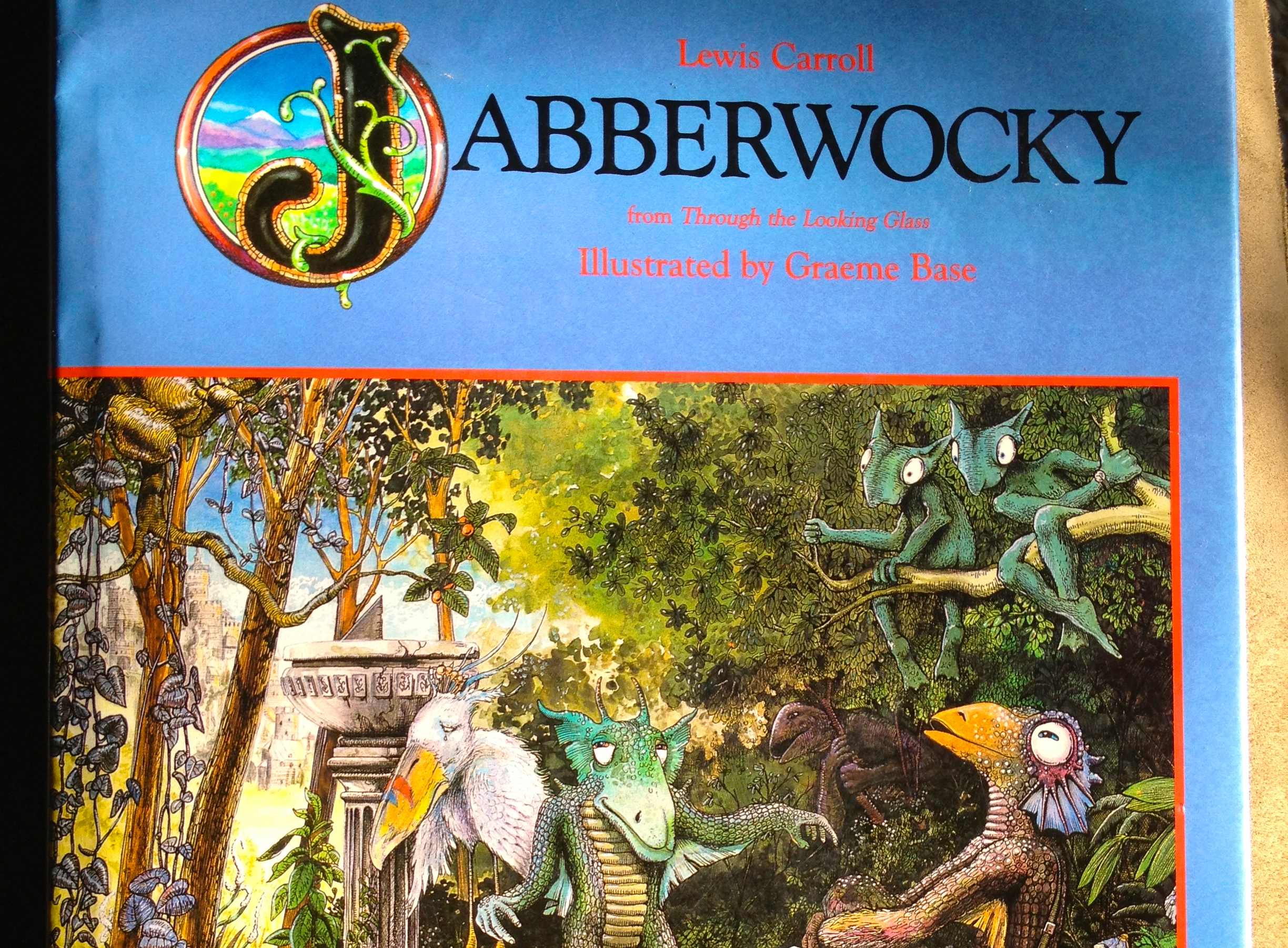
The book! Illustrated by Graeme Base

The book! Illustrated by Graeme Base

Jabberwocky
by Lewis Carroll
 
`Twas brillig, and the slithy toves
Did gyre and gimble in the wabe:
All mimsy were the borogoves,
And the mome raths outgrabe.
 
“Beware the Jabberwock, my son!
The jaws that bite, the claws that catch!
Beware the Jubjub bird, and shun
The frumious Bandersnatch!”
 
He took his vorpal sword in hand:
Long time the manxome foe he sought —
So rested he by the Tumtum tree,
And stood awhile in thought.
 
And, as in uffish thought he stood,
The Jabberwock, with eyes of flame,
Came whiffling through the tulgey wood,
And burbled as it came!
 
One, two! One, two! And through and through
The vorpal blade went snicker-snack!
He left it dead, and with its head
He went galumphing back.
 
“And, has thou slain the Jabberwock?
Come to my arms, my beamish boy!
O frabjous day! Callooh! Callay!’
He chortled in his joy.
 
`Twas brillig, and the slithy toves
Did gyre and gimble in the wabe;
All mimsy were the borogoves,
And the mome raths outgrabe.

<>   <>   <>

Borogrove and Mimsy

Borogrove and Mimsy

Alice’s Adventures in Wonderland came out in 1865. Then came the second book. Jabberwocky is found at the end of the first chapter
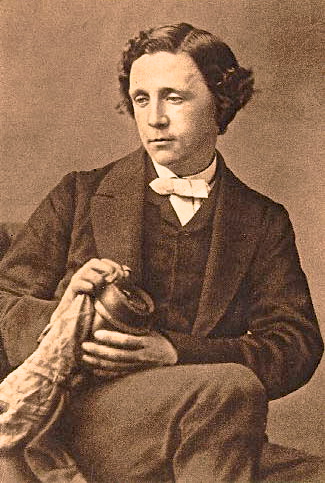
Lewis Carroll

Lewis Carroll

of Lewis Carroll’s Through the Looking Glass and What Alice Found There. After Alice has entered the looking-glass (mirror)…she opens the book in which Jabberwocky is written. The poem is written backwards, and she is unable to read it until she realizes that it’s a looking- glass book, and that she must hold it up to the mirror to decipher it….  Oh, yes, this is the kind of adventure in the written word that I love!

Lewis Carroll was the pen-name for Charles Dodgson, who lived from 1832 to 1898. He was one of eleven children. He became a mathematics professor at Oxford University in England. Adults found him difficult to deal with, and he got along best with children. He was fond of magic and sleight of hand, and as a child he dabbled in puppetry. http://www.thepublictheatre.org/education/study_guides/2010-11/Jabberwocky.pdf

THREE IS NOT TOO YOUNG FOR THIS: a few days ago I was suggesting a nap to my granddaughter, Oona. She’s a sparkly three and a half years old. Will you read Jabberwocky, Tutu? (That’s me, Tutu is Hawaiian for grandparent. It goes with Tamam. Tutu Tamam.) I answered that I brought the beautiful new book I’d read her just once before. She leaned forward and went into a
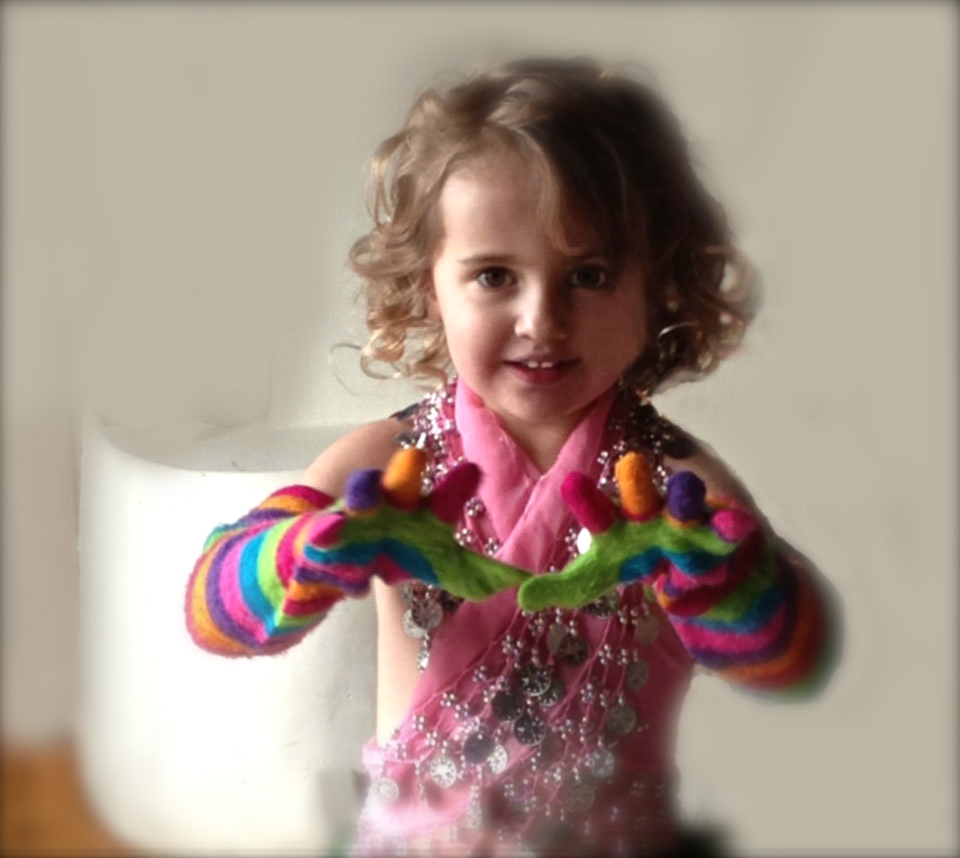
Oona, ready for the Jabberwocky

Oona, ready for the Jabberwocky

conspiratorial tone: Jabberwocky, Jabberwocky! Jabberwocky! –– as much to herself as to me. Moments later she was on my lap and we entered the weird-word-world of Lewis Carroll. We were in the garden of beautifully drawn creatures, which I had mentioned to her as looking strange, odd, or fierce, but having something funny about them at the same time, and that tiny funniness kept them from being scary. A twinkle in their eyes, a silly color, some vulnerability made them more like us. Oona’s parents are both artistic and move toward the unconventional, so she can go there. You can see from her outfit, socks on her hands…

This fall Oona discovered strong moments; she has always had delight, now she could turn fierce or pissed off, trying out her power at home in the months after her third birthday. It follows that she was encouraged to be a bit milder. Be gentle. That stuff.  This book challenged that. Was she strong enough to go on this adventure? A boy and a sword to slay the creature, then be adored by the dad for completing the task!

Look, Oona, the Borogroves! She answered: I think one is a Mimsey. We tracked the two pale green creatures, hidden skillfully on nearly every page. They were the “team” that went with the hero on his adventure. And the white horse, Borogroves and Mimsey – and us.

She had told me the first time I read the book that the hero was a girl. Now she began to correct me. I mean pronouns. He took his vorpal sword in hand. HER vorpal sword. Come to my arms my beamish boy.
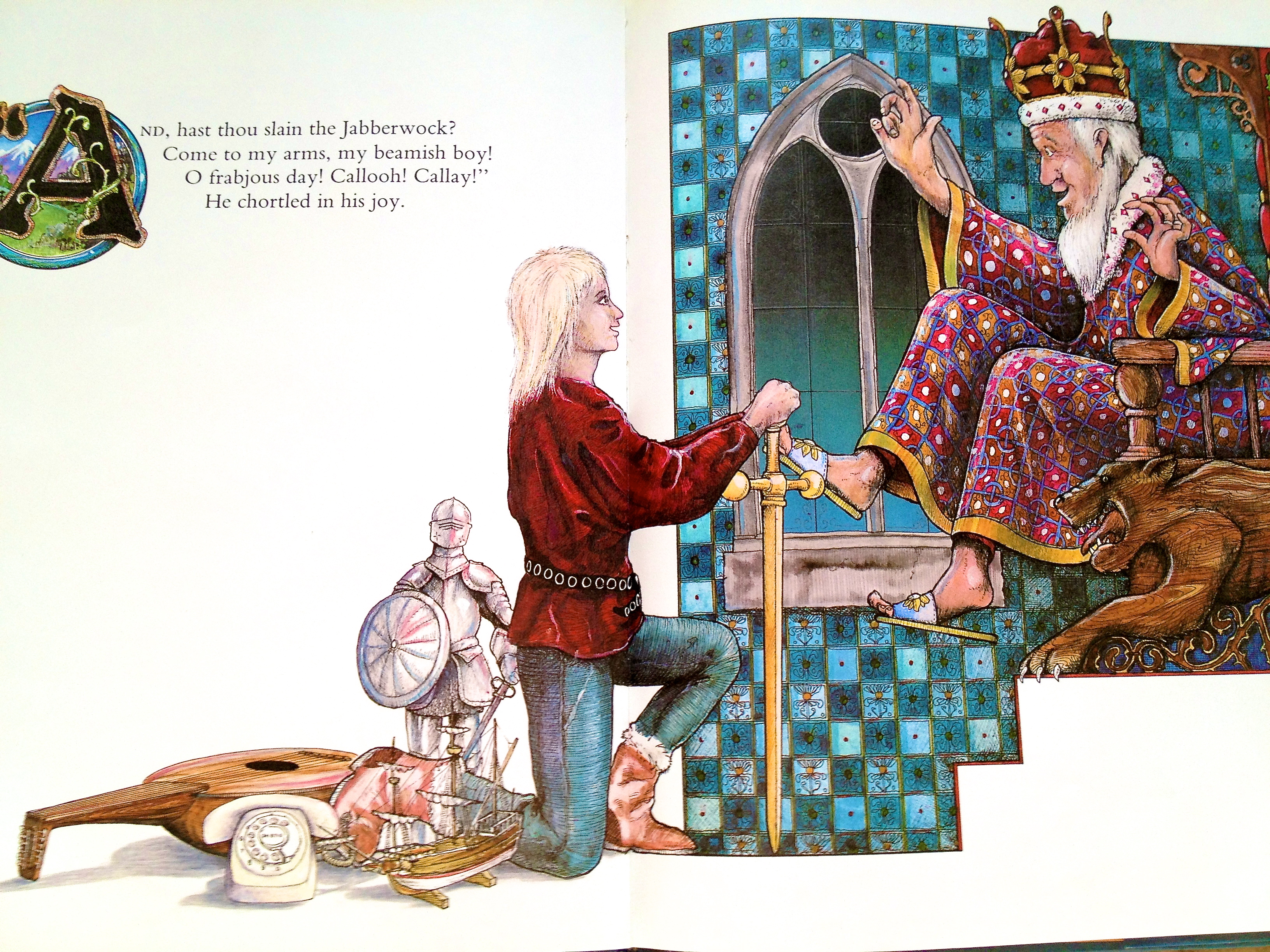
Come to my arms my beamish GIRL...

Come to my arms my beamish GIRL…

GIRL, Tutu, it’s GIRL.  We made it through the story and Oona said, AGAIN!  I said if she got into bed, I’d whisper the poem to her –– without the book.  All tucked in under the pink quilt, she closed her eyes. Her thumb found her mouth. But as I began to whisper, she corrected most of the seven pronouns he and his to SHE and HER! Beamish boy  to Beamish GIRL.

I was stunned. I never heard of a three-year-old feminist! This is her journey. She can be all-powerful and be rewarded.  She has weird friends. She is at home with them. Not only teddy-bear and dolly stuff!  Go Oona.

Jabberwocky         as preferred by Oona (she and her and girl)

 
by Lewis Carroll
 
`Twas brillig, and the slithy toves
Did gyre and gimble in the wabe:
All mimsy were the borogoves,
And the mome raths outgrabe.
 
“Beware the Jabberwock, my Girl son!
The jaws that bite, the claws that catch!
Beware the Jubjub bird, and shun
The frumious Bandersnatch!”
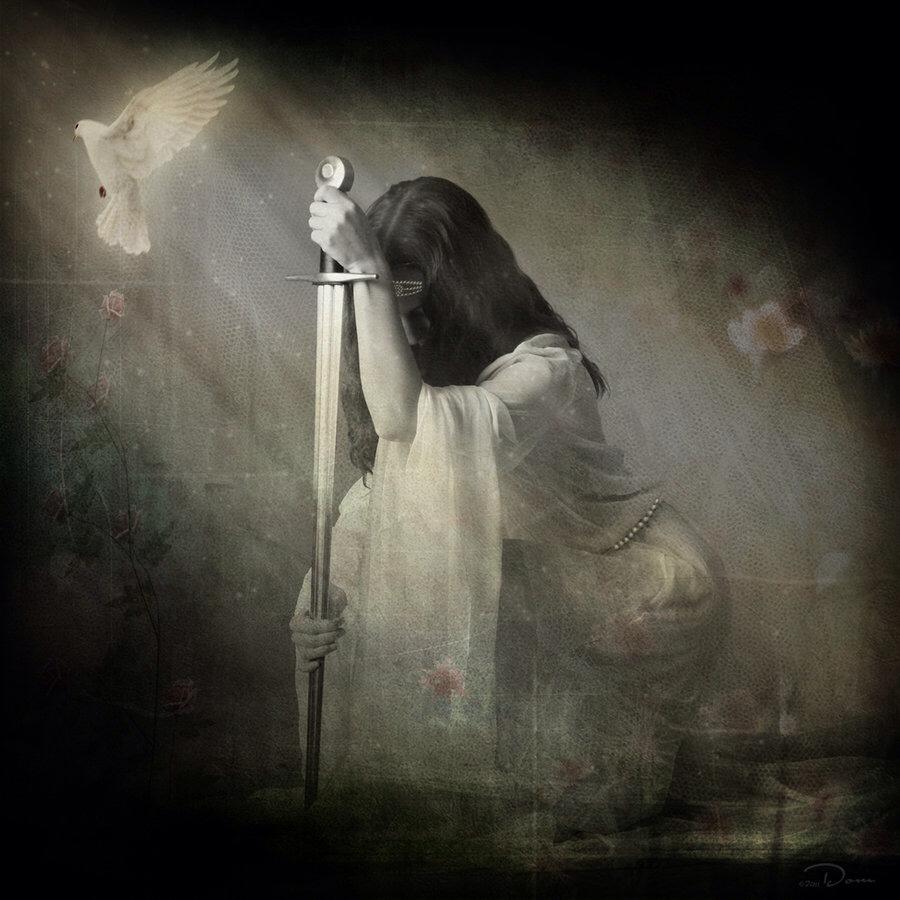
 girl with a sword
She He took her his vorpal sword in hand:
Long time the manxome foe she he sought —
So rested she he by the Tumtum tree,
And stood awhile in thought.
 
And, as in uffish thought she he stood,
The Jabberwock, with eyes of flame,
Came whiffling through the tulgey wood,
And burbled as it came!
 
One, two! One, two! And through and through
The vorpal blade went snicker-snack!
She He left it dead, and with its head
She He went galumphing back.
 
“And, has thou slain the Jabberwock?
Come to my arms, my beamish girl boy!
O frabjous day! Callooh! Callay!’
He chortled in his joy.
 
`Twas brillig, and the slithy toves
Did gyre and gimble in the wabe;
All mimsy were the borogoves,
And the mome raths outgrabe.
 

<>  My favorite version is Jabberwocky by Johnny Depp as the Mad Hatter in Tim Burton’s 2010 film, “Alice in Wonderland.” He ends this unique reading of the poem speaking to Alice, saying –– “It’s all about YOU, you know.”  Which brings us back to Oona, and the girl champions of our era.  Alice falls down a hole after spotting an unusual rabbit. Arriving in a strange and surreal place called “Underland,” she finds herself in a world filled with talking animals, villainous queens and knights, and frumious bandersnatches. Alice realizes that she is there for a reason–to conquer the horrific Jabberwocky and restore the rightful queen to her throne.  Check this out!  You may have to copy this pesky URL  <http://viralverse.net/wordpress/?p=3405v=uTvNIxeipqs&gt;

And this! A girl a bit older than Oona recites Jabberwocky: http://www.youtube.com/watch?v=uTvNIxeipqs     <>
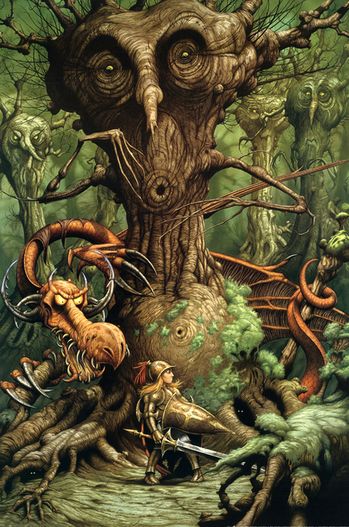
jabberwocky7xo    ~WORDSWORDSWORDSWORDS~ WORDSWORDSWORDSWORDS~

For my friends the writers, here is Poetic Analysis:

Each stanza is cross-rhymed (ABAB). The first three lines of each stanza have 8 syllables (4       roughly iambic feet), and the fourth line has 6 (3 feet).

Line 1: Let’s take the word slithy as our first example. This word is two things: an example of onomatopoeia, and an example of portmanteau. What’s that second one? Well, a portmanteau is a word that’s made by squashing two words together. In this case, lithe and slimy. Onomatopoeia, as you might have encountered earlier in the discussion about this poem, refers to a word that sounds like what it means (think hiss or buzz). So we have a word that not only sounds slimy, but also is graceful, because of the inclusion of lithe (which means “supple and/or graceful”). Both the sound and the word combining give this new word force and depth of meaning.

Line 2-3: Gimble and mimsy echo each other (technically, it’s assonance, i.e., repeated vowel sounds) creating sonic cohesion, while the light i sounds give us a feeling of carefree-ness and peace.

Line 5: The word Jabberwock is harsh, and signals an impending violence. To jab also means to hit something, which further enhances the sense that this thing is something you don’t want to mess with.

Line 8: Similarly, the word Bandernsatch has hints of both bandit and snatch in it, the latter being something that the former would do (a bandit snatches your stuff and runs away with it).

Line 18: Snicker-snack! is also sonically resonant, as it mimics the sound of a sword hitting something. And about the sword: the word vorpal is a onomatopoetic, if you think about it. Say “vorp!” Doesn’t this sound like the swinging of a big, powerful weapon?

Line 23: The expressions of joy here are all sound-play. Frabjous is a bit like fabulous, and if you were to holler “Callooh! Callay!” people would probably think you were cheering.<http://www.shmoop.com/jabberwocky/sound-wordplay-symbol.html>

Lewis Carroll offered a definiton for ‘uffish thought’ in a letter he wrote in 1877: “I did make an explanations once for ‘uffish thought’! It seemed to suggest a state of mind when the voice is gruffish, the manner roughish, and the temper huffish.”
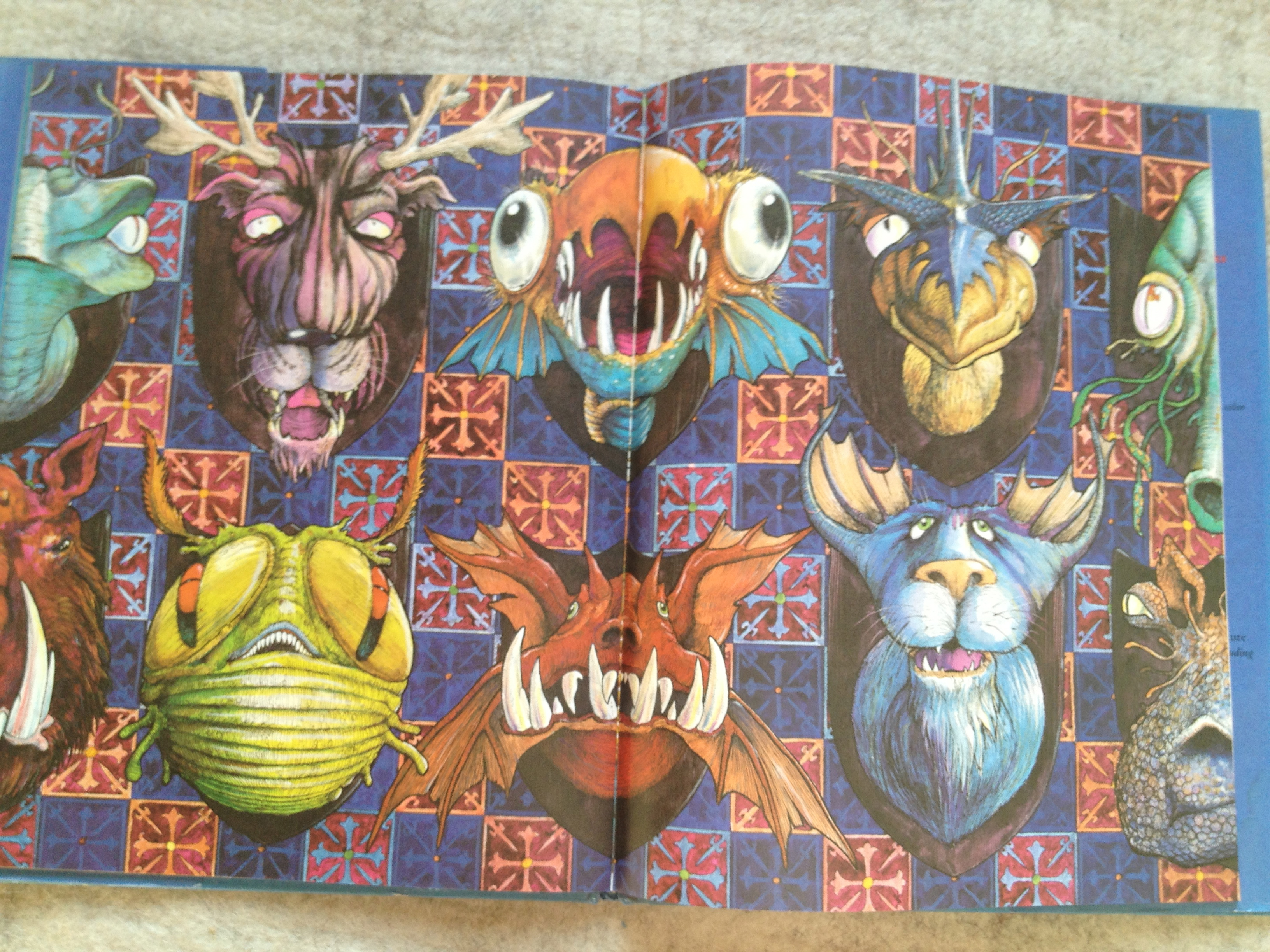
Oona likes the yellow one best....

Oona likes the yellow one best….

I have a sign on the computer. THIS IS THE YEAR OF UFFISH THOUGHT!  For me it is a magical state of thought, a doorway into the empowerment of granddaughters, and the sword of clarity taking out my jabber-confusion. May it be so!

<>   <>   <>
Mirabai Starr: Book Review

07 Saturday Jul 2012

Posted by Tea-mahm in Mirabai Starr, word-dancing

≈ 1 Comment

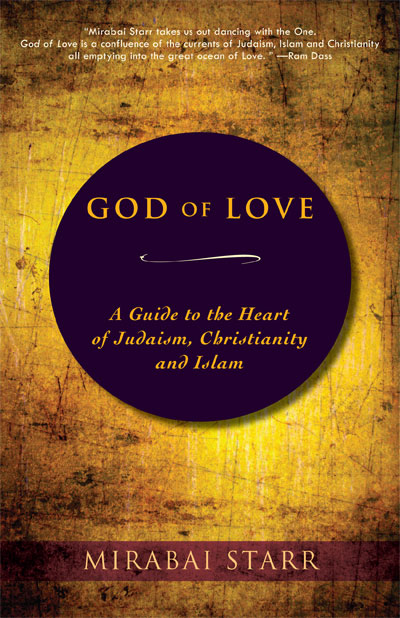
Author Mirabai Starr will be at Open Secret Bookstore, San Rafael, CA on Monday July 9 at 7pm! Her book is: God of Love: A Guide to the Heart of Judaism, Christianity and Islam

Mirabai Starr has some terrific one-liners. “Sorrowing and rejoicing hook you up with the God of Love.” ~ “Maybe the most difficult stranger to welcome is the one who lives inside us.”

Mirabai Starr

There is an openness here that clearly welcomes those who question life and their own path.  She takes us with her into a colorful collection of narratives from her own rich experience and that of Jewish, Christian and Muslim mystics. Her work is described as interspiritual. I like that word!

In the chapter, entitled: “Toward the One: The Unity of the Divine” she quotes from Isaiah 56:7 ~ My house shall be called a house of prayer for all people. But she doesn’t leave you there. “One day when I was sixteen, as I was carrying groceries from the car to the house, I had an epiphany…” I love the way she moves from the groceries to the mystical… and back to groceries. This kind of story telling keeps me turning the pages. Real people. Real stories.

In person, Mirabai’s beautiful smile welcomes and lights up the room. “Every religion is welcome in my sacred library, and no topic is dismissed as heretical.”

Near the end is “Afterward: Walking the Interspiritual Path.” In this chapter she writes: “Choose at least one religious tradition different from your own and participate in a service… When we say yes to the God of Love in an unfamiliar, and potentially uncomfortable form, locks fly off the doors of the heart, making more room for the Mystery to dwell there,” and “invent your own prayers. It is not necessary to relegate this sacred function to religious professionals.”

This is the mark of a writer who has learned to squeeze the essence from the fruit of the experience many of us share. God of Love is a passionate, honest  vessel of service: “I pray that my books may be a dipper of cool water in this burning world.”     Amen Sister!  <>  <>  <>

http://mirabaistarr.com/godoflove.html

Biography: Mirabai Starr writes fiction, creative non-fiction and contemporary translations of sacred literature. She teaches Philosophy and World Religions at the University of New Mexico-Taos and teaches and speaks widely on contemplative practice and inter-spiritual dialog. A certified bereavement counselor, Mirabai helps mourners harness the transformational power of loss.

She has received critical acclaim for her revolutionary new translations of “Dark Night of the Soul” by 16th century Spanish mystic St. John of the Cross, and “The Interior Castle” and “The Book of My Life,” by St. Teresa of Avila. Her new book is God of Love, A Guide to the Heart of Judaism, Christianity, and Islam, Monkfish Books, 2012.

POET Gjertrude Schnackenberg

26 Saturday Nov 2011

Posted by Tea-mahm in book awards, Poetry, precision, word-dancing

≈ Leave a comment

You don’t have to be brilliant to read Gjertrude Schnackenberg’s poetry – but you do need to surrender to her word music! Her new book, Heavenly Questions, Farrar, Straus, and Giroux, New York, 2011 (paperback), is a set of six linked long poems written in iambic pentameter –  a pulsing drumbeat of syllables – blank verse enriched by occasional rhyme. She comments: “…poetry is an effort to communicate meaning. It’s doing it through feeling and emotion rather than through the ideas it presents.”*

 “It is perhaps the most powerful elegy written in English by any poet in recent memory, and it is a triumphant consummation of Schnackenberg’s own work.” Carl Kirchway 
 

The emphasis in the Web reviews is her stunning elegy for her husband. For me the real beauty is in her confident stride even more than the content; it is the way she travels with words– entrancing the reader by means of iambic pentameter, that     –/  –/   –/  –/  –/ rhythm, which does to the mind what riding a camel or a horse does to the body.  Schnackenberg’s poems avoid both the archaic as well as distortion in the natural order of words, which – in less skilled hands – leads to the feeling of ‘manufactured’ lines.

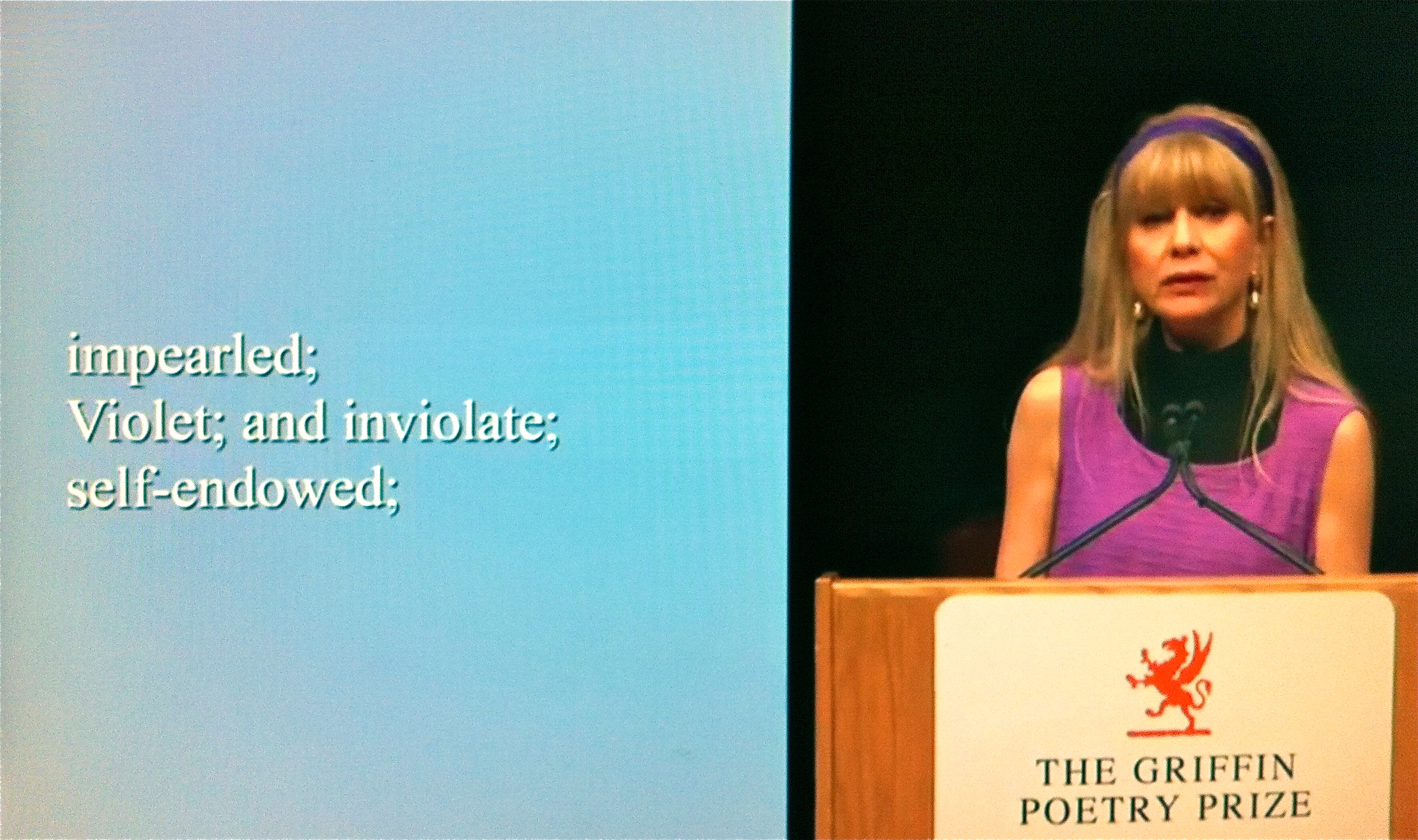
…Reading this book is like reading the ocean, its swells and furrows, its secrets fleetingly revealed and then blown away in gusts of foam and spray or folded back into nothing but water. Heavenly Questions demands that we come face to face with matters of mortal importance, and it does so in a wildly original music that is passionate, transporting, and heart-rending... Judges Citation, Griffin Poetry Prize.

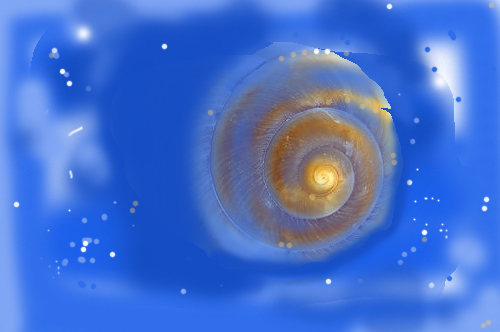
She carries an invisible inherited poetry: the blank verse vehicle of Shakespeare’s plays, of  Wordsworth’s “Tintern Abbey,” and Milton’s “Paradise Lost.” I’ve been in the light rain of meter and occasional rhyme most of this year now, and all but  well-written free verse strikes my ear as dry or un-musical. What happened to that ancestral rhythm and rhyme that rocks us? Musicians and Spoken Word artists have picked it up in this dominant  culture of un-formal poetry, but now with Schnackenberg and AE Stallings too, here is poetry in form, a read that’s fresh, yet carries the ancestral link forward. Here is a taste of the nearly 6 page poem “Fusiturricula Lullaby,” from Heavenly Questions. (Fusiturricula is pronounced few-see-tur-IK-ula – a sea snail).

 A shell appears––Fusiturricula––
And uses its inherited clairvoyance
To plot a logarithmic spiral round
An axis of rotation evermore
And evermore forevermore unseen….
 

This triple repetition coils the reader through the shell. She often uses repetition  as a climactic devise in her long poems. She says: “Repetition can be hypnotic.”* Trance-like. In the poem of her husband’s death, “Venus Velvet No. 2,”  six pages into the poem  she begins the negation –no one, nothing,  never, never again, and not, not; then the negative goes further with unscrolling, unwheeling, historyless, and nothing less. You can see her life with her husband unwinding to its conclusion, without the least bit of sentimentality. The result is paradoxically beautiful and haunting. Blank verse serves the longer poems well. •  If you are a poetry lover, read Heavenly Questions. It’s elevated enchantment. <>

*AUDIO INTERVIEW – [This one is great!] from the series: New Letters on the Air (30 minutes): <http://www.prx.org/pieces/60701-poet-gjertrud-schnackenberg&gt;

VIDEO FILM CLIP: < http://www.griffinpoetryprize.com/awards-and-poets/shortlists/2011-shortlist/gjertrud-schnackenberg&gt;

The following are links to other Web sites with information about poet Gjertrud Schnackenberg. (Note: All links to external Web sites open in a new browser window.)

  • Gjertrud Schnackenberg profile (Poetry Foundation)
  • Review of Heavenly Questions by Gjertrud Schnackenberg (Quarterly Conversation)
  • <>
  • For more on formal poetry, see West Chester University Poetry Conference, 2011 on this blog.
  • The End!

Brenda Hillman and Bob Haas @ Toby’s Feed Barn

02 Tuesday Nov 2010

Posted by Tea-mahm in Brenda Hillman + Bob Haas, Events, Poetry, Untold, word-dancing

≈ Leave a comment

Way back in September, Brenda Hillman and her husband, one time Poet Laureate of the USA, Robert Haas, read at a favorite local venue – Toby’s Feed Barn. Bob and Brenda are two of my favorite poets. It was a spirited occasion celebrating and fundraising for the local bookstore, Point Reyes Books. Add a hundred or so poetry lovers, plenty of chairs, books for sale, an old milk can or two, and bales and bales of straw – and you have it. I bought tickets ahead of time and brought my husband, Shabda, and friend, Kyra, with me. The Barn was cozy and smelled sweet and dry. I gave a copy of my new book, Untold, to Brenda, with the message that I didn’t need anything from her, just wanted her to have it. I’m a fan and have several of her wonderful books of poetry. Practical Water is her newest. You can catch something of the subtlety and originality of her thinking and poetry here.

From Practical Water

What does it mean to live a moral life

It is nearly impossible to think about this

We went down to the creek

the sides were filled

with tiny watery activities…                                                 

An ethics occurs at the edge

of what we know

The creek goes underground about here

The spirits offer us a world of origins

Owl takes its call from the drawer of the sky…

It’s hard to be water

to fall from faucets with fangs

to lie under trawlers as horizons

but you must

Your species can’t say it

you have to do spells & tag them

uncomfortable & act like you mean it

Go to the world

Where is it

Go there  ~

Bob read “Poem for Brenda,” with the line  “..kissing, our eyes squinched up like bats…” and told the story of how he un-invited poet Robert Pinsky and his wife (after planning to dine with them) when Brenda spontaneously agreed to come over for their first date – years back. I came home with Bob’s 2007 book Now and Then, The Poet’s Choice Columns 1997-2000, Counterpoint Press, Berkeley. For those of us that love poetry, this is a great read. It consists of columns he wrote as Poet Laureate, and I have a marker at every 3 or so of more than 100 small essays for the Washington Post as a column called, “Post’s Book World.” It was syndicated all over and went continued four years. Here’s a sample:

July 19 “Postmodern –experimental poetry– has been for the last fifteen years or so trying to figure out how to wriggle out from the sort of direct, personal poetry that the generation of Allen Ginsberg and Adrienne Rich made… it was time to do something else.” (The new poetry he describes as…) “an effort to subvert narrative, undermine the first person singular, and foreground the textures and surprises in language rather than the drama of content.” His example is Susan Wheeler. Haas writes, “Sometimes it seems that Wheeler is trying to marry The Talking Heads’ Stop Making Sense to Victorian nonsense verse.” From “Shanked on the Red Bed,” The perch was on the roof, and the puck was in the air./ The diffident were driving, and the daunted didn’t care. <>

[I’m glad to be back writing this blog again, with hopes that those looking for information on my book Untold can find the right buttons above.]

Words and Redwoods

27 Tuesday Jul 2010

Posted by Tea-mahm in Poetry, Sufi, word-dancing

≈ Leave a comment

I just returned from teaching a poetry class for a week in the woods of Mendocino. It felt wonderful to be among words and redwoods, opening to both. Here are some thoughts from Dorianne Laux, a wonderful poet. Years ago at Flight of the Mind, [a woman’s writing retreat in Oregon] I studied with her:

Dorianne Laux  Why do I write?

…I work to find my subject, something I can sink my teeth into. I live for that flaring up of language, when the words actually carry me, envelope me, grip me. And all the above is why I read poetry, to hear the truth, spoken harshly or whispered into my ear, to see more clearly the world’s beauty and sadness, to be lifted up and torn down, to be remade, by language, to become larger, swollen with life.

I write to add my voice to the sum of voices, to be part of the choir. I write to be one sequin among the shimmering others, hanging by a thread from the evening gown of the world. I write to remember. I write to forget myself, to be so completely immersed in the will of the poem that when I look up from the page I can still smell the smoke from the house burning in my brain. I write to destroy the blank page, unravel the ink, use up what I’ve been given and give it away. I write to make the trees shiver at the sliver of sun slipping down the axe blade’s silver lip. I write to hurt myself again, to dip my fingertip into the encrusted pool of the wound. I write to become someone else, that better, smarter self that lives inside my dumbstruck twin. I write to invite the voices in, to watch the angel wrestle, to feel the devil gather on its haunches and rise. I write to hear myself breathing. I write to be doing something while I wait to be called to my appointment with death. I write to be done writing. I write because writing is fun.

<>

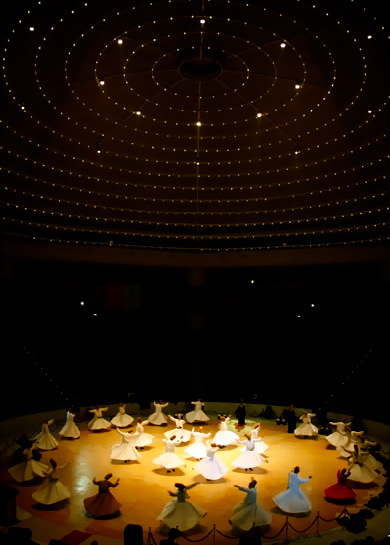
…When the Sufi poet whirled, was he looking            

outward, to the mountains so solidly there

in a white-capped ring, or was he looking

to the center of everything: the seed, the egg, the idea

Mevlevi Sema

that was also there,

beautiful as a thumb

curved and touching the finger, tenderly,

little love-ring,

as he whirled,

oh jug of breath,

in the garden of dust?

<>  <> excerpt from

Where Does the Dance Begin, Where Does it End ~ by Mary Oliver

-from Why I Wake Early (2004)  <>

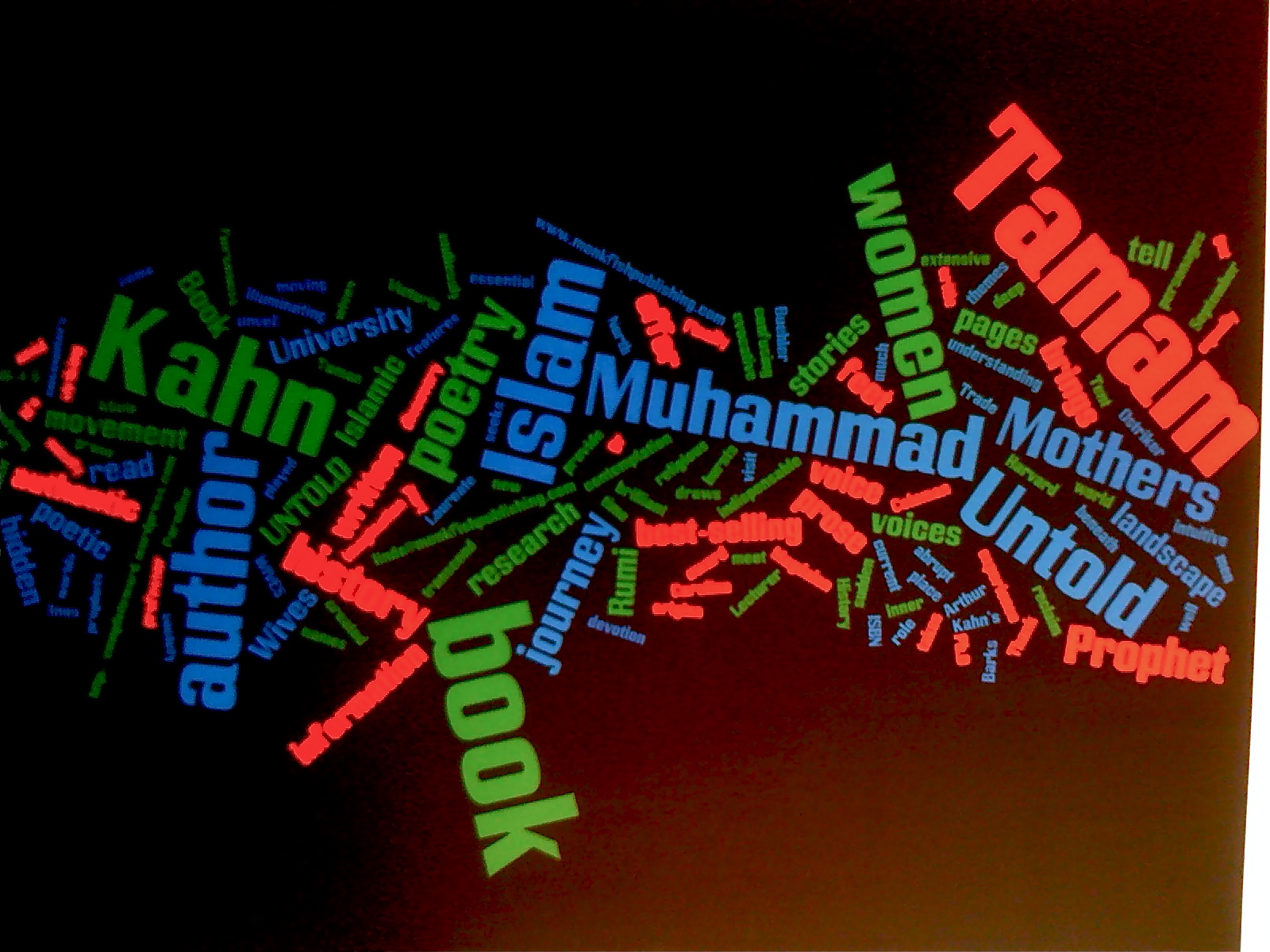
Untold, wordled in a cloud of words

15 Tuesday Jun 2010

Posted by Tea-mahm in Poetry, Travel, Untold, word-dancing, wordle

≈ 3 Comments

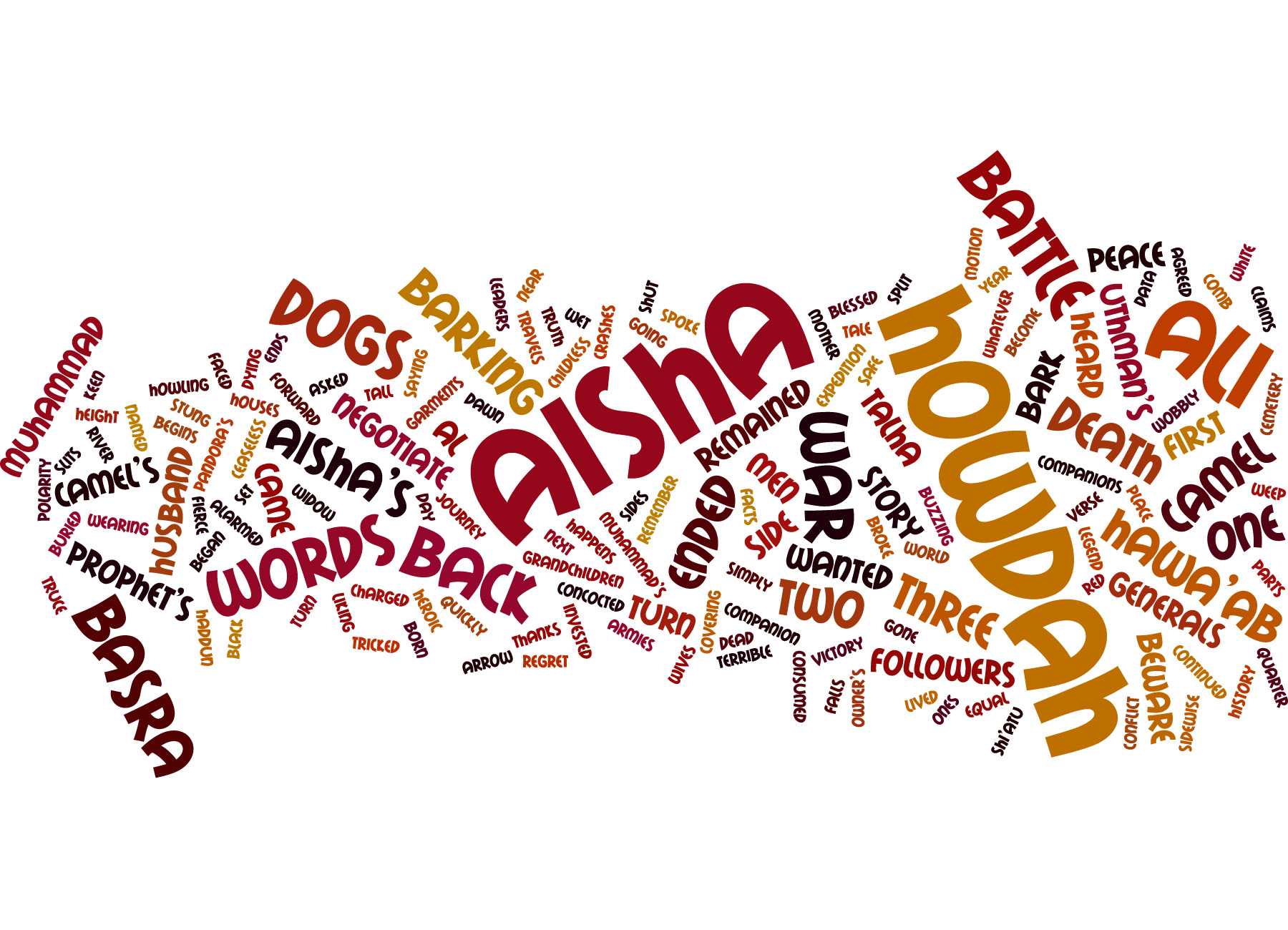
I’ve discovered wordle.net! To do this, go there and paste in some text. I dropped in my promotional material and the pattern above was chosen, with the most used words appearing larger. I decided to put in selections from the chapter on ‘A’isha, with “The Battle of the Camel”  featured, and here is what appeared:

‘A'isha and The Battle of the Camel

Here is some of the text from Untold: A History of the Wives of Prophet Muhammad:

“Beware the barking dogs of Hawa’ab” is a phrase from the legend of ‘A’isha’s journey to Basra. In this tale, there were dogs in the town barking or howling. This caused ‘A’isha to remember Muhammad’s warning. Alarmed, she wished to turn back. But her generals, men invested in war, tricked her into going forward. Was this a story concocted by ‘Ali’s followers to discredit her? Whatever the truth, she continued, riding first to Basra, then to a place near the Tigris River where the armies faced each other and the leaders began to negotiate a resolution to the conflict. During the night fighting broke out and the truce ended ended quickly — with war. Untold, p. 44.  [This is followed by a poem]

<><> owner’s manual: the howdah

The father of this howdah is dawn with no birds. Its mother is a lost prayer. This is the story of ‘A’isha, the ride to Basra, the sidewise motion of war. It is equal parts the camel’s wobbly stride and a woman’s keen eye.

The howdah is a covered platform strapped to a camel’s back. Some facts about the howdah:

ONE.              It’s arrow proof.

TWO.             One can peer out through the slits.

THREE.         Dismounting requires that the camel kneel or fall.

‘A’isha travels inside a howdah.

When her army comes to Hawa’ab, the local dogs

set up a ceaseless howl.

Beware the barking dogs of Hawa’ab She hears him say,

“Turn back and do it now!” Were those the Prophet’s words?

‘A’isha’s generals bark and bark around her. She wishes they’d shut up. She rides on.

More things to know about the howdah:

ONE.              It’s a fairly safe observation post in a battle

TWO.            Above the battle, it’s a rallying point for the troops.

THREE.        It’s a Pandora’s Box.

A war begins and ends in hemorrhage.

Ten thousand dead and dying men surround Aisha’s tall, red camel.

What happens to a howdah during a battle:

ONE.            In a fierce battle it can become a target.

TWO.            If the camel falls, the howdah crashes from a great height.

THREE.       al Hawdaj, al Haddun! The other side claims victory.

The daughter of this story is a crushed bird. Its son is a desire for peace

folded in to that unspeakable war. This is the story of ‘A’isha

as Shahada. The story over and over, between one breath

and the next, anywhere else than this.    Any other outcome. <><>

endnotes:~ This is a phrase that may have been yelled in battle as a great animal with a howdah fell heavily al-hawdaj,– the howdah, al-Haddun! – the heavy, tumbling, fall.~ “Beware the barking dogs…” was, according to some accounts, something Muhammad had prophetically told ‘A’isha years before (hadith). ~ Shahada means witness.

pages from Untold about Zaynab b. Jahsh

One morning Zaynab opened the door to greet Muhammad and something happened between them. Some say she was wearing only a single garment, and that he closed his eyes and said, “Praised be God the Great, praised be God who turns hearts!”…. Untold, p. 49.

<>~<>~<>

Fred Chappell~ Shadow Box

16 Sunday May 2010

Posted by Tea-mahm in Poetry, Untold, word-dancing

≈ 1 Comment

I hesitate to write about this poetry book, because I am intimated by its brilliance and inventiveness. But then I want to stand on a soapbox and shout out –Shadow Box! Yes! It’s that good. It’s also rich, deep and chewy as a California coastal mountain Cabernet, so you need to sip and savor it. Admire the color and complexity.  Fred Chappell has written embedded poems – a poem within a poem – and made it seem effortless.

Fred Chappell is the author of a dozen other books of verse, including Backsass and Spring Garden; two story collections; and eight novels. A native of Canton in the mountains of western North Carolina, he taught at the University of North Carolina at Greensboro from 1964 to 2004. He is the winner of, among other awards, the Bollingen Prize in Poetry, Aiken Taylor Award, T. S. Eliot Prize, and Roanoke-Chowan Award for Poetry eight times over.

The Foreseeing~

If he could love her less, he might succeed in seeming unaware

of those fleet changes in her she herself would never recognize,

not seeing how her shadow that had bleached until it was

a bare half-shadow, until it was the color of morning rain, seeing nowhere

signal that it will now begin to overfill (the way that sighs

overfill breathing) its edgeless contours with a serene and depthless power,

a resistless immaculate azure-like sky-shine: and though he tries,

deception fails because she is in love again, and mist-cold

fear he can no longer flee or put from him the well-intentioned lies

comes on like April’s heartless frost to wither him once more.

Now just imagine Fred reading this with his wife Susan. He reads the non-italic phrases  and she reads the inside poem. [as in this photo.]

Here is a  review from the back of the book: “In this sharply innovative collection, renowned poet Fred Chappell layers words and images to create a new and dramatic poetic form—the poem-within-a-poem. Like the shadow box in the volume’s title, each piece consists of an inner world contained, framed, supported by an outer—the two interdependent, sometimes supplementary, often contrary. For example, the grim but gorgeous “The Caretakers” is a landscape that reveals another image inside it. Chappell also introduces sonnets in which the sestet nests within the octet. Play serves as an important component, but the poems do not depend upon gamesmanship or verbal strategems. Instead, they delicately or wittily trace human feelings, respond somberly to the news of the world, and rejoice in humankind’s plentiful variety of attitudes and beliefs. Just as an x-ray can show the inner structure of a physical object, so the techniques in Shadow Box display the internal energies of the separate works.

With this new form—the “enclosed” or “embedded” or “inlaid” poem—Chappell broadens the expressive possibilities of formal poetry, intrigues the imagination in an entirely new way, and offers surprise and revelation in sudden flashes. At once revolutionary and traditional, Shadow Box contains an Aladdin’s trove of surprises.”

<>  I met Fred in 2002 at a small workshop at UMD in Duluth Minnesota. I listened carefully to what he said. I laughed. I learned important basics about writing. I discovered trusted him more than nearly anyone with whom I had studied poetry. Then he taught at the WCU Formalist Poetry Conference in 2004. I went there just to see him. I told him I had dozens of poems about Prophet Muhammad’s Wives but no one knew their stories so I couldn’t just make a book of the poems. He wisely suggested “the prosimetrum.” I’d never heard the word but for me it was magic. I set the poems in a narrative, as Boethius did in the fifth century. I devoted several years to this. This November I will visit North Carolina on my book tour and offer thanks to my friend and  “Godfather” of Untold – Fred Chappell.

More word dancing from Mirage:

1   Somewhere sidewise lies the untitled time of earth/

before the mind becomes a work of art…

————————————————–

also recommended ~

Farewell, I’m Bound to Leave You by Fred Chappell, New York, Picador Press (a novel).

Understanding Fred Chappell, by John Lang. Columbia: USC Press, 2000.

word dance with sequins and bits of poetry

06 Tuesday Oct 2009

Posted by Tea-mahm in sequin, word-dancing

≈ 1 Comment

P1010981_2

I came up with a title for an essay using “word dancing” and a line from Stanley Kunitz that goes, in the Dangerous Traffic Between Self and the Universe. I surprised myself right there. I looked to see what Marvin Bell had to say about “word dancing.” It goes like this: “When poems are written well enough, when they are interesting enough, they’re like a dance…” IMG_0146_2I’m thinking I want to make the dangerous dance beautiful, so I add SEQUINS, with help from Dorianne Laux. “I write to be one sequin among the shimmering others, hanging by a thread from the evening gown of the world.” Lets have more words with sequins. Picture this from Mark Doty: “ I do my tap routine surrounded by five little girls in sequined outfits like bathing suits dipped in glitter.” 6560_101326244286_514054286_1980682_5762495_nGo Mark! From “Firebird: A Memoir.” Donald Justice goes beyond bathing suits and brings in a transvestite. “Some nights out on the dock/…There comes the sound/ of bare feet dancing/which is Mr. Kehoe,/lindying solo,/whirling, dipping/ in his long skirt that swells and billows,/ turquoise and pink,/ Mr. Kehoe in sequins…” from “A Chapter in the Life of Mr. Kehoe, Fisherman.” Imagine! Dorianne, Mark Doty and Donald Justice – all in poetry’s shimmer.

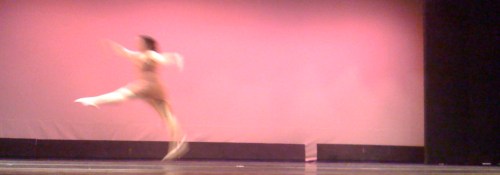
Here is some wisdom on dancing in traffic:

King David, flushed with wine, is dancing before the ark;

the virgins are whispering to each other

and the elders are pursing their lips but the king knows the Lord delights

in the sight of a valorous man/ dancing in the pride of life... Irving Layton: “A Wild Peculiar Joy.“IMG_0155_2It isn’t easy thumbing through books by my favorite poets for a word, but here are two I found.

“…the moon pocked to distribute more or less/ indwelling alloys of its dim and shine/ by nip and tuck,/ by chance’s dance of laws.” Heather  McHugh: “In Praise of Pain.”

“…like a wave about to break across dance floors/ they still dream of, disguised as bay and meadows.” Wm. Matthews: “What a Little Moonlight Can Do.”IMG_0778_2

“Dance me to your beauty with a burning violin/ 
Dance me through the panic ’til I’m gathered safely in 
/Lift me like an olive branch and be my homeward dove 
/Dance me to the end of love 
/Dance me to the end of love…” Leonard Cohen: “Dance Me To The End of Love.” Now that we’ve made it through “the panic,” with Leonard’s soothing voice, we can stop dancing. In traffic. Dangerous traffic. Put the red shoes away.

<>     <>     <>     <>      <>     <>     <>     <>     <>     <>     <>     <>

Solomon Posts

Untold Book

Enter your email address to follow this blog and receive notifications of new posts by email.

Join 157 other subscribers

Tamam’s Links

- Poetry Group - Oracular Pear

- Youth Speaks: Poetry Slam

Links

  • Book: Physicians of the Heart the 99 Names of God – amazing book
  • Fred Chappell: short review
  • Gulf Coast Poems Poets for Living Waters
  • How a Poem Happens
  • Jamaica Osorio's website
  • Mari L'Esperance, poetry
  • Mark Doty, amazing poet read and listen to this poet
  • New Formalism Where is formal poetry today?
  • Oona and Maeve Granddaughters Oona Beatrix and Maeve Clementine
  • PoemShape Formalist Poetry
  • Poetry Out Loud! supporting the next generation!
  • Seven Pillars Book Review by Tamam Mother of The Believers by Kamran Pasha
  • Seven Pillars, POETRY poetry on Pir Zia’s blog/7 Pillars
  • Sufi Ruhaniat International Ruhaniat web site!
  • The Accidental Theologist Lesley Hazelton – a favorite writer and author…
  • The Sound Journal Tamam edits this Journal: NEW!
  • very like a whale good poetry reviews
  • West Marin radio show Sufism: The Heart of Islam, with Wendy McLaughlin

Archives

Blog at WordPress.com.

  • Subscribe Subscribed
    • CompleteWord
    • Join 157 other subscribers
    • Already have a WordPress.com account? Log in now.
    • CompleteWord
    • Subscribe Subscribed
    • Sign up
    • Log in
    • Report this content
    • View site in Reader
    • Manage subscriptions
    • Collapse this bar
 

Loading Comments...