
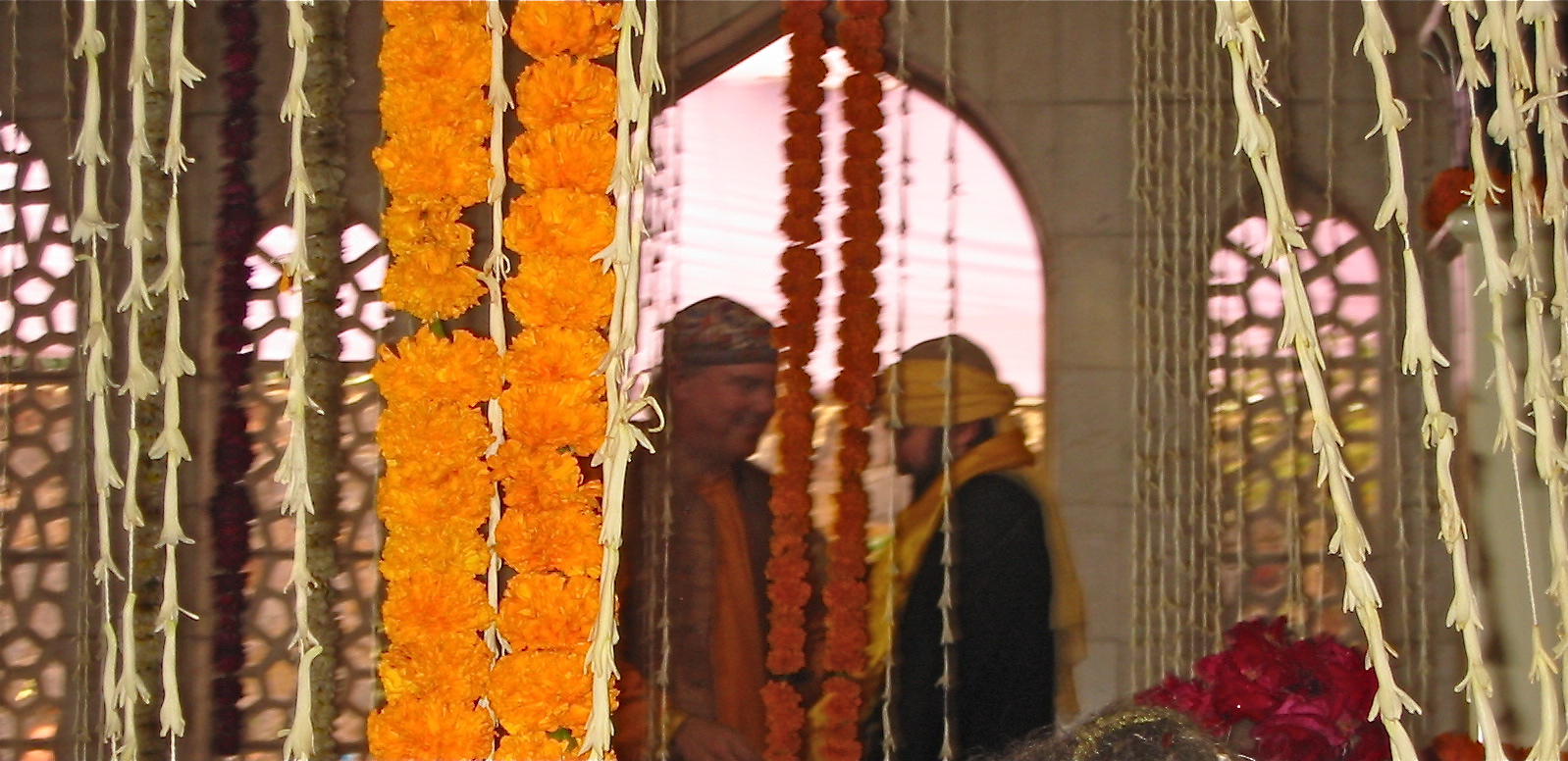
This week, my husband, Shabda, leaves for India to co-host the eighty-third year celebration of Hazrat Inayat Khan’s passing. One hundred years ago this coming September, the young Inayat Khan, founder of our Chistia Sufi lineage, left India to bring “The Message” to America and Europe. Both of these events will be celebrated February 5 in Delhi, India. In honor of this journey Shabda is making with many Sufi friends, I am posting an article I wrote for “The Sound” three years ago.
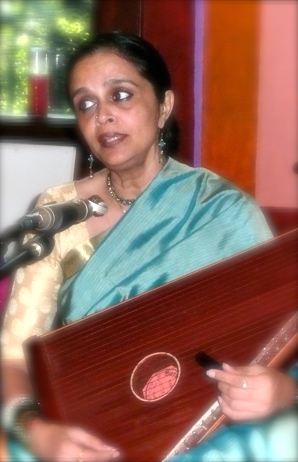
Shanti Sharma
Since then, we have lost our sister Shanti Sharma, songbird of that beautiful time. Salam, Shanti, may you rest in peace!
Pilgrimage to Delhi, 2007 – “unprecedented!”
It began to feel like an Indian wedding. Pale lavender cloth stretched over bamboo scaffolding. The entire front yard and driveway of La Sagrita Guest House vanished. White sheets tightened over a dozen rugs that hid the lawn below. We walked out the front door into a kind of outdoor marriage pavilion with sunlight throwing tree and bird shadows on walls of the tent. A vine of large green leaves wound up an inside tree. Light bars appeared on the white ceiling. The small sound system came to life as Shabda stood in the center and tuned his guitar, and Gayan his djembe drum.
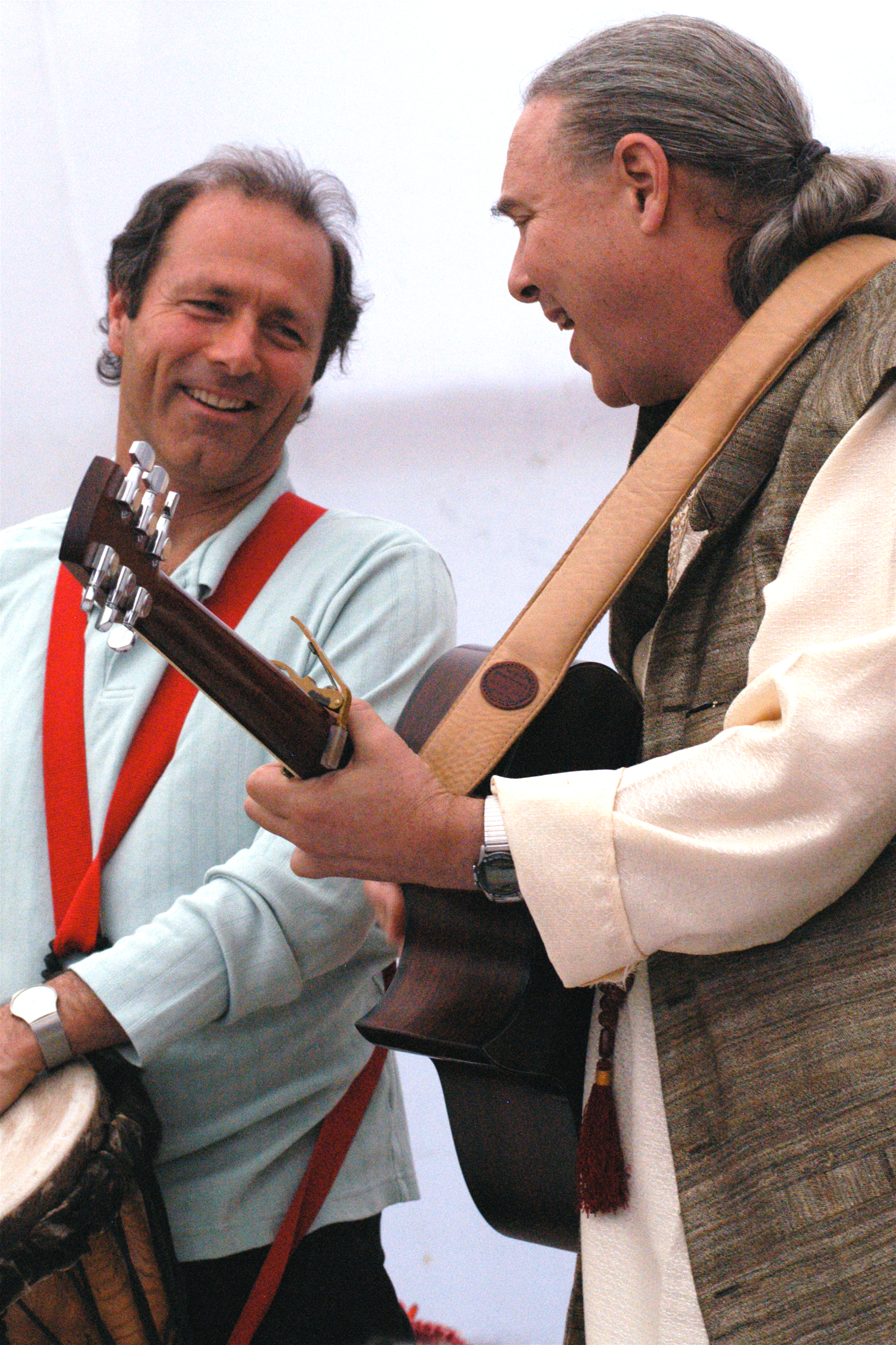
Gayan and Shabda
The travelers circled up for the first of the Dances of Universal Peace. There were familiar faces and new ones; seventy-four people made up the India celebration team, at the 80 year Urs of Pir-O-Murshid Hazrat Inayat Khan. This was our dance hall; morning Raga room where Shanti (the master Indian Raga singer) offered early morning raga practice; gathering place where Taj Inayat shared insights, where Shabda indicated what the day might offer and what we might bring to the day; and shrine room where Tai Situ Rinpoche sat surrounded by flowers and said to us that freedom-from-wanting-more comes from (spiritual) practice.
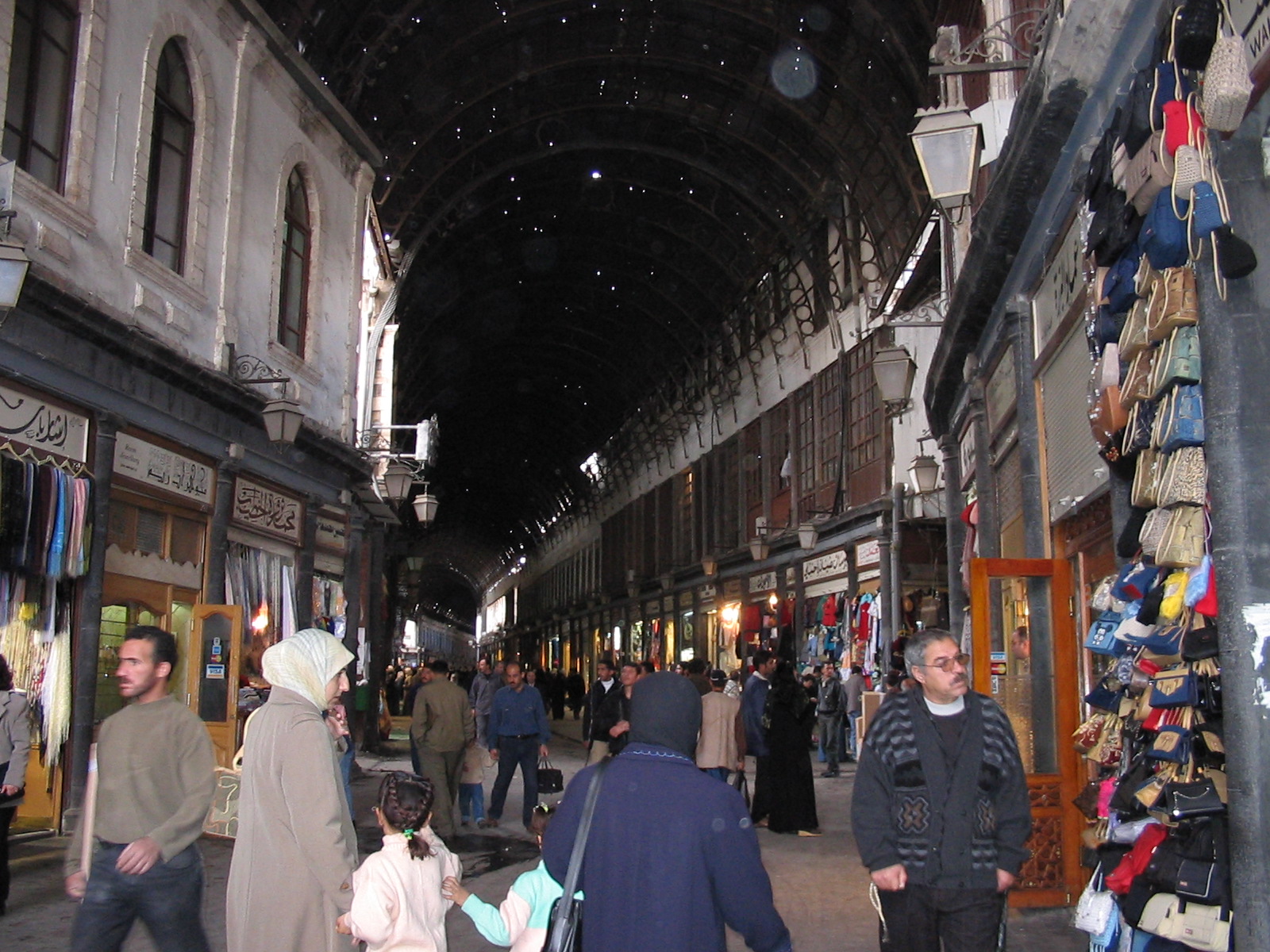
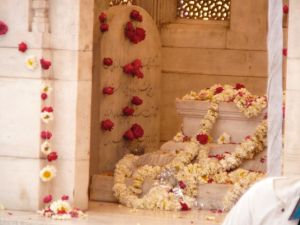
We walked to the dargah (tomb and surrounding area), through the small cared-for park, down the street through Sundar Nagar neighborhood, past the Sweets Corner, and out into fast and hectic traffic and uneven walking terrain. After crossing the last “highway” we were in the “Nizamuddin” world (great Sufi saint), among goats and beggars, barefoot children carrying babies, pan wallahs and slabs of meat; close by the Muslim rose garland sellers, the smells of frying oil and spice. Bright little ones sing-song’d, “Hello, hello!” and after a few days, we passed easily down that familiar street.The stone-work of the dargah, the entrance and the courtyard with its serenity and order allowed us to exhale with a sense of home-coming. We climbed the stairs, left our shoes and placed our foreheads on the rose-scented cloth or cool marble of the tomb. We were here at last, as at-home as we’ll be in India.
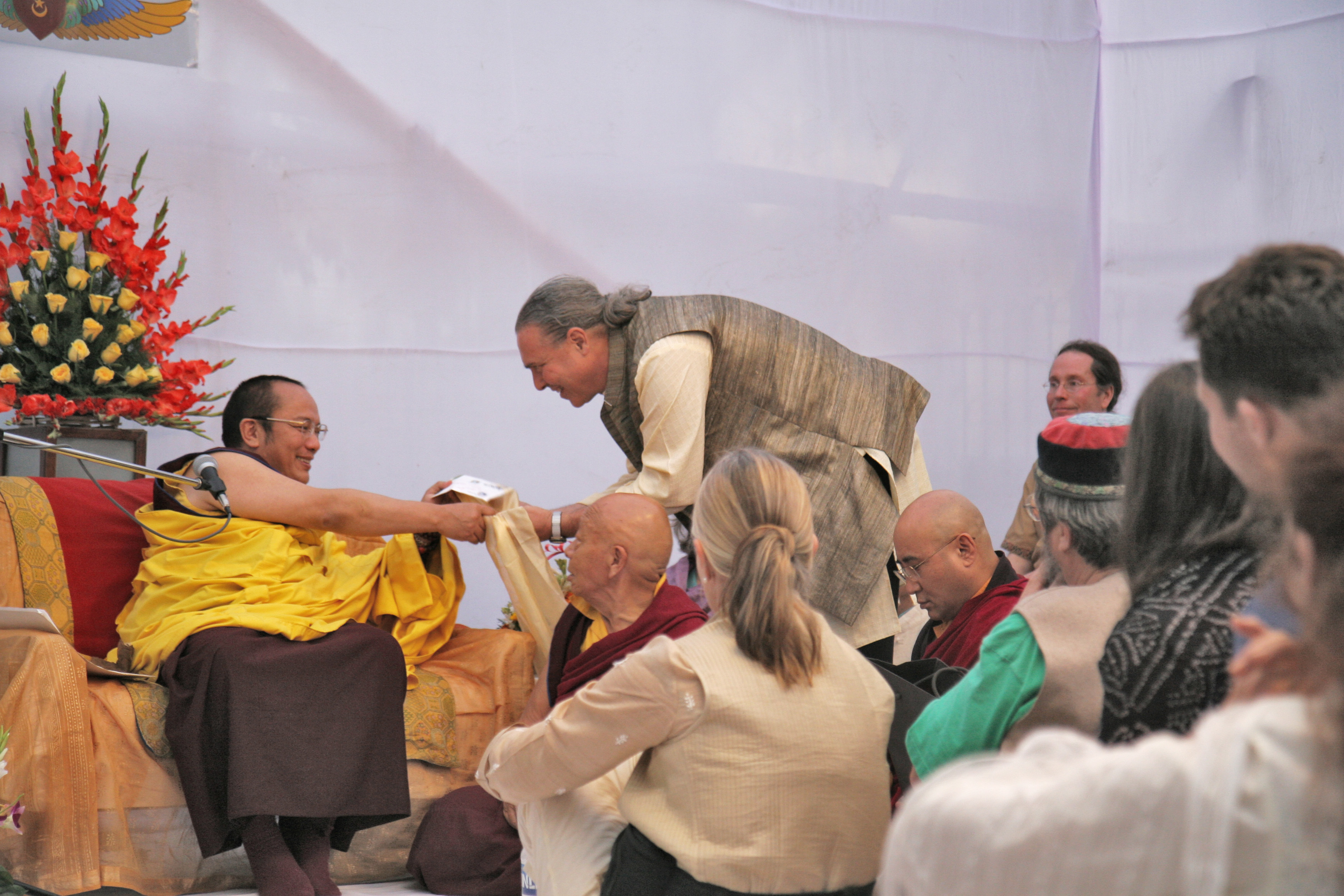
Tai Situ Rinpoche
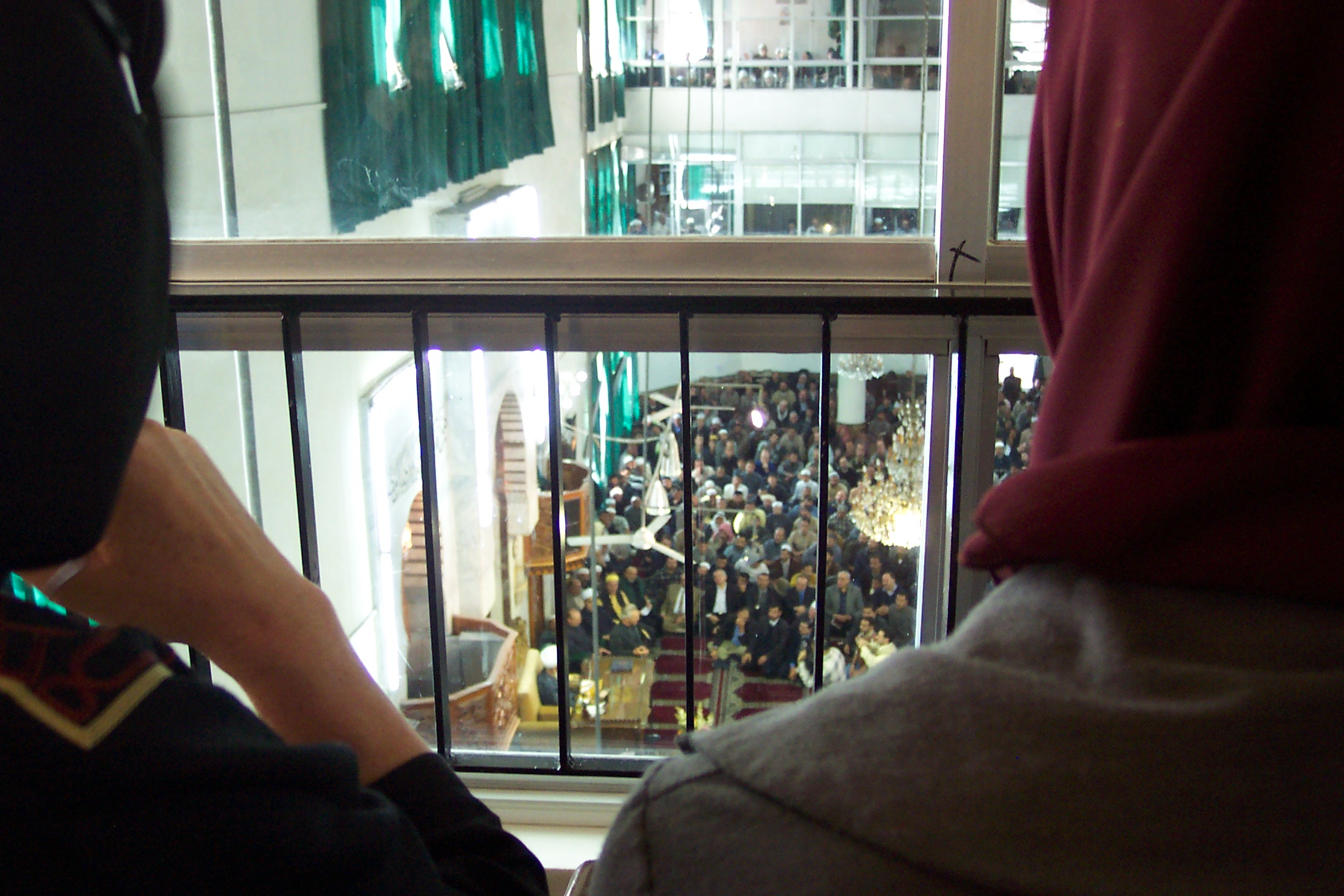
Our program was ambitious. Our group, with Pir Shabda as leader, was host to fifty to one-hundred more Europeans, Americans, and Indians who felt the Inayti connection and came to the Urs to celebrate. A few days later, Pir Zia (grandson of Hazrat Inayat Khan) referred to the program and efforts as “unprecedented.” The concert hall was constantly packed, including the over-flow room and the outside chairs.
Our old friend Karunamayee opened with devotional singing Saturday morning. Sunday night closed the musical events with with Shri Bahauddin Dagar playing Rudra Veena accompanied by the stunning pakawash drum late into the night. Shanti gave a moving vocal concert. There were eight master musician concerts in two days.
After a weekend of concerts came the day of the Urs, or “wedding day,” the anniversary of Hazrat Inayat Khan’s passing, February 5, 1927. We gathered at the large tomb area of Hazrat Nizammudin Aulia on a beautiful warm sunny morning.
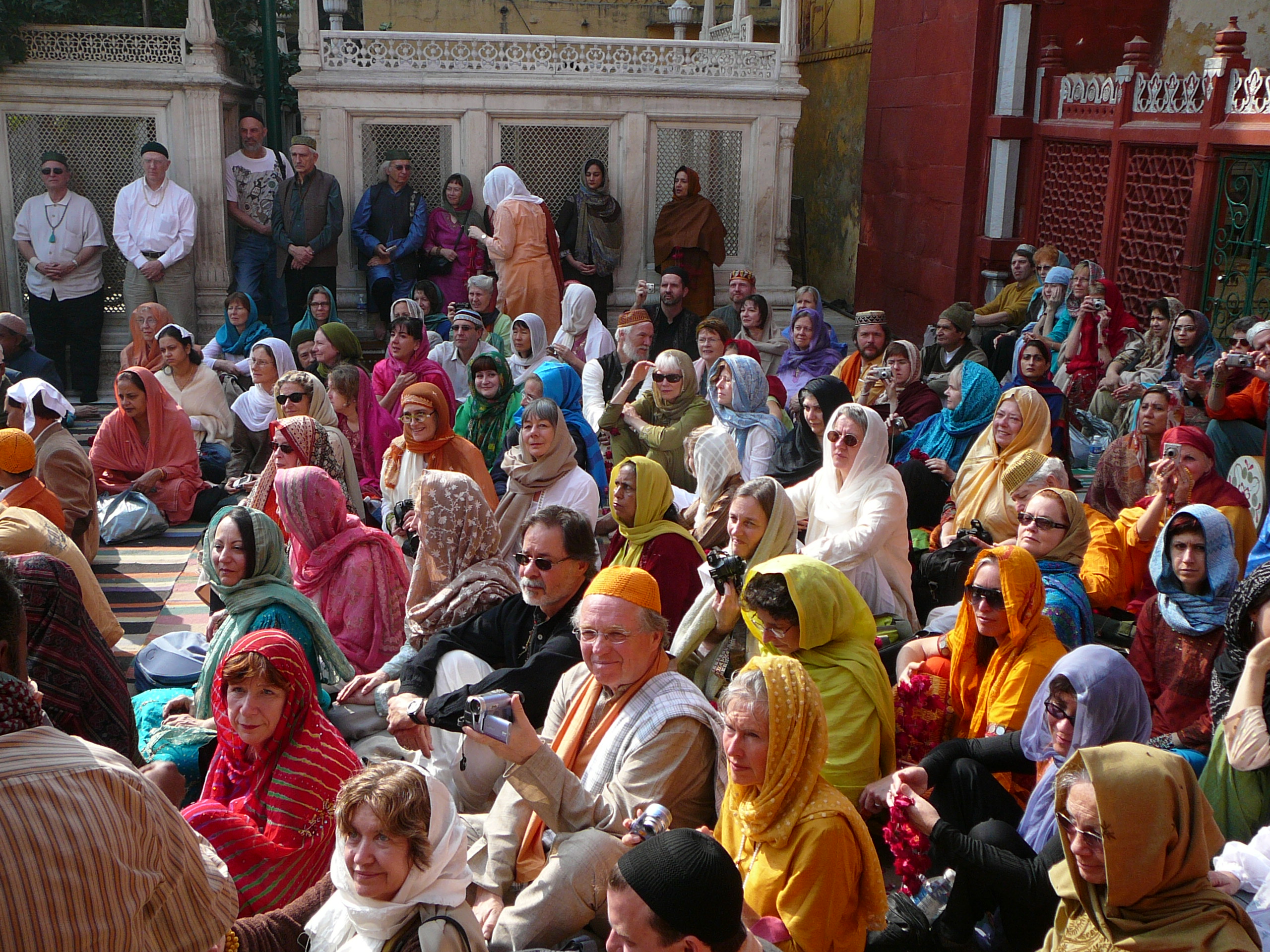
at Nizamuddin
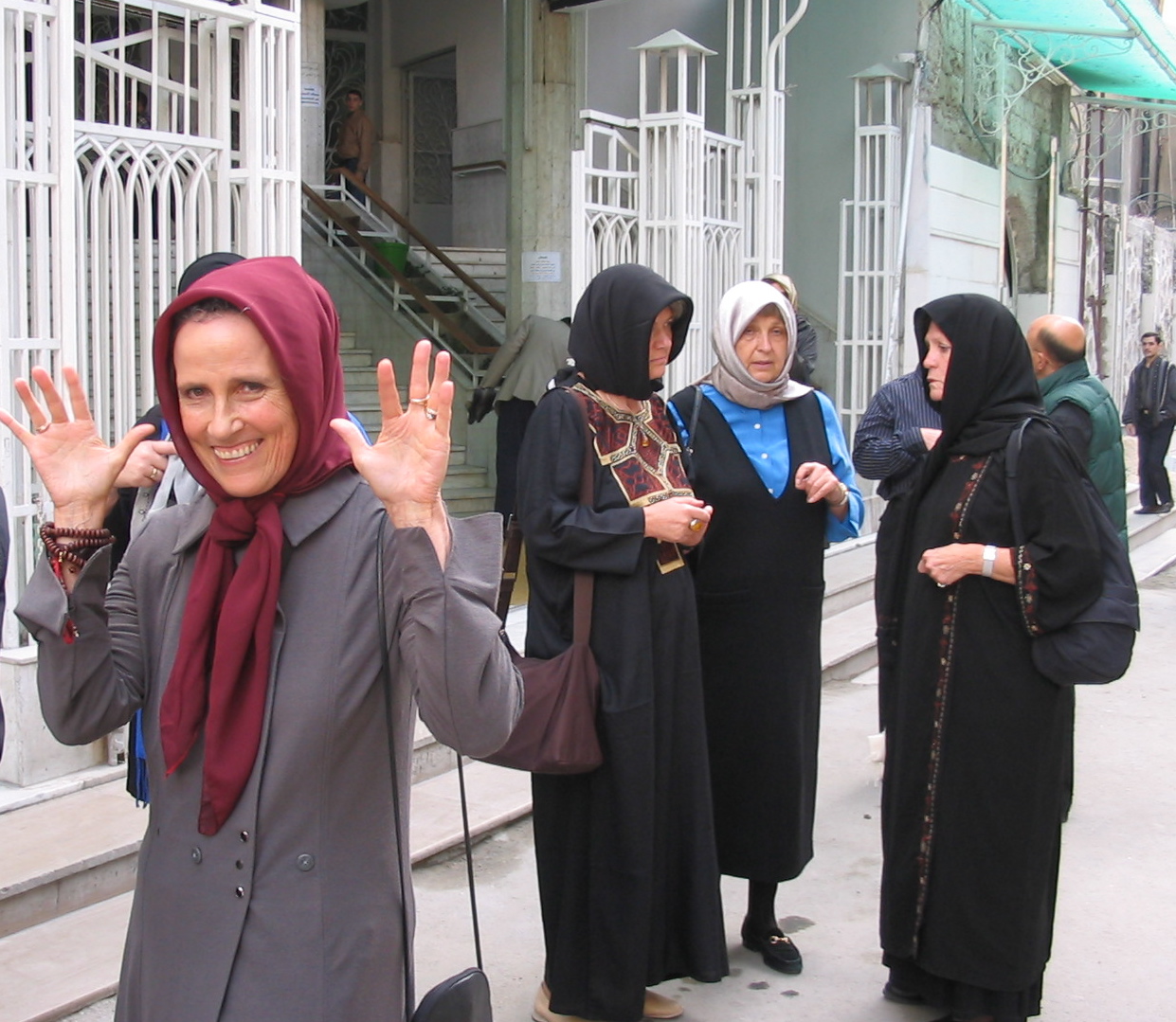
Pir Shabda was joined by Khawaja Hasan Sani Nizami, Pir Rashis ul Hasan Jili Kalimi, Pir Zia Inayat, Pir Sharif Baba, and Murshid Shahabuddin Less, Murshid Nawab Pasnak, and others. There was a strong women’s presence, with Dr. Farida Ali, guardian of the Hazrat Inayat Khan Trust advising Taj Inayat and myself what was the proper adab for women in a Sufi ceremony.The area, called Nizammudin, is open to devotees from all over India, as well as those who were there for the celebration. The qawwalis (dargah musicians who offer spirited devotional songs) began to sing, as they have for many years, and sweets were offered to all. <> Soon the Fateha (verse from the Qu’ran) was recited, the chaadar (cloth tomb cover) was blessed, then it was lifted and Taj and I each held an edge as the chaadar-carrying procession squeezed through the narrow lanes of the dargah onto the street while following the qawwalis to Hazrat Inayat Khan’s dargah several blocks away. Soon it was Taj, myself, Zuleika, and Zarifa in the front. Traditionally, it was a man’s privilege to lead, so we felt exhilarated breaking new ground. At the dharga steps, a European man darted in front of me to take the right corner. “Excuse me,” I said, “this year the women are leading, please step behind!” Shabda joined us and we placed the beautiful brocade cloth on the tomb, under the strings of marigolds and tuberoses. The qawwalis sang on, followed by a beautiful short kirana style vocal concert by Shabda, some words from Pir Zia and Taj, and finalized by everyone joining in Hazrat Inayat Khan’s sung zikr. <>
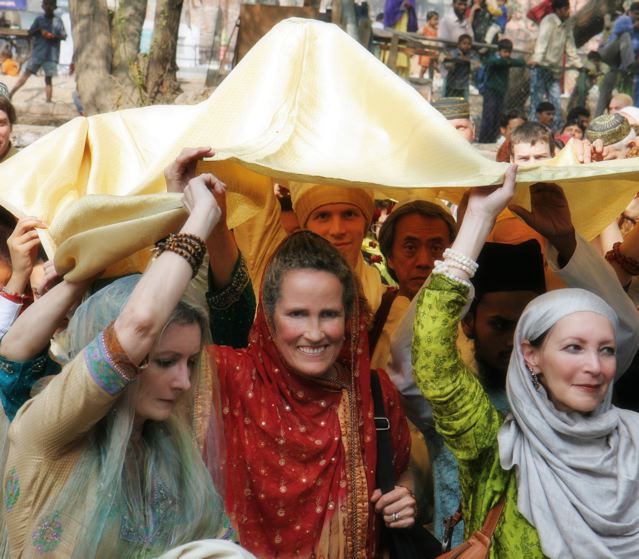
<> That afternoon, Khadija Goforth led a luminous Universal Worship service. After a courtyard meal for two-hundred or so devotees, we celebrated with Dances of Universal Peace in a long double oval just in front of the entrance to the tomb. Mevlevi dervishes whirled inside by the tomb. It was an amazing and fulfilling moment where Murshid Sam’s family brought music, dance, and joy in great measure, and many were carried by the wave of “love, harmony, and beauty.”
Like all beautiful Indian “weddings” this one seemed to go on and on. Tai Situ Rinpoche changed his schedule to come back a second time, Saraswati and Zuleika wowed us with beautiful dance performances, The Hope Project and The Memorial Trust school children performed theater and music. At the end, it began to rain.

Taj teaching
Taj opened her last morning talk with, “It’s good to see your bedraggled, glowing faces.” She went on. “How do we live a life that characterizes Love Harmony and Beauty? …You are the embodiment of the answer”. Her words were the small piece of cake we took away from the wet tent on careful plates, certain that we would hold the sweetness of this celebration for now and time to come.




 Oona Beatrix Haggerty. Born August 24th 2009.
 just a few blocks from the ice cream store. It seems just after I wrote the last posting about waiting for the baby, Laura went into labor – a long labor, but one mercifully, without complications.

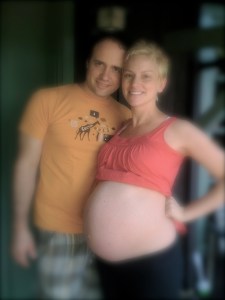 My life will change as when the elevator door opens. I will be a grandmother. My arms will hold a baby and my house will become a grandparent’s house. This is all a normal thing, they tell me; gates across the stairs, child-proof locks, weight training for lifting. I’m impatient. What will the eyesof my granddaughter see when she looks at me? What will I see in her face? Like all great mysteries, this unseen land will be charted and I will set foot there. There will be a name. And celebration. Oh, yes!


 For rank geezerhood, try the Goat’s Beard, yellowing like aging teeth. In those tabloid moments, observe the Lambs Ear and Pussywillow in strapless evening gowns and stiletto heels, made up lambs and kitties as small as your thumb, each decorated with red, white and pink petals, and smelling like cherry chapstick.
 than Marrakech, Morocco. How about this Palace Hotel sign on the old 1901 brothel?
 birthday. Most were wearing tie-dye and the food was good. I never met Barbara, but joined in the large circle, singing happy birthday. I liked the outhouse there. The sound system opened with Jimmy Hendricks’ Purple Haze. We were of the age where some of us had actually heard Jimmy Hendricks play, like at Winterland in 1968.


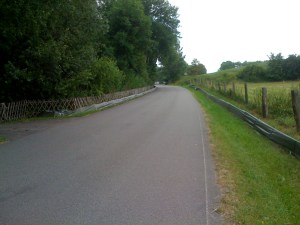
 or simply hanging out on that smooth black surface. I made R.R.Rahima stop the car so I could take a picture at tire level. So now the question of motivation arises. Is it a kind of clean-freak thing — no squished frogs, flattened outlines to disturb motorists? Or is it animal (reptile) protection, environmental carefulness? Was there a swarm of frogs in this area, Communist frogs that have been hiding in the woods for a few decades? Or did an eccentric naturalist just come up with this idea and make it into a crusade? “Save the frogs along here!” (I missed taking a photo of the caution sign with a red exclamation mark and a frog.)
 Did Lady GaGa see the frog walls and become inspired with reptilian fashion possibilities? Or is she merely trolling for her own hoped-for Royal Moment?
 said yes.
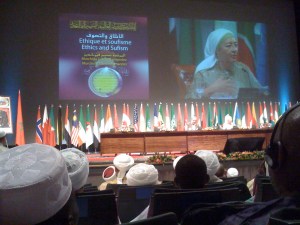
 My poems were translated by Dr. Kostas, as we stood on the stage at the banquet close to midnight Saturday night. Dinner had just ended, but nights in Morocco seem to go on forever. Before I began to read, I thanked the King. (He was absent, but it’s not often you get chance to say, “I want to thank His Majesty, King Muhammad VI for his generosity ….”) Afterward, Dr. Toufiq expressed his appreciation to me for my work on the Mothers of Islam, and told me I was always welcome in Morocco. My friend and fellow poet Abdal-Hayy Moore read his poems as well.The next day, Arabic-speaking delegates called out to me in Arabic, smiled warmly, gave thumbs up or offered me their business cards.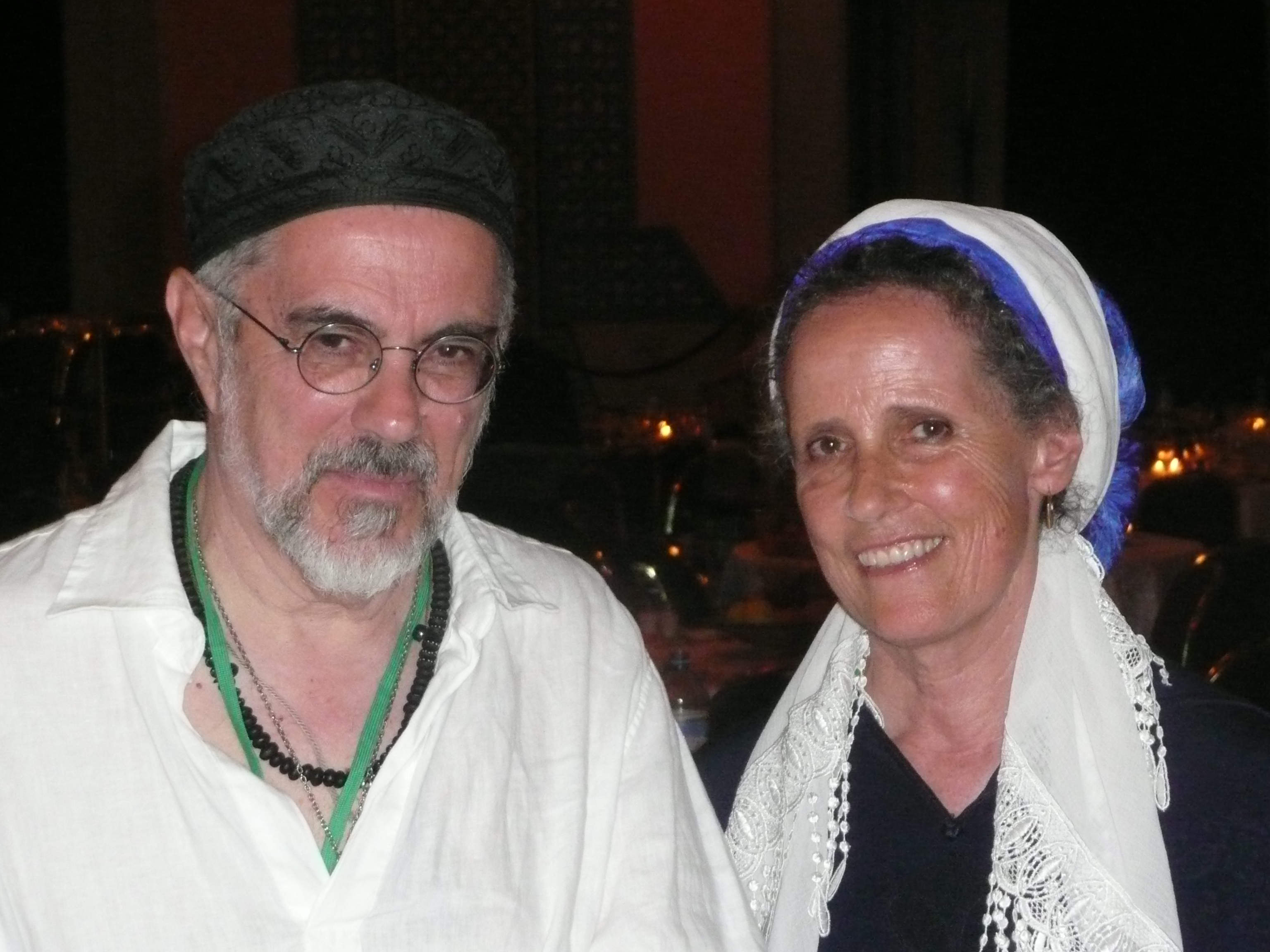

 CompleteWord