• About Tamam
  • Poems
  • NEW BOOK! Reviews & Praise
  • UNTOLD: Book Trailer & Blurbs
  • Fatima’s Touch
  • Reading Schedule

CompleteWord

CompleteWord

Category Archives: Uncategorized

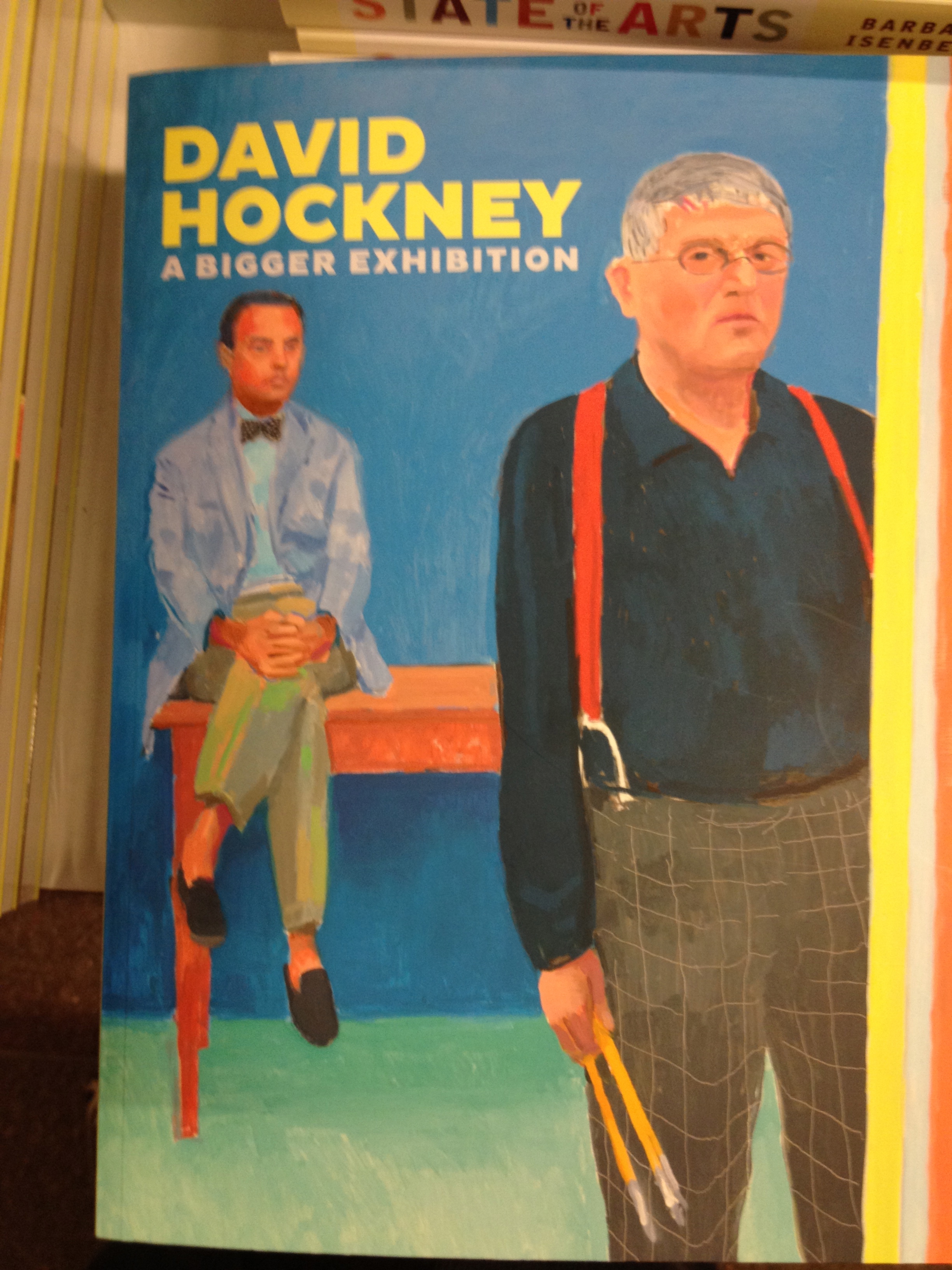
David Hockney at the DeYoung Museum

07 Thursday Nov 2013

Posted by Tea-mahm in Uncategorized

≈ Leave a comment

IMG_7961

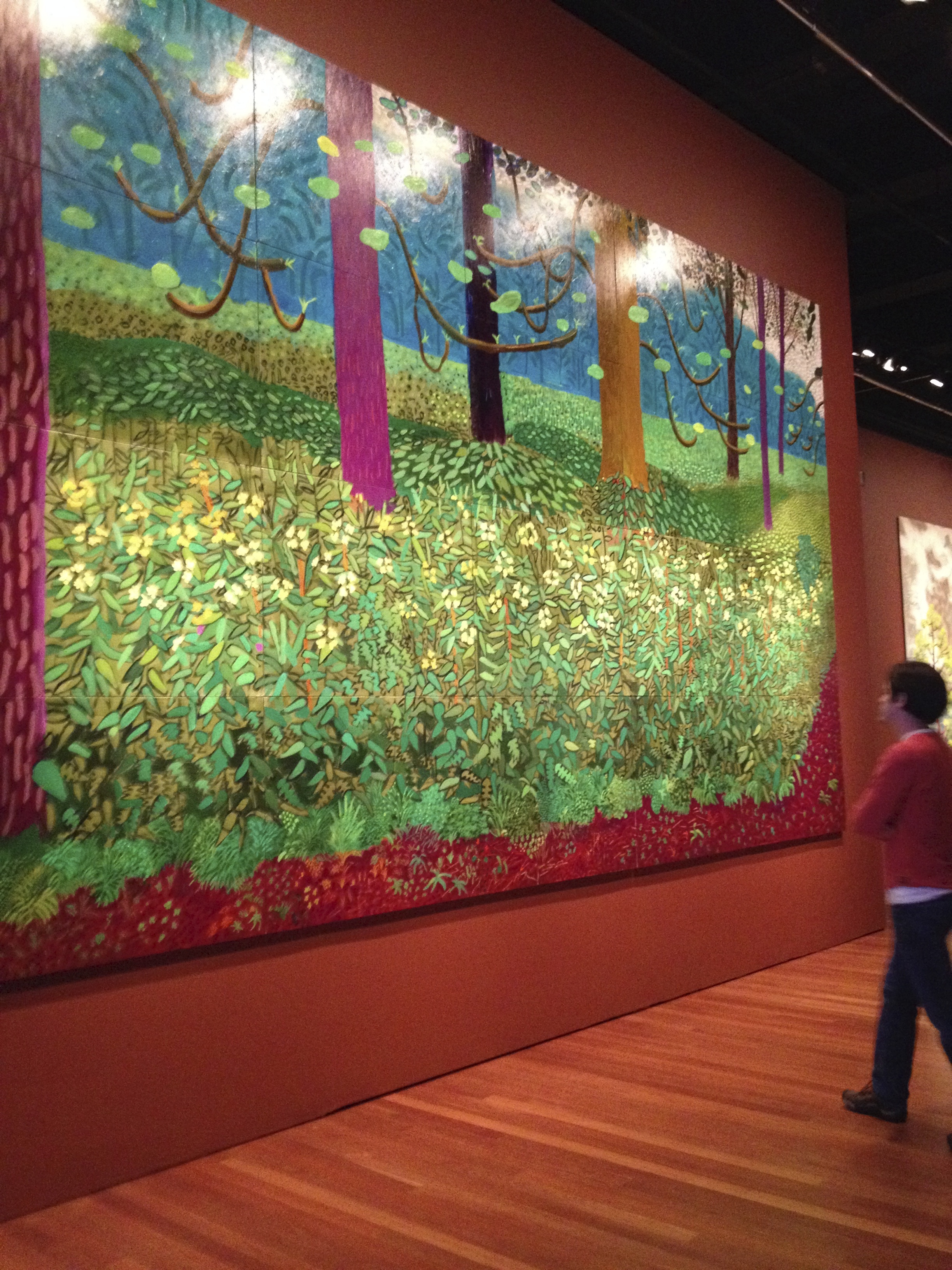
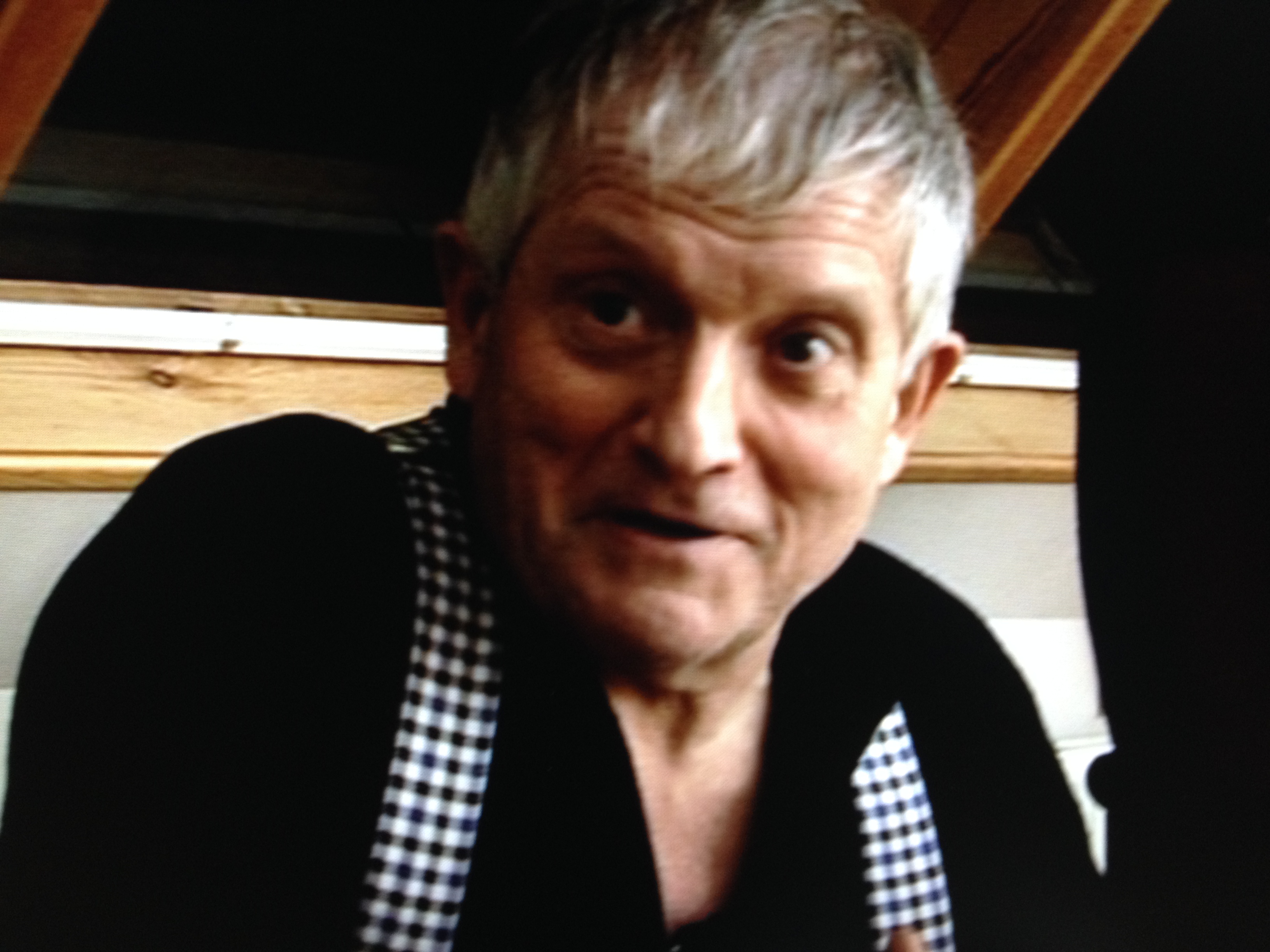
You won’t need 3D glasses, but you’ll feel like you have them on. The London Times calls his work: “An unqualified, life-enhancing joy…” I went to see this exhibit twice, actually 3X, because I could not quite fathom the effect the paintings had on my mind and heart. I really liked this selection of artwork.

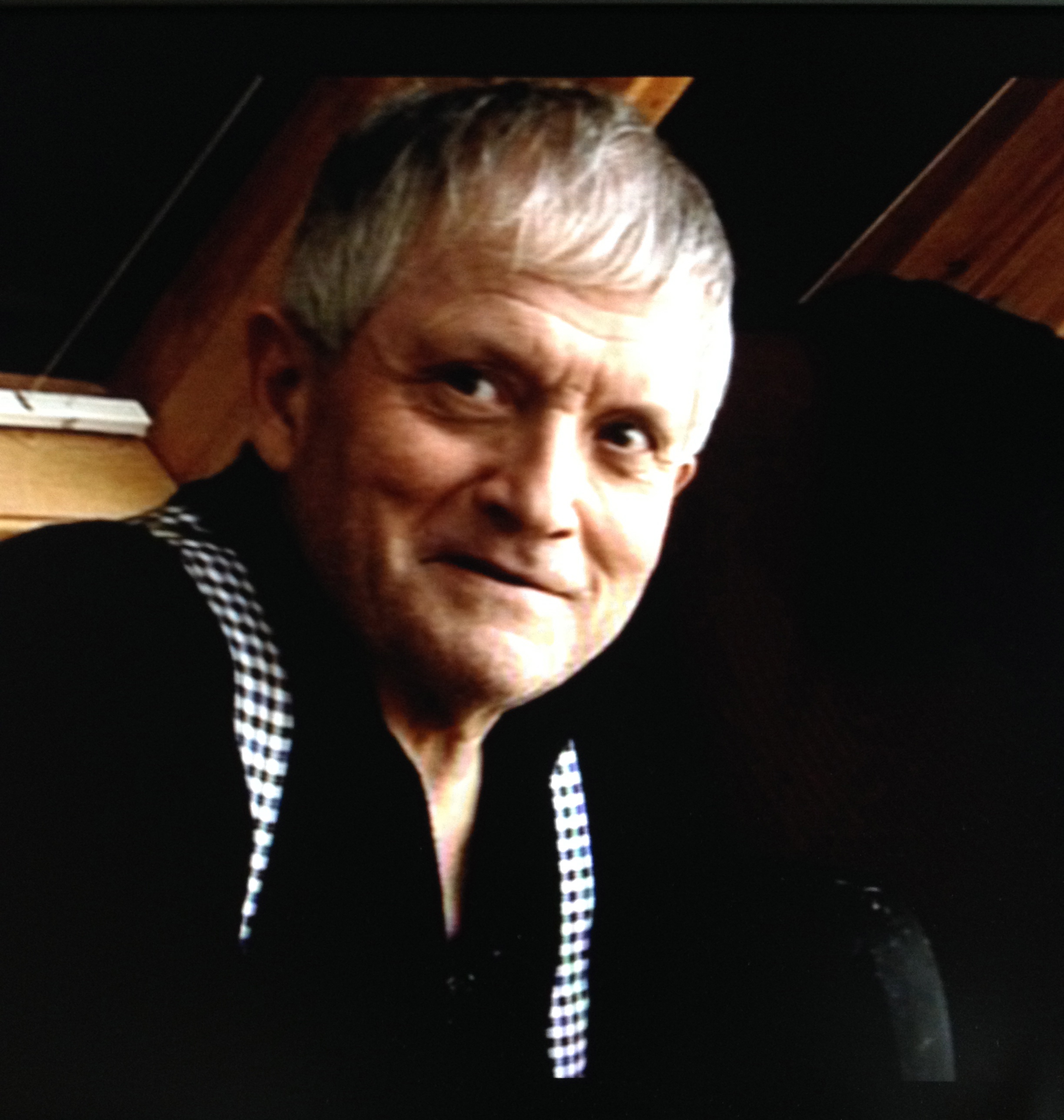
David Hockney

David Hockney

IMG_7953

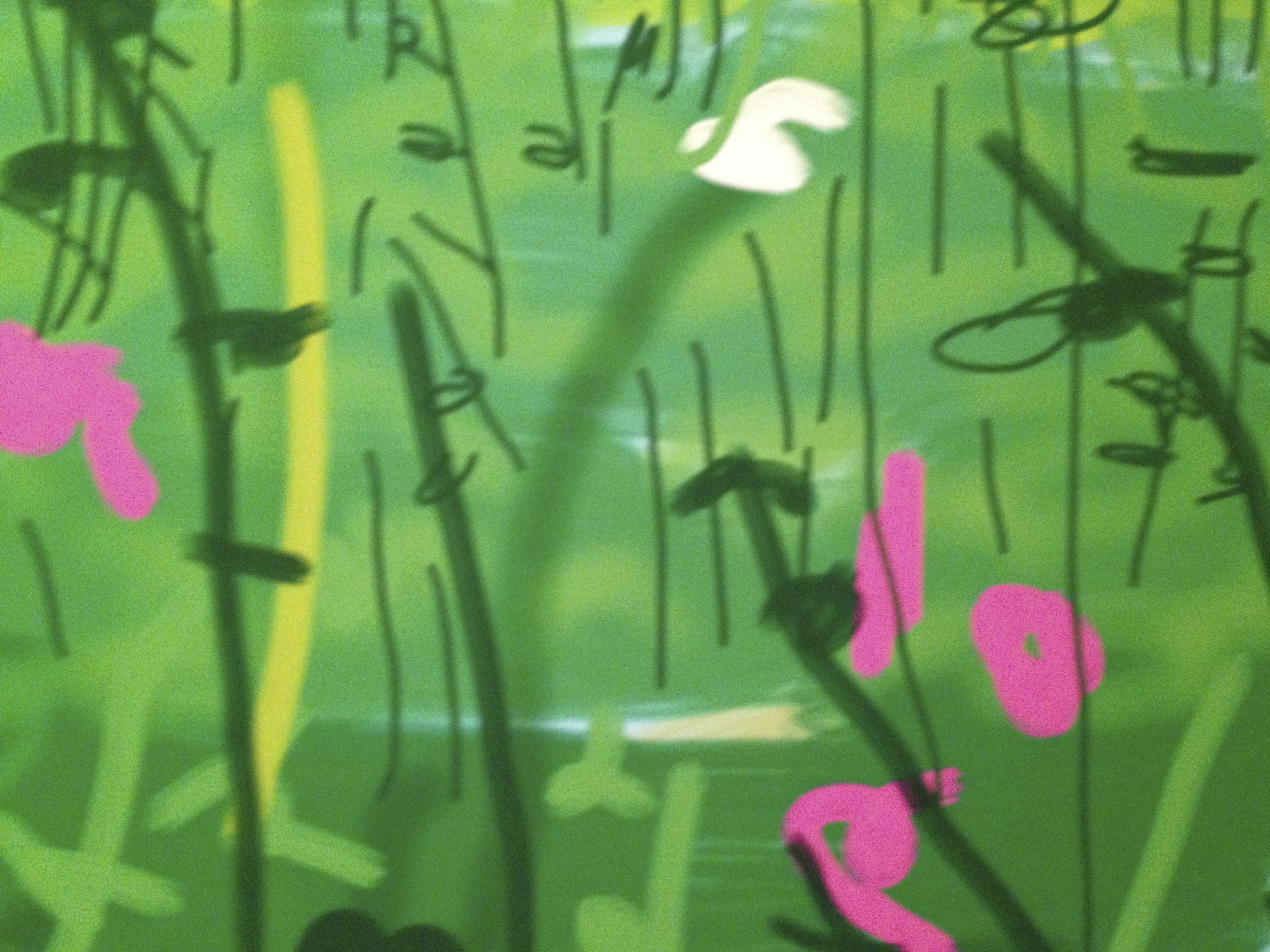
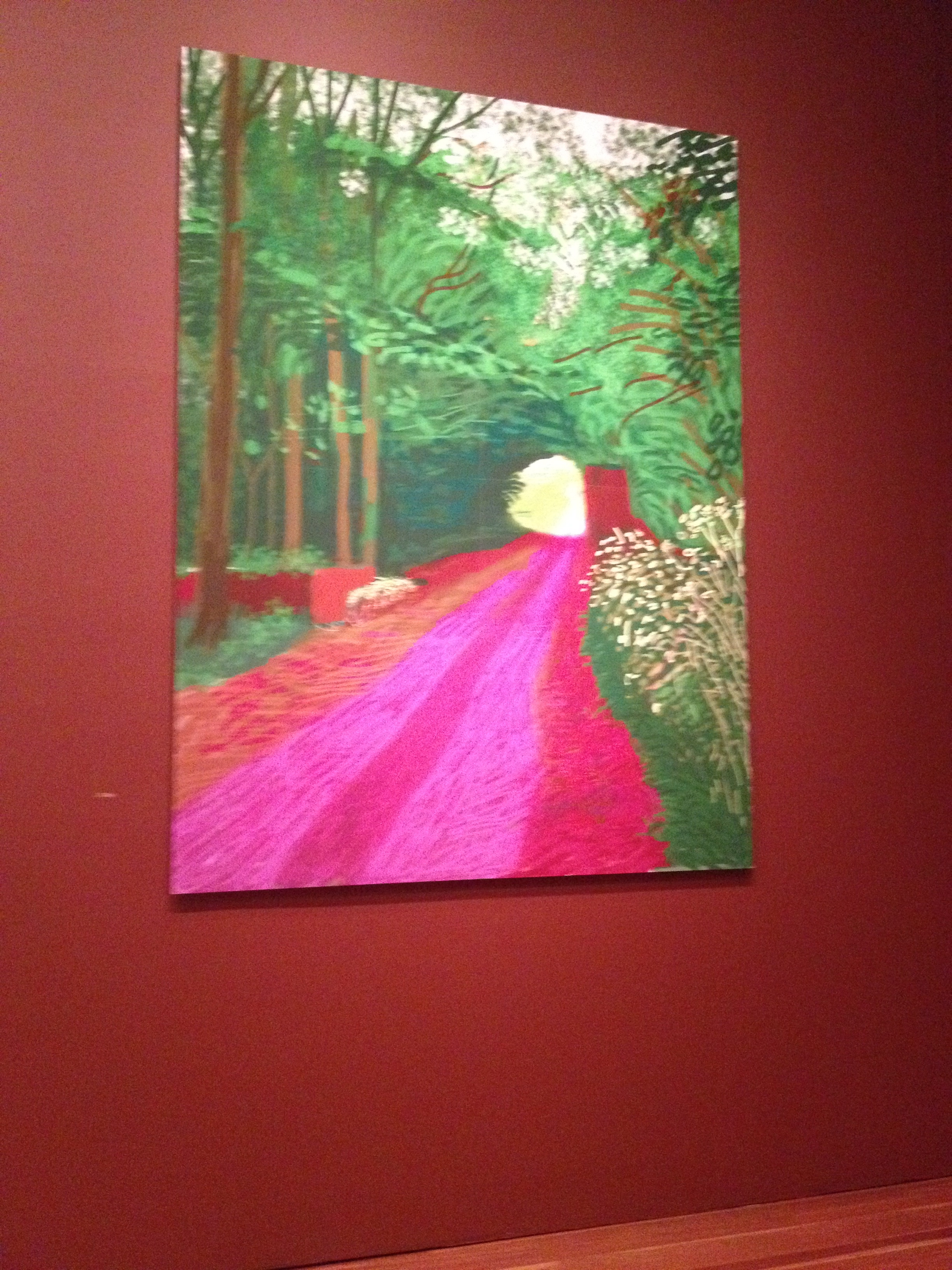
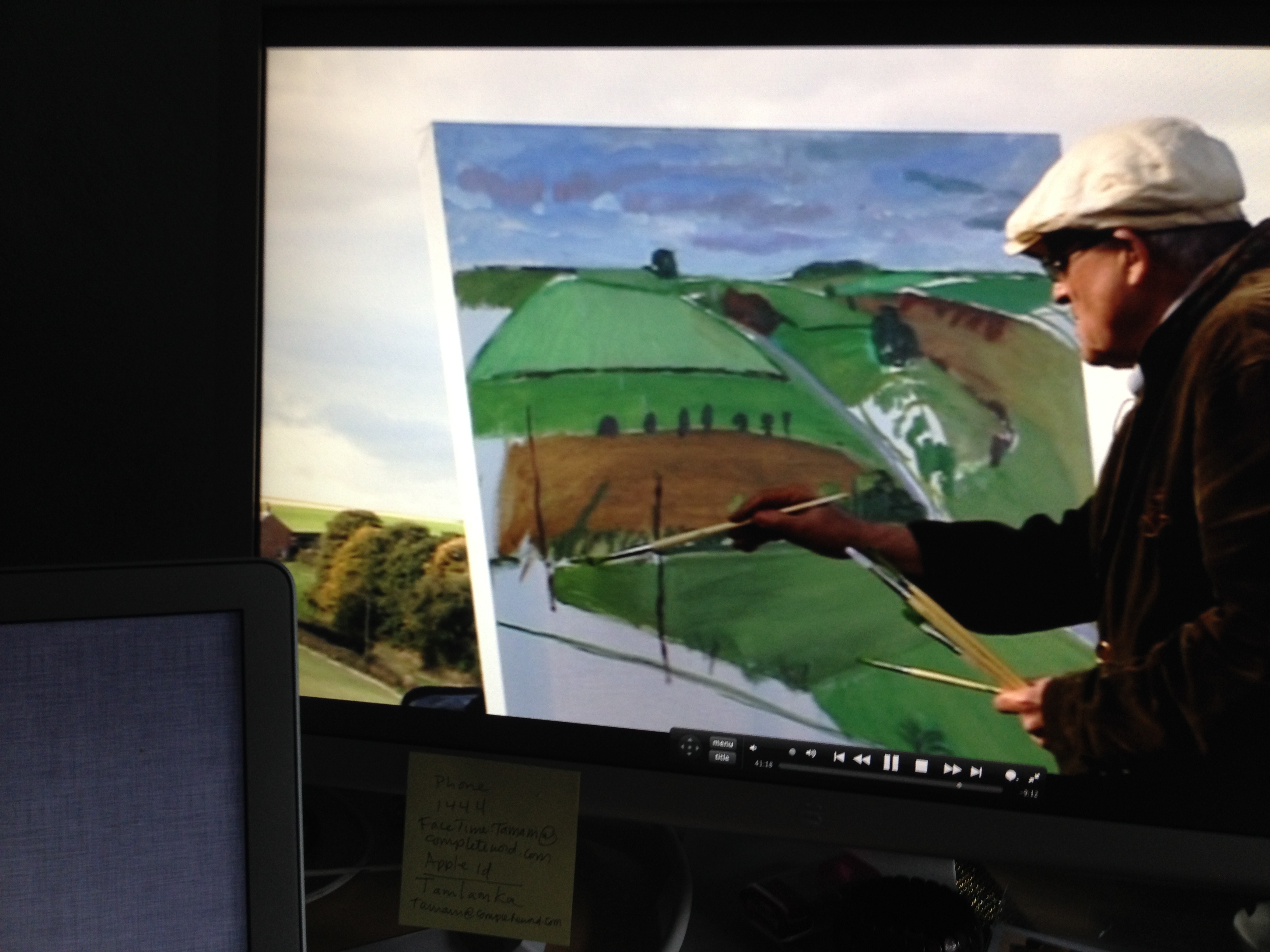
Part of it is scale and short-hand details, though neither scale nor detail comes across well in these small photos I am posting. I’d look at a ten-canvas landscape, and as I walked closer, the realism shifted into elegant abstractions representing light, shadows, water and plants. His work carries a certainty that makes you feel safe in his created world of form and color. And yet you have fallen down the rabbit hole into Wonderland at the same time. David Hockney has invented a painting language that effects me the way Arabic does.

IMG_7956What do I mean? First of all, Arabic is seductively beautiful to see, the calligraphy flows. Then when you study the individual letters a new layer upon layer of visual integrity draws you in. In different scripts the letters appear as if in new clothing. So here is Hockney pulling me into his universe with his mastery and whimsey, his language of brush-dancing. The portraits carried so much of human nature I was astounded. But mainly it was the landscapes that I relished.IMG_7988

I’m his— in those lighted rooms. I went with Wendy and David the first time. We were amazed, and after about 20 minutes I was too full — and bolted out of the exhibit.  I went outside and gazed at grass and sky while they continued looking at art. I went back to look again when my vision quieted down,  and snuck a few photos because I needed proof I had actually seen these things.IMG_7954

Asha was in town from Virginia a week later. She is a wonderful artist, and I couldn’t wait to see Hockney’s art with her.  She liked it a lot. We went and sat in a quiet room. The one with Yosemite pictures, a smaller scale. What do you feel is going on with these paintings? I asked her. She commented on his I-pad drawings, [some enlarged and mounted like the oils], and how he was balanced on the edge of present and future in art. Also that he communicated more than artistic mastery. I can’t remember exactly what she said, but I felt like she helped me to digest this banquet-for- the-eyes. If you are near San Francisco between now and January 20 and you like this preview, make it a point to go.

Asha and a landscape...

Asha and a landscape…

IMG_7950

IMG_8045IMG_7962

IMG_8008

Reza Aslan in Berkeley

03 Thursday Oct 2013

Posted by Tea-mahm in Uncategorized

≈ 2 Comments

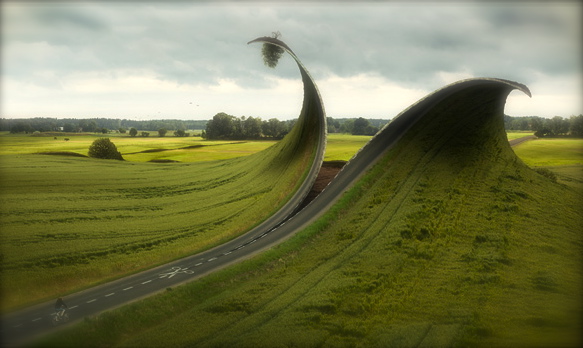
bike-photo-manipulations-erik-johansson-1

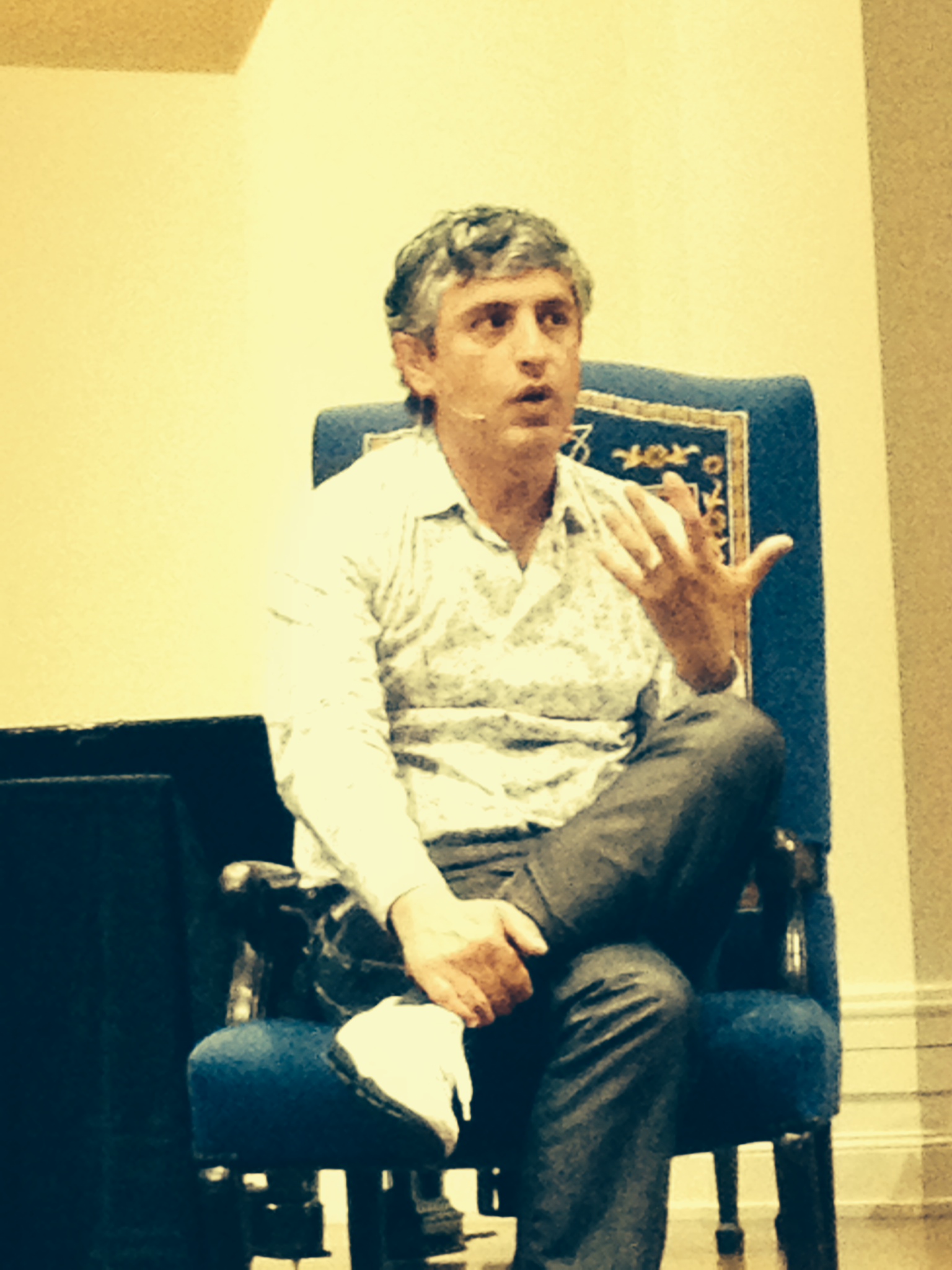
Last night I went to see and hear Reza Aslan part of the CIIS series: Great Minds Speaking on Provocative Subjects, at the First Congregational Church in Berkeley. I made the mistake of sitting in the first row. I’m very glad I did, even though the sound system in that church is located forty feet above the stage above and projects overhead, sending back a weird echo and no bass tones, so all of the commentator’s words and most of Reza’s were mostly unheard, especially the quips, followed by laughter. Next time I’ll sit further back.

Reza Aslan

Reza Aslan

In the question period, a woman asked him about the difference between “truth” and “history.” He leaned forward and spoke slowly and clearly. He mentioned a gospel and an example: one day a poor man came to the house of  — and asked for alms. The man who had a house had nothing else, so he gave him his shirt. That, Reza pointed out, is a generosity story to illustrate a quality.  No one who read that gospel saw that as news reporting.  There are many “one day Jesus…” gospel stories. Some contradict each other. As Reza writes: “none of the gospels we have were written by the person after whom they were named… These are not eyewitness accounts of Jesus’s words and deeds recorded by people who knew him.” That was understood. The gospel writers were offering teachings, not the biography — in the sense that we write biographical stories today. That is, history was a very different consciousness, a very different slant from twenty-first century storytelling. Yet, the twenty-first century readers often see it as  “gospel,” kind of cell-phone recordings, or the equivalent from that time.

So my brain is running — Ah Reza, you have found the elephant in the room and taken a picture of it for me!  My attempts in the last two years are to comb through and distill stories about Fatima, daughter of Prophet Muhammad: Fatima’s name is inscribed on the leg of God’s throne. Fatima crossed a bridge as narrow as a hair with thousands of Heavenly Beings, riding a blue horse….

These fragments are preserved, shared among those who wish to know about Fatima, while the room where Fatima spent her childhood sleeping and playing, the room to the left of the front door of her mother Khadija’s house is under sand and cement, sealed off. Her birth: We have Mary, mother of Jesus; Assiyya, wife of the Pharaoh; Kulthum, sister of Moses; and Hagar or Sarah, wife of Abraham who delivered Fatima when Khadija gave birth. Umm Ayman, who delivered Muhammad and was a servant in the house — isn’t mentioned, just those legends. So there is a gap. Poetry is good for this kind of situation, since it can give wings to words when the trail ends, as long as the reader can follow the new trail through air….  My job with Fatima is to haul all of it, a pack-rat’s-vehicle-of-lifetimes, to a place where I can chose what to hold, fold, walk or run away from…. a challenge that needs one thing; a quivering antenna, a very refined radar that keeps asking the question: what needs to be said here? 

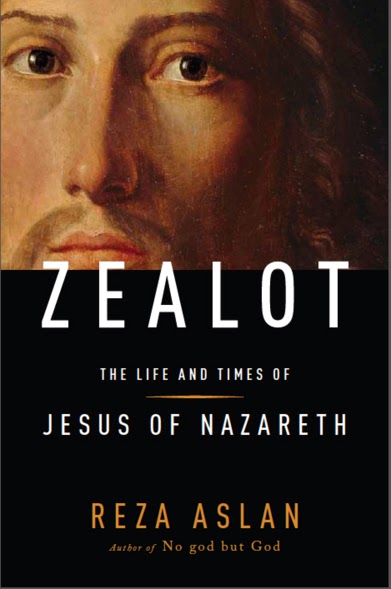
324 The next book I will begin on the plane tomorrow is Zealot, the Life and Times of Jesus of Nazareth, by Reza Aslan, Random House, 2013.

 “gospels” quote Zealot, p. XXVI

<>   <>

DOCTOR, LAWYER, INDIAN CHIEF…

21 Saturday Sep 2013

Posted by Tea-mahm in Uncategorized

≈ 12 Comments

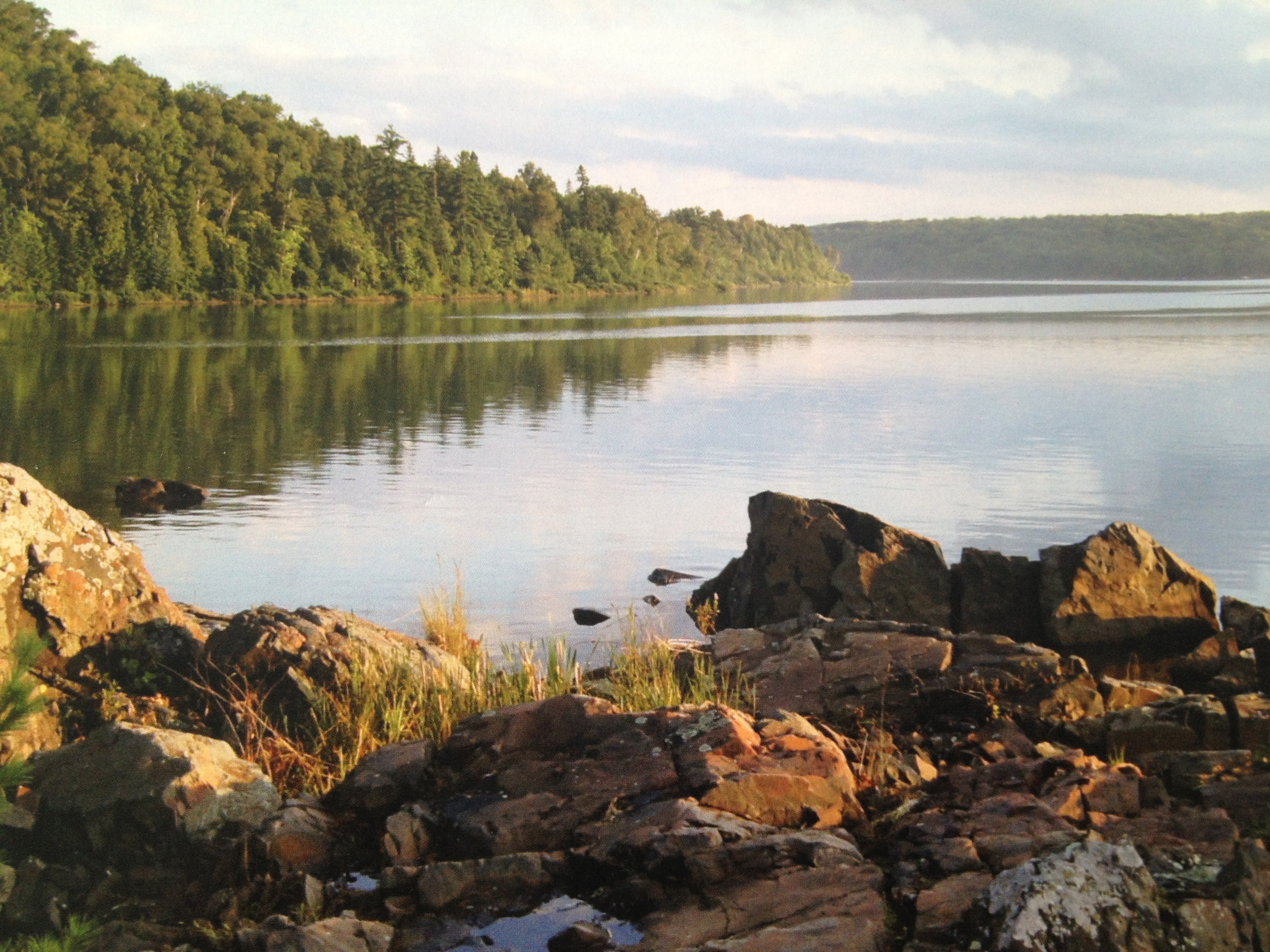
Desbarats on the Ste. Mary's River, Ontario...

Desbarats on the Ste. Mary’s River, Ontario…


There’s a doctor livin’ in your town
There’s a lawyer and an Indian, too…    [popular song from 1945]
 

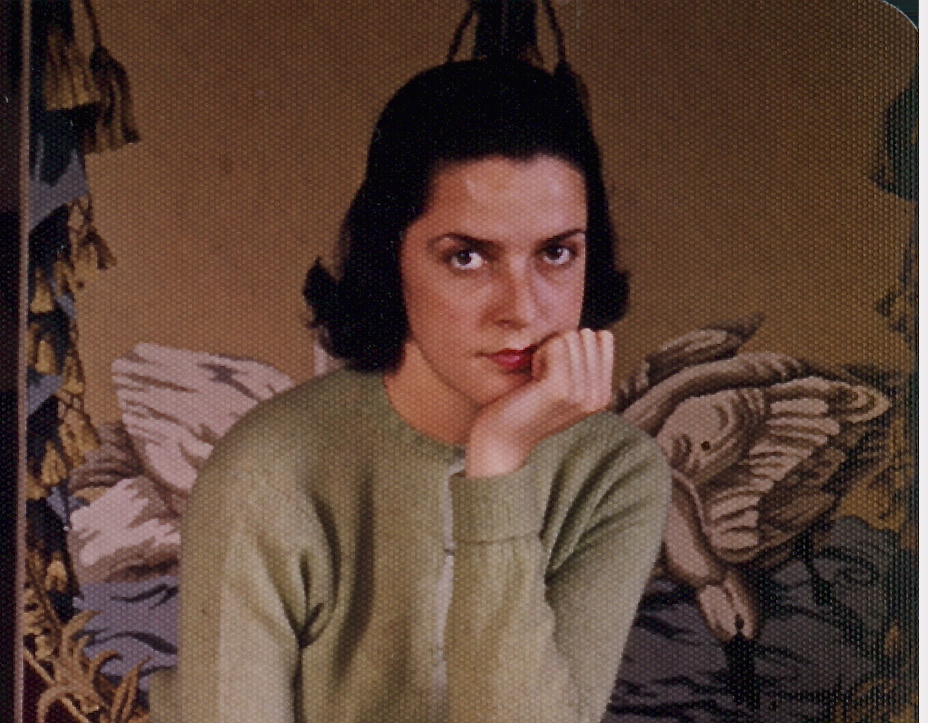
My Grandfather Proxmire, my mother’s father, was a DOCTOR. The man my mother married, John Baker, was a LAWYER, as was his father. And then there was the INDIAN CHIEF. These three men had a great effect on my mother’s life.

my mother, Adele

my mother, Adele

The Lawyer, John Baker, my father

The Lawyer, John Baker, my father

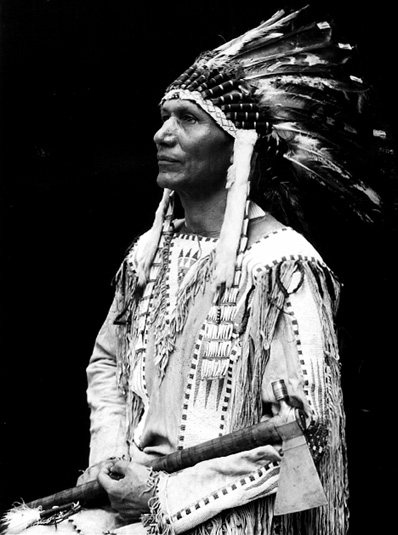
There was a mystery around “the indian,” an exceptional man who bridged two worlds, who lived a fifteen-minute walk in the woods from the cabin past the blueberry meadow, near the place called Killaly Point, South-east of Sault Ste. Marie, Ontairo, where my mother spent her childhood summers (and so did I). Her brothers used to tease her about Dr. Eastman. I’ve looked all over for the tiny black and white photo of her eldest brother, Ted, wearing Dr. Eastman’s feathers. The ones he is wearing in his portrait shown here. Can’t find it.

Dr. Charles Eastman, Ohiyessa

Dr. Charles Eastman, Ohiyessa

Dr. Charles Eastman,  also named Ohiyesa, (pronounced O eee su), “the Winner,” was born near Redwood Falls, Minnesota in 1858, great-grandson of Dakota Sioux Chief Cloud Man. His grandmother (Stands Sacred), was the chief’s daughter. Eastman’s  grand-father was a well-known Army officer, Seth Eastman. Their daughter, Mary Eastman, died soon after giving birth to Charles. Eastman’s own father was a full-blooded Sioux, Many Lightnings. The boy was raised by his grandmother, who fled with the 4-year-old to Canada, and gave him traditional training. Many Lightnings returned for him when the boy was 15 and took him into the white culture. Charles cut his hair, was raised in Mission Schools, and went to Dartmouth, graduating in ’87. He became a medical doctor with a degree from Boston University in 1889 and was sent back to Pine Ridge Reservation in South Dakota as a government doctor there. — the same year as Wounded Knee, 1890. He was close by the massacre and was the first doctor to reach the “blood-soaked field,” and treat the wounded. He experienced the horrible tragedy first hand. Three hundred Lakota died that day. He was never the same after that day.

<> He began to work to bridge the far-apart-worlds, wrote eleven books, numerous articles, lived in many places with his wife, social worker, Elaine Goodale. They even lived in D.C. where he worked at lobbing congress for his Indian Nation from1897-1902. Dr. Eastman believed that the teachings and spirit of his adopted religion of Christianity and traditional Indian spiritual beliefs were essentially the same, a belief that was controversial to many Christians, including his wife. They separated.

In 1928, Eastman purchased land near Desbarats, Ontario, within walking distance of the cabin, with a view of the North Chanel of the Ste. Mary’s River. For the remainder of his life, when he was not traveling and lecturing, he lived there in his simple wood cabin in the nature that he loved so dearly. He died in 1939 at age 80.

My mother was 10 when he moved there. Her brothers used to tease her about

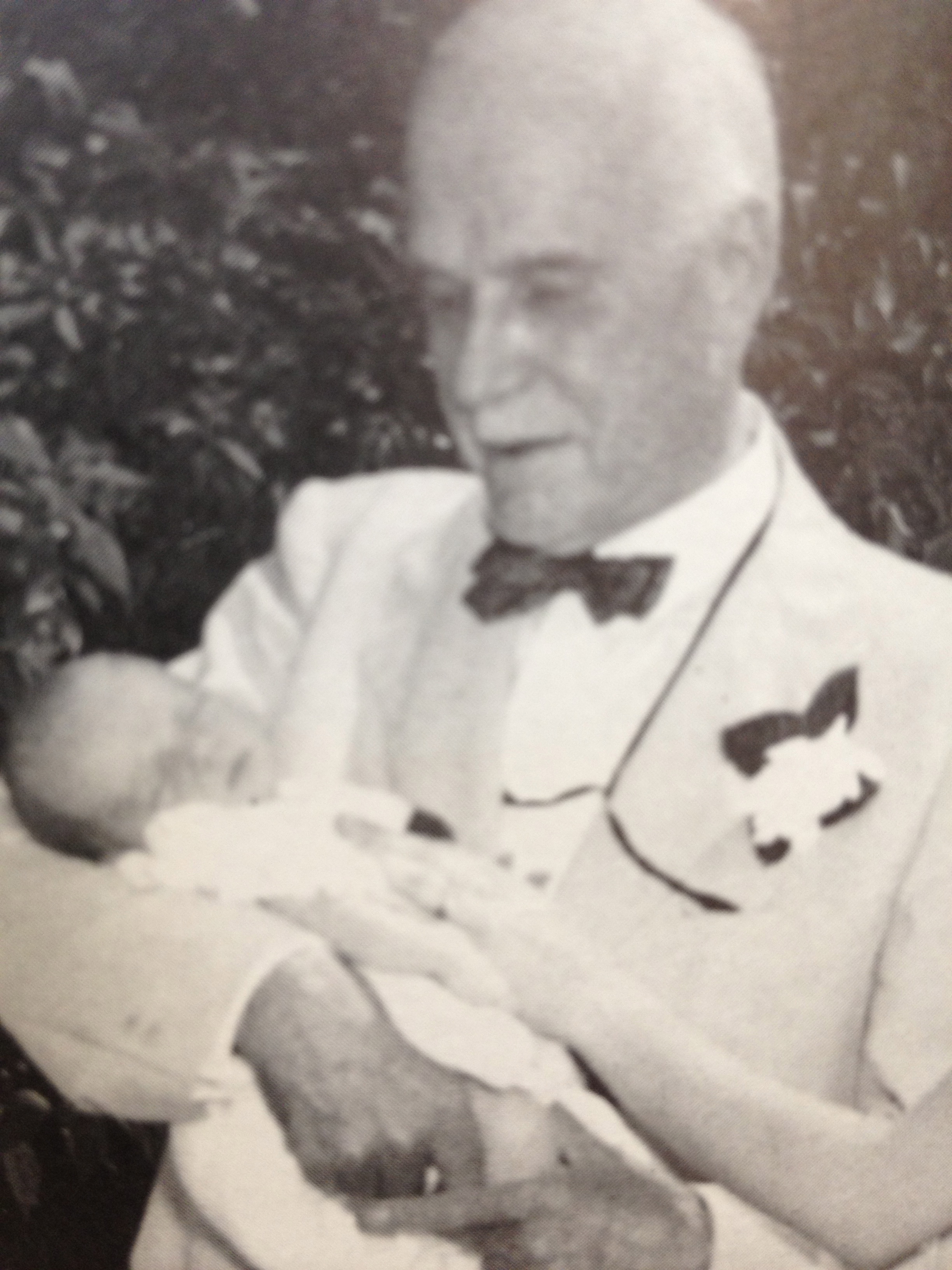
Doctor Proxmire with a baby he delivered, 1955

Doctor Proxmire with a baby he delivered, 1955

“the Indian” My mom was a teenager who wanted answers about life and the world. She never shared with me what he told her because she gradually lost her ability to speak or move much, due to severe M.S, so I never had those conversations with her that a girl would have with her mother. All I know is Eastman was in her early life and impressed her deeply. And Mother wanted to know about the Dalai Lama. She read Seven Years in Tibet, by Hendrich Harrer, when it came out in 1954.

When I met His Holiness the Dalai Lama with Shabda and my son, Ammon (age 5) in Dharmsala in 1976, he wanted to know why I was had come to see him. I said: because my mother always wanted to meet you. His Holiness was a real chief of all his people. I had grown up with the doctor and the lawyer, here was the Greatest Chief, who, like Dr. Eastman,  had to deal with two worlds, the one of a dominant race holding power and assumption of superiority, and the other of his own people… in this case, the Tibetans.

I just spent 32 days at a writing residency in the town where both my mother and father grew up, where I was born. One morning the phrase: Doctor, Lawyer, Indian Chief was running through my head. That is the story.

I'm on the porch roof just down the river from Dr. Eastman's cabin

I’m on the porch roof just down the river from Dr. Eastman’s cabin


        <>  <> May all beings treat each other with sincere dignity! <>  <>

.

Zaatari Syrian Refugee Camp ~ Can we take this in?

05 Monday Aug 2013

Posted by Tea-mahm in Uncategorized

≈ 9 Comments

Muslim refugee camp in Jordan

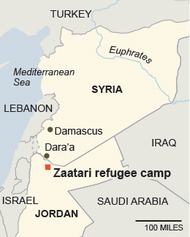
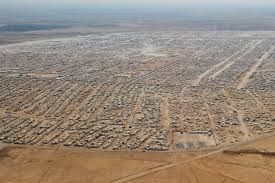
Zaatari Syrian Refugee Camp in Jordan —there it sits as my screensaver pic, lit and staring at me. It’s been there for two weeks, daring me to recognize it for what it is, birds eye view of an emergency residence for more than 115,000 people (as of July 15, 2013), thanks to the Kingdom of Jordan, the host. Each “box” houses families or supplies. They seem to have run out of prefab containers called “caravans” so the bottom of the screen has some tents, which give a perspective on the miles of boxed lives. Over 60,000 are kids, they say. Who can say how many Syrian refugees in Jordan? I walk outside and the backyard hillside is musical with spilling water from three stone containers and a small pump. Flowers and trees color my view as sun begins to burn through the fog. I am in an unlocked house in a town with no soldiers. My nephew-in-law is a local policeman. My nephew a building inspector. I know my neighbors. I feel safe.

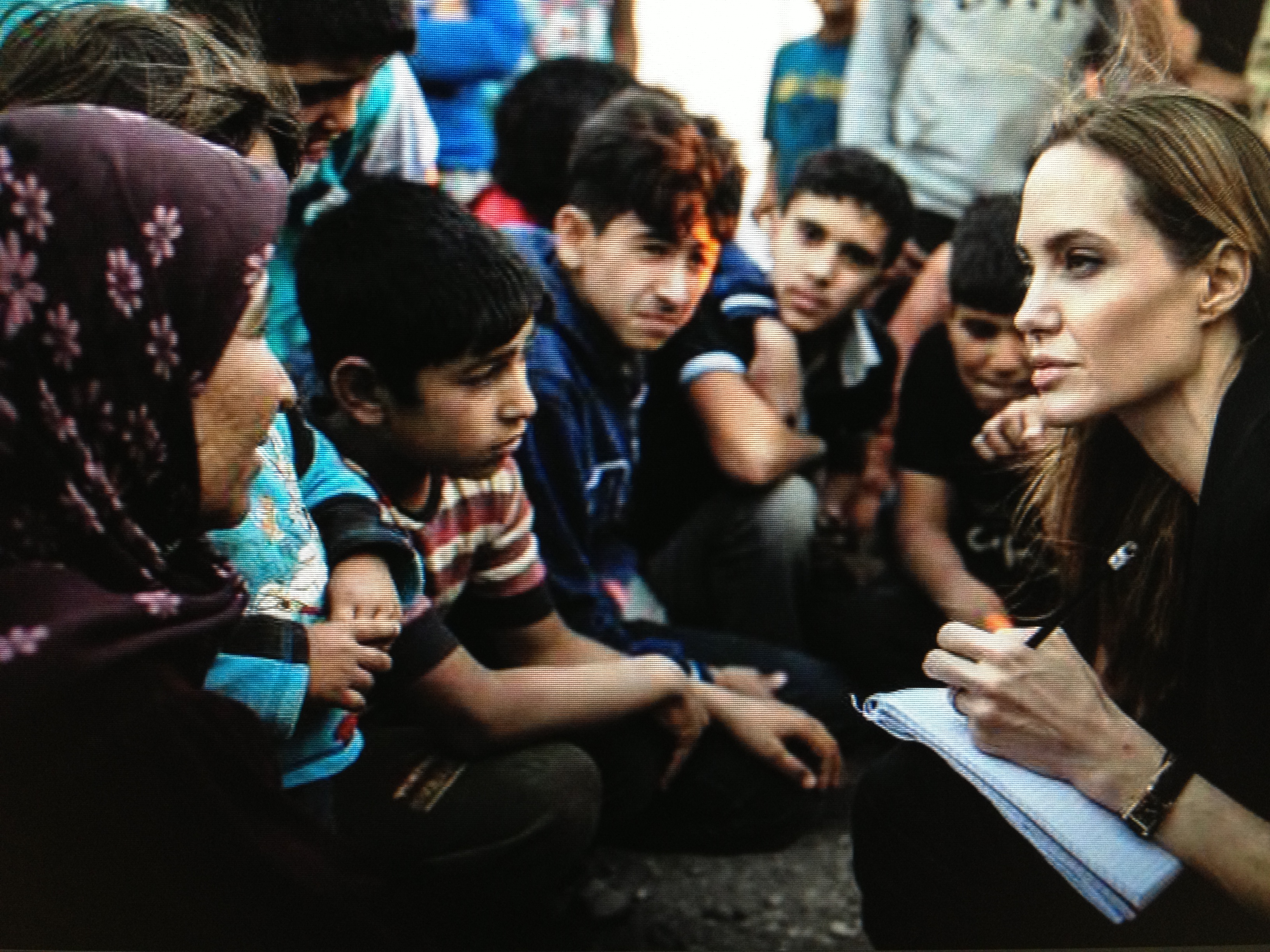
Angelina Jolie at Zaatari

Angelina Jolie at Zaatari

In June Angelina Jolie visited the camp and speaks to the growing crisis. She says: “1.6 million people have poured out of Syria with nothing but the clothes on their back., and more than half of them are children…… Every 14 seconds someone crosses Syria’s border and becomes a refugee.” <> http://www.telegraph.co.uk/news/worldnews/middleeast/jordan/10133034/Angelina-Jolie-visits-Syrian-refugee-camp-in-Jordan-on-World-Refugee-Day.html>

Oxfam International has installed solar powered lampposts outside several sanitation facilities, lighting the streets, so people could feel safe going to the toilet at night. UNICEF recently claimed lack of water and sanitation in the camp poses an enormous threat to the health of everyone, especially the children living there.

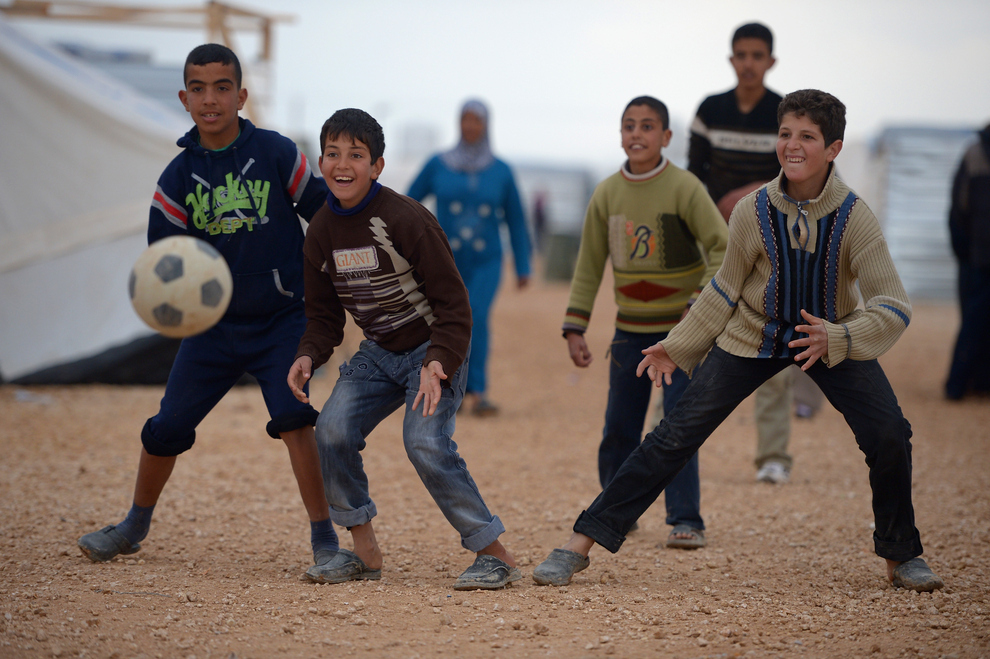
camp 2 kids

“Jordan’s Water Minister Mohammed Najjar said he has asked Western nations for donations to buy water for the refugees. Jordan suffers acute water shortages and has complained that the refugees were exhausting its limited resources.” Huff PostcWorld

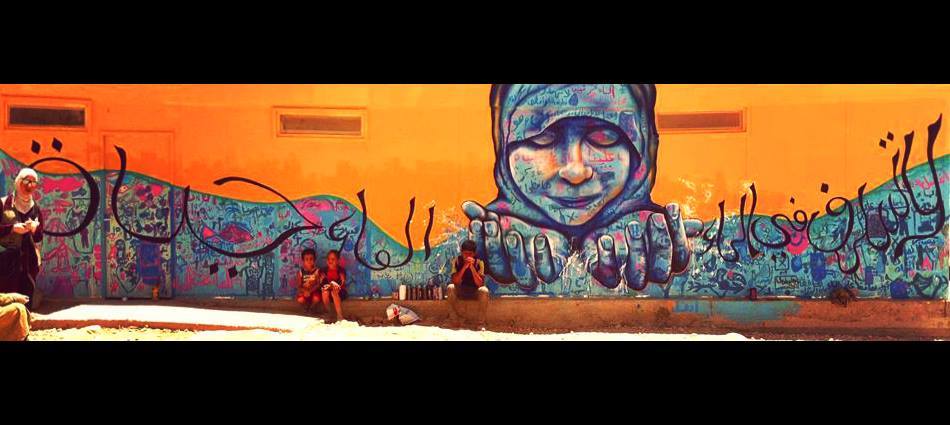
Samantha Robison's art project

Samantha Robison’s art project

The desert and water. I comb the internet for positive news. I found this special story. Samantha Robison (twenty-seven years old) founder of AptART brought art  materials to the young people at the camp to give them a means of expression. The artwork is a wonderful gift here. http://www.huffingtonpost.com/2013/07/23/aptart-samantha-robison_n_3640193.html

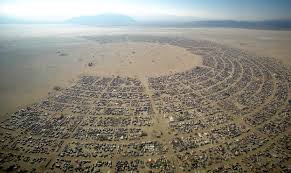
camp mapZaatari is a word that refers to a delicious Middle Eastern dish made up of wild oregano and toasted sesame seeds, I’m told. But maybe it means something else. The Arabic lexicon is illusive as I struggle for the root of the word. Food. My plum tree is heavy with fruit, tomatoes ready for salsa in jars. How can I justify living in a paradise garden while Syrians, some there I may have prayed with a decade ago, suffer such fear and uncertainty and the loss of nearly all that they value? I feel like the middle ground is being eroded, yet the only sane solution is to hold both extremes, the way I have held the unthinkable loss of my son, Solomon, a year and a half ago, held him in my heart along with the abundance of friends and beloved family. Sometimes one is in focus, sometimes the other, but all of this, every part — makes up my life and has inclusive value. So I look at this desert refuge camp, and I’m struck with the surreal thought that this is the time Burningman begins to come together a desert city — half the size of Zaatari — a celebration of life, way out in the Nevada desert. Two cities: one a sudden city of survival, the other — an enormous party of freedom and excess. Hold them both! I tell myself. May all beings have what they need NOW. May all have shelter, food and clean water, be well, safe, and happy.

the encampment of Burningman

the encampment of Burningman

Zaatari Refugee Camp

Zaatari Refugee Camp

More on this: http://arabist.net/blog/2013/4/2/the-zaatari-refugee-camp.html


Patience

02 Tuesday Jul 2013

Posted by Tea-mahm in Uncategorized

≈ 7 Comments

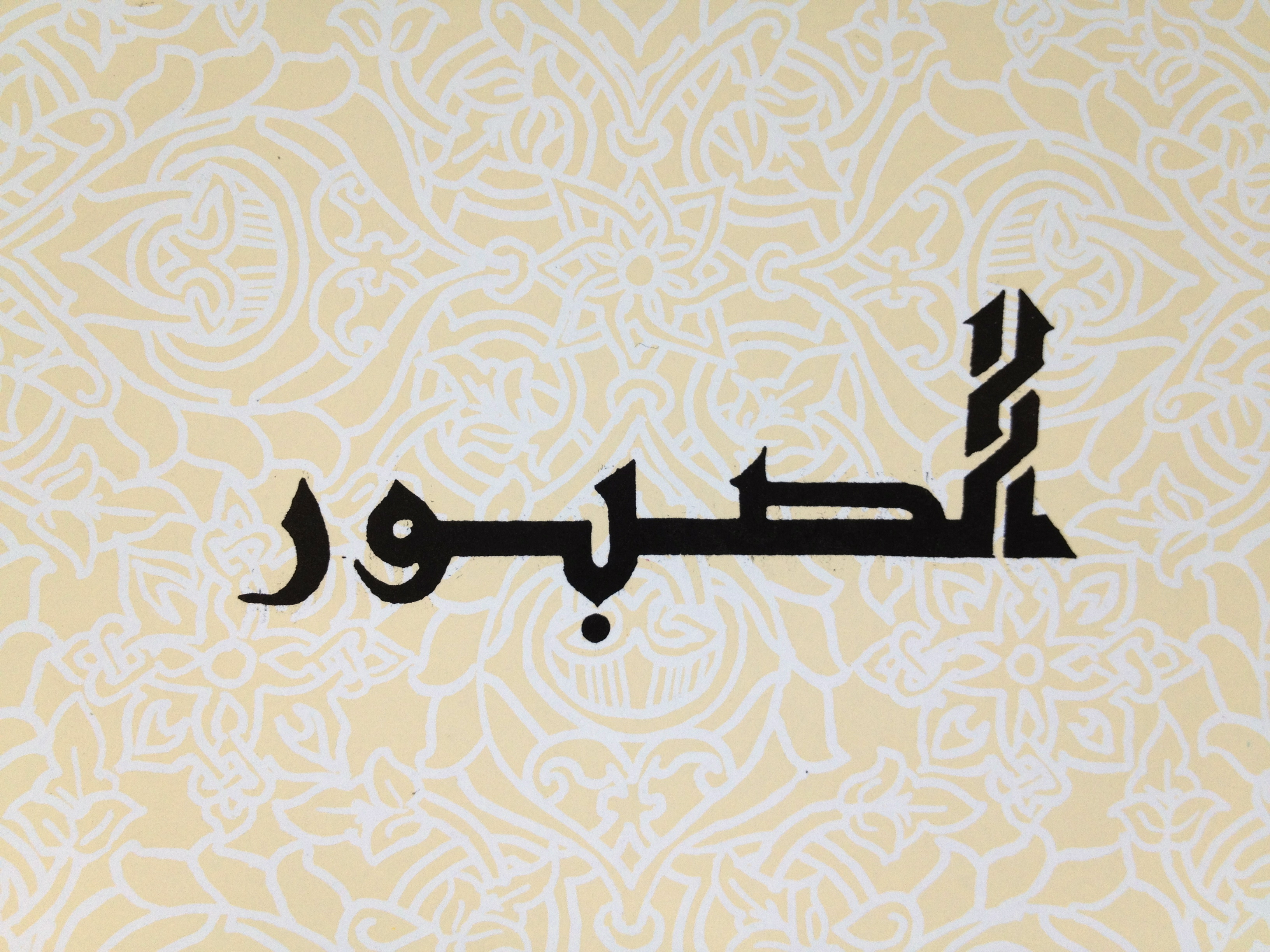
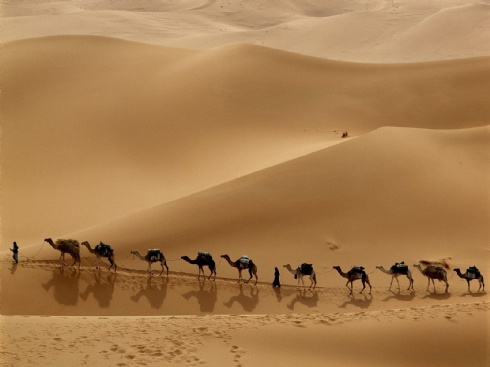
Ya Sabur  I looked up patience. The Latin/English meaning is proportioned as a small donkey beside a great camel caravan of Arabic usage. Sabr means patience and much more.  The Oxford Dictionary, a somewhat thoughtful book, defines it as: “… the capacity to accept or tolerate suffering without becoming annoyed or anxious.” … from patiens, patientis (latin),  patient (patience) and “able to endure.”

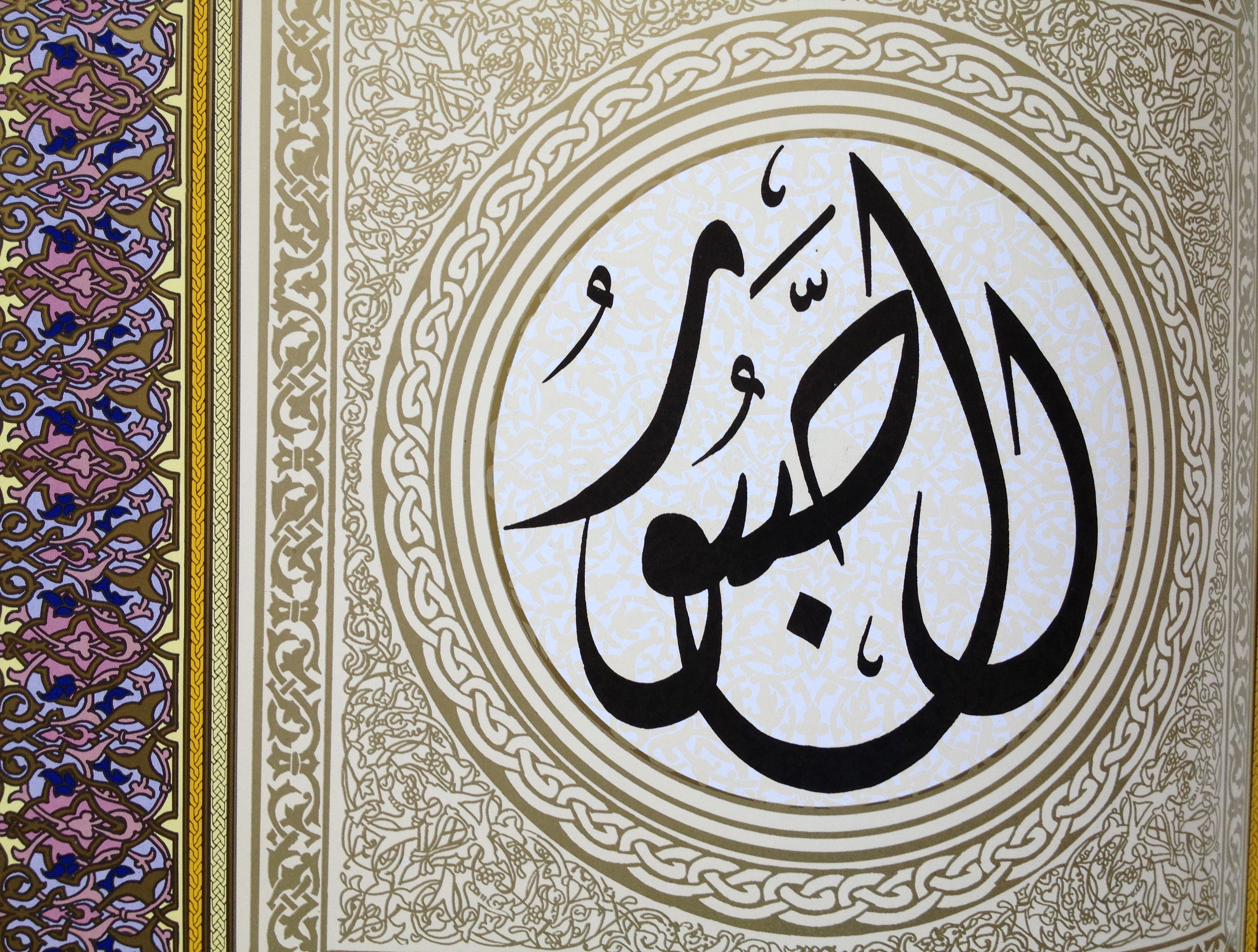
Ya-Sabūr is the last Divine Name of the 99 Beautiful Names of Allah. There is a sense of accumulated development; one who continually manifests sabr is  called Sābirūn. This manifests “perfect equilibrium and moderation in all that he (she) does.”1

I’ve been reading about Fatima az-Zahra, daughter of Prophet Muhammad. Reading and reading. Writing about her life. Friends send me articles. Here’s a sentence from the Mafatih of prayers to Fatima. (The “He” is Allah.) When He tested you, He found you to be patient under affliction…2

Sabr means giving up complaining.  Something I work on constantly. When I am  at ease with someone, it seems to open a door that holds a closet of complaint and the furniture of annoyance spills out before I can press it shut. Here is the rectangular glass dish that seems to be coated with baked-on dark crust

camel-caravan-libya_43370that needs heavy scrubbing every time it lands in the sink. I complain. The stopped traffic. Mmm. Sabr means go easy. Make a joke about it. Be in the present. Gratitude seems to feed all the camels in the caravan of patience.

Cultivated sabr prepares you to withstand hardship. There is also a sub-meaning in the root (SaBaRa)  to bind, tie, or fetter — a no escape clause. Canned, preserved, food is called musabbarāt.

The great Sufi, Junaid, says, “Patience is swallowing a bitter draught with out displaying a frown or scowl.”3

And what of sabr as a jewel of mysticism? One of my favorite books, Physicians of the Heart notes: “As-Sabūr embodies development of complete inner capacity. It is a great container that enables a spiritual student to endure the long journey of the path…”  and  “….According to the story in the Qur‘an of Khidr and Moses, sabr is the one essential element for following the path of mystical union.”4  Why? Moses is unable to trust Al-Khidr, the one annihilated in truth; the one unveiling higher understanding while seeming to do cruel and harmful acts. Al-Khidr tells him,” You will not be able to have patience with me.”  Moses insists he will be patient. The master proves him wrong. The story hints and plays with the power of sabr. It takes up sixteen verses of the Qur‘an. 5

It occurs to me that deep patience is an antidote against anger and reactivity. The patient person contains his (her) reactions at the onset.  That is, being so very onto yourself, you could shoot an arrow across the spaciousness of your mind… and it would not reach the other side. I was amazed to see, after I’d written this that there is an expression for being “at the end of one’s patience” in Arabic that translates: “There is no arrow left for the bow of my patience!”

I am thinking as we age this is an essential quality — to be patient with all we can no longer do so well. Aging, limitation. My mother-in-law, Ilse, was quite graceful at turning her book-keeping over to my husband. Giving up driving was harder. She, a precise, well-organized woman could no longer do those things.

When the Prophet whispered to Fatima he would die soon, the advice he gave her was to keep sabr and taqwā, superficially translated as patient and fearful of God, 6 but the mystical meaning is “to remain steadfast on the path to Allah like holding a burning coal in one’s hands…”7

as-Sabur, beautiful calligraphy from Jordan

as-Sabur, beautiful calligraphy from Jordan

The inner meaning of taqwā is awareness of Unification, no separation. All is infused with God-consciousness. That was her father’s message to her. The timing of this message is good, as I have not been able to distill the story of Muhammad’s whispered message. Now maybe, I will.

<>    <>    <>

1  The Most Beautiful Names, compiled by Sheikh Tosum, 1985. p. 133.
2  Chittick, A Shiate Anthology, 1981. p. 18.
3 Shaikh ‘Abd al-Qadir al-Jilani, Sufficient Provision for Seekers of the Path of Truth,
vol. 5, 1997. p. 141.
4 Wali Ali Meyer, etc… Physicians of the Heart, p. 76.
5 Qu‘ran, 18:66-82. Also Talat Halman’s new book, Where the Two Seas Meet, 2013.                  
6 Hadith: (Bukhari, #8.301)
7 Hadith: Anas ibn Malik/ Al-Tirmidhi.

Mahmoud Darwish translated by Fady Joudah

09 Sunday Jun 2013

Posted by Tea-mahm in Uncategorized

≈ Leave a comment

Tags

mahmoud darwish poetry

Posted by Tea-mahm in Fady Joudah, Mahmoud Darwish, Poetry
≈ Leave a Comment

[Edit]

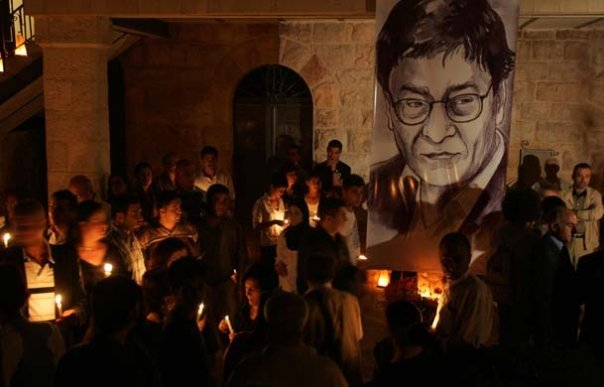
Near the grave of Darwish....poetry is difficult yet possible, but it cannot change the world. However, it can light little candles in the dark.

Near the grave of Darwish, Ramallah …poetry is difficult yet possible, but it cannot change the world. However, it can light little candles in the dark.

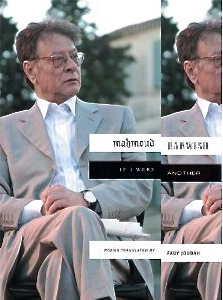
 Mahmoud Darwish, If I were Another <> translation, Fady Joudah, Farrar, Straus, Giroux, 2009.

Mahmoud Darwish,  If I were Another. I love this book! Finally an Arabic-to-English translation that gives me an elegant bridge of words between two languages. These languages are distant, so far from one another that the intuitive engineering is a feat that deserves profound and grateful recognition, especially for the epic poems.  Fady Joudah, thank you for this achievement. (He won the 2010 PEN Literary Award for the translation). He also translatedThe Butterfly’s Burden by Darwish, 2007.

I was struck by the book’s cover photograph. I had the rare feeling that I really knew this person, although I never met him. How beautifully the picture captures the Darwish book coverqualities of dignity and intelligence! How perfect his suit is – finely crafted, the color, elegant. This man is the Poet of the Palestinian people! I offer a prayer for all Palestinians: Ya Salam! May Allah create peace, may you find a refuge of peace, be safe and slowly heal, secure from harm.

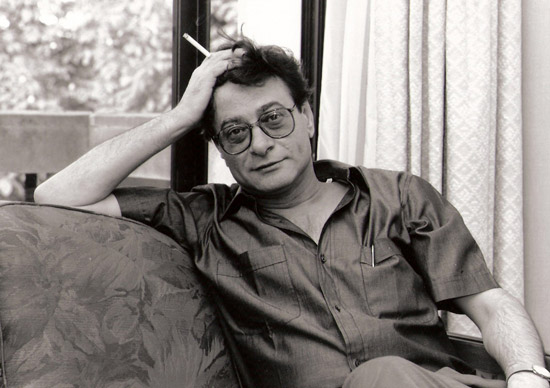
Poet, Naomi Shihab Nye, has said, “Mahmoud Darwish (1941-2008) is the Essential Breath of the Palestinian people, the eloquent witness of exile and belonging, exquisitely tuned singer of images that invoke, link, and shine a brilliant light into the world’s whole heart. What he speaks has been embraced by readers around the world—his in an utterly necessary voice, unforgettable once discovered.” [www.poets.org]

Darwish was born in 1942 into a land-owning Sunni Muslim family in Birweh, a village in Galilee, under the British mandate in Palestine. When he was six, the Israeli army occupied Birweh and Darwish’s family joined the exodus of Palestinian refugees, estimated by the UN at between 726,000 and 900,000. The family spent a year in Lebanon on UN handouts. After Israel’s creation and the Arab-Israeli war of 1948, the family returned “illegally” in 1949, but found Birweh was one of at least 400 Palestinian villages razed and depopulated of Arabs, Israeli colonies built on its ruins. Darwish says, “We lived again as refugees, this time in our own country. It’s a collective experience. This wound I’ll never forget.” 

The family lost everything, says Darwish, the second oldest of four brothers and three sisters. His father, Salim, was reduced to agricultural labour. “My grandfather chose to live on a hill overlooking his land. Until he died he would watch [Jewish] immigrants from Yemen living in his place, which he was unable even to visit.” <http://www.mahmouddarwish.com/ui/english/ShowContent.aspx?ContentId=23&gt;

Darwish1

“…poetry is difficult yet possible, but it cannot change the world. However, it can light little candles in the dark. It is true that poetry is fragile, but it has the strength of silk and the sturdiness of honey.” MD

 POEMS: excerpts from Counterpoint, Mural, and Rita’s Winter follow ~

Counterpoint, 2005, [a farewell conversation between himself and Palestinian-American Edward Said, who died in 2003].
 
…On the wind he walks. And on the wind
He knows who he is. There is no ceiling for the wind
And no house. The wind is a compass
To the stranger’s north.
He says: I am from there, I am from here,
But I am neither there nor here….
 
(Darwish asks him):
–Then you are prone to the affliction of longing?
–A longing for tomorrow is farther and higher.
My dream leads my steps. And my vision
Seats my dream on my knees like a cat.
My dream is the realistic imaginary and the son of will….
 
(and here they both share this terrible reality):
…Blood
                  and blood
                                        and blood
                                                            in your land
in my name and yours, in the almond
blossom, in the banana peel, in the infant’s
milk, in light and shadow,
in wheat grains, in the salt container.
Proficient snipers hit their marks
with excellence
                                       and blood
                                                               and blood
                                                                                          and blood…

 <>   <>   <>

Darwish night

Mural, 2000, a 45 page epic poem about his engagement with Death, a hospital room, and visions. He begins talking to himself:

…I am other than me. The fig orchards haven’t ripened
around the girls’ dresses. The phoenix
feather hasn’t birthed me. There’s no one there
waiting for me. I came before, I came
after, but found no one who believes what I see…
 
    ––Death, be a kind friend…And you might
have saddled a horse for me to kill me on it. As if my language,
when I remember forgetfulness, can rescue
my present. As if I were forever present. Forever
a bird. As if my language, since I’ve known you,
has become addicted to its fragility on your white vehicles,
higher than the clouds of sleep,
when feeling is liberated from the burden
of all the elements. Because you and I on God’s road
are two Sufis who are governed by vision
but don’t see.  

<>   <>   <>

from the love poem: Rita’s Winter [from Eleven Planets, 1992]
 
                  …Rita cracks the walnut of my days, and the fields expand
and this small earth becomes mine,/
like a room on the ground floor
in a building on a street on a mountain
that overlooks the sea air. I have a moon of wine/
and I have a burnished stone…
 
                  …And she broke the ceramic of the day/
against the iron windowpane
placed her handgun on the poem’s draft
threw her stockings on the chair, and the cooing broke…
then she went barefoot to the unknown, and departure reached me

<>   <>   <>

(no punctuation on the last word of this 6 page poem)

12422706-an-image-of-the-palestine-flag-painted-on-a-brick-wall-in-an-urban-location

Fady Joudah reading his trans…http://www.youtube.com/watch?v=yOxismkzCn0

Tribute on Democracy now… http://www.youtube.com/watch?v=1SUm-7M6yP8

Re: Arab schools in Israel: The Education Ministry has approved the inclusion of the works of the Palestinian national poet, Mahmoud Darwish, in the Israeli-Arab curriculum starting next year. The additions mark the end of a decades-long struggle to bring controversial writers to an impoverished list…. Raymond Marjiya and Omri Meniv report.(March 29, 2012) Read more:http://www.al-monitor.com/pulse/culture/2012/04/arab-poets-and-writers-in-the-ar.html#ixzz2Vf7knA5e

<>   <>   <>   <>   <>

Mother’s Day ––not all sweetness and light

13 Monday May 2013

Posted by Tea-mahm in Uncategorized

≈ 22 Comments

IMG_3910 - Version 2

As the day went by I felt more sharply the need to address the Mother’s day bubble – with a pin.

Mothers Day can be a painful day. Many have lost a mother this year, making this the first Mothers Day without her. Some mothers were elderly. Then there’s the loss of the wife and mother of not-yet-grown children.  Such a fragile, delicate time!

Today we spent the day at the home of a close friend who adored her mother, and would never be with her again because she recently died. My mother passed on in 1967, but I lost a son sixteen months ago. I was not with him today, and he will never call me on the phone to wish me happy Mother’s Day. I’ll say it. There are thousands and thousands of us who must endure Mothers Day.

Mothers Day began in recognition of a “memorial” [according to Wikipedia,] but now we are in the business of holidays. “The modern holiday of Mother’s Day was first celebrated in 1908, when Anna Jarvis held a memorial for her mother in Grafton, West Virginia. She then began a campaign to make “Mother’s Day” a recognized holiday in the United States. Although she was successful in 1914, she was already disappointed with its commercialization by the 1920s.”

What would she think now? A card, flowers –– profitable on a large scale. What about restaurant lunches? dinners? hey, clothes and jewelry! Now I see why the newspapers, magazines and TV mention Mothers Day for weeks leading up to this Sunday. You cannot escape the little smiling reminders – everywhere.  No one treats it like a memorial, respectfully admitting that – for many people – this is linked to death and grief, a family tradition that has stopped, is no longer. We need to honor their loss.

Shabda said he thinks it is good to have mothers recognized and appreciated, that it is black rose from Turkeygrateful family time. I agree. He reminded me that Tibetans suggest we act as if every being in some life time is or will be our mother; that if we imagine every being as our mother, we will learn to care for each other. Yes, all true.

There is Mother Earth. Then today I brought to mind my two grandmothers, my own mother and my beautiful god-daughters. (Several were in touch with me today.) And my sweet son Ammon, who did call me. This softened my sense of injustice.

But I keep thinking, if this is painful for me, what about the others who are in the early stages of grief, or who have conflicting feelings about their mother, what about those who have lost a father, having to go through this in June –– Fathers Day. What is it about the lack of sensitivity in our culture around celebration, loss and bereavement? I am not writing this for sympathy, but because I just want to hear it said.  <>

Pray for Damascus!

05 Sunday May 2013

Posted by Tea-mahm in Damascus, Syria, Travel, Uncategorized, Updates

≈ 9 Comments

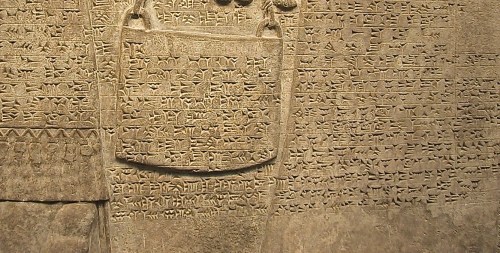
cuneiform tablet

From Syrian Poet exiled in France – Adonis:
                                       Trans. From Arabic: Bassam Frangieh
Tomorrow when my country sings
With love flowing from me,
I erase the blackness with my face
And become a nation for every nation
So no darkness remains in our land
And no evil remains
Thus, say, I am free
And say, you are free.
syriahands2

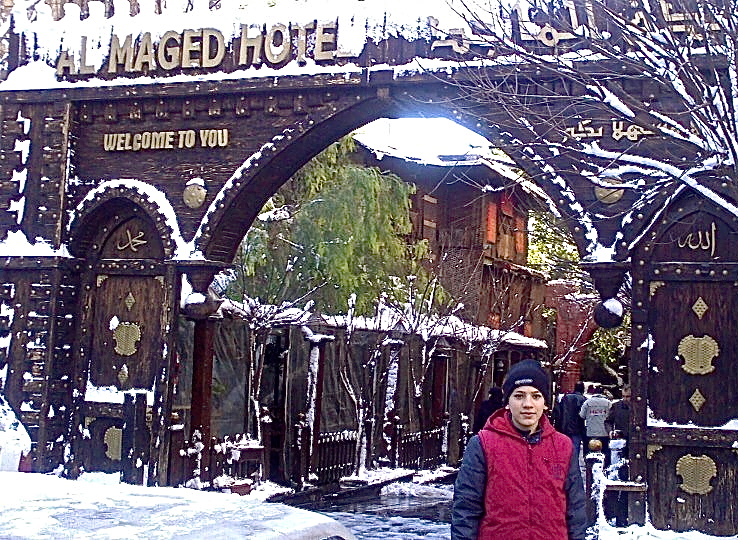
Today I saw a name on my facebook request, someone I’ve thought about from time to time over the last decade. He is in management at the hotel where we stayed in Damascus, the Al-Majed (Spelled this way on the card, Maged on the building…). It will be 10 years this November, that Shabda and I landed in Damascus as part of a peace delegation headed by Elias Amidon and his wife, Rabia.

The fact that Damascus is caught in terrible civil war breaks my heart. Damascus may be the oldest continuously occupied city in the world. World Heritage states it was founded 3400 BCE. In 2003 it felt very safe to walk around there, and I did, often alone, feeling the heady ancient qualities, as if in the protection of a wise elder.

Our hotel was near a very high-end international hotel, and I had a daily routine of buying the International Herald Tribune there then stopping for a bag of fresh greens at the open market on another street. I’d ask the kitchen to lightly boil the greens for me. My friend, who worked at Al-Majed, needs to be mentioned here. When I returned from the north earlier than our peace-group, this man, whom I will call “B,” watched out for me.  One morning he took me to the Al-Assad National Library, when he learned about my interest in writing about Prophet Muhammad’s wives.
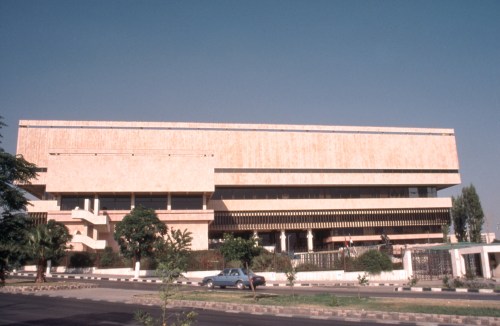
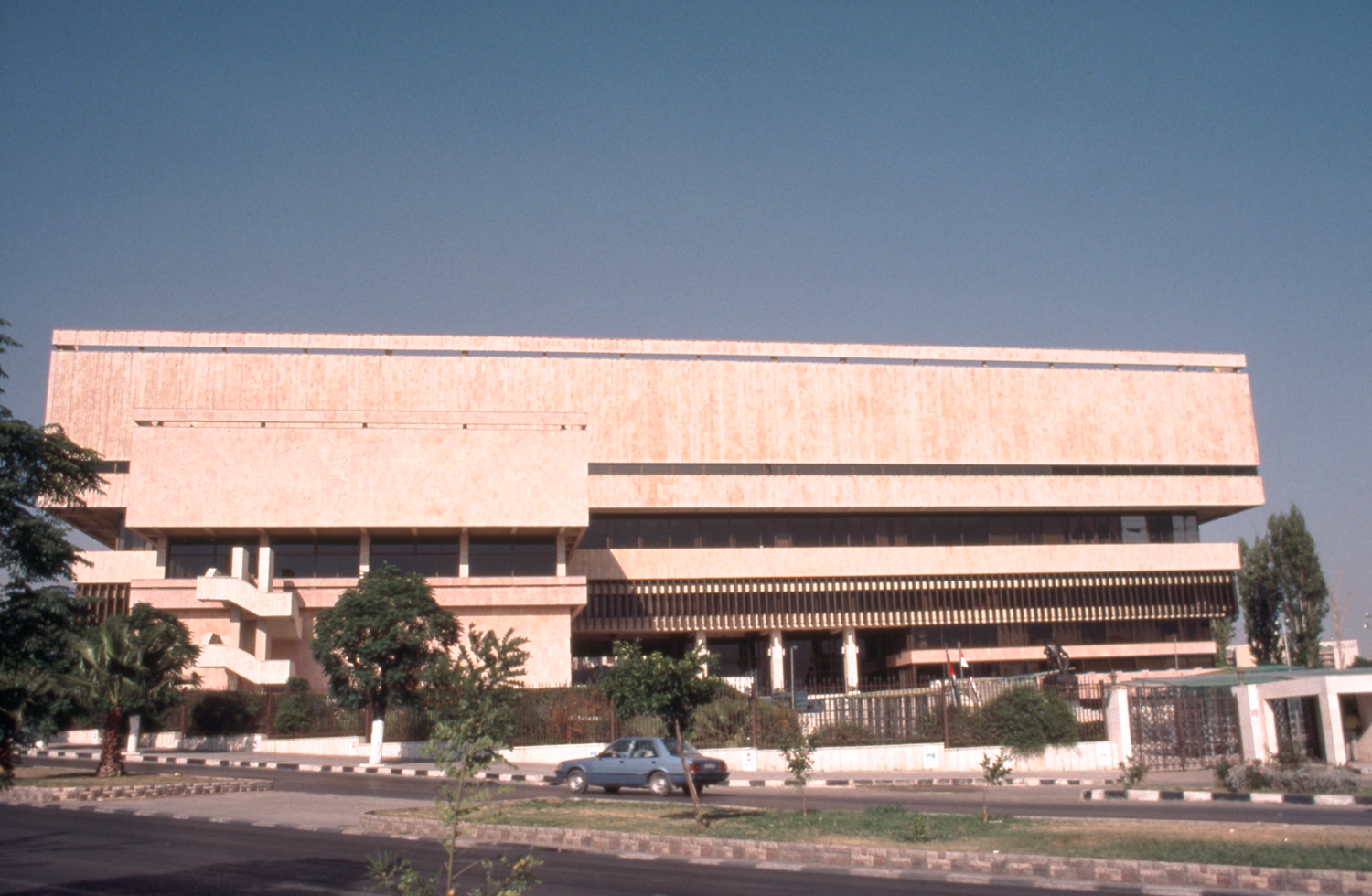
Al-Assad National Library Damascus

Al-Assad National Library
Damascus

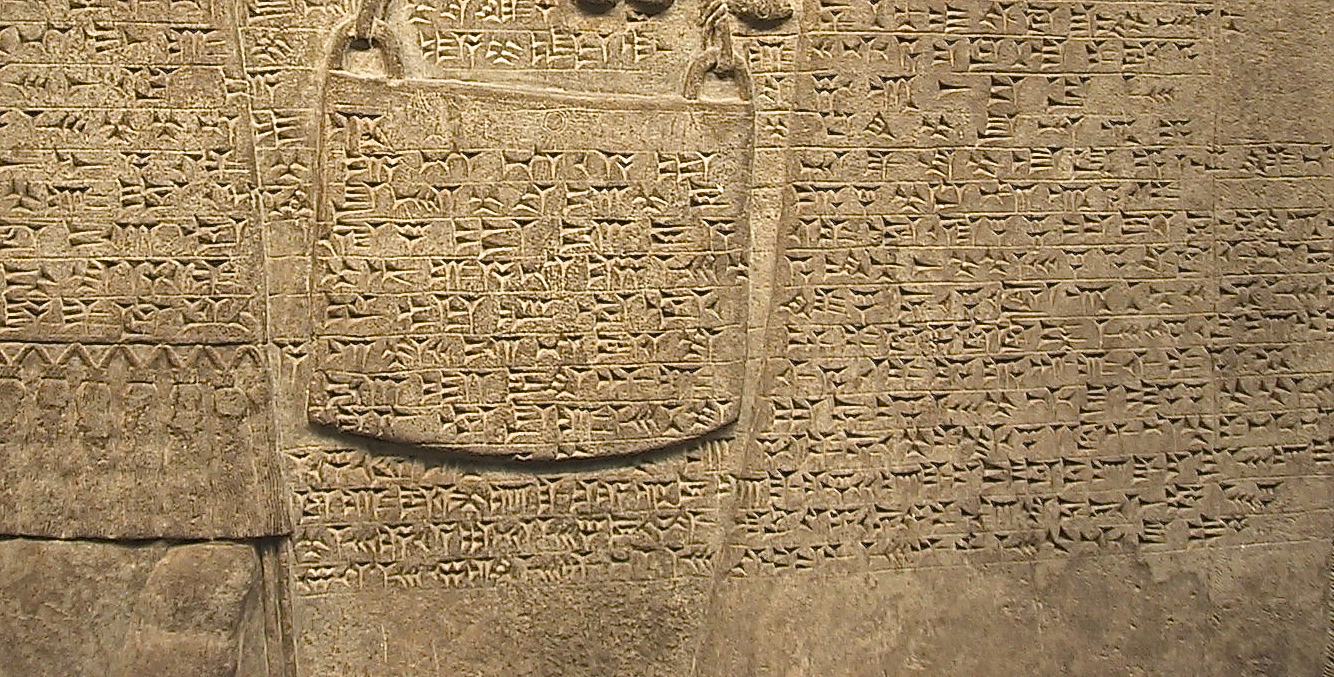
What a place! Built in the 1980’s this fancy new building houses all kinds of literature connected to the “ancestral cultural lineage,” 9 floors (two underground) and 40000 titles. B talked to the guard and convinced him that even though I was an American, he would vouch for me, that I needed entry, and here was my passport. (That was the era of Syria named as part of “The Axis of Evil” by President Bush.)  I recall the place as vast and new, with a fountain and at least one cuneiform tablet on the wall. Wait. A Cuneiform Tablet just hanging on the wall? The first historical reference in the world was languaged in that writing on a tablet. Here is a good quote: “The tablets give a background into the world in which the Old Testament  grew up.” [Researcher Ted Lewis June 1996, Biblical Archeologist.]

This library containes rare books in many languages and precious manuscripts – the pride of Syria.  There is a map room. (Sadly, I never made it back to see detailed maps of 7th century Arabia…)  After B left me there to pick his child up from school, I looked for someone with English. I asked how to obtain a stack of books on my subject, to sit and look through. She pointed to a long hallway with a fifties-style office of the chief official who approved and issued passes for the reading room. As-salamu ‘alaykum, I said, English?  Wa-lakum as-salam, he replied, Française?  And that was it. Me speaking my terrible un-conjugated French, my dismal Française, begging for a three-day card, as if my literary life depended on it. I think he smiled. I know he signed the card which I have framed and include here. It hangs over my desk.
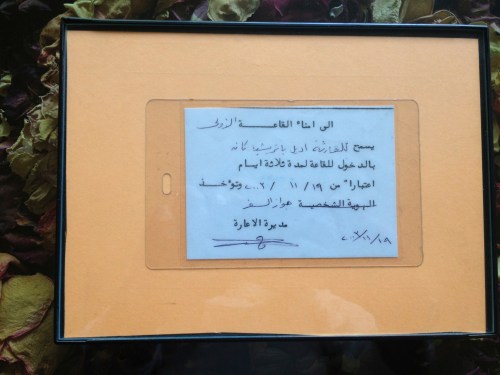
Al-Assad Library Card with my name on it!

Al-Assad Library Card with my name on it!

I spent the next two hours blissfully reading stories like that of the eclipse that happened right after Muhammad’s son Ishmael died, writing down sequences (they are before me on this pad: s27 614, outline of bio…. S14 809, Khadija, Mother of the Orphans….).  I left as the great library closed its doors early, since it was Ramadan. I remember the chair I sat in, the look of the director’s desk, the cuneiform tablet.  All thanks to B.

The night before I got a call from someone who said he was calling from the American Embassy and they were evacuating Americans from Damascus  — within the hour. He said there would be a helicopter on the roof.  I’d seen that roof.  B, is this you???  Great peals of laughter.  It was – a joke. At that moment I felt at home in Syria –– and I made a friend.  Ten years have passed.
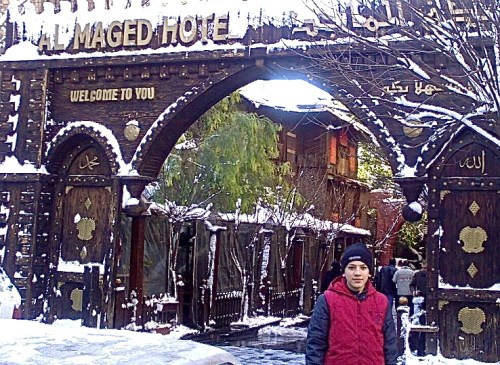
Al-Majed Hotel in the snow, and my friend's son

Al-Majed Hotel in the snow, and my friend’s son

So here is the conversation I had on facebook.

Me: B, is this really you from the Al-Maged in 2003? Good to be in touch.

B. oh yes, Thank God , you talked to me.  The hotel is only for Syrians now fleeing from the war since we are still a bit safe area.

Me: My prayers are for you to be safe! I have such a good memory of the telephone joke you played when I was there. Also how good it was of you to take me to the library!

B. God bless you   Thanks You don’t know our needs of some nice words like this…

Tonight there was a video of an explosion and bombings that were happening in Damascus. One way we can connect with these terrible things in a healthy way is to see the face of a friend living there. To have him or her in our prayers, to walk that tightrope between obsessing rage-fully about injustice and putting the whole thing out of our mind and heart –– because it is too painful. I invite you, my friends and readers to send a prayer to Damascus, to B and his son, his mother, and his wife, to the spirit of protection and PEACE.
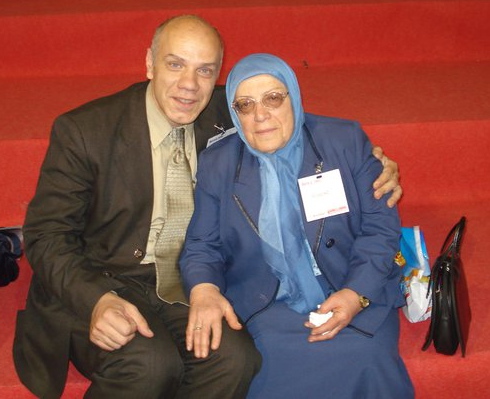
Bayan and his mom


<>   B and his mother, may they be safe and well . <>

(for more on Damascus Peace Journey 2003, see Damascus Journal part I and Damascus Journal part II  here on Completeword.)

<>   <>   <>
Wyoming Writer’s Residency

21 Thursday Mar 2013

Posted by Tea-mahm in Uncategorized

≈ 3 Comments

IMG_6566

This afternoon I was standing in the stile (a series of steps or rungs over a wall or fence  as a barrier to sheep or cattle) at the entrance to the thousand open acres behind the residency, and up by the peak was an eagle, then another one. I caught a far-away shot of one circling near the half-moon. I wish I had taken Shabda’s high magnifier camera. This morning: a pheasant and a redheaded woodpecker.  At dawn the white peaks  of the high western mountains turned pink and all shades of Waldorphian pastel…
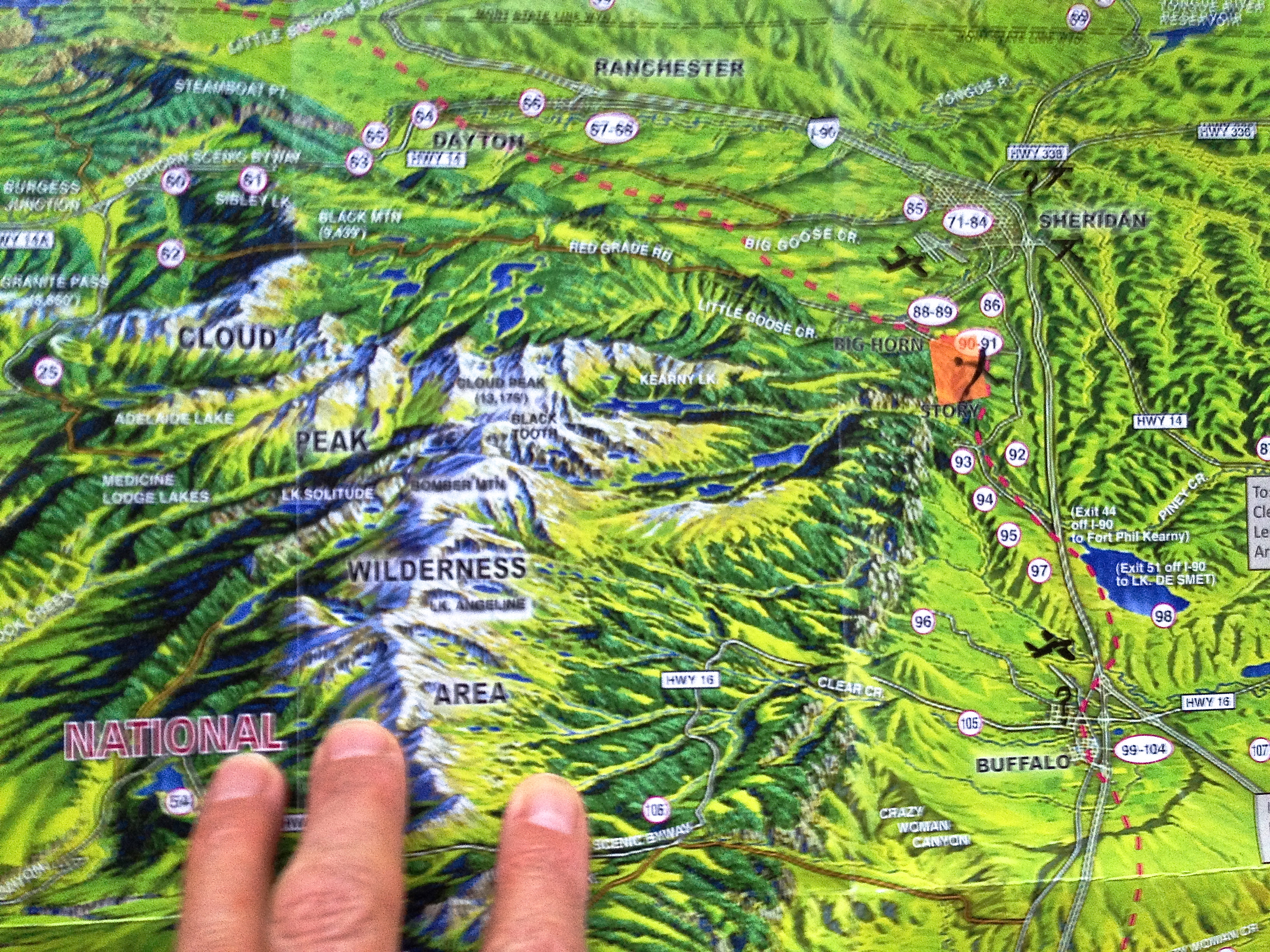
Map showing CloudPeak Wilderness area and the orange mark is us...

Map showing CloudPeak Wilderness area and the orange mark is us…

There are four artists here and two writers. Seth and I disappear into the writing studios after breakfast and he writes prose while I rewrite poems and promise myself to come up with a new subject every day. The studio has a propane fireplace, a comfy chair, desk and writing chair as well. Windows look at the eagle cliff and curtains cut the snow glare.  From first arrival a few days ago, each of us is stunned to be in this beautiful, creative environment, cannot believe our good fortune to be given this gift, and really given. The mother of this residency lets us be here free of charge.  Our job is to create wows of visual art or wonderful word play.

The temperatures shift wildly from sort-of-warm in the afternoon sun to really really

the driveway...

the driveway…

chilly. The altitude is 4,000 feet. We get the local paper on the table every morning and .75 cents is the price printed on the first page. Last night the stars looked as if they had been washed, and the sky darkened to dramatize the arrangement.

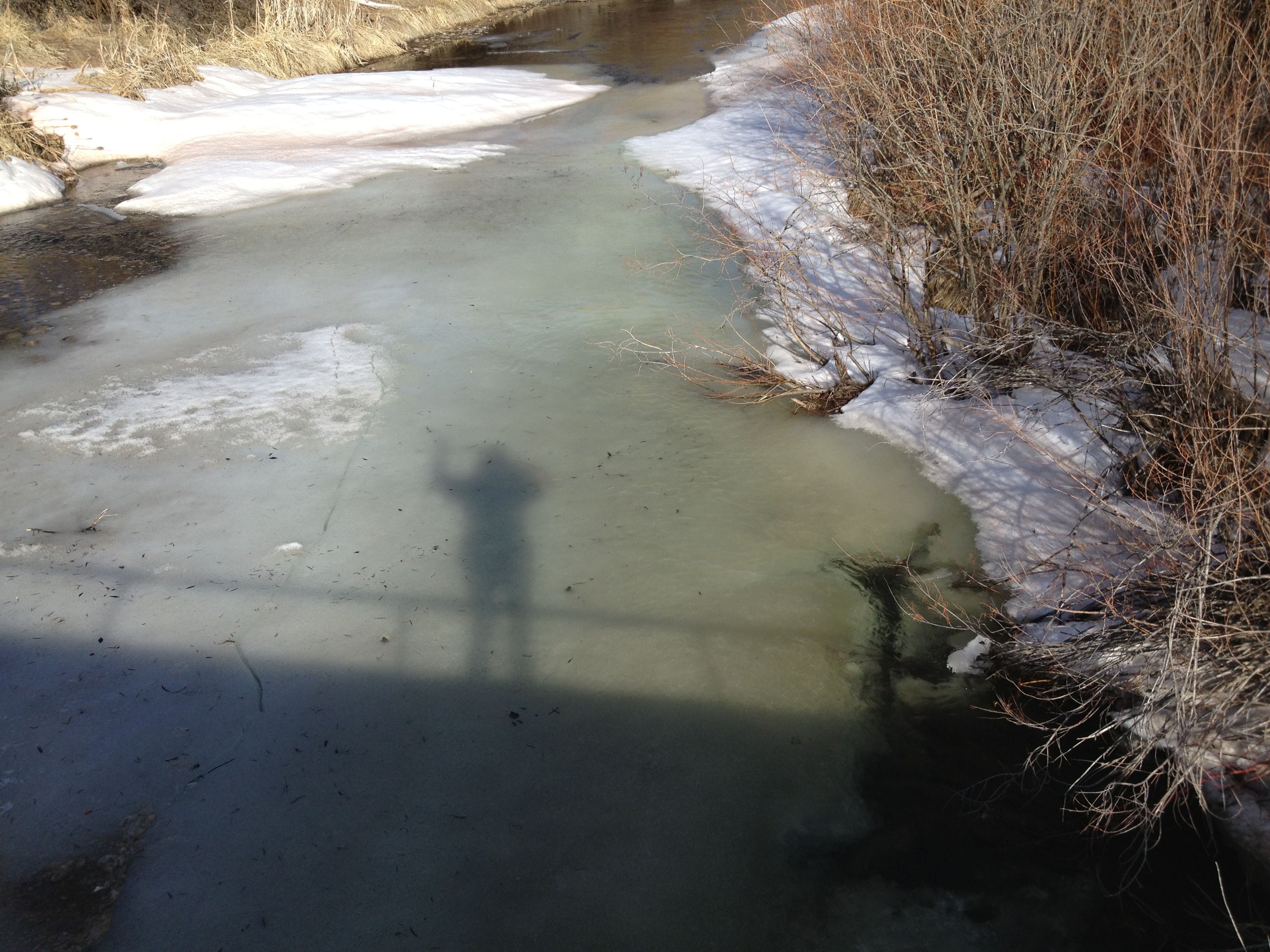
bridge over thawing creek

bridge over thawing creek

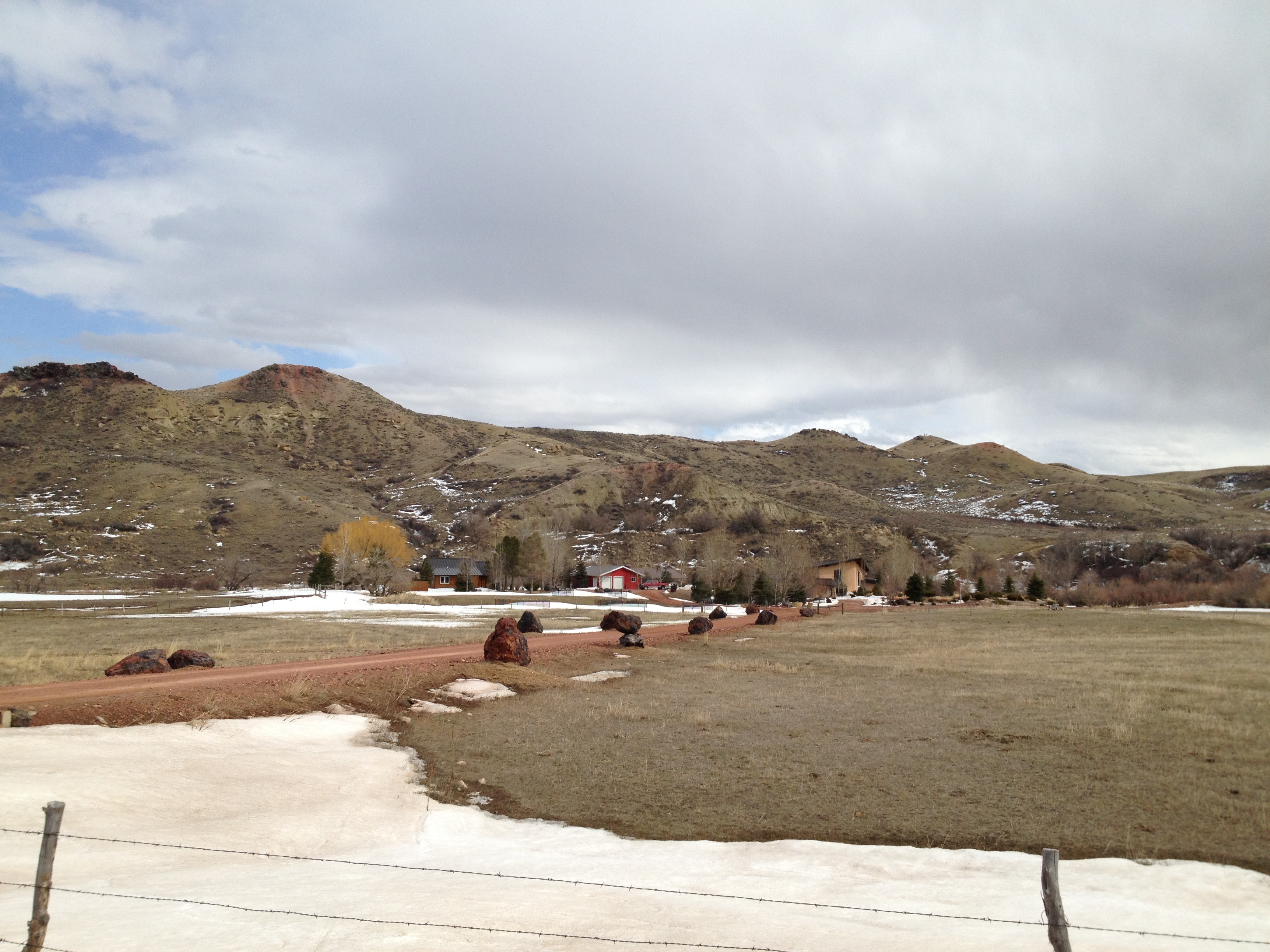
view from the mailbox, eagle cliffs in the background

view from the mailbox, eagle cliffs in the background

Galapagos Islands!

03 Sunday Mar 2013

Posted by Tea-mahm in Uncategorized

≈ 2 Comments

IMG_6493 - Version 2

This post will be a bit off the cuff… not my usual care. I am in an internet cafe on ethernet in the small town on the southern end of Santa Cruz Island, downhill from the giant tortoises, 45 kilometers from the harbor that has boats to the other islands. It is Sunday and the town is very quiet. Hot. Shabda, Wendy, David and I are staying at Patricio’s house a few blocks north east. My room has a fan. The main room has two. Today Wendy locked her keys in the room and Patricio does not have an extra pair, so I bound a strainer to the other end of a broom and edged open the screen (behind the heavy grill, bolted to the window). We were all cheering as the keys fell into the “cup” and were eased out the window.

Wendy and a giant tortoise

Wendy and a giant tortoise

Yesterday Wendy and I met two penguins and had a delicious 10 minutes as the only people on a beautiful beach in the middle of the ocean. Captain Marlon took us on a 2 hour journey to an island I cannot spell. While the other 18 people (including Shabda and David) snorkeled with a shark, Wendy and I had a journey in the Zodiac with Roland. Sadly the large groups of small penguins native to these islands have all but disappeared! Patricio says the last El Nino almost pushed them to extinction.

just before the penguins

just before the penguins

We have led the Dances of Universal Peace two evenings here, and tonight Shabda will give a talk, and the last night of Dances. He was on TV talking about the Sufi work our first night here.

Galapagos poster

Galapagos poster

Evening of Dances and talk at "The Old Hotel" next to Darwin Institute...

Evening of Dances and talk at “The Old Hotel” next to Darwin Institute…

Rosalea and Julian, her nephew, have made this all possible and have graciously hosted us, as has Patricio. Tomorrow we begin the journey home.  We are grateful for this adventure. Here are some photos:

picture perfect birds by Shabda!

picture perfect birds by Shabda!

Galapagos Iguana

Galapagos Iguana

swimming hole on Santa Cruz Island

swimming hole on Santa Cruz Island

Shabda on the boat going to the islands....

Shabda on the boat going to the islands….

← Older posts
Newer posts →

Solomon Posts

Untold Book

Enter your email address to follow this blog and receive notifications of new posts by email.

Join 157 other subscribers

Tamam’s Links

- Poetry Group - Oracular Pear

- Youth Speaks: Poetry Slam

Links

  • Book: Physicians of the Heart the 99 Names of God – amazing book
  • Fred Chappell: short review
  • Gulf Coast Poems Poets for Living Waters
  • How a Poem Happens
  • Jamaica Osorio's website
  • Mari L'Esperance, poetry
  • Mark Doty, amazing poet read and listen to this poet
  • New Formalism Where is formal poetry today?
  • Oona and Maeve Granddaughters Oona Beatrix and Maeve Clementine
  • PoemShape Formalist Poetry
  • Poetry Out Loud! supporting the next generation!
  • Seven Pillars Book Review by Tamam Mother of The Believers by Kamran Pasha
  • Seven Pillars, POETRY poetry on Pir Zia’s blog/7 Pillars
  • Sufi Ruhaniat International Ruhaniat web site!
  • The Accidental Theologist Lesley Hazelton – a favorite writer and author…
  • The Sound Journal Tamam edits this Journal: NEW!
  • very like a whale good poetry reviews
  • West Marin radio show Sufism: The Heart of Islam, with Wendy McLaughlin

Archives

Blog at WordPress.com.

  • Subscribe Subscribed
    • CompleteWord
    • Join 157 other subscribers
    • Already have a WordPress.com account? Log in now.
    • CompleteWord
    • Subscribe Subscribed
    • Sign up
    • Log in
    • Report this content
    • View site in Reader
    • Manage subscriptions
    • Collapse this bar
 

Loading Comments...