• About Tamam
  • Poems
  • NEW BOOK! Reviews & Praise
  • UNTOLD: Book Trailer & Blurbs
  • Fatima’s Touch
  • Reading Schedule

CompleteWord

CompleteWord

Category Archives: Uncategorized

Mark Doty in San Jose

26 Thursday Feb 2009

Posted by Tea-mahm in Uncategorized

≈ 1 Comment

p1060659_4

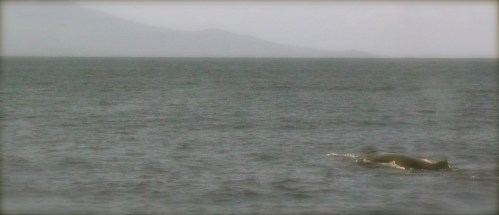
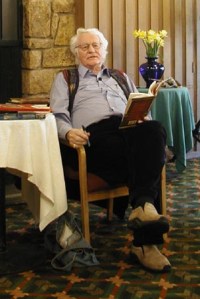
Mark Doty read and talked about poetry today in the gigantic library at San Jose State University. I was not disappointed, not even for a minute. It was the whale poem, “Visitation,” that dealt with heft in a completely new way. He comes to view the whale expecting:

     …shallow water

     confusion, some accident to bring

     a young humpback to grief.

In “Visitation” he asks himself the question, “How much weight do we give to joy? The last line of the poem is:

     What did you think, that joy

     Was some slight thing?

~~~~~~~~~~~~~~~~~~~~

But first he read “Citizens:”

     The light turns red and I’m stepping

     onto the wide and empty crosswalk on eighth Avenue,

     nothing between the white lines but a blowing riffle

     of paper when this truck –

It’s the way Mark reminds me of Prospero, first summoning the minutiae of the craft, with a mastery of the elements – earth, air – and those potent polished and swirled words alchemized into a dazzling heartfelt poem… in completion he seems to ordinary down the magnetic field, blessing and releasing those energies back from whence they came by his own humanness, it is that magical touch that brings me back again to listen to this poet. To move with him through the poem and then be invited to visit his process of creation — is profound. Here is something of what he shared. He tells about how he was almost run over, and lost his temper. Something awful about that, being knocked off center. Later he began reflecting on the red truck that almost hit him. He writes something. He asks, “When does it start to become a poem? When we enquire, ‘Why does it matter?’ “

His first words when the truck cut him off were, what are you doing, act like a citizen. This led to his reflection on the fabric of social exchange in America. “What damage has been done to social responsibility? Last year Exon made the largest profit – why is there no money to pay teachers? It’s an absence of citizenship.” So when he says, act like a citizen, he is speaking for others (as well). Then he looks at his own violent reaction:

     If I carried a sharp instrument 

     I could scrape a long howl on his flaming paint job….

     and what kind of citizen does this thought make me…

Then he asks himself why he is still carrying the feeling after it is over  (like the monk in the poem who carry the nun across the stream, put her down, but still holds to the experience.) When our identity gets whacked what do we do with our reaction? This can go very deep. The poem closes with Mark entering the subway “with the devil in his carbon chariot,” and an image of the train

     burrowing deeper uptown

     as if it were screwing further down into the bedrock.

People in the train are weighed down by lack of dignity, tired, carrying a burden. His last words are

     …When did I ever set anything down?

He asks, (in relation to the making of the poem) “What will stay with me? Take your experience and think about why it matters. In the words of Walt Whitman: ‘There are buds beneath speech.’ The poem wants to unfold.”

These poems, “Visitation” and “Citizens,” are in Mark’s prize-winning book, fire to fire.


Wise words from Robert Bly

07 Saturday Feb 2009

Posted by Tea-mahm in Uncategorized

≈ 1 Comment

p1060218_2

I came across an interview with Robert Bly by Peter Johnson of The Prose Poem: An International Journal, Vol. 7, 1998. I’ve been unable to find the poem in its entirety, so the following may be partial, and imperfectly presented here. My apologies! I wanted to share Bly’s  comments and insights about the making of poetry. [Please contact me through the blog if you have the corrected poem!]

The Large Starfish

Now the ecstasy of low tide, kneeling down, alone. In six inches of clear water I notice a purple starfish– with nineteen arms! It is a delicate purple, the color of old carbon paper, or an attic dress… at the webs between the fingers sometimes a more intense sunset red glows through.  The fingers are relaxed… some curled up at the tips… with delicate rods… apparently globes… on top of each, as at World’s Fairs, waving about.  The starfish slowly moves up the groin of the rock… then back down… many of its arms rolled up now, lazily, like a puppy on its back.  One arm is especially active… and curves over its own body as if a dinosaur were looking behind him. I put him back in… he unfolds – I had forgotten how purple he was – and slides down into his rock groin, the snail-like feelers waving as if nothing had happened, and nothing has.

send2 RB: How did you feel about the similes in “The Starfish”?

PJ: It goes back to what you said about metaphor reflecting your internal state. Obviously, there is nothing ominous about your starfish. It possesses a sense of wonder and connectedness.

RB: I noticed that the starfish’s various arms were doing different things: “many of its arms are rolled up now, lazily, like…,” and the moment you say “like…” the whole unknown world enters in, and you don’t know what you’re going to say. At that moment, as Bill Stafford says, you have to give up all plans and all hope for perfection. Be a good host; let whatever comes in come in. One arm is rolled back a little “like a puppy on its back.” I remember writing that and thinking, “Whoa, that’s wonderful.” A scientist will say, “Some of its arms are in a rolled up position.” Period. The eye has done that. But I added “lazily,” and all of a sudden, something comes in from the part of me that likes lazy people, maybe. And then I say “like…” and now one is really in the soup. Writing, one has to be playful enough to say, “I’ll probably make a fool of myself in this image.” Then you can call on the part of yourself that isn’t precise, but has seen hundreds of these events when you were ten or twelve or fifteen. You don’t know from what era or stage or moment of your life the image is going to come. Had I been feeling reptilian, I might have compared the starfish’s curved arm to a snake. In any case, I love that moment when one asks, “Like what?”
 Then I wrote, “How slowly and evenly it moves.” I’m simply watching the starfish move. But moving like what? I could say it’s moving like a racing car stuck in first, or like a snail. But when I say, “The starfish is a glacier,” then I’m far ahead, and I have time to make a joke, saying it goes “sixty miles a year”; actually most glaciers go only a foot or two. I go on to say that the starfish is “about the size of…” what? A “pail.” Sometimes when I’m writing I’ll put down six nouns at that point: it’s the size of a fist, of a dinner plate that’s been thrown out into the dump, of a hubcap on a Volkswagen, the lid of a can found underneath the water, or the bottom of a pail. “The bottom of a pail” interests me, because all at once we have a pail; moreover, we have the interesting volume at the bottom of a pail, and perhaps some shady light.

img_0810

PJ: Well, certain images have more resonances than others.

RB: Yes, and the making of them is so much fun.

PJ: Being an editor of a prose poem journal, I read work from many poets who try to imitate the Robert Bly thing-poem, and I’m sure they’re having fun, too, but somehow they just can’t make the leaps you make, whether those leaps come through metaphor or juxtaposition of imagery. I think a certain astonishment is missing in many object poems I receive. For example, I published your poem “An Oyster Shell.” Listen to what happens in the first paragraph:

“The shell is scarred, as if it were a rushing river bottom, scratched by great trees being carried down. Sometimes its whitish calcium has been folded over itself, as when molten rock flows out; so something is still angry.” [Bly laughs.]

  So you see what I mean? In your best thing-poems you constantly redirect the reader and reveal strange new associations. I’ve come to see the object poem as being similar to the still life in painting. Every once in a while I come across an astonishing still life, say by the Irish impressionist O’Connor, but, for the most part, many of them leave me empty. Similarly, many of the object poems I receive remind me of a still life without the banana, devoid of any correspondences, any kind of creative, erotic energy.

RB: My leaps have to do with a confidence that psychology gives me that one can see the invisible. If you glance at a human being and you see the layers of calcium on his face, you are looking at some anger underneath that. That’s where the sally in “An Oyster Shell” came from. The fun lies in making unjustified leaps about people and things.

………………………

RB: I think a lot about the word “safety.” One reason I couldn’t write as well when I was twenty-five as I can now is that I didn’t feel as safe then. At twenty-five you think you’re going to do the wrong thing, and you probably are. You meet people who belong to the class system and are hierarchical, and this fear cuts down your ability to play. Instead of playing, you’re looking for the right associations, the ones an educated person might have. I don’t want to make a big thing about this, but for me one of the joys in the prose poem is that I don’t feel as much fear there. I’m writing in a new form, so to speak; I’m not claiming that I’m keeping up to great standards. As I’ve said, the most wonderful thing about the prose poem is that no one has set up the standards yet. The ability to make leaps has something to do with how safe you feel, because if you can’t feel safe, then you can’t go back to your childhood.

PJ: Someone once mentioned that, in a sense, Charles Simic’s poetry could be considered “children’s literature.” Dickens, too, and Virginia Woolf and so many writers probe this area. Another curious point is that many poets have told me that they have encouraged students to write prose poems as well as verse poems in poetry workshops, and that the prose poems have been better. One could suggest that this occurs because it’s “easier” to write a prose poem, but those of us who write them know that’s not true. More likely, it goes back to what you just said. Not intimidated by meter or even line breaks, these young poets feel safer; they can focus on the poem without imaginary mothers or fathers, “the tradition,” looking over their shoulders.

RB: Well, let’s go back to that, but in a different way. What is the proper subject for a prose poem? There is no answer for that, so you have to look at your own life. I lived my childhood relaxed and on a farm, so when I’m with a tree, I feel relaxed. But a friend of mine who’s lived in Manhattan his whole life went for a weekend up to Rye and when he came back, he said, “Why don’t those trees ever say anything?” He’d be better off writing a prose poem in the city, because he feels safe there. Once at a prose-poem workshop in the Village, I asked the students to find some object to write about that was not made by human beings. One poet refused and said: “I’m not going to do that. I don’t care beans about pinecones. Instead I’ll find you a city object to write about!” He came back after lunch with a small bottle cap entirely full of that grungy dirt peculiar to vacant lots; three long white hairs rose out of it. I wrote about that for hours. His message was, “Throw away pine cones. Get a bottle cap.”

PJ: It does seem that you are stuck, or blessed, with the geography of your childhood.

RB: All you have to do is relax into that. Do you remember that little poem David Ignatow wrote about the city? He was asking a wall to bless him. It didn’t:

The wall is silent.

I speak for it,

blessing myself

 He once dedicated a poem to me, complaining about my constant mentioning of leaves falling: “I wish I understood the beauty / in leaves falling. To whom / are we beautiful / as we go?”

That’s great, great. <>img_0589

Slumdog Millionaire- classic sufi tale

12 Monday Jan 2009

Posted by Tea-mahm in Uncategorized

≈ Leave a comment

Tags

"Slumdog Millionaire" Laila Majnun

143meditatingathumayunstombcomplex

Slumdog Millionaire, a most excellent film, won a Golden Globe last night for Best Drama! The SF Chron. film editor, Mick LaSalle didn’t understand it and also mentioned it was in Hindi. I wonder if he saw it at all, since the characters spoke English. This is a remarkable story that reads like the classic Sufi tale: Layla and Majnun, only the lovers are Latika and Jamal Malik. Her name means “elegance” in Hindi, his name translates to ” handsome king,” (a Muslim name). They are orphans from hell-on-earth, the enormous Mumbai slum. His journey to his “beloved” takes him on the impossible hero’s quest. Each searing and terrible blow carries a gift he can use later on to bring him closer to Latika. Karma and dharma flash back to back, and dazzle the viewer. There is strong violence, but I would see it anyway. This award-winning film is a remarkable success by director Danny Boyle. He talks about it on You Tube: 

http://www.youtube.com/watch?v=HJRzk2WfOAo

It’s all over the internet after the surprise win.

“Written with a Woman’s Needle”

24 Wednesday Dec 2008

Posted by Tea-mahm in Uncategorized

≈ Leave a comment

Tags

"Mahmoud Darwish", Damascus, Jahili, Poetry


img_2106_21

                                                                                     feeding orphans and widows in Damascus

When life becomes strange, tender, and full of pain, when my daily fare and that of this tilted civilization mirror one another, when fortune steps out in her fickle dance, shifting partners, poetry soothes me. Mahmoud Darwish, the late great Palestinian poet wrote these verses honoring my favorite city– The Damascene Collar of the Dove:

B
In Damascus:
I see all of my language
written with a woman’s needle
on a grain of wheat,
refined by the partridge of the Mesopotamian rivers
C
In Damascus:
the names of the Arabian horses have been embroidered,
since Jahili times
and through judgement day,
or after,
…with gold threads…

<>          <>          <>          <>          <>          <>          <>          <>          <>          <>          <>          

Jahili times. That would be now. In the introduction to Married to Muhammad  I’ve written:

There is a term for the time before Islam, which is often misunderstood. Jahiliyya is known as the “Era of Ignorance,” although brutality, arrogance, and retaliation are more faithful to the Arabic. Prophet Muhammad’s approach was one of mild manner, calm deliberation, and gentleness, known as halim, an attribute of Allah as well as an antidote to this kind of attitude and behavior:

instructions for Jahiliyya

[…the jahil, a wild, violent and impetuous character who follows the inspiration of unbridled passion and is cruel by following his animal instincts; in one word, a barbarian.
words by Ignaz Goldziher.]

Know you are right.
Think fist and knife-edge.
Do not appear
foolish, no matter what.

Control your woman
and your guests; keep them
a little afraid, and thankful
for your protection.

Guard your clan’s
honor. Carve a notch
on your weapon of choice
for each successful pay-back.

If someone calls you animal,
smile and answer — lion,
hyena, crocodile, fighting cock—
the meek are the pack animals of the ferocious.

<>          <>          <>          <>          <>          <>          <>          <>          <>          <>          <>          

Peace-on-Earth, a working verb, earns meager wages in this Jahili time. May all be well, easeful, prosperous, and with loved ones in this time of the increase of light!

img_2024

Iguanas and Madoff

18 Thursday Dec 2008

Posted by Tea-mahm in Uncategorized

≈ Leave a comment

Tags

iguana, Madoff, Mexico, Sayulita

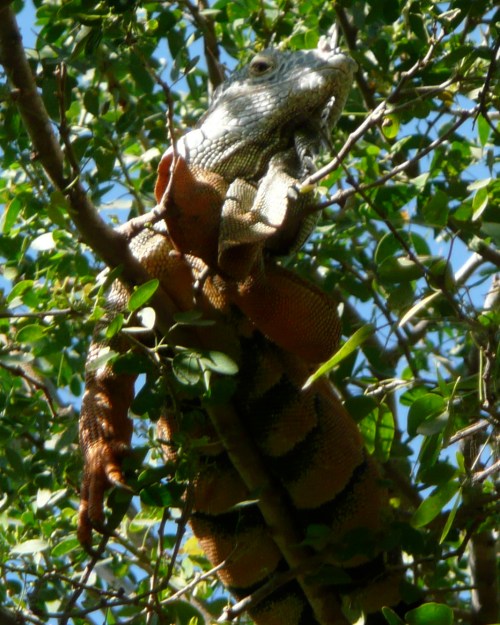
Sayulita is a dirt and cobble-stone Mexican village with numerous paharos de la nieve – “snow-birds,”(winter visitors from the States and Canada,) which means it is picturesque, framed by a quiet bay, small green mountains, a spill of jungle and the iguana tree with a sign that reads sanctuario de las iguanas verdes. We stop under the strong branches above the rutted road and peer up. “You stand and stare,” the shop-girl told us, and pointed in the direction of a tangle of trees in the next block.

 Under the tree is a tall iron gate. Enormous butterflies hover. The iguanas blend in. We tilt our heads and gape, looking for a creature or two in the leaves above us. “There they are! Two of them.” Shabda said. I looked. Powerful arms and hands. Orange spiky backs. A head with an eye and a fake eye below it. But the tail, my God, that tail is long and thick and scaly. Most iguanas look bigger than a green daschund but dragonish. A thin pig dressed in a costume.

 An on-line zoologist claims that skin change from green to orange in the male occurs just before breeding season, along with dewlap extension and head bobbing. They feed on bugs and leaves, and stay near water so they can drop in and swim away, if threatened. A Green Iguana can grow up to seven feet long. I really hope one doesn’t fall on us.

 p1060369_2

Things fall out of the sky these days. The Air Force jet flattened two San Diego houses. Bernard Madoff’s fifty billion dollar investment scheme crashed on to the front pages of the New York Times last week, was splayed all over the international press, knocked us over and spilled our peace of mind, and that of many friends. Makes you want to duck. Makes your blood run cold. For the reptile cold blood is not a problem. Fire breath is another thing entirely. In the world of caves and treasure, the dragon is better than an investment firm. A large, fast-moving, burn-you-quick reptile.

Just where was that treasure-dragon when Mr. Madoff made off with all the money?

p1060317

Mumbai, great film… and a tribute

29 Saturday Nov 2008

Posted by Tea-mahm in Events, Uncategorized

≈ Leave a comment

Tags

Barsi Concert, Blue Frog, Mumbai, Peace, Zakir

103tajmahalandus_2

I begin by going to a film made in the movie capitol of India – Mumbai: Slumdog Millionaire. Excellent film, although the SF Chron. film editor, Mick Lasalle didn’t understand it and also mentioned it was in Hindi. I wonder if he saw it at all, since the characters spoke English. This is a remarkable story that reads like the classic Sufi tale: Layla and Majnun, only the lovers are Latika and Jamal Malik. Her name means “elegance” in Hindi, his name translates to ” handsome king,” (a Muslim name). They are orphans from hell-on-earth, the enormous Mumbai slum. His journey to his “beloved” takes him on the impossible hero’s quest. Each searing and terrible blow carries a gift he can use later on to bring him closer to Latika. Karma and dharma flash back to back, and dazzle the viewer. This award-winning film is a remarkable success by director Danny Boyle. He talks about it on You Tube: 

http://www.youtube.com/watch?v=HJRzk2WfOAo

<>          <>          <>          <>          <>          <>          <>          <>          <>          <>      

 2246690254_ecaa92f991

Tribute to all who lost their lives in the attacks on Mumbai

The ear hears it first: a lingering mis-pronouncement ~ Bombay. Here’s a bomb and a bay. The name was first spoken by the Portuguese, then anglicised, some dark seed in the soft hummed syllables of the word – Mummm bai from Mumbadevi,  “a goddess,” and Aai, “mother” in Marathi language. Oh, Mumbai! This hurting city needs all our sparkling thoughts to heal and be wrapped in real protection.

What if every mother begins to whisper the words Peace, Kindness, and World Family to her babies, then toddlers, then children, then young adults. She must envision that and imprint the heart of each one in her care, knowing that her words are more powerful than commands of any tyrant, or school of fear and hate. With each mothering person’s milky, whispered suggestions, vengeance and terror attack can and will lose momentum, then meaning, and finally and be retired, like Bombay, darkie, re-tard, DDT. When is the last time you heard someone say, “I’ve got a can of DDT; no more pesky mosquitos!” or “Let’s use frequent flier miles to Constantinople or Babylon.”


 2245883455_d32d3b8fb2

100_20651

In 2007, I traveled to Mumbai for the Barsi, an Indian music memorial concert featuring percussive virtuosos, singers and other musicians, held in a beautiful large hall in honor of the late Ustad Allarakha Khan, India’s great Tabla Master. The concert began before dawn and finished after 10 that evening. Aside from a brief nap on sheets spread on the Green Room floor, most of us sat closely listening, hour after hour to one master performance after another. Sometimes the rhythm was so amazing, the master drummers would shout and gesture on ONE! (in a pattern of 12 or 16). I don’t remember much about eating, but we must have done that. In the evening most of the audience changed into dressier clothes for the final performances. I sipped on bottled water, and reluctantly slipped away before the end of Shakti with Zakir Hussain and John McLaughlin. We had an early morning flight to Delhi, and had arrived in the dark the night before, so I barely saw Mumbai in daylight.


Solomon and Nicole went back for the Barsi last year and took more pictures of Mumbai and had a great time there. He was featured performing as a DJ at The Blue Frog, the premier night club in Mumbai. 

  2245846335_db6991a062

Silver-White Dreadlocks

22 Saturday Nov 2008

Posted by Tea-mahm in Events, Uncategorized

≈ 1 Comment

10hubbel

Once long ago and far away…

I went to City Arts and Lectures In Conversation featuring Toni Morrison interviewed by Michael Krasny last night.  It took place in San Francisco at Masonic Auditorium, a vast, cold place. I had a first row balcony seat. Far below, two big orange chairs were separated by a table with a vase of orange tulips. Toni Morrison is a grand presence, a woman who seems to shine with mental incandescence. She is the winner of the Nobel Prize for Literature in 1993. This woman is funny, and deadly serious in almost the same moment. Toni Morrison is a diva. Her mind has the speed and ferocity of a whip, but she is gracious and listens carefully to all questioners with the patience of a real teacher (She teaches at Princeton University).

 I’m not a big fan of her books (although I did read Beloved); I was there to listen to and experience her, and to admire her beautiful dreadlocks: silver-white and twisted in an elegant pattern falling far down her back.

 But then I found myself scribbling her words on the first thing I could grab from my purse – $5 off coupons from Elephant Pharmacy called, “peanuts”.  I wrote to catch the hefty statement When my father died the girl he thought I was died too.  I love that. It’s so true and I’ve never heard anyone say it like that.

 She talked about inhabiting her characters fully.” I can taste everything she tastes, know what she would wear, but I would never cut off the reader’s imagination by describing it all in detail.”  Michael brought up an extremely sexy scene in one of her books. How did she do that?  She mentioned that the secret of writing like that is to just lay the groundwork – to write (I can’t remember exactly) a part of the scene and let the reader fills in the rest with his or her imagination. Something about “corn-silk” and the touch of it. Uh-Huh!

 She mentioned how slavery was diverse, not unique to (black) identity, how the part of history about “white” slavery in America and other places in the world has not been part of what Americans learn.

<>          <>          <>          <>        <>          <>          <>          <> 

The LA Times Book Review On Line, November 16, 2008 talks about A Mercy, her new book:

What is the true nature of enslavement? The smithy provides part of the answer when he tells Florens that he’s seen slaves freer than free men. “One is a lion in the skin of an ass,” he says. “The other an ass in the skin of a lion.” It’s the withering inside that truly enslaves.                       

When asked about the BLOG format last night, Toni Morrison commented, “Dante changed English, why not the BLOG (this time)?”

Al’ America book review

13 Thursday Nov 2008

Posted by Tea-mahm in Uncategorized

≈ Leave a comment

Tags

Al' America, Rumi

p0001915

Jonathan Curiel mentioned the other night at his talk at the San Francisco World Affairs Council that a plan was needed to filter the Arab-Muslim world (in relation to this country) through the arts, not through violence.


This morning’s San Francisco Chronicle headlined Jonathan Curiel’s article in the Datebook section with splashy photos and a piece on “Arab Labor” a new comedy (yes, comedy!) about a Palestinian Journalist and his family “as they navigate life in Israel.” The series aired in Israel last year. The series creator, Sayed Kashua, says the show is “Seinfield –inspired.” It will be on the Link TV satellite channel (dish 9410), which is streaming the first episode free on website http://www.linktv.org/arablabor  7 p.m. Saturdays. Check it out.

<>          <>          <>          <>          <>          <>          <>          <>          <>          <>          <>    

 Jonathan is promoting his new book, Al’-America, an original look at the little known influences of Arab and Islamic culture on America. Here are some I marked:

Elvis Presley had a crush on a girl, and she gave him a copy of Khalil Gibran’s The Prophet. He read it, even quoted from it and it helped him “…relax and forget everything.” (Everything?)

Jim Morrison and the Doors loved Arabic music. Strong influences are discussed.

Ralph Waldo Emerson “identified closely” with Hafiz and Sufi poet Saadi. And Emerson persuaded Thoreau to read them both.

Coffee berries grown in Yemen around 1400 led to the Shadhili Sufi’s reliance on the coffee to fuel their all night chanting (zikrs). One thing led to another – the first coffeehouse! Coffee spread to Turkey, where it exploded and became national beverage. Kahve is Turkish for Arabic qahwa. By the end of the 16th century, Yemen was producing most of the Muslim world’s coffee. Then, John Smith of Jamestown fame, (isn’t that the Pokahantas Smith?) brought coffee to America after drinking it in Turkey.

Islamic architectural influences in America: The Alamo in San Antonio Texas, the Alhambra in Evansville Illinois, and – this is very strange – The World Trade Center, designed by Minoru Yamasaki in 1959. The twisted metal arches are burned into the memory of nearly every American who has seen the aftermath of 9/11. “In 1961, (Jonathan writes), exactly a year before he was awarded the World Trade Center commission, Yamasaki told the New York Times that his favorite building of all times was Iran’s Shah Mosque…’Its delicacy and beautiful proportions are very thrilling,’ Yamasaki told the paper… He believed that the buildings accomplished the goal he had set for them: to be a welcoming place for people of all nationalities to conduct world trade.”  He used the words “an oasis” and “a mecca” to describe his vision for an elaborate plaza beneath the towers that was never fully realized.

Curiel has some language surprises. Christopher Columbus was known as almirante – “commander” and Queen Isabella herself was Almirante del Mar Oceano – “Commander of the Ocean Sea.” These words came from al-emir. “Alcatraz” stems from  al-ghattas – “the white tailed sea eagle” and became in Spanish, alcatras, a word for “sea birds”, hence the island of sea birds – “Alcatraz.” My favorite is “algebra” – al-jabr, which he attributes to an Arabic mathematician. (He doesn’t mention this but if you take Algebra back to the root Ja Ba Ra, it means to “compel”. From there you move to “the bonesetter,” “the healer,” and “the tyrant” – all from the word that became Algebra). Tangier in Morocco, with its famous orange fruit became “tangerine.” He ends the discussion with the fact that  over 500 words based in Arabic have become words in our everyday speech: “alcove,” “alchemy,” “almanac”… (Al means “the”).

The whirling poet from Afghanistan who died in Turkey, Maulana Jalaluddin Rumi is the best selling poet in America. True. Coleman Barks americanized John Arberry’s traditional British translations:

FOLLY

Why envious are ye

Of this all generous sea,

these joyous waters why

to each would ye deny?

Shall fishes treasure up

the waters in a cup,

to whom the ocean wide

will never be denied? (Arberry)

———————————————————————————

Are you jealous of the ocean’s generosity?

Why would you prefer to give

this joy to anyone?

Fish don’t hold the sacred liquid in cups!

They swim the huge fluid freedom.  (Barks)

————————

[ Certain Sufis might sing this variation with Dumbek drum, Bouzouki and two dance circles:

Fill your cup, drink it up, Ya Allah, Allah…

…Fish in the water’s not thirsty! ] This last comment is not from JC’s book.


Young Poets

06 Thursday Nov 2008

Posted by Tea-mahm in Poetry, Uncategorized

≈ Leave a comment

img_15261

I’m writing to the High School students I met at Dodge: Riley, John, Abigail, and Samantha. There were two others, but I didn’t get their E-mail. I am writing to ask them to send the poems they are writing have written and are thinking about writing so I can publish them in The Sound, the newsletter I edit.  I wish someone had written me when I was in high school, when poetry was as much a part of my identity as music. When my life blew up every couple of days. When all I had was the school “Full Cry” to submit to.

Ed Hirsh said at Dodge: “I had the idea if you started talking about poems you love, the subject of poetry would deliver itself. …The poems that changed me – like Neruda’s odes– in those poems feeling came first, then the rest. …Spirit and desire have to be embodied in poetry.”

I like that he speaks of “embodying” rather than just talking about, or mentioning. A much stronger commitment. And some of us are powerfully committed to WORDS.

Download last years Poetry Issue of The Sound – here.

bfly-cup

Reflections and References

26 Sunday Oct 2008

Posted by Tea-mahm in Poetry, Uncategorized, Updates

≈ Leave a comment

Tags

Arabia, Damascus, Grand Mufti, Poetry, Sufi

This image appeared on the glass of the coffee table, bringing  outside leaves into the room. An Arabic shadda  – added in photoshop – turns the upside down autumn skyscape into a joyful word for Unity.

<>          <>           <>          <>          <>           <>          <>          <>           <>       <>          <>          

Here are the references from the radio show: Sufism: the Heart of Islam with Wendy McLaughlin. I mentioned Karen Armstrong, Muhammad, A Prophet for our Time; Martin Lings, Muhammad, His Life Based on the Earliest Sources; and Reza Azlan, No god but God. These all have general material on Muhammad’s wives and daughters. I forgot to mention the classic: Nabia Abbott, Aisha, the Beloved of Muhammad.

If you search farther into the primary sources – Muhammad Ibn Sa’d, The Women of Medina; Al-Tabari, The History of al-Tabari (in thirty-some volumes); A. Guillaume’s translation of Ibn Ishaq’s Sirat Rasul Allah (The Life of Muhammad); and the Alim, CD ROM (for Hadith). Gordon Newby wrote A History of the Jews of Arabia.  From here on, road leads into road…. Ya Fattah (may the way open!)

The CD’s played on the show are: White Shade Cloud and The Woman with Muhammad – to order contact http://www.marinsufis.com   click on – music for sale and Hear a sample! There will be a link to Wendy’s show here soon.

Damascus. One my favorite places on earth. May it be protected! See May archive for my visit to the Mosque of the Grand Mufti.

← Older posts
Newer posts →

Solomon Posts

Untold Book

Enter your email address to follow this blog and receive notifications of new posts by email.

Join 157 other subscribers

Tamam’s Links

- Poetry Group - Oracular Pear

- Youth Speaks: Poetry Slam

Links

  • Book: Physicians of the Heart the 99 Names of God – amazing book
  • Fred Chappell: short review
  • Gulf Coast Poems Poets for Living Waters
  • How a Poem Happens
  • Jamaica Osorio's website
  • Mari L'Esperance, poetry
  • Mark Doty, amazing poet read and listen to this poet
  • New Formalism Where is formal poetry today?
  • Oona and Maeve Granddaughters Oona Beatrix and Maeve Clementine
  • PoemShape Formalist Poetry
  • Poetry Out Loud! supporting the next generation!
  • Seven Pillars Book Review by Tamam Mother of The Believers by Kamran Pasha
  • Seven Pillars, POETRY poetry on Pir Zia’s blog/7 Pillars
  • Sufi Ruhaniat International Ruhaniat web site!
  • The Accidental Theologist Lesley Hazelton – a favorite writer and author…
  • The Sound Journal Tamam edits this Journal: NEW!
  • very like a whale good poetry reviews
  • West Marin radio show Sufism: The Heart of Islam, with Wendy McLaughlin

Archives

Blog at WordPress.com.

  • Subscribe Subscribed
    • CompleteWord
    • Join 157 other subscribers
    • Already have a WordPress.com account? Log in now.
    • CompleteWord
    • Subscribe Subscribed
    • Sign up
    • Log in
    • Report this content
    • View site in Reader
    • Manage subscriptions
    • Collapse this bar
 

Loading Comments...