• About Tamam
  • Poems
  • NEW BOOK! Reviews & Praise
  • UNTOLD: Book Trailer & Blurbs
  • Fatima’s Touch
  • Reading Schedule

CompleteWord

CompleteWord

Category Archives: Poetry

Poet, Phil Levine ~ Jan. 10, 1928 – Feb. 14, 2015

16 Monday Feb 2015

Posted by Tea-mahm in Phil Levine, Poetry

≈ 2 Comments


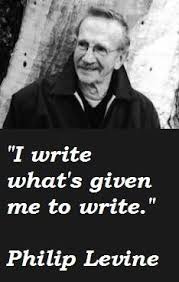
images

Phil Levine died on  Valentine’s Day.  How sad.  How dis-heartening!

I feel strongly about this wonderful poet, this Central Valley-California poet. A great man. An important writer. He won a Pulitzer Prize for his poems, and served as Poet Laureate of the United States 2011-2012.

I wanted to remember all the moments I spent Phil Levine. When I was with him, it was as if he had all the time in the world and we were old friends— even though we weren’t. I chatted with him at his poetry reading in Berkeley about the things that disturbed me about the Bay Area poetry scene. The fragmentation. He agreed. Said he was more comfortable reading in LA or New York. I had a leisurely talk with him one day, probably 20 minutes or more, while waiting for the shuttle bus at a hotel near The Dodge Poetry Fest. He wanted to know what I thought about poetry. He listened.    That’s what I mean.

He had just given an unforgettable reading of They Feed they Lion in a large tent at Dodge the year the Poetry festival met at Duke Farms in the mud— 2004. I remember how he broke-open-the-night with that poem, as I huddled in the hay bales in the cold and wet. Here’s an excerpt. Phil always took his time writing “narratives,” often more than a page or two in length.

They Feed they Lion
 
Out of burlap sacks, out of bearing butter,Out of black bean and wet slate bread,Out of the acids of rage, the candor of tar,

Out of creosote, gasoline, drive shafts, wooden dollies,

They Lion grow.


Out of the gray hills

Of industrial barns, out of rain, out of bus ride,

West Virginia to Kiss My Ass, out of buried aunties,

Mothers hardening like pounded stumps, out of stumps,

Out of the bones’ need to sharpen and the muscles’ to stretch,

They Lion grow.


Earth is eating trees, fence posts,

Gutted cars, earth is calling in her little ones,

“Come home, Come home!” From pig balls,

From the ferocity of pig driven to holiness,

From the furred ear and the full jowl come

The repose of the hung belly, from the purpose

They Lion grow. …


…From my car passing under the stars,

They Lion, from my children inherit,

From the oak turned to a wall, they Lion,

From they sack and they belly opened

And all that was hidden burning on the oil-stained earth

They feed they Lion and he comes.

<>

Phil Levine by artist, Jon Friedman

Phil Levine by artist, Jon Friedman


His poems are lean and strong. Every word is working hard. He was so unassuming in person, yet seemed not to suffer fools. I wrote to him in 2005, offering to drive to Fresno if I could study with him— to tighten up the poems I was writing for my book, Untold. He wrote me back immediately, and said he wished me well, but had no interest in taking another student. “I have a good beginning on a new book, one that I believe in, but at my age it takes a lot out of me to write decent poems.” He was 77 at the time. Six years later he was Poet Laureate.

In 2012 He read in San Francisco at the JCC. I was there. Here is the link:

http://blogs.jccsf.org/blog/2012/03/15/philip-levine-a-reading-with-the-u-s-poet-laureate/

*Richard Tillinghast shared this wonderful video on Facebook:

https://www.youtube.com/watch?v=NxJVgAJB6As

His dry sense of humor, his wonderful poems. Enjoy.

Phil, we will miss you.


POET Kazim Ali in Napa, California

03 Sunday Aug 2014

Posted by Tea-mahm in Kazim Ali, Poetry, Uncategorized

≈ 2 Comments

Kazim Ali

Kazim Ali

The day before his poetry reading at Napa Valley College, Kazim Ali won an Ohioana Book Award for his excellent  poetry book: Sky Ward. I went to Napa to hear him read. I am deeply affected by this man’s writing. I feel like I experience his poetry far below and above the words.

On Tuesday Kazim began his craft talk at The Napa Valley Writers’ Conference with breathing practice. I loved that. Breathe and be present. “Poetry involves bodies,” he said… “bring the body into poetry.” From his poem Promisekeeper: You built a tower to god out of bricks and mud/ when you should have built it with breath… Your own body is the only mosque you need…

As he introduced The Plaint of Marah, Woman of Sodom, a poem about Lot’s Wife turning to a pillar of salt, he playfully threw out the name “Vicki Vale.” Being a Batman fan, I couldn’t resist the reference.

From Tim Burton’s 1989 Batman: “the most awkward dinner in movie history:” Bruce Wayne —AKA Batman— and Vicki Vale, (invited to the huge mansion with the longest dinner table for a meal.)


“How’s the soup” (Vicki shouting)
“What?” Bruce said
“I asked how the soup was,” Vicki asked, louder
“Oh, it’s good,” said Bruce
“Can you please pass the salt?” (very loud).
“Sure.” Bruce got up, picked up the salt shaker and walked to the other end of the table.
“Do you eat here every night?” Vicki asked.
“No, I don’t think we ever have,” Bruce said as he sat back down at his table.
On a more serious note, Kazim speaks of the poem in an interview: We are talking about Biblical times, and salt is like gold. It’s currency. The word “salary” comes from the Latin word for salt; it was a euphemism for what we would call a “paycheck.” She wasn’t turned into a pillar of coal or a pillar of shit. She was transformed into a pillar of one of the most valuable substances on the earth at that time. So, to me, it was obvious she wasn’t being punished. It’s not that radical of a supposition.   http://14hills.net/node/660
 

 Some lines from The Plaint of Marah, Woman of Sodom

Sundered and sinful, caught in a rain of fire
Nearly devoured, now inch by inch turning to salt…
 
Who was I before the thorn of my birth pierced me,
Before the thread of my death drew me through?…
 
Before the fire stitched me in salt to the ground, who was I?

 This kind of writing catches me, not only for the choice of words, but here is a biblical woman, her story sticky with the honey of possibilities! Where can we go with this? If I were her, how would the dramatic moment taste? She carries the sweet with the bitter. (Marah means bitter.) It’s all wound together and he lets us taste it, and adds water— couplet by couplet.

The last prophets boarded the ark for departure,
But this time amid fire, I am the water—
 
 You are ahead of me fifty-one paces,
Leaning on our daughters, hoping they’ll hold you…
 
…This time I look back to the city that’s burning,
 
And yes, in that moment, doubting believer,
I was transformed into the most precious of matter…

I had recently found this meaning as I was brushing up on my Arabic. The three letter root in Arabic: MaLaHa means — to be beautiful, to salt, preserve with salt, to be witty. The meaning depends on the vowels. A “salty” woman is smart and funny and that contributes to a kind of beauty the Arabs appreciate.

You can hear him read this poem in this clip: http://www.youtube.com/watch?v=M0q22HDg0s4

He mentions poet, Scott Cairns, whose final stanzas of the poem: The Turning of Lot’s Wife, are given below.

                                                               …She looked
ahead briefly to the flat expanse, seeing her tall
daughters, whose strong legs and churning arms
were taking them safely to the hills; she saw,
farther ahead, the old man whom she had served
and comforted for twenty years. In the impossible
interval where she stood, Marah saw that she could
not turn her back on even one doomed child of the
city, but must turn her back instead upon the
saved.
 
OK, I appreciate thoughtful consideration of this historical interpretation. Instead of seeing Lot’s Wife as someone longing for the sinfulness of Sodom, she is more than a “wife,” she’s a woman with a first name, a woman pulled toward tragedy, as we are toward Gaza, heartbroken from the suffering of the people there, helpless to stop it. As Kazim mentioned at the beginning of his reading: …Remember the innocent people who need protection. Like Marah, we can’t turn our backs on them.
 

The last lines of  The Plaint of Marah, Woman of Sodom:

I became one with the ground in the night of great fire
Given eternal life as a priceless pillar
 
Slowly disappearing into the infinity of matter,
Not curse nor condemnation but salt into water, my endless reward—
 
 
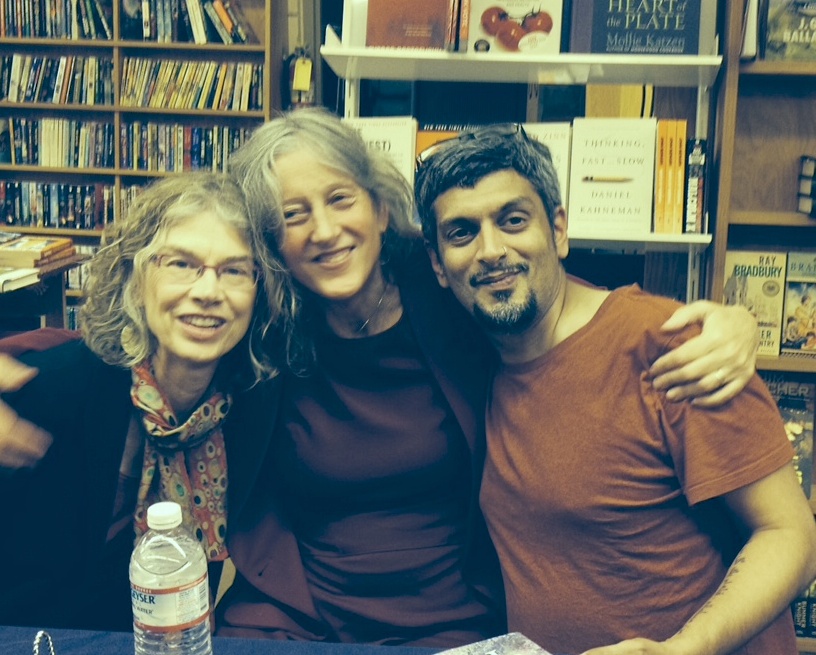
Brenda Hillman, Annie Finch, and Kazim Ali: three of my favorite poets!

Brenda Hillman, Annie Finch, and Kazim Ali: three of my favorite poets!

Honoring poet Mirza Ghalib

15 Saturday Feb 2014

Posted by Tea-mahm in Mirza Ghalib, Poetry, Sufi

≈ 2 Comments

window

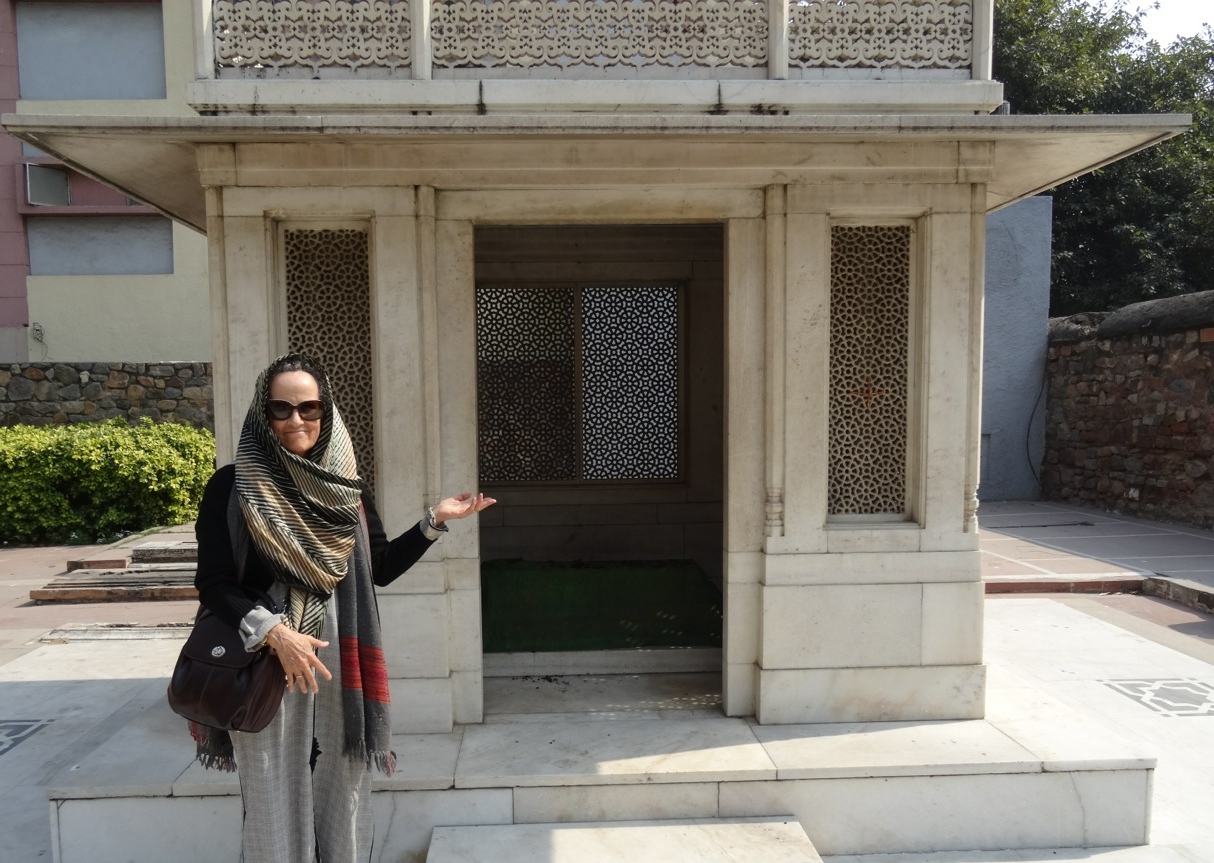
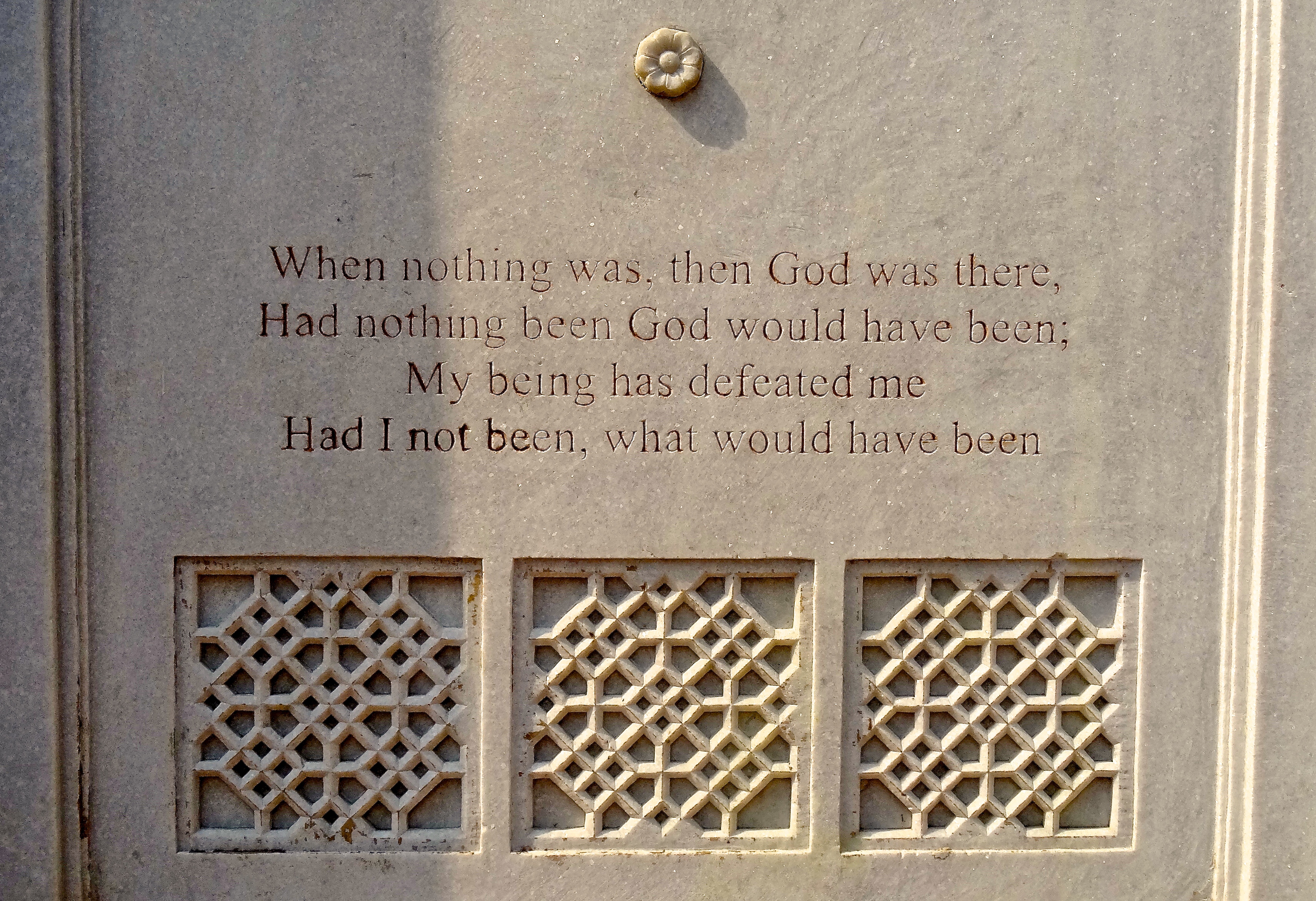
Yesterday we went to Mirza Ghalib‘s resting place. It is located in Nizamuddin neighborhood in Delhi, not far from Hazrat Inayat Khan’s dargha. Today was his URS celebration, which we attended in 2007. So in honor of the great Urdu poet and master of the ghazal, here is a poem by him:

Let the ascetics sing of the garden of Paradise –

We who dwell in the true ecstasy can forget their vase-tamed bouquet.


In our hall of mirrors, the map of the one Face appears

As the sun’s splendor would spangle a world made of dew.


Hidden in this image is also its end,

As peasants’ lives harbor revolt and unthreshed corn sparks with fire.


Hidden in my silence are a thousand abandoned longings:

My words the darkened oil lamp on a stranger’s unspeaking grave.


Ghalib, the road of change is before you always:

The only line stitching this world’s scattered parts. (trans. Daud Rahbar)
 
 
Ghalib

Mirza Ghalib was born in Agra December 17, 1797, and  died in Delhi on February 15, 1869. He was a very liberal mystic who believed that the search for God within liberated the seeker from the narrowly Orthodox Islam, encouraging the devotee to look beyond the letter of the law to its essence. His Sufi views and mysticism is greatly reflected in his poems and ghazals. As he once stated: 

“The object of my worship lies beyond perception’s reach; 
For men who see, the Ka’aba is a compass, nothing more.”

DSC01607

Ghalib believed that if God laid within and could be reached less by ritual than by love, then he was as accessible to Hindus as to Muslims.

He once wrote in a letter to a friend: 

“In paradise it is true that I shall drink at dawn the pure wine mentioned in the Qu’ran, but where in paradise are the long walks with intoxicated friends in the night, or the drunken crowds shouting merrily? Where shall I find there the intoxication of Monsoon clouds? Where there is no autumn, how can spring exist? If the beautiful houris are always there, where will be the sadness of separation and the joy of union? Where shall we find there a girl who flees away when we would kiss her?” 


Info on Ghalib ~  http://www.poemhunter.com/mirza-ghalib/biography/

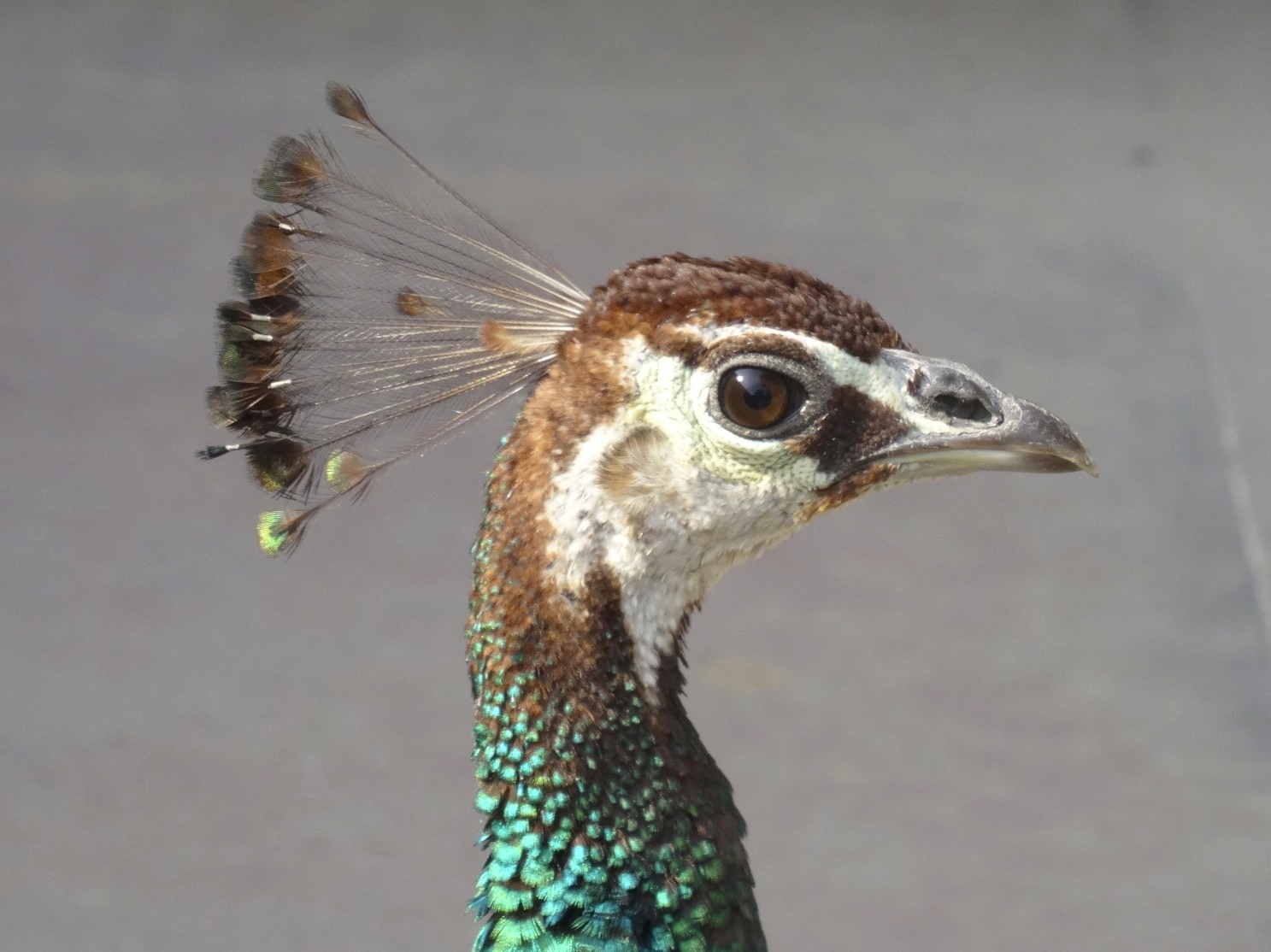
Peacock in the courtyard of Ghalib! photo by Shabda

Peacock in the courtyard of Ghalib! photo by Shabda

<>   <>   <>

POEMS: WS Merwin and WS Di Piero

12 Thursday Dec 2013

Posted by Tea-mahm in Poetry, WS Di Piero, WS Merwin

≈ 5 Comments

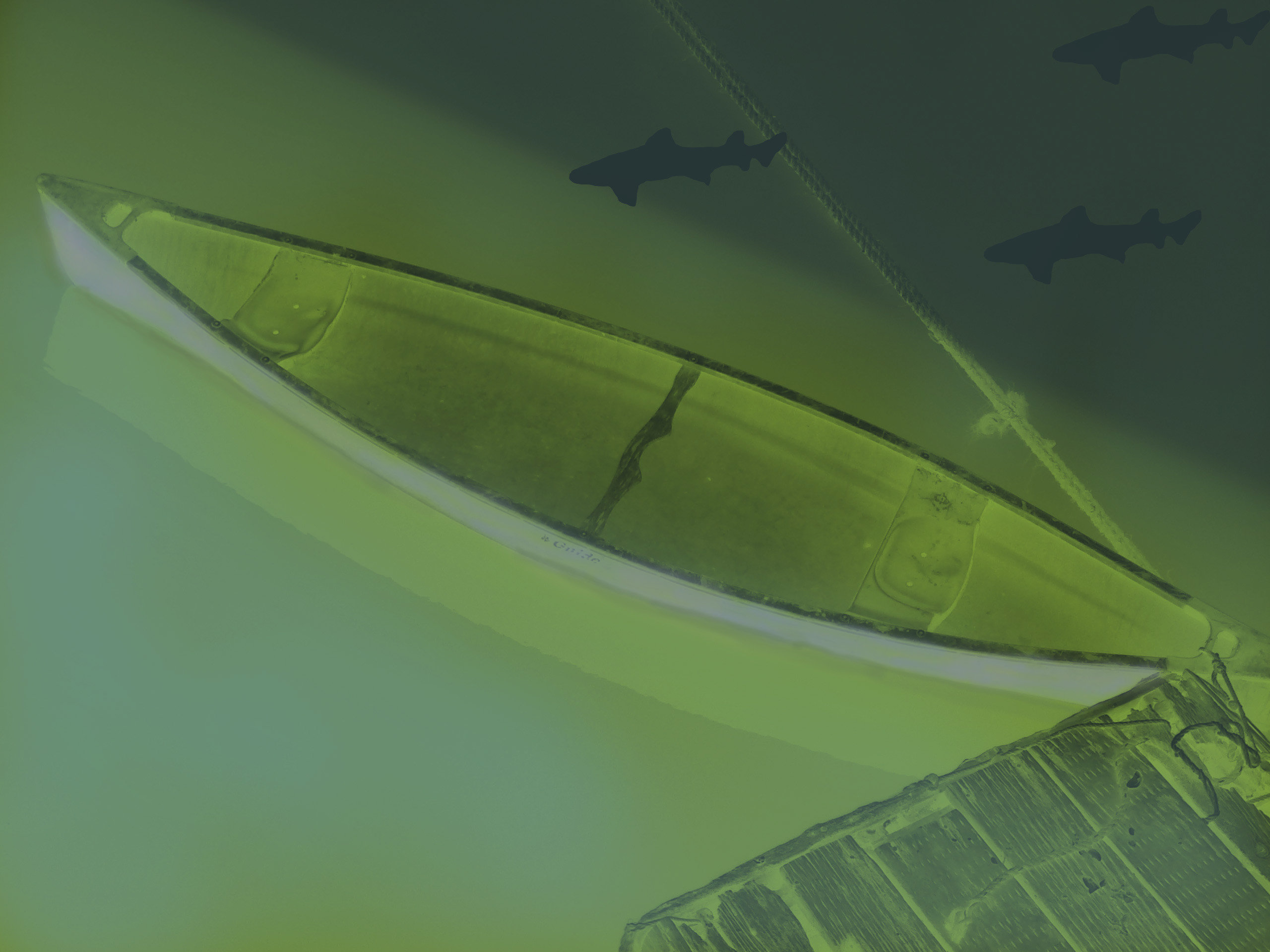
green boat and sharks2

WS Merwin has a stunning historical poem called Odysseus from  1960. I first heard it on a poetry tape or CD and said out loud — Oh, yes! What was that?!  I played it again. I was driving on Stockton street near Union Square in SF. It was around 1998. I’m a sucker for terse historical poetry. Here are some lines:

Always the setting forth was the same,

same sea, same dangers waiting for him

as though he had got nowhere but older.

Behind him on the receding shore

the identical reproaches, and somewhere

out before him, the unraveling patience

he was wedded to…. 

http://www.poetseers.org/contemporary-poets/w-s-merwin/merwin-poems/odysseus/

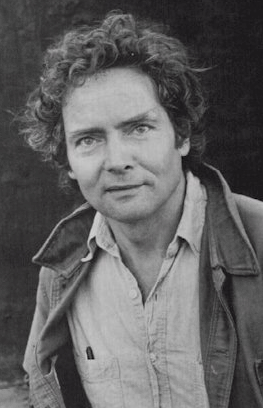
Merwin around the time he wrote Odysseus

Merwin around the time he wrote Odysseus

Penelope, his wife is the unraveling patience
 he was wedded to… Penelope, whose job was to weave by day, secretly unravels the weavings by night, so she won’t finish her work and have to chose a suitor among the unappealing gold-diggers trashing her downstairs rooms, men who have waited over a decade for her to complete her work. Odysseus carries the continual confusion of being becalmed or moved about by the gods, until his mind no longer can hold the certainty of reaching Ithaca, his home. Metaphoric expertise carries the reader into new realms. It takes Merwin 17 lines to take us to the inner state —with not a word wasted.<>  <>  <<>>  <>  <>

When my son Solomon died, the short Merwin poem called Separation felt true and wise. Its strength was sustaining and held the painful paradox — presence and absence at the same time.

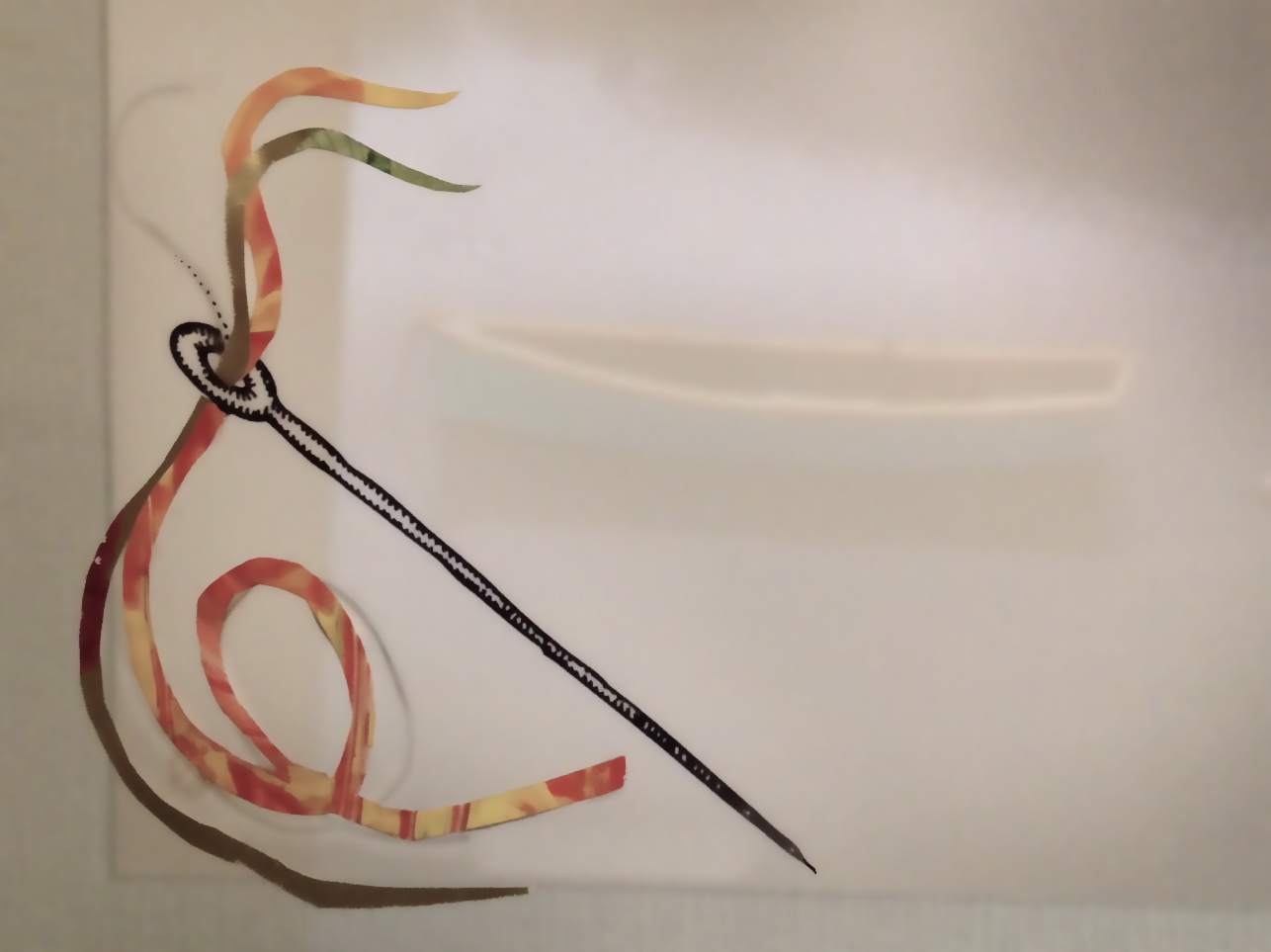
Your absence has gone through me   
Like thread through a needle.
Everything I do is stitched with its color.

photo 2

This morning I came upon a poem by poet and Stanford Professor Emeritus WS Di Piero called: There Were Such Things [in 2014 Pushcart Prize XXXVIII, Best of the Small Presses from ZYZZYVA]. I was stunned by where it took me. Here it is:


There Were Such Things
I knew the words would be waiting for me,
how various sounds play in the mouth and mind,
each time a different estero in my heart
like your bracelet’s lost coral scale, your bone hairpin,
the lipstick smudge sliding off torn tissue
a special event each time, thing by thing,
word by word. I knew these creatures, as before,
would be waiting in their familiar names,
in dowicher, willet, whimbrel and coot
or snipe or curlew, that I could speak and speak.
Where were you that day? Why weren’t you with me?
But what waited there was something else.
Muscling nonstop around each other,
dingy leopard sharks shadowed the shallows,
the light dying on their silty backs.
They seemed to be themselves the moving waters.
They were the swimming absence of the words
they drove away, part of the new vocabulary
of exclusions, of what might have been birds,
symmetric in their bones like umbrellas,
the feather and flesh of what was now elsewhere.
 

I love the wordplay in the first part, then come the 4 lines:

            Dingy leopard sharks shadowed the shallows,
            the light dying on their silty backs.
            They seemed to be themselves the moving waters.
            They were the swimming absence of the words
            they drove away…

What just happened? The knowable just expanded. The sharks are vivid, then they shift to moving waters then

They were the swimming absence of the words they drove away.

Crazy Good! The absence of words drove away the new vocabulary.

Big shark

Sharks appear. Sharks are an attention-grabbing image— then they are an absence… then they shark into “the vocabulary of exclusions”  [an invisible contrast to, say,  dowicher, willet, whimbrel]

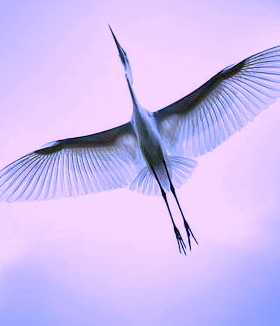
Finally, an introduction of birds, symmetric in their bones like umbrellas,… now elsewhere. The metaphors work so well they appear and vanish, you can see through them, participate in the graceful dance of paradox.

This is an area of experience that feels true, but new, unexplored. I can still see the sharks, the excluded umbrella-birds.  Clean. Solid. Bravo.

bird in flight

Writing Retreat in Wyoming II

09 Tuesday Apr 2013

Posted by Tea-mahm in Poetry, Travel, Wyoming writing

≈ 8 Comments

IMG_6788 - Version 2

It started with Lynn, who works here and keeps an eye on us, saying: two inches of snow today, 8 inches tomorrow, as I made my morning tea. I could tell because the heat in my room was finally coming through the vent at around 7 AM. I opened the outside door and it was COLD. As I write this I see a blur of white out the window, and my comfy stove-fireplace has been showing those make-believe logs burning, heating the room all afternoon. Snowstorm.

Yesterday morning I walked across a brown landscape and recorded a meadowlark and later, an oriole singing with loud rich volume. In the distance

Kim's photo of a Meadowlark

Kim’s photo of a Meadowlark

another bird answered. Frogs, where there were none. And a daffodil about to open, a yellow bud, all part of the now white world outside my log cabin writing studio.

Kim has a fire going in the main house living room. A real one with logs and kindling.

I have been here so many days I can’t remember. There are 4 days left. The writing has filled a small booklet, and I’ve organized it pretty well. I am pleased and amazed at myself.

A couple of days ago, Melissa strung her handmade net across the creek and I took pictures of it. Yesterday morning, where I sat for morning meditation, I could see sparkles as the sun touched it and the wind slightly moved it behind a wall of branches. It had a magical spider-web-with-dew feeling, a IMG_6757between-worlds shimmer, as good art installations can. Tonight I’ll be having what leftovers I can find in my section of the fridge. We got farm-fresh eggs today so maybe an omelet. The weather is supposed to clear by the end of the week so the prop plane can fly to Denver. If not, Melissa, Kim, and I will spend the night in a hotel in Sheridan. A new group of artists and writers will be here soon.

I cannot imagine a better place to spend 30 days writing away from home. Thanks, Jentel, for all you have given me. A beautiful gift.

up on the big hill in the 1,000 acres...

up on the big hill in the 1,000 acres… <>  <>

Wyoming River Otter

28 Thursday Mar 2013

Posted by Tea-mahm in Poetry

≈ 11 Comments

Tags

Writing Residency, Wyoming

Wyoming River Otterstanding on the icy creek

Wyoming River Otter
standing on the icy creek<>  <>

This morning I saw the otter again, a smaller one, climb out of the water and run along the ice, downstream.  This isn’t a clear shot, it’s a curtain of brush and low trees – all bare branches, between my bedroom sliding door, (where I sit to meditate) and the snow bank on the far side of the creek. She is after the brown trout that dart out, then back under the ice, ice that is beginning to break up as the day inches up from freezing. Melissa sat on the bridge today and the otter didn’t see her. These are her amazing photos of a shy creature that moves very fast both under water and on the snow.  She has a slight web in her back feet only, like having fins for swimming. I say “she” because I want her to be a she, thinking of my granddaughter Oona, who is three and a half, and turns heros into sheros.

I love that these otters are playful and slide down snowbanks again and again – for the fun of it, their front paws tucked into  their sides, leading with the DSC_8627raweditcropnose. That’s what the tracking book says. I’ve spent time away from my desk here looking at all the tracks in the snow.  There is a “bird farm” about a quarter mile up the road. Birds raised for hunting, that is to be hunted. You know, quail and pheasants.

So I’m happy to say that a few pheasants have “escaped” and live here by the river because I see them, the males dragging their long tails. I want to tell them they are safe here… that is unless the eagles decide they are hungry.

IMG_6644

I’m on day 13, right in the middle of the writers retreat. I have a stack of new material, and will begin looking at my partially-done pieces in the next few days.  Again I am so grateful to be at the artists residency and have this heavenly opportunity to write new poems in the wilds of Wyoming. Tomorrow I go to town for supplies. Who knows what the weather will be. <> <>

Jabberwocky and Oona-the-Brave

19 Saturday Jan 2013

Posted by Tea-mahm in Jabberwocky, Poetry, word-dancing

≈ 2 Comments

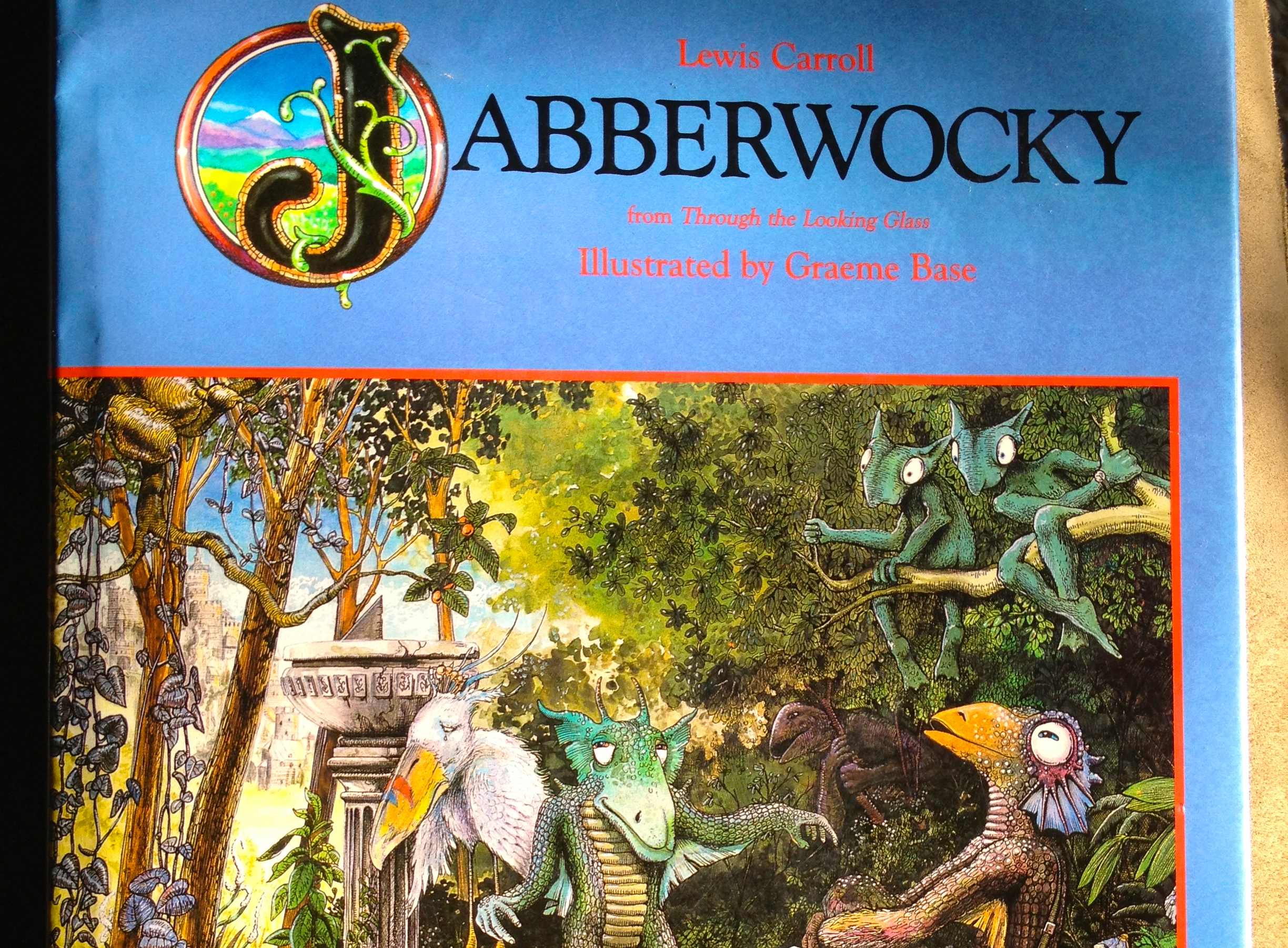
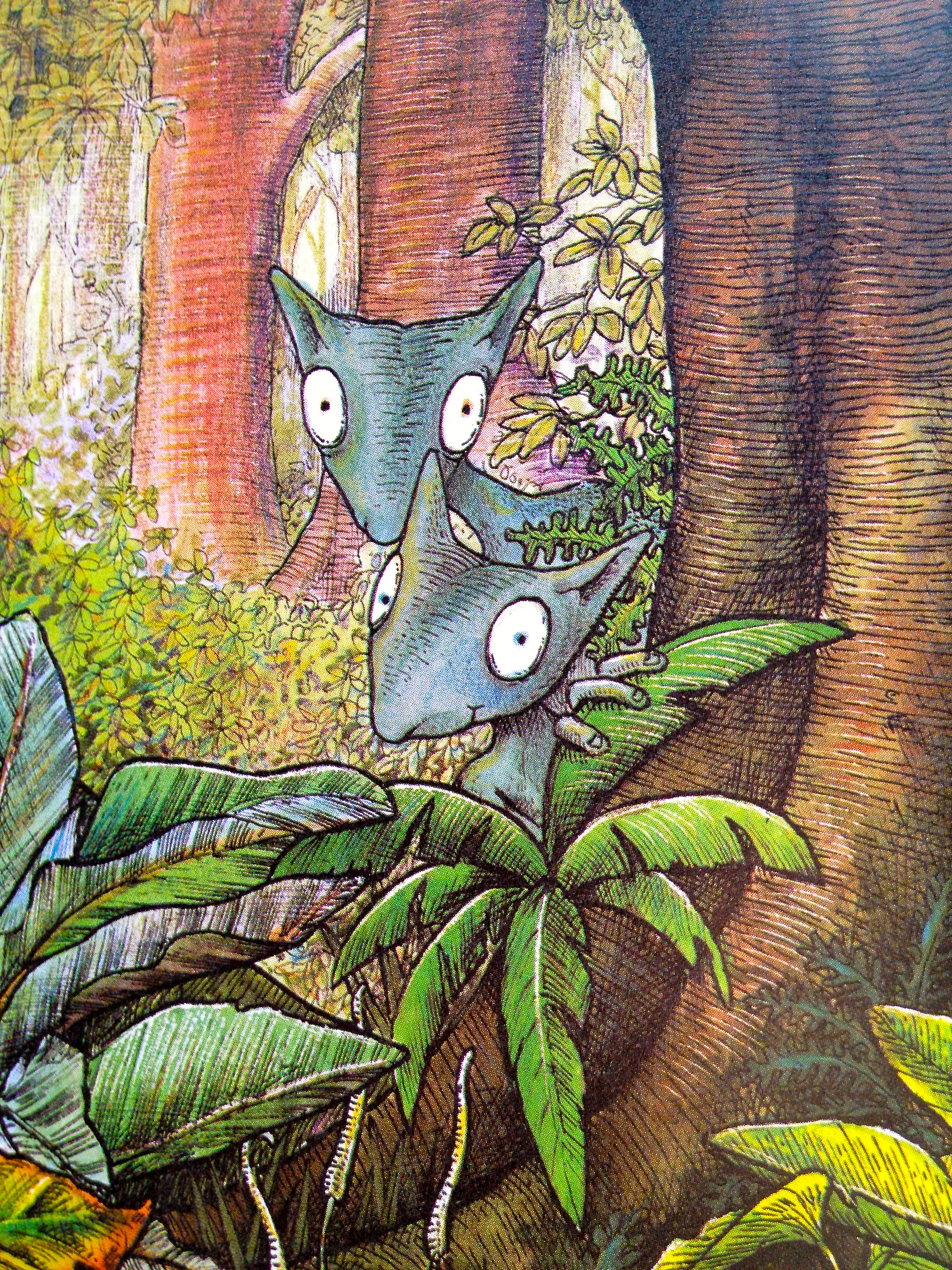
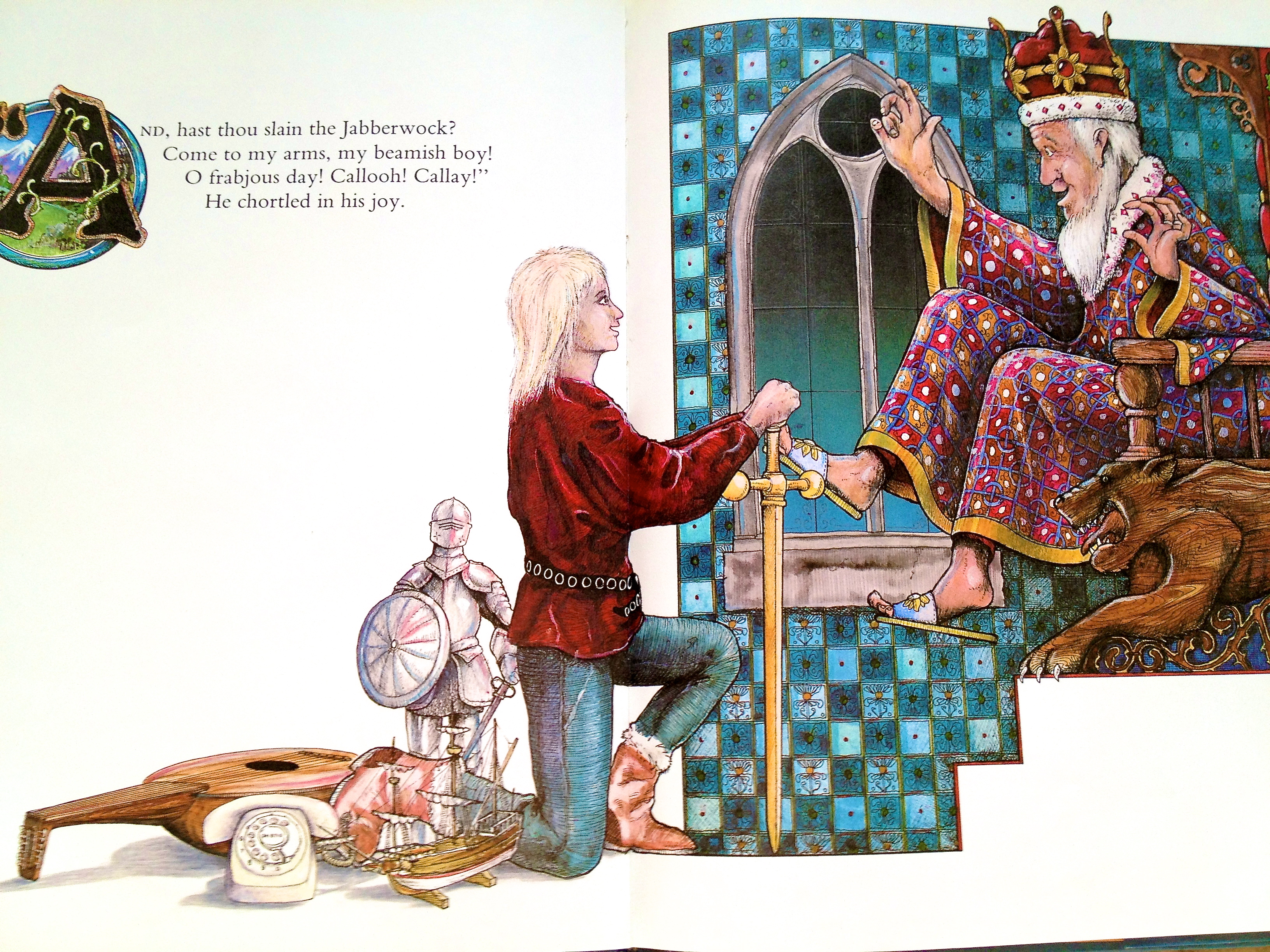
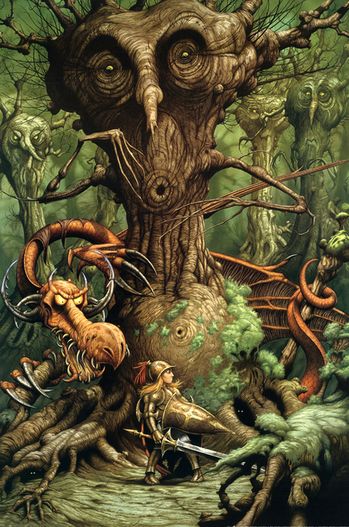
The book! Illustrated by Graeme Base

The book! Illustrated by Graeme Base

Jabberwocky
by Lewis Carroll
 
`Twas brillig, and the slithy toves
Did gyre and gimble in the wabe:
All mimsy were the borogoves,
And the mome raths outgrabe.
 
“Beware the Jabberwock, my son!
The jaws that bite, the claws that catch!
Beware the Jubjub bird, and shun
The frumious Bandersnatch!”
 
He took his vorpal sword in hand:
Long time the manxome foe he sought —
So rested he by the Tumtum tree,
And stood awhile in thought.
 
And, as in uffish thought he stood,
The Jabberwock, with eyes of flame,
Came whiffling through the tulgey wood,
And burbled as it came!
 
One, two! One, two! And through and through
The vorpal blade went snicker-snack!
He left it dead, and with its head
He went galumphing back.
 
“And, has thou slain the Jabberwock?
Come to my arms, my beamish boy!
O frabjous day! Callooh! Callay!’
He chortled in his joy.
 
`Twas brillig, and the slithy toves
Did gyre and gimble in the wabe;
All mimsy were the borogoves,
And the mome raths outgrabe.

<>   <>   <>

Borogrove and Mimsy

Borogrove and Mimsy

Alice’s Adventures in Wonderland came out in 1865. Then came the second book. Jabberwocky is found at the end of the first chapter

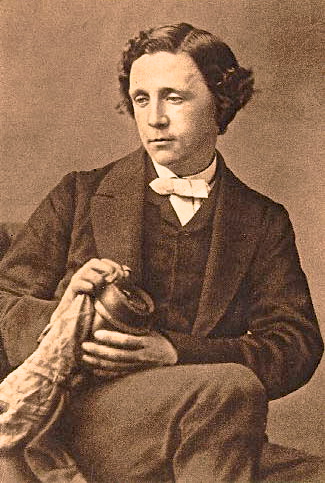
Lewis Carroll

Lewis Carroll

of Lewis Carroll’s Through the Looking Glass and What Alice Found There. After Alice has entered the looking-glass (mirror)…she opens the book in which Jabberwocky is written. The poem is written backwards, and she is unable to read it until she realizes that it’s a looking- glass book, and that she must hold it up to the mirror to decipher it….  Oh, yes, this is the kind of adventure in the written word that I love!

Lewis Carroll was the pen-name for Charles Dodgson, who lived from 1832 to 1898. He was one of eleven children. He became a mathematics professor at Oxford University in England. Adults found him difficult to deal with, and he got along best with children. He was fond of magic and sleight of hand, and as a child he dabbled in puppetry. http://www.thepublictheatre.org/education/study_guides/2010-11/Jabberwocky.pdf

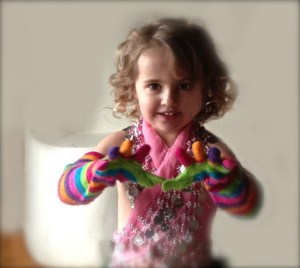
THREE IS NOT TOO YOUNG FOR THIS: a few days ago I was suggesting a nap to my granddaughter, Oona. She’s a sparkly three and a half years old. Will you read Jabberwocky, Tutu? (That’s me, Tutu is Hawaiian for grandparent. It goes with Tamam. Tutu Tamam.) I answered that I brought the beautiful new book I’d read her just once before. She leaned forward and went into a
Oona, ready for the Jabberwocky

Oona, ready for the Jabberwocky

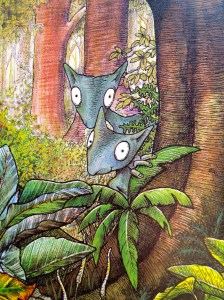
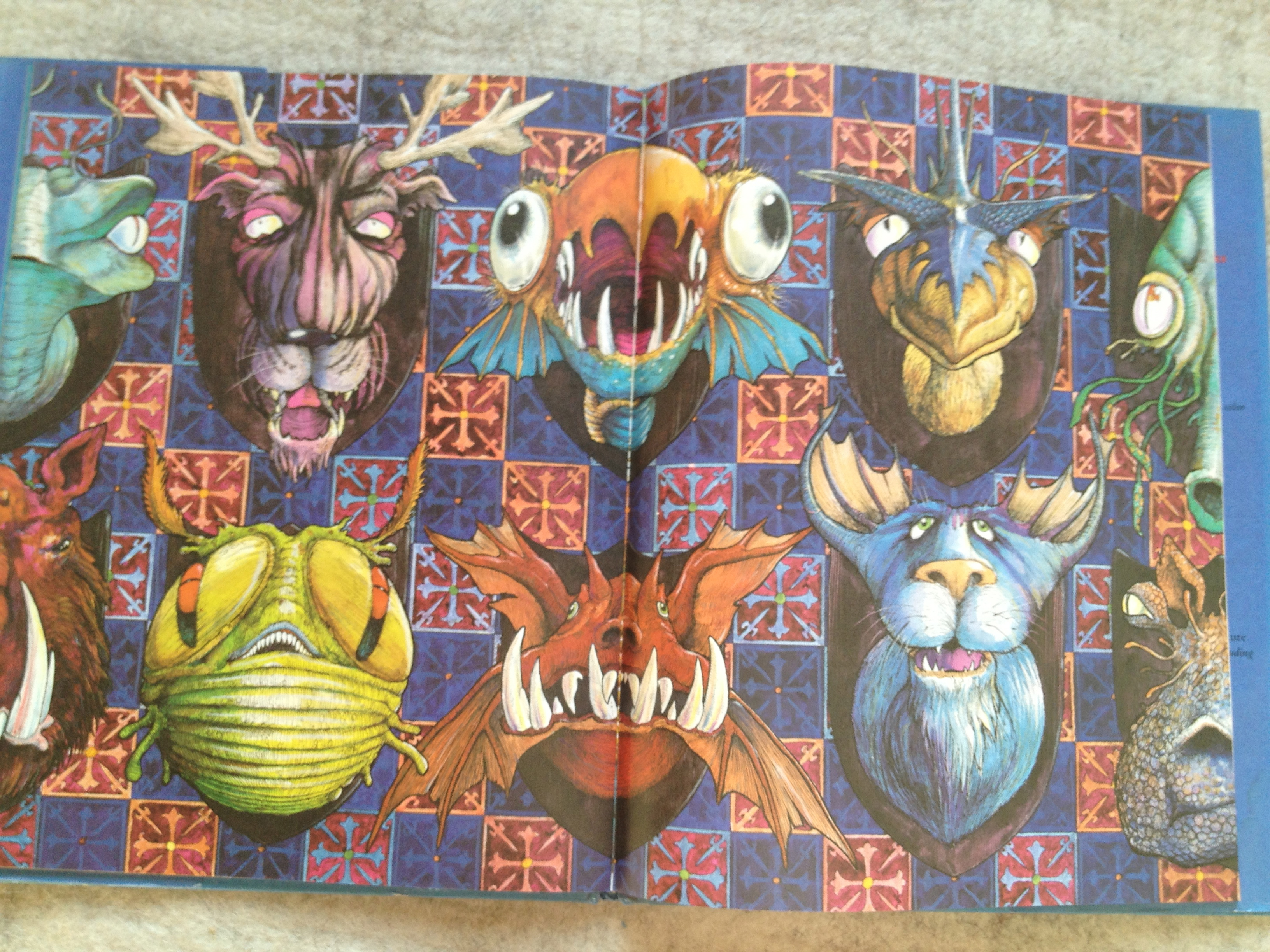
conspiratorial tone: Jabberwocky, Jabberwocky! Jabberwocky! –– as much to herself as to me. Moments later she was on my lap and we entered the weird-word-world of Lewis Carroll. We were in the garden of beautifully drawn creatures, which I had mentioned to her as looking strange, odd, or fierce, but having something funny about them at the same time, and that tiny funniness kept them from being scary. A twinkle in their eyes, a silly color, some vulnerability made them more like us. Oona’s parents are both artistic and move toward the unconventional, so she can go there. You can see from her outfit, socks on her hands…

This fall Oona discovered strong moments; she has always had delight, now she could turn fierce or pissed off, trying out her power at home in the months after her third birthday. It follows that she was encouraged to be a bit milder. Be gentle. That stuff.  This book challenged that. Was she strong enough to go on this adventure? A boy and a sword to slay the creature, then be adored by the dad for completing the task!

Look, Oona, the Borogroves! She answered: I think one is a Mimsey. We tracked the two pale green creatures, hidden skillfully on nearly every page. They were the “team” that went with the hero on his adventure. And the white horse, Borogroves and Mimsey – and us.

She had told me the first time I read the book that the hero was a girl. Now she began to correct me. I mean pronouns. He took his vorpal sword in hand. HER vorpal sword. Come to my arms my beamish boy.

Come to my arms my beamish GIRL...

Come to my arms my beamish GIRL…

GIRL, Tutu, it’s GIRL.  We made it through the story and Oona said, AGAIN!  I said if she got into bed, I’d whisper the poem to her –– without the book.  All tucked in under the pink quilt, she closed her eyes. Her thumb found her mouth. But as I began to whisper, she corrected most of the seven pronouns he and his to SHE and HER! Beamish boy  to Beamish GIRL.

I was stunned. I never heard of a three-year-old feminist! This is her journey. She can be all-powerful and be rewarded.  She has weird friends. She is at home with them. Not only teddy-bear and dolly stuff!  Go Oona.

Jabberwocky         as preferred by Oona (she and her and girl)

 
by Lewis Carroll
 
`Twas brillig, and the slithy toves
Did gyre and gimble in the wabe:
All mimsy were the borogoves,
And the mome raths outgrabe.
 
“Beware the Jabberwock, my Girl son!
The jaws that bite, the claws that catch!
Beware the Jubjub bird, and shun
The frumious Bandersnatch!”
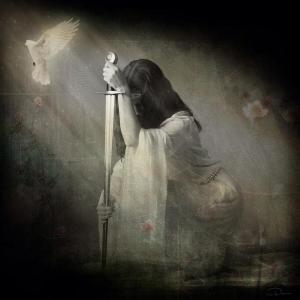
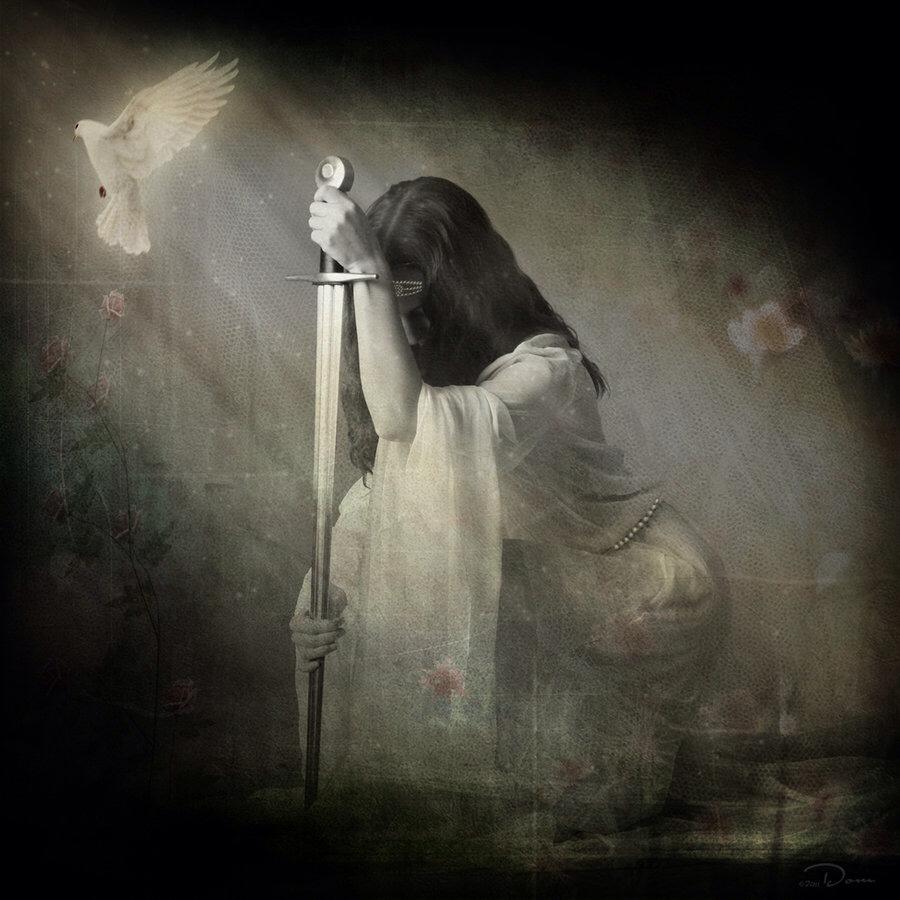
 girl with a sword
She He took her his vorpal sword in hand:
Long time the manxome foe she he sought —
So rested she he by the Tumtum tree,
And stood awhile in thought.
 
And, as in uffish thought she he stood,
The Jabberwock, with eyes of flame,
Came whiffling through the tulgey wood,
And burbled as it came!
 
One, two! One, two! And through and through
The vorpal blade went snicker-snack!
She He left it dead, and with its head
She He went galumphing back.
 
“And, has thou slain the Jabberwock?
Come to my arms, my beamish girl boy!
O frabjous day! Callooh! Callay!’
He chortled in his joy.
 
`Twas brillig, and the slithy toves
Did gyre and gimble in the wabe;
All mimsy were the borogoves,
And the mome raths outgrabe.
 

<>  My favorite version is Jabberwocky by Johnny Depp as the Mad Hatter in Tim Burton’s 2010 film, “Alice in Wonderland.” He ends this unique reading of the poem speaking to Alice, saying –– “It’s all about YOU, you know.”  Which brings us back to Oona, and the girl champions of our era.  Alice falls down a hole after spotting an unusual rabbit. Arriving in a strange and surreal place called “Underland,” she finds herself in a world filled with talking animals, villainous queens and knights, and frumious bandersnatches. Alice realizes that she is there for a reason–to conquer the horrific Jabberwocky and restore the rightful queen to her throne.  Check this out!  You may have to copy this pesky URL  <http://viralverse.net/wordpress/?p=3405v=uTvNIxeipqs&gt;

And this! A girl a bit older than Oona recites Jabberwocky: http://www.youtube.com/watch?v=uTvNIxeipqs     <>
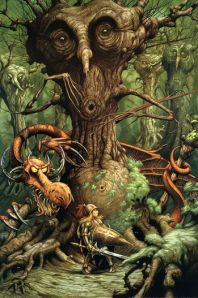
jabberwocky7xo    ~WORDSWORDSWORDSWORDS~ WORDSWORDSWORDSWORDS~

For my friends the writers, here is Poetic Analysis:

Each stanza is cross-rhymed (ABAB). The first three lines of each stanza have 8 syllables (4       roughly iambic feet), and the fourth line has 6 (3 feet).

Line 1: Let’s take the word slithy as our first example. This word is two things: an example of onomatopoeia, and an example of portmanteau. What’s that second one? Well, a portmanteau is a word that’s made by squashing two words together. In this case, lithe and slimy. Onomatopoeia, as you might have encountered earlier in the discussion about this poem, refers to a word that sounds like what it means (think hiss or buzz). So we have a word that not only sounds slimy, but also is graceful, because of the inclusion of lithe (which means “supple and/or graceful”). Both the sound and the word combining give this new word force and depth of meaning.

Line 2-3: Gimble and mimsy echo each other (technically, it’s assonance, i.e., repeated vowel sounds) creating sonic cohesion, while the light i sounds give us a feeling of carefree-ness and peace.

Line 5: The word Jabberwock is harsh, and signals an impending violence. To jab also means to hit something, which further enhances the sense that this thing is something you don’t want to mess with.

Line 8: Similarly, the word Bandernsatch has hints of both bandit and snatch in it, the latter being something that the former would do (a bandit snatches your stuff and runs away with it).

Line 18: Snicker-snack! is also sonically resonant, as it mimics the sound of a sword hitting something. And about the sword: the word vorpal is a onomatopoetic, if you think about it. Say “vorp!” Doesn’t this sound like the swinging of a big, powerful weapon?

Line 23: The expressions of joy here are all sound-play. Frabjous is a bit like fabulous, and if you were to holler “Callooh! Callay!” people would probably think you were cheering.<http://www.shmoop.com/jabberwocky/sound-wordplay-symbol.html>

Lewis Carroll offered a definiton for ‘uffish thought’ in a letter he wrote in 1877: “I did make an explanations once for ‘uffish thought’! It seemed to suggest a state of mind when the voice is gruffish, the manner roughish, and the temper huffish.”
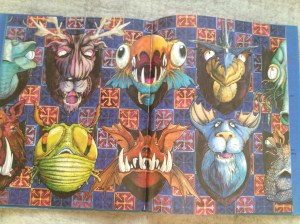
Oona likes the yellow one best....

Oona likes the yellow one best….

I have a sign on the computer. THIS IS THE YEAR OF UFFISH THOUGHT!  For me it is a magical state of thought, a doorway into the empowerment of granddaughters, and the sword of clarity taking out my jabber-confusion. May it be so!

<>   <>   <>

Wearing the Kuffiyeh on retreat

12 Saturday Jan 2013

Posted by Tea-mahm in Jordan, kuffiyeh, Naomi Shihab Nye, Poetry

≈ 7 Comments

Ghost of the olive tree,Palestine

Ghost of the olive tree,
Palestine

I’ve been on retreat for seven days. We are (sixty or so people) on a hill-top surrounded by fields, deer, and oak trees south of Petaluma California. We sit for 20 minutes –  participate in music, chanting, and movement for 20 minutes – sit for 20 minutes (back and forth) every day for ten days the first week in January. This is our tenth year.

IONS bench

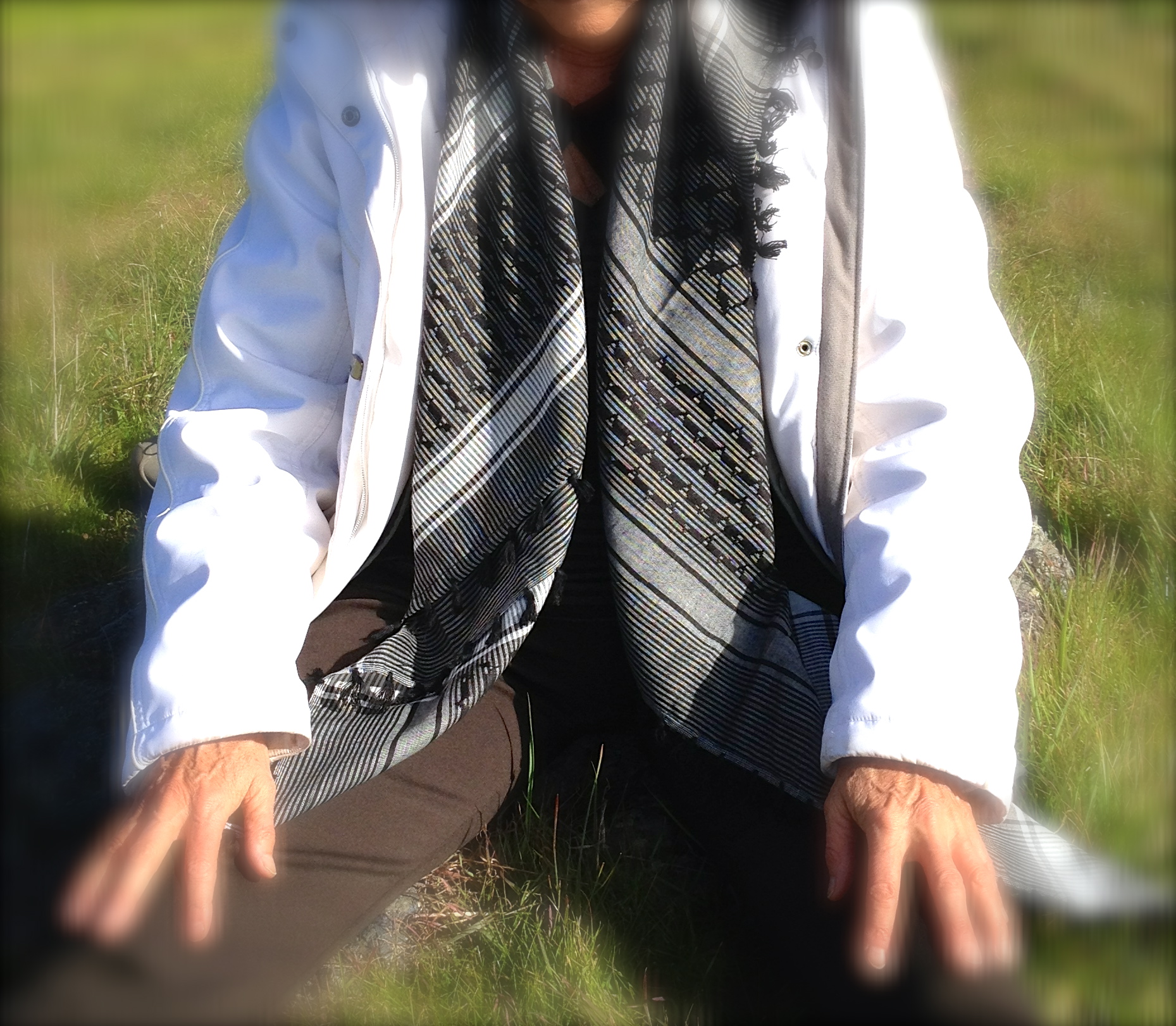
 Today I’ve heard it snowed in Jerusalem! I’m wearing a gift, a black and white scarf made by Palestinians in Jordan. My friend Girija gave it to me. The Kuffiyeh is a symbol of Palestinian national sentiment. Here’s a translated excerpt from a spoken word piece by Shadia Mansour:

That’s why we rock the kuffiyeh, cuz it’s patriotic
The kuffiyeh, the kuffiyeh is Arabic
That’s why we rock the kuffiyeh, our essential identity
The kuffiyeh, the kuffiyeh is Arabic…
 

I sit in silence, deep into my days of meditation, wearing the black and white cloth that links me to the  Arabs, and specially the Palestinians, as does my name – Tamam. It was given to me by Murshid Hassan, a Jordanian living in Nabulus in 1975. It goes with Kahn, my husband’s Jewish family name. I sit with both names. Both names sit together peacefully with me.

I sit with eyes open most of the time, and the man in front of me wears a jacket black on his shoulders and a deep blue on the back. It’s like looking at the ocean at night; our morning is evening in the Middle East. Near Jerusalem and elsewhere, many Palestinians live in pain and uncertainty. The hopeless feelings are ever-present, and the black flower of hatred blooms. I am stunned by my own reflections as my world here on the hill at IONS is safe and peaceful. I am with people who are trying to be kind to one another. We don’t question the certainty of our next meal and a warm bed. Here there are no bulldozers breaking the centuries-old olive trees, no rocket launchers, no rats, no fetid water. I can afford to be focused, present and awake now  because I sleep safely at night.

My beloved mentor and friend, Naomi Shihab Nye is a world-class poet who lives in San Antonio. Her father grew up in Palestine, her mother – America. Here is a poem she wrote:Palestinian_Peace_Dove_by_Latuff2

Luncheon in Nabulus city Park

When you lunch in a town
which has recently known war
under a calm slate sky mirroring none of it,
certain words feel impossible in the mouth.
Casualty: too casual, it must be changed.
A short man stacks mounds of pita bread
on each end of the table, muttering
something about more to come.
Plump birds landing on park benches
surely had their eyes closed recently,
must have seen nothing of weapons or blocades.
When the woman across from you whispers
I don’t think we can take it any more
and you say there are people praying for her
in the mountains of the Himalayas and she says
Lady, it is not enough,  then what?
 

 The gong sounds, ending the sit. The blue ocean before me tips over as the man acknowledges the end of the meditation with a small bow. I am gently holding the two worlds, rocking first there then here, wearing the soft fabric of hope. May all prayers for end to the conflict in the Holy Land reach the heart of the earth. May all be safe and happy and free to live a full life!

<>     <>       <>

Some people doing work for peace the Middle East:

http://jerusalempeacemakers.org 

Home

New, Oscar-Nominated Documentary film: 5 Broken Cameras about a Palestinian family <http://www.kinolorber.com/5brokencameras/#/about&gt;

my kuffiyeh...

my kuffiyeh…

Untold and Madonna at the concert in NYC

16 Friday Nov 2012

Posted by Tea-mahm in Announcements, Events, Kay Turner (folklore), Madonna, Poetry, Untold, Updates

≈ 2 Comments

“I went down to Rockaway Beach yesterday with my children and we saw what was going on there, we saw the destruction,” she said. “It was really sad but we also saw amazing acts of humanity. People sharing with other people, people working hard, cleaning houses, handing out food, blankets giving love and a hug.” Madonna

This October 8 I gave a reading in Tribeca, NYC. A new friend, Ishwari, bought my book and gave it to the director of Brooklyn Art Council, Dr. Kay Turner. I looked her up. Dr. Turner  loves Folklore as “the oral basis of culture, bringing the past into the present…,” she mentioned in an interview conducted by Diana Taylor for HIPP, NY.

Here’s where I pick up the thread. Kay thanked Ishwari with an email that said this:

“I am devouring Untold. I love it! Thank you!!! You will appreciate that I took it with me to Madonna’s concert on Monday night. To read about the Wives while I waited for Her!!   Ha!  Xok”

Best book review I’ve gotten. Thank you Kay!    Pop Royalty and the royalty of the 7th Century – together – at Madison Square Garden…. oh, yes.  It makes me smile.

And this on the concert: from reviewer Cory Midgarden:  [November 13th for MTV online News]:  NEW YORK — “Madonna fans were in for a treat Monday night when the Material Girl packed Madison Square Garden for her MDNA Tour. While concertgoers waited for more than an hour between her set and her opening act …. it all proved to be worth the delay once the original Queen of Pop took the stage.

The 54-year-old confirmed the title was still hers as she opened the night wearing a black skintight ensemble that was hard to imagine Britney, Beyoncé or Gaga pulling off in 25 years’ time. But it was not just her flawless appearance that garnered ear-piercing screams throughout MSG. As Madonna worked the crowd with her single “Girl Gone Wild,” it was clear to everyone in attendance that they were in the presence of pop royalty…. The mood changed dramatically before her performance of “Masterpiece,” however, where Madonna expressed her condolences for those affected by Superstorm Sandy.”

Please! May we all continue to send prayers and help to those who are still suffering from this terrible storm. <>

Jack Gilbert, Master Poet dies

14 Wednesday Nov 2012

Posted by Tea-mahm in Jack Gilbert, Napa Valley Writers Conference, Poetry

≈ 1 Comment

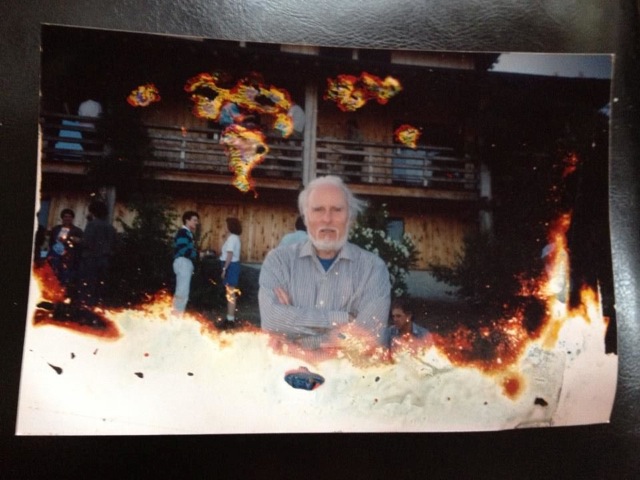
Dorianne Laux writes: “This photo was reclaimed from a box left out in the rain. Even water was turned to a great fire when it came to Jack.”

I was saddened by the news that the great poet Jack Gilbert just died today. Here is a very good bio and interview from years ago in The Paris Review.<http://www.theparisreview.org/interviews/5583/the-art-of-poetry-no-91-jack-gilbert&gt;

and here is a tender beautiful piece on Linda Gregg… and Jack: <http://alexdimitrov.tumblr.com/post/36726870922/meeting-jack-gilbert-and-linda-gregg&gt;

from Burning (Andante Non Troppo)
 
We are all burning in time, but each is consumed
at his own speed. Each is the product
of his spirit’s refraction, of the inflection
of that mind. It is the pace of our living
that makes the world available. Regardless of
the body’s lion-wrath or forest waiting, despite
the mind’s splendid appetite or the sad power
in our soul’s separation from God and women
it is always our gait of being that decides
how much is seen, what the mystery of us knows,
and what the heart will smell of the landscape….
 

I went back over a poem I wrote in Jane Hirshfield’s class at Napa Valley Writer’s Conference over 5 years ago.I re-worked it, and will continue to do so for awhile.  The bones of his poems are so strong, you can build a house or another poem from the inherent structure of his words. So here’s my tribute to Jack Gilbert and his poem it sprouted from. There are references to other poets and I use the titles of two of Ruth Stone’s poetry books,  In an Iridescent Time, and Simplicity, as well as lines from Shelley and Gilbert.

 Retail  – [after Jack Gilbert’s Going Wrong] ~  by Tamam Kahn               
                                                                  For Ruth Stone
 The dress is beautiful. Pleated shibori.
Folded shivers. Sculpted silk that eases
toward the hem and respects the line
of a woman’s hip. It’s like nothing else
in the shop. In an Iridescent Time,
the woman hums, smoothing it.
 “What can you know of my silks!”
demands the Malicious Muse. Simplicity,
the woman answers as she lifts the mannequin
to the display window, rotates the base.
The muse gestures dramatically. “I have shown you fabric
dyed with lines from Shelly: “God save the Queen!”
All you come up with is  –– simplicity?”
The woman walks outside, tilts her head slightly
and takes in the whole window. She steps back in
and selects a branch of forsythia. “You have lost
the elegant link between word and textile,” She takes
a chenille scarf and scrunches it. “Your references
are obscure, color choice at odds with Caucasian skin.
Silk worms would find your efforts clumsy.”
I am not clumsy, she thinks, watching the
edge of the silk end in “three knots and a space…”
She smiles and picks up the smooth tagging gun.
Not clumsy.    Ferocious.
 
 <>
Notes:
In an Iridescent Time, Simplicity: books by Ruth Stone
Shelly wrote “A New National anthem” which repeats: “God save the Queen.”
Jack Gilbert, “Having the Having:” “…three knots and a space…”

++++++++++++++++++++++++++++++++++++++++++++++

Going Wrong   by Jack Gilbert
 
The fish are terrible. They are brought up
the mountain in the dawn most days, beautiful
and alien and cold from night under the sea,
the grand rooms fading from their flat eyes.
Soft machinery of the dark, the man thinks,
washing them. “What can you know of my machinery!”
demands the Lord. Sure, the man says quietly
and cuts into them, laying back the dozen struts,
getting to the muck of something terrible.
The Lord insists: “You are the one who choses
to live this way. I build cities where things 
are human. I make Tuscany and you go to live
with rock and silence.” The man washes away
the blood and arranges the fish on a big plate.
Starts the onions in the hot olive oil and puts
in peppers. “You have lived all year without women.”
He takes out everything and puts in the fish.
“No one knows where you are. People forget you.
You are vain and stubborn.” The man slices
tomatoes and lemons. Takes out the fish
and scrambles eggs. I am not stubborn, he thinks,
laying all of it on the table in the courtyard
full of early sun, shadows of swallows flying
on the food.  Not stubborn, just greedy.
 

It is sobering to see how ordinary and even the language is. It reminds me of great musicians who seem to be doing very little, as they pull on your heartstrings and move you to tears.

I am grateful to have read his words, even the titles are wonderful. Here are a few:

Haunted Importantly, Scheming in the Snow, Having the Having, The Container for the Thing Contained, Naked Except for the Jewelry, Failing and Flying, and Half the Truth…

Jack Gilbert, by Robert Toby

Thank you Jack Gilbert for all I have learned from your poetry.  <>   <>
← Older posts

Solomon Posts

Untold Book

Enter your email address to follow this blog and receive notifications of new posts by email.

Join 157 other subscribers

Tamam’s Links

- Poetry Group - Oracular Pear

- Youth Speaks: Poetry Slam

Links

  • Book: Physicians of the Heart the 99 Names of God – amazing book
  • Fred Chappell: short review
  • Gulf Coast Poems Poets for Living Waters
  • How a Poem Happens
  • Jamaica Osorio's website
  • Mari L'Esperance, poetry
  • Mark Doty, amazing poet read and listen to this poet
  • New Formalism Where is formal poetry today?
  • Oona and Maeve Granddaughters Oona Beatrix and Maeve Clementine
  • PoemShape Formalist Poetry
  • Poetry Out Loud! supporting the next generation!
  • Seven Pillars Book Review by Tamam Mother of The Believers by Kamran Pasha
  • Seven Pillars, POETRY poetry on Pir Zia’s blog/7 Pillars
  • Sufi Ruhaniat International Ruhaniat web site!
  • The Accidental Theologist Lesley Hazelton – a favorite writer and author…
  • The Sound Journal Tamam edits this Journal: NEW!
  • very like a whale good poetry reviews
  • West Marin radio show Sufism: The Heart of Islam, with Wendy McLaughlin

Archives

Blog at WordPress.com.

  • Subscribe Subscribed
    • CompleteWord
    • Join 157 other subscribers
    • Already have a WordPress.com account? Log in now.
    • CompleteWord
    • Subscribe Subscribed
    • Sign up
    • Log in
    • Report this content
    • View site in Reader
    • Manage subscriptions
    • Collapse this bar
 

Loading Comments...