 In 2003 I left San Francisco to go on a peace pilgrimage to Damascus. I am reprinting this because I believe it is vitally important to offer positive personal stories about Arab countries.
I thought I heard someone say “terrorists”, but I realized by the context it was “terrace”, something about “the terrace next to the mosque”. That word – terrorist – shocked my nervous system. Nine-Eleven events were not so far away and George Bush was the American president. I told my ninety-one year old mother-in-law that we were just going to England and never mentioned Syria, even when we were there and calling her. It was strange: “Hi. Where? We’re in the countryside near… London”. Our friends and family were somewhere on a scale from worried to frightened that our visit to Syria would place us in harm’s way. Syria. Number one enemy of Israel.  President of the Arab American Institute, James J. Zogby, says in his article in the Syrian Times Nov. 19, 2003: “Having just returned from a short visit to the Arab world, I find the disconnect between the United States’ Middle East policy debate and realities in the region has never been greater than it is today.” he goes on to say that the real struggle is “…over ideas that will shape the U.S. policy debate in the minds of the American people.” For me it is important to communicate the urgency I feel; as if a tall, heavy door between America and Syria is swinging shut. Elias Amidon, leader of the journey, describes a “wall” being built by the U.S.
Why go? I went because I had a clear and powerful inner directive that comes from being welcomed by a loving friend or summoned by a great man – in this case a Sufi Master from the thirteenth Century, Sheik al Akbar, Ibn ‘Arabi. That seemed true to both my husband, Shabda, and me, so we went. Several years before this, we led a pilgrimage to Andalusian Spain and Morocco, entitled: In the Footsteps of Ibn ‘Arabi. We visited his birthplace in Spain, and carefully followed his trail to Fez. This was to be our completion phase – for us, and by proxy – for our fellow pilgrims of years past. The master lived his senior years productively in Damascus and was buried on the hill not far from the Al- Majed, our Hotel. I wanted to sit there quietly and sense what I felt. The “quiet” part was not meant to be, but now I’m getting ahead of myself.
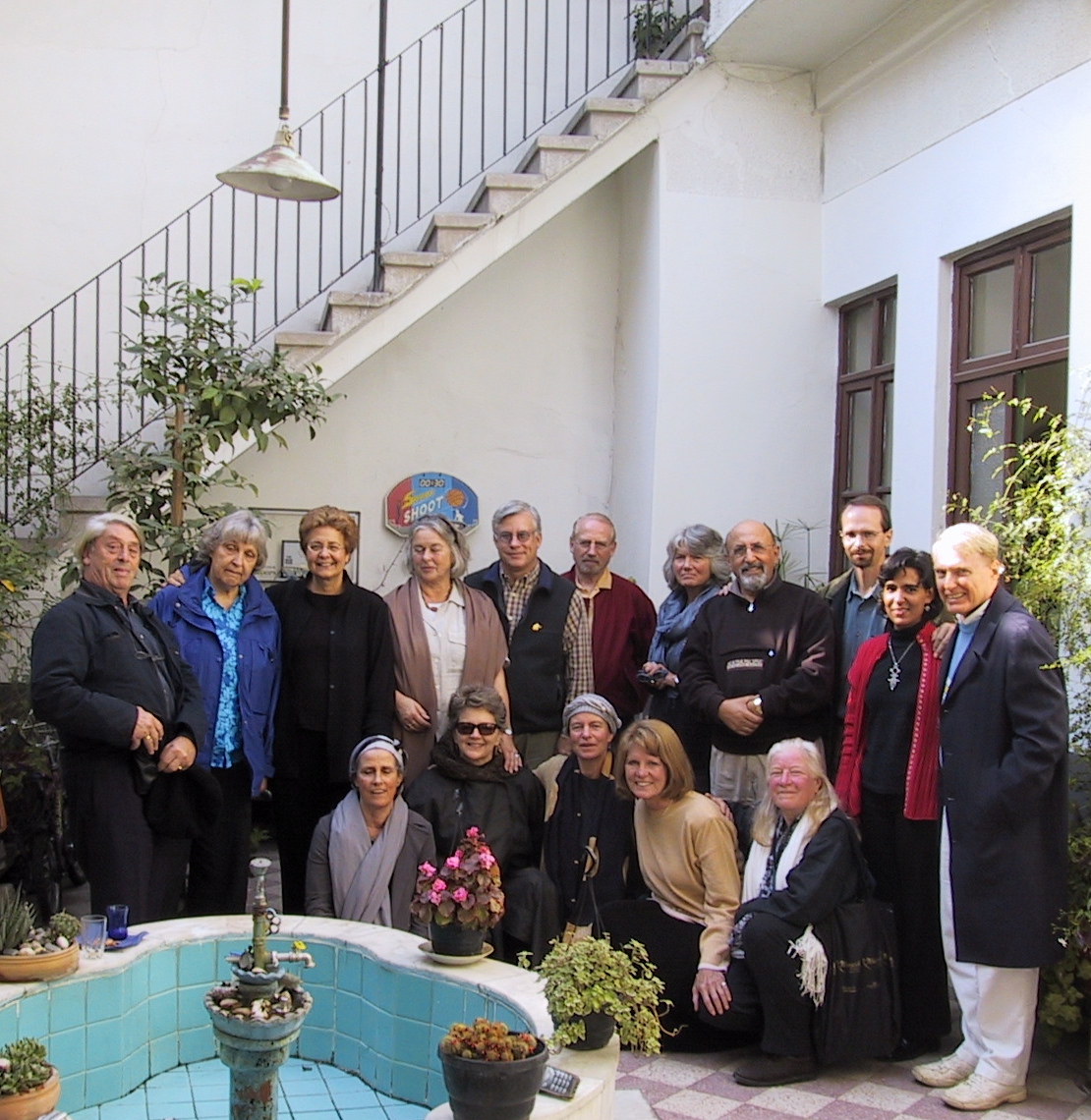
We were here to join 13 other peace delegate pilgrims and our hosts, group leaders, Rabia Elizabeth Roberts & Elias Amidon of Boulder Institute for Nature and the Human Spirit. This journey was their invitation. The pamphlet for the Interfaith Pilgrimage reads: “The purpose… is to provide religious and community leaders, peaceworkers and other concerned citizens from Western countries an opportunity to visit Syria, …to come and listen to Syrian citizens describe their own views…and their visions for how real peace and mutual respect may be established.”
We were instructed to dialog with Syrians: “…how is it for you? What are the worst problems facing Syria?” Rabia & Elias had done this in Bagdad and Damascus in former years, and found that holding ground for this kind of exchange was very healing for local people who feel America doesn’t listen to them or their government. “We are here to make friends and to listen,” they told us. “It’s a crash course in human trust, after which the pilgrimage comes alive.”
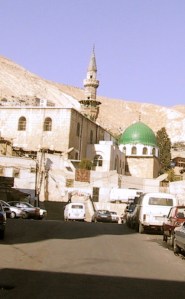
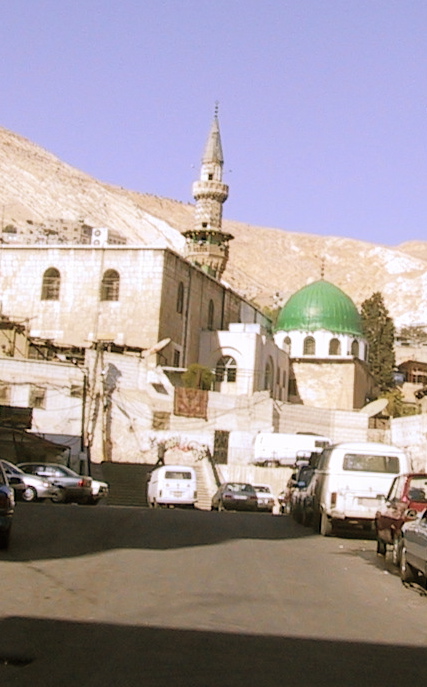
The resting place of Ibn ‘Arabi
I stepped into the unknown and possibly hostile landscape and found that the feeling among Syrians was: You’re from America? You are welcome here! The unsaid part was something like, “We know that governments, particularly dictatorships, have little to do with the people and it seems we both have this problem, so we extend to you courtesy, as you are a guest in our country”.
Janaki from Boulder, Colorado and I teamed up and went to find a Syrian who spoke English. Finally we were led to Mohammad, a young man at a convenience store. He was happy to talk to us, but his boss, a man in his fifties was nervous. We began by saying we were peace delegates from America. Mohammad had learned our language from an interest in computers. He started by saying “OK” or “fine” to our questions. We would have been offered tea by now, but it was Ramadan and he was fasting. Finally he opened up and spoke: “Why do America and Israel need big nuclear weapons pointed toward us? They are so powerful. We are a small country. And why does America support Israel?”
I was amazed that we could have a conversation like this. That it was safe to do so. The names Israel and Jew are such a hot topic that our hosts inferred that neither word was prudent to say out loud on the street, as it would bring immediate attention. Israel is the enemy. America seems to share with that country what is perceived as expansionist goals. I was stunned to learn that 50 years ago Jews lived integrated lives in Damascus but now there are almost none. We listened. We told him it was impossible to understand how governments behave, and that we pray for positive change. At the group meeting there were many stories like ours. Collectively, we had just dropped into a deeper level. This was our work here.
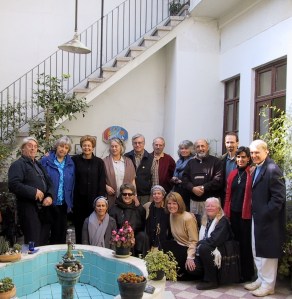
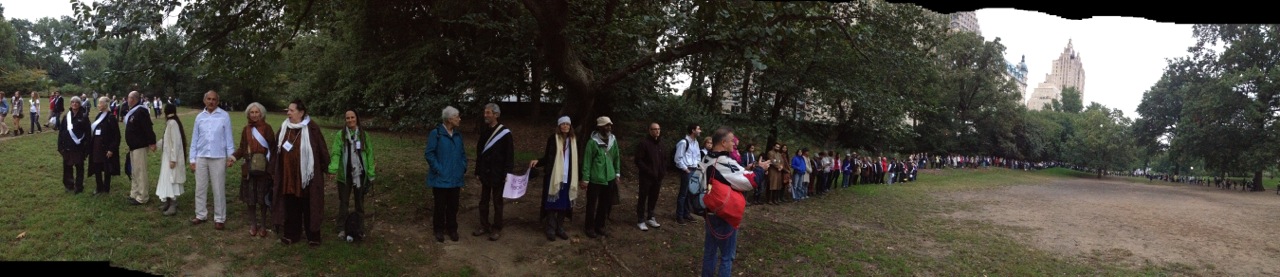
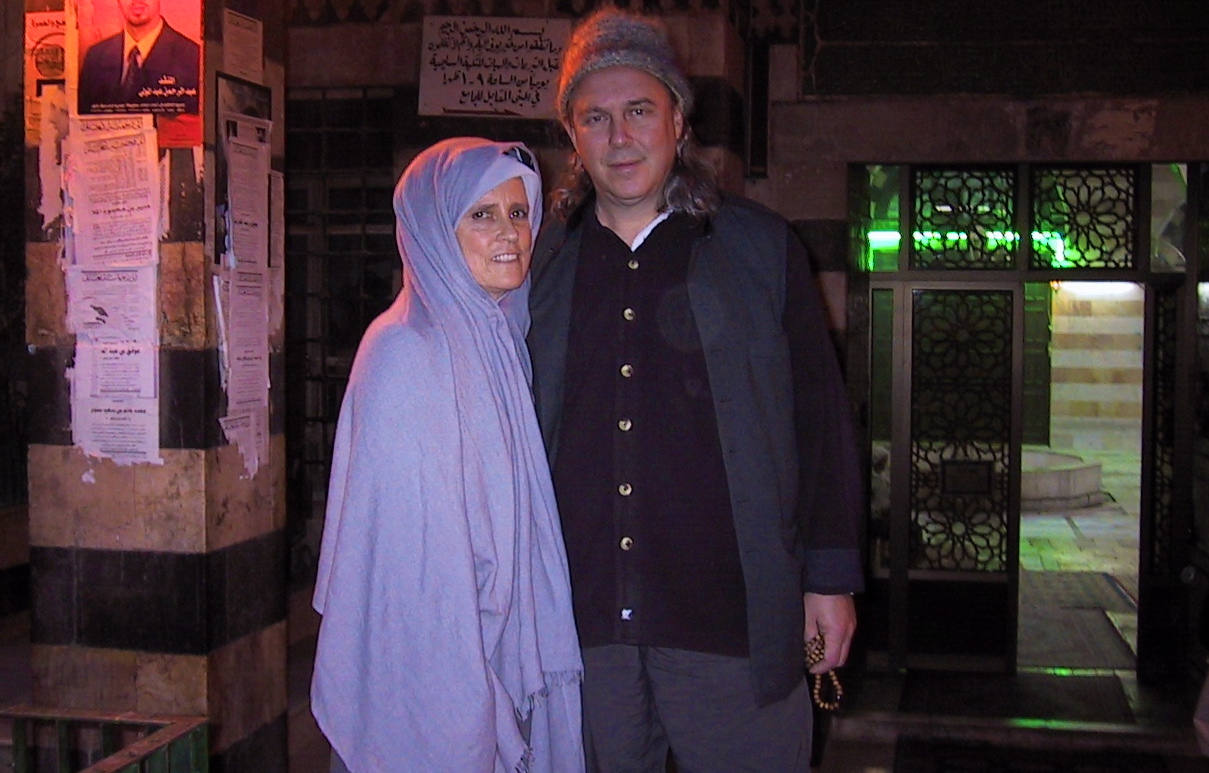
The Peace Pilgrims
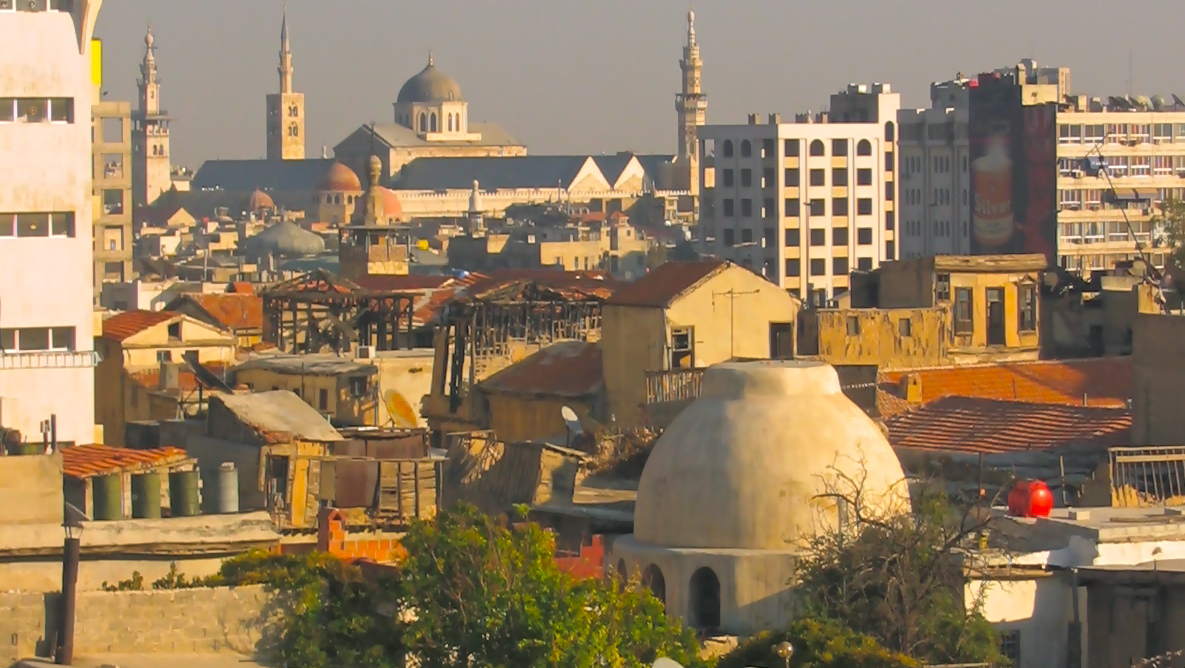
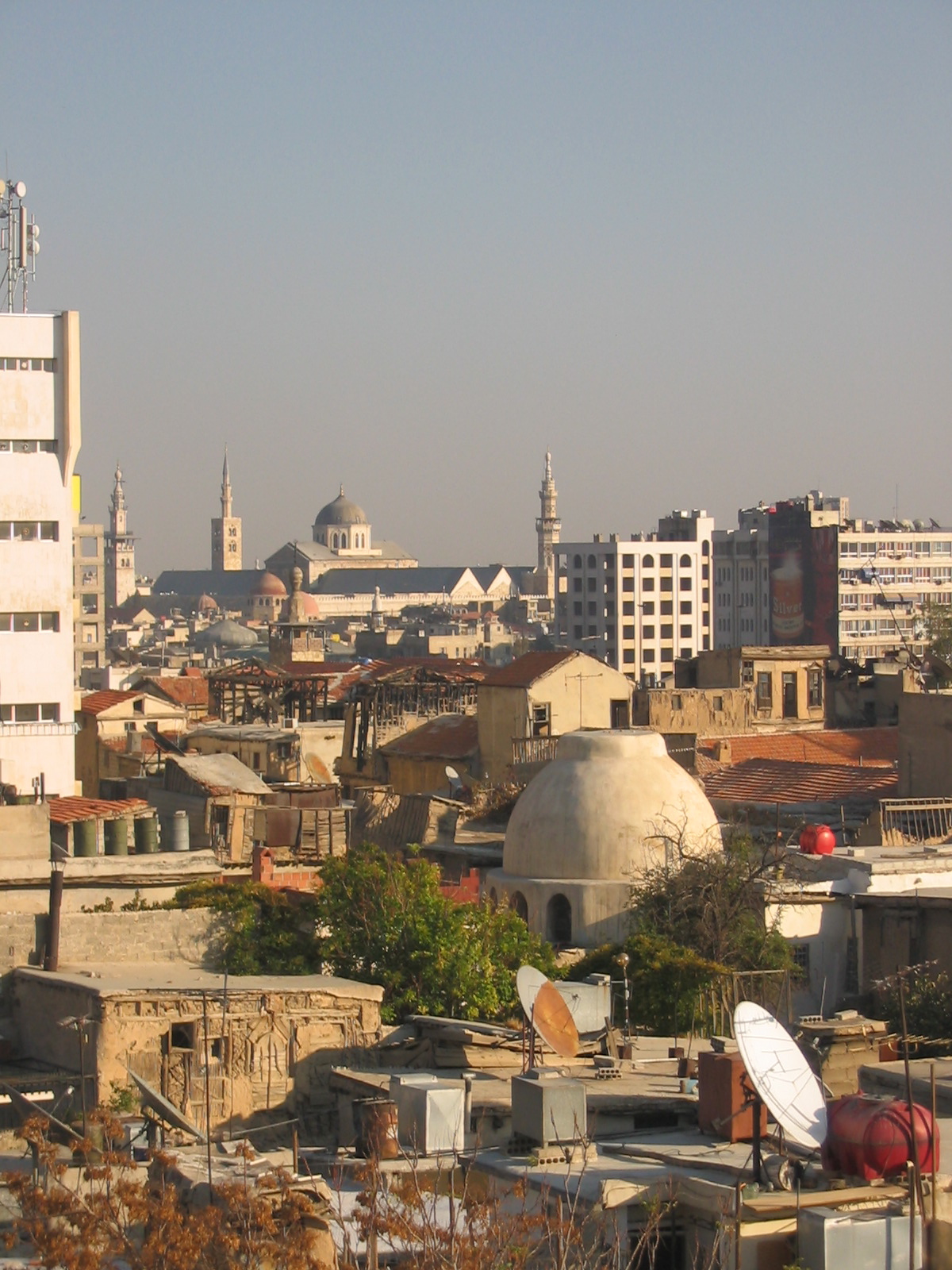
What is the city of Damascus like? It is a vital, attractive city. One hotel has a revolving restaurant on the fifteenth floor. Other buildings go back hundreds of years. Some are crumbling. Not one American tourist. No soldiers in the streets, no beggars or disoriented people like the homeless I encounter in San Francisco. (This was written before the Iraqis poured into Syria as refugees.) The shops are full of merchandise. Streets busy with commerce. Police acting as traffic directors. I saw many women without head scarves and women with head scarves. The best hotel was filled with Saudi oil-men in town to work on a business deal with the Syrians. You could read about it in the Syrian Times and the Daily Star in English.
The day I did get to Ibn al Arabi’s tomb it was nearly noon as I came in with the women from our group. Five or six local women were there. A green curtain divided the room from the larger men’s side. I was thrilled to finally arrive, and silently touched my forehead to the rug for a minute or two. “La la! “[no. no!] someone poked me and mimed with gestures that I needed to praise and be happy, not emotional. My face showed no traces of tears yet my behavior was somehow not appropriate. I’d come thousands of miles to put my head down here in this spot. What a discovery. I was in a country where woman’s emotional behavior, it seemed, was being censored by other women, most likely because it was not safe to stand out in word or action. Two of them spoke urgently in Arabic. One was writing me a note. What was going on? I don’t speak or understand modern Arabic. I asked for a Qu’ran and began to recite Sura Ya Sin, (chapter 36) “Heart of the Qu’ran”. As I recited, I struggled with the Syrian style of text, as one of the women corrected my mistakes. I began to notice her reading was completely uninflected, the way you would read if you wanted to escape notice. I had a more traditional pronunciation of certain letters like Qaf and Ayn (Arabic letters). I was taught that this tells that you’ve had a careful education. I felt gratitude for the years of insistence by my Arabic teacher to squeak the ayns and squeeze the pharynx for the qaf. They seemed happy with me now. Sura Ya Sin was giving me a moment of dignity.
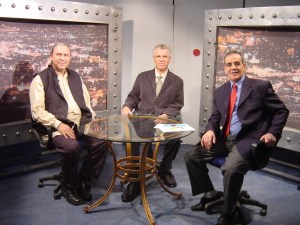
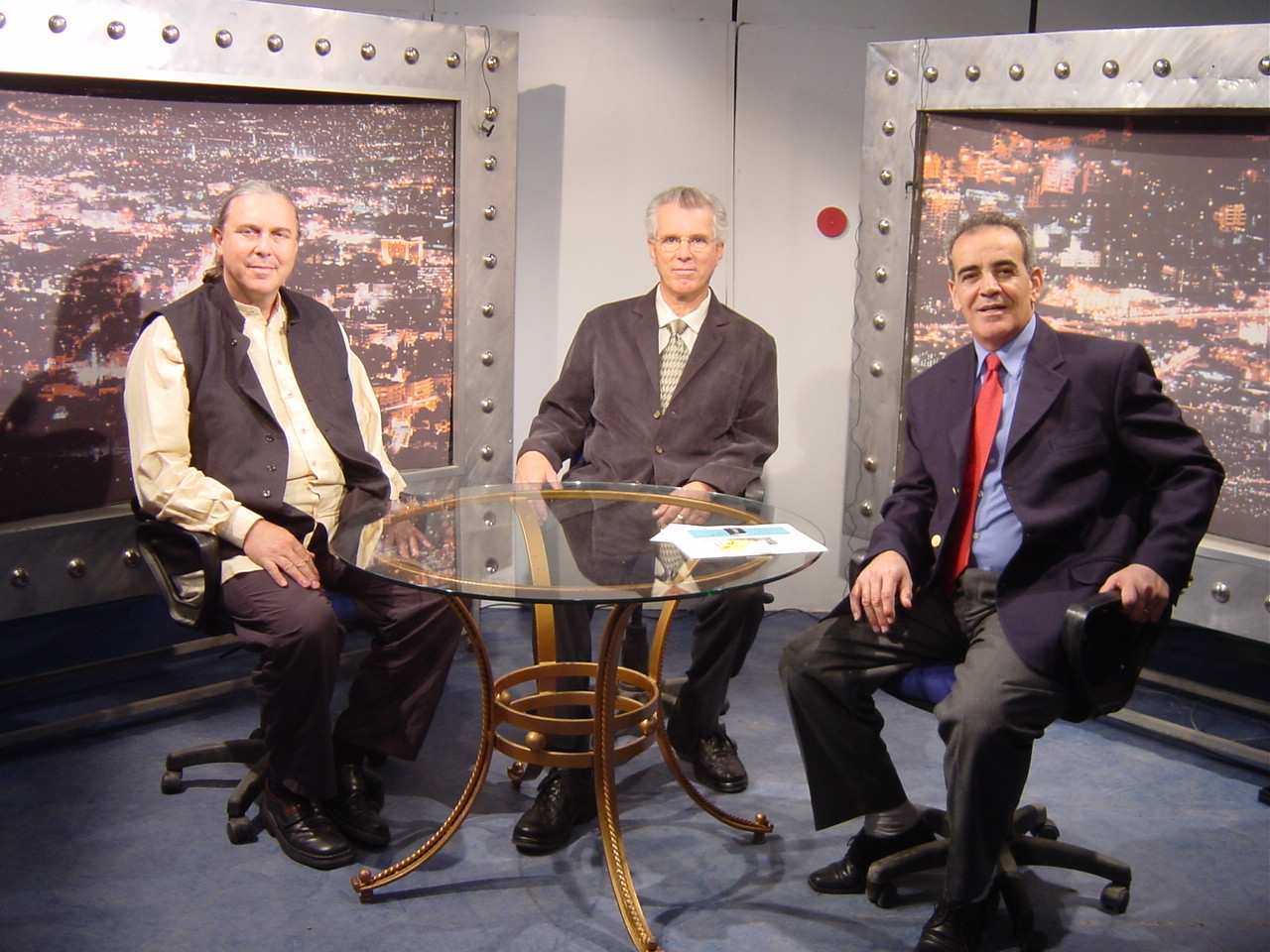
Shabda and Elias had recorded a television interview with a prestigious commentator, for a weekly show called “Focus”, not unlike 20/20 in America. The group was at a monastery north of Damascus when it aired.
 I was in my hotel room waiting for the show, watching live TV footage from Mecca. The phone rang. “Mrs. Kahn? This is The American Embassy calling. We are evacuating all American citizens from Damascus tonight. Can you be packed and ready to leave in one hour?” After the words were repeated my full attention was with that voice on the line! I said that I couldn’t leave because my husband wasn’t here. I was thinking, ‘God, he’s going to be on national television, I can’t miss that!’ “Never mind your husband, we need to get you out”, continued the voice. “How do I know this is the Embassy calling. I’m going to check with the hotel desk”. I answered. The caller played his last card: “We will have a helicopter waiting on the roof…” I’d seen the roof. I was suspicious. “B, is this you?” Happy laughter was the response. It was the hotel manager, who was keeping a protective eye on me since I was in the hotel by myself. Syrian-American comedy hour. Strangely, his show of bold dark humor made me feel more at home here. I’d faced the unspoken boogey-man, and it transformed into laughter.
The Most Amazing Library I Have Ever Entered:
The next day B chuckled when he saw me, very pleased with himself. He was sitting at the computer that is located in the center of the lobby. He pulled up a chair for me, asking what I planned to do today. “Type this in,” I said. “It’s my web site”. “YOU have a web site?” He was stunned. “It’s because I’m a writer. It talks about my work.” I told him about research on the Wives of Muhammad. He was on his feet. “But you have to go to The Al-Azhar National Library. I’ll take you there at once!” He told me if we left immediately, he could get me there and pick up his son on time from school. He must have decided I was a kind of celebrity, with a husband on television and my own web site. He was at my service. The library guard looked at my passport for a long time. He talked to B. Finally I passed through the iron gates into a vast modern building like an urban American Museum. Three floors, two large spiral staircases, fountains that created a mushroom shaped lens of water off a round pedestal. Reflections of the sky danced on the water’s skin. Unusual art hung on the walls: a plaque with the world’s first alphabet, cuniform pressed triangles from Ugarit, fourteenth century B.C. Impressive.
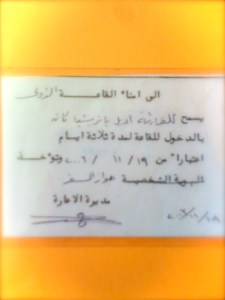
My Library Card!
I located an English-speaking librarian who was amused by me; with my headscarf (disguising my dreads), my inability to speak Arabic, my American passport, the books I was searching for – anything on the wives of Prophet Muhammad. There are no tourists from America, and it was off-season for Europeans. I was sent in search of the library director, Mr. D. Mazen Arafe. His office was at the end of a long hall. I smiled, “Salaam Aleikum, do you speak English?” He was seated at a big desk, looking at me. “Francais.” he replied. I really wanted my own library card with its Arabic version of my name. Words poured out in awful broken French. Success! I went to the reading room and ordered whatever I could find in English. I’ve laminated the card.
End of part I


 CompleteWord