• About Tamam
  • Poems
  • NEW BOOK! Reviews & Praise
  • UNTOLD: Book Trailer & Blurbs
  • Fatima’s Touch
  • Reading Schedule

CompleteWord

CompleteWord

Monthly Archives: January 2010

Stanford’s first Grand Slam Championships

31 Sunday Jan 2010

Posted by Tea-mahm in "Jamaica Osorio", Stanford poetry slam

≈ 3 Comments

with the winners going to the Nationals. I had to go. Only three dollars at the door.  After catching Youth Speaks last year, I wanted to see what this group of poets was up to.  I have been following Jamaica Osorio’s spoken word with great interest.(http://www.youtube.com/watch?v=d54xhGzwM50).  Here was a chance to see her work it.  I invited my friend Michelle, who is great company,


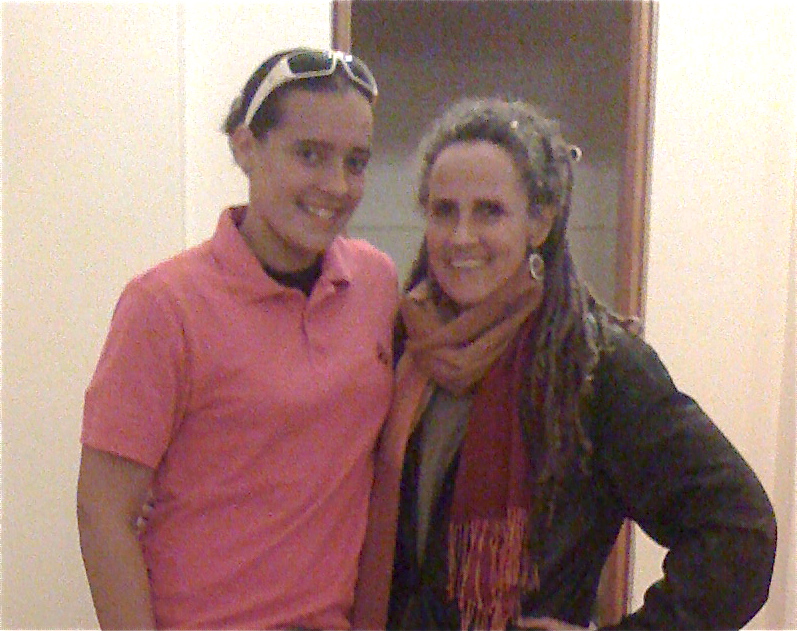
Michelle

and rode from SF with me, while we listened to DJ Solomon’s music. Spoken Word. Slam poetry. There is something fresh and slightly jittery about the first time. With a slam, first is bound to be good because there’s a sparkle and none of the jive and expectation that comes with tried and true.

Rayna's poem

They gave us zammee.com to login for a broadcast… waiting for that to begin and it’s midnight. I may have to re-write this after I catch the download. Apologies if I don’t get the names right. There was no program with names printed so I’m guessing.

Mercy Bell began with a bitter-sweet piece about a girl and her father.  “James Hurell saves Mercy’s soul on Sunday…” and took us with her, as a good poet does. We believed her.

There were poets with love poems, heartbreak poems, but two of performers brought up the unspeakable tragedy of unnecessary death and suicide.

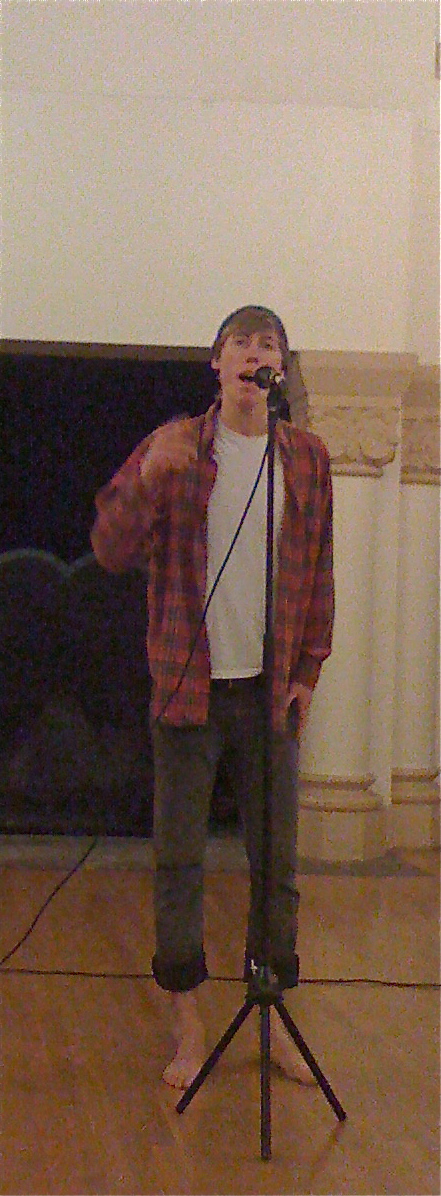
Simon's spoken word

The tall poet named Simon spoke out with precision and speed of suicide with reference to the railroad crossing in Palo Alto. “We sing this song for the 5 who have died…”

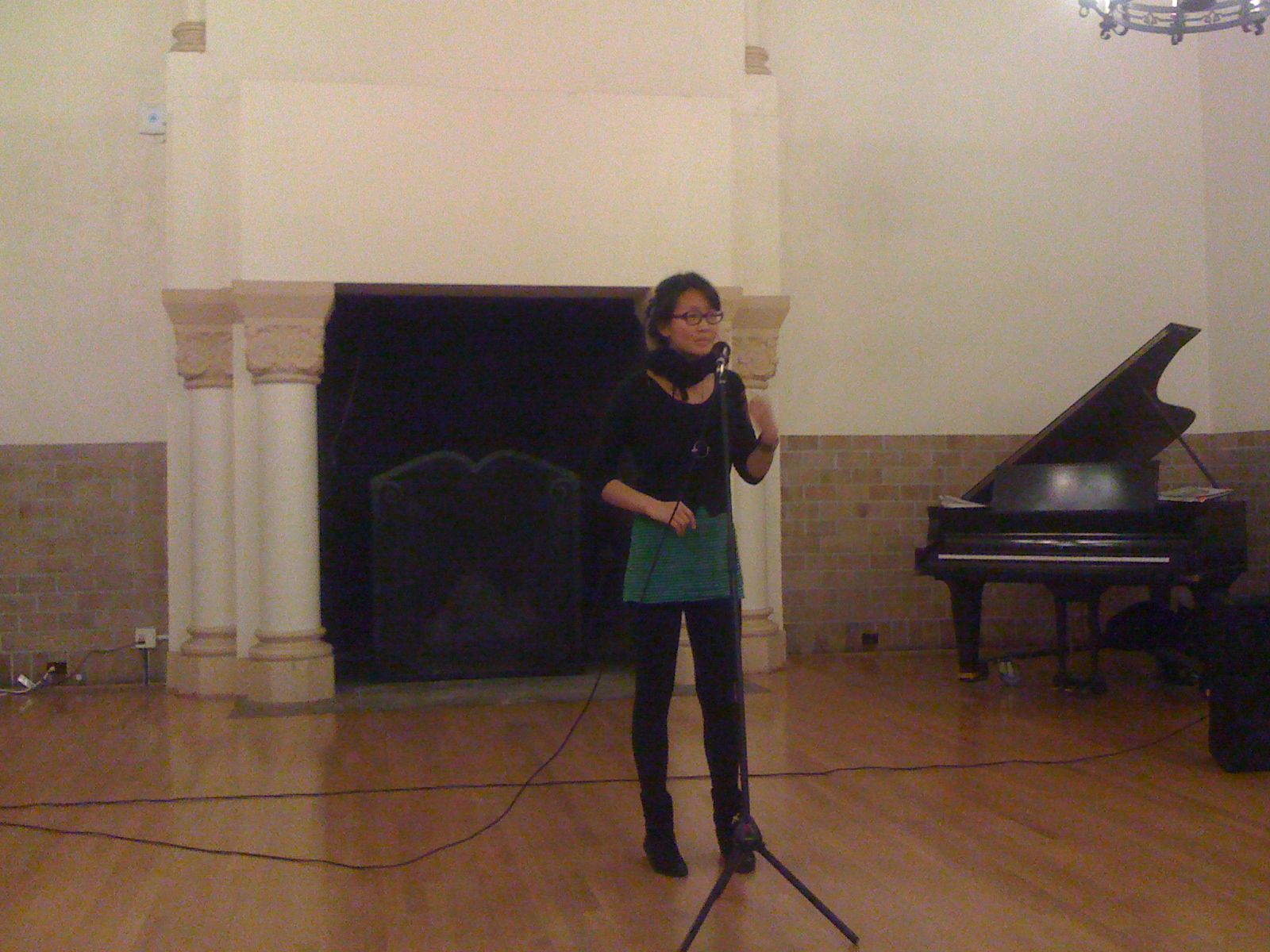
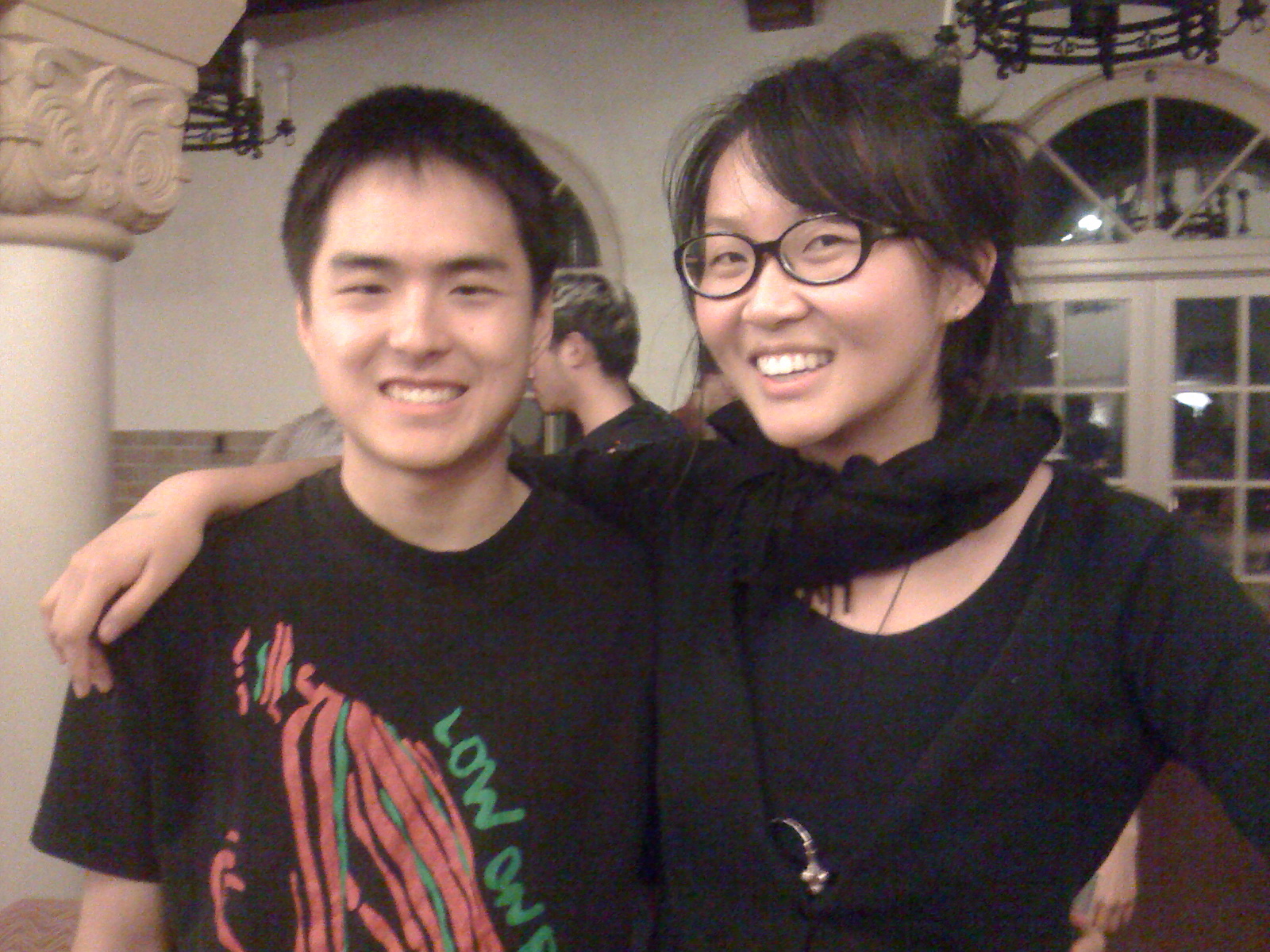
I finally met Jamaica!

Jamaica Osorio shared with us the awful pain of death by fire. These are tough subjects to speak about, even metaphorically. Jamaica brings dazzling light to dark places.  Both got high marks from the judges.

Bryan Yu slammed down a concert poem with panache and numerous four letter words. The crowd loved it and he would have had the highest score except that he ran over the time limit.

The poem that I yelled for the loudest was by Rayna, entitled “Questions for a Stranger.” She rocked it. Here are a few lines I caught as it unrolled:

…Who are you?

…How do you kiss?

…How many books by women have you read?

…Would you sleep with me just to forget other people?

…What’s under your pillow?

Bryan (Ryan?) and Rayna - going to the nationals!

If I were to describe the evening I’d say the archetypal theater masks of tragedy and comedy were balanced, the spoken word poetry community at Stanford – alive and very supportive of one another. There was a good turnout. The MC’s did a great job, but I only caught Stan’s name. I will definitely return to the Second Annual Stanford Poetry Slam. Yes, poets! Be waiting to see how you do in the Nationals.

http://www.youtube.com/user/eJAMAICAtor

<><>    <><>    <><>

Celebration in Delhi, India

25 Monday Jan 2010

Posted by Tea-mahm in Nizamuddin, The Urs of Inayat Khan, Uncategorized

≈ 2 Comments

This week, my husband, Shabda, leaves for India to co-host the eighty-third year celebration of Hazrat Inayat Khan’s passing. One hundred years ago this coming September, the young Inayat Khan, founder of our Chistia Sufi lineage, left India to bring “The Message” to America and Europe. Both of these events will be celebrated February 5 in Delhi, India. In honor of this journey Shabda is making with many Sufi friends, I am posting an article I wrote for “The Sound” three years ago.

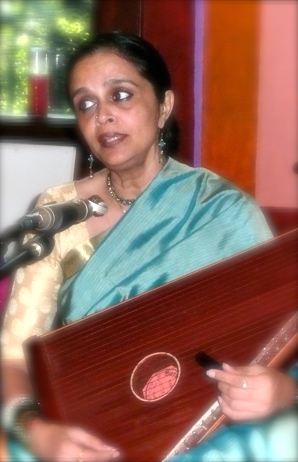
Shanti Sharma

Since then, we have lost our sister Shanti Sharma, songbird of that beautiful time. Salam, Shanti, may you rest in peace!

Pilgrimage to Delhi, 2007 – “unprecedented!”

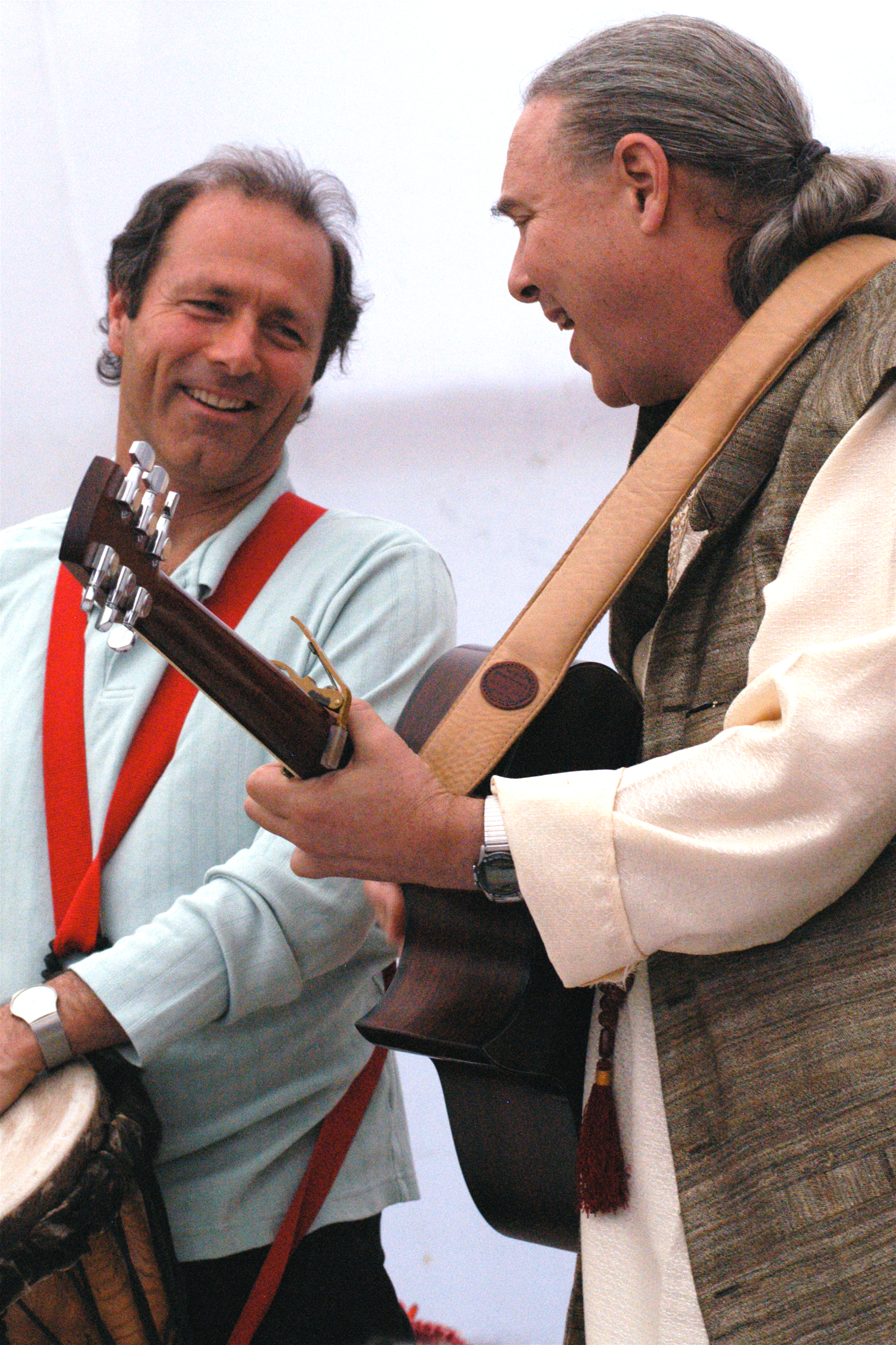
It began to feel like an Indian wedding. Pale lavender cloth stretched over bamboo scaffolding. The entire front yard and driveway of La Sagrita Guest House vanished. White sheets tightened over a dozen rugs that hid the lawn below. We walked out the front door into a kind of outdoor marriage pavilion with sunlight throwing tree and bird shadows on walls of the tent. A vine of large green leaves wound up an inside tree. Light bars appeared on the white ceiling. The small sound system came to life as Shabda stood in the center and tuned his guitar, and Gayan his djembe drum.

Gayan and Shabda

The travelers circled up for the first of the Dances of Universal Peace. There were familiar faces and new ones; seventy-four people made up the India celebration team, at the 80 year Urs of Pir-O-Murshid Hazrat Inayat Khan. This was our dance hall; morning Raga room where Shanti (the master Indian Raga singer) offered early morning raga practice; gathering place where Taj Inayat shared insights, where Shabda indicated what the day might offer and what we might bring to the day; and shrine room where Tai Situ Rinpoche sat surrounded by flowers and said to us that freedom-from-wanting-more comes from (spiritual) practice.

We walked to the dargah (tomb and surrounding area), through the small cared-for park, down the street through Sundar Nagar neighborhood, past the Sweets Corner, and out into fast and hectic traffic and uneven walking terrain. After crossing the last “highway” we were in the “Nizamuddin” world (great Sufi saint), among goats and beggars, barefoot children carrying babies, pan wallahs and slabs of meat; close by the Muslim rose garland sellers, the smells of frying oil and spice. Bright little ones sing-song’d, “Hello, hello!” and after a few days, we passed easily down that familiar street.The stone-work of the dargah, the entrance and the courtyard with its serenity and order allowed us to exhale with a sense of home-coming. We climbed the stairs, left our shoes and placed our foreheads on the rose-scented cloth or cool marble of the tomb. We were here at last, as at-home as we’ll be in India.
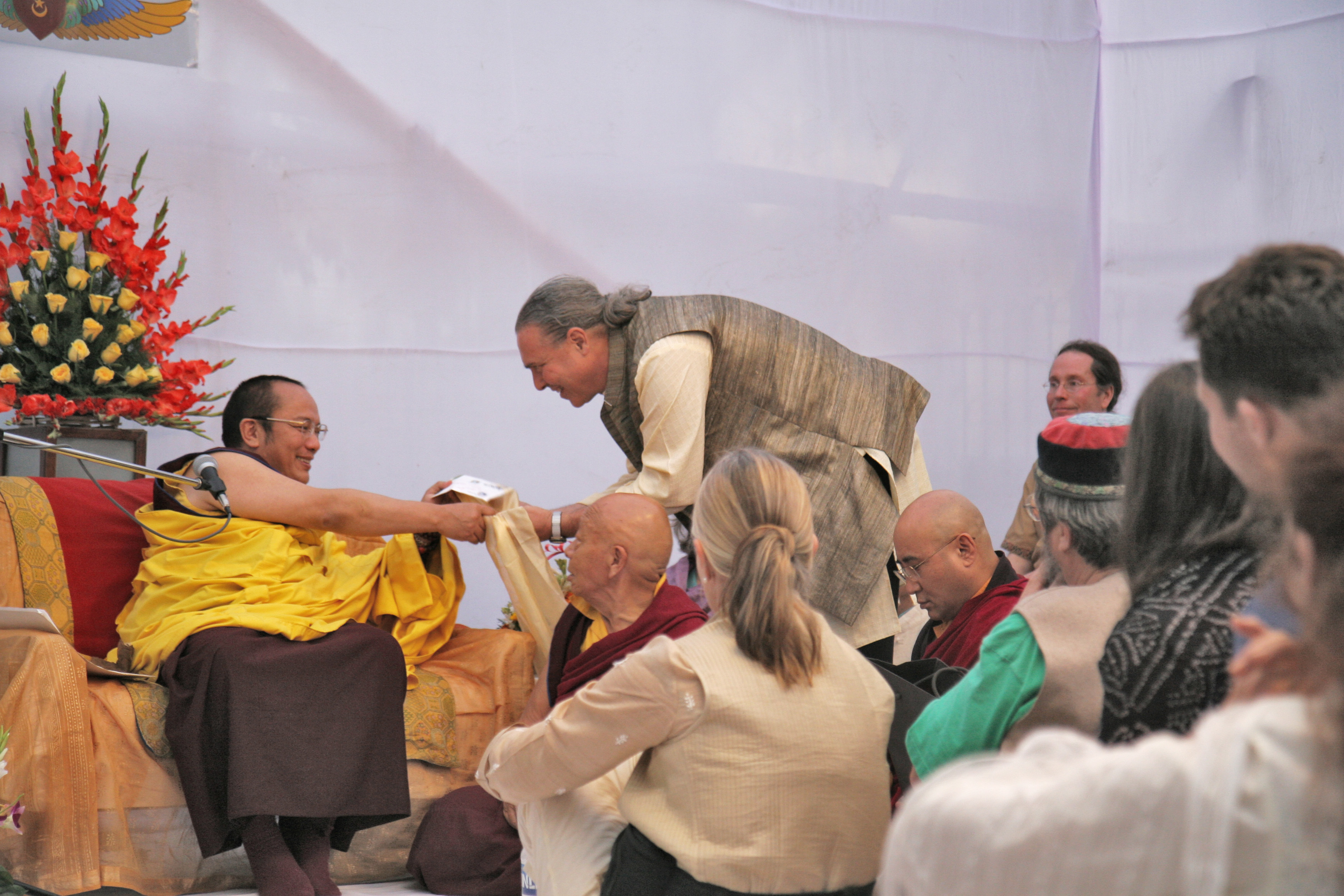
Tai Situ Rinpoche

Our program was ambitious. Our group, with Pir Shabda as leader, was host to fifty to one-hundred more Europeans, Americans, and Indians who felt the Inayti connection and came to the Urs to celebrate. A few days later, Pir Zia (grandson of Hazrat Inayat Khan) referred to the program and efforts as “unprecedented.” The concert hall was constantly packed, including the over-flow room and the outside chairs.

Our old friend Karunamayee opened with devotional singing Saturday morning. Sunday night closed the musical events with with Shri Bahauddin Dagar playing Rudra Veena accompanied by the stunning pakawash drum late into the night. Shanti gave a moving vocal concert. There were eight master musician concerts in two days.

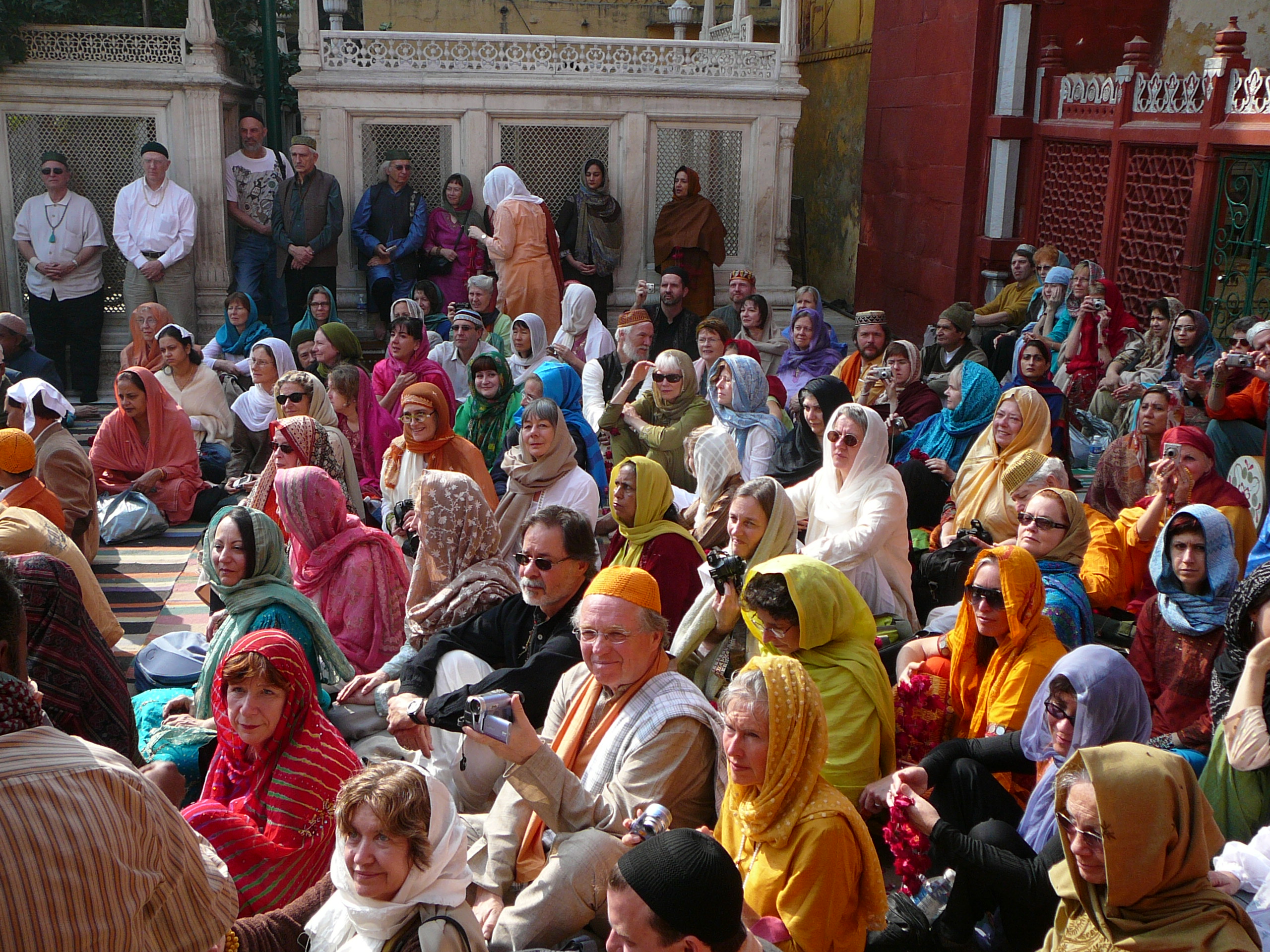
After a weekend of concerts came the day of the Urs, or “wedding day,” the anniversary of  Hazrat Inayat Khan’s passing, February 5, 1927. We gathered at the large tomb area of Hazrat Nizammudin Aulia on a beautiful warm sunny morning.
at Nizamuddin

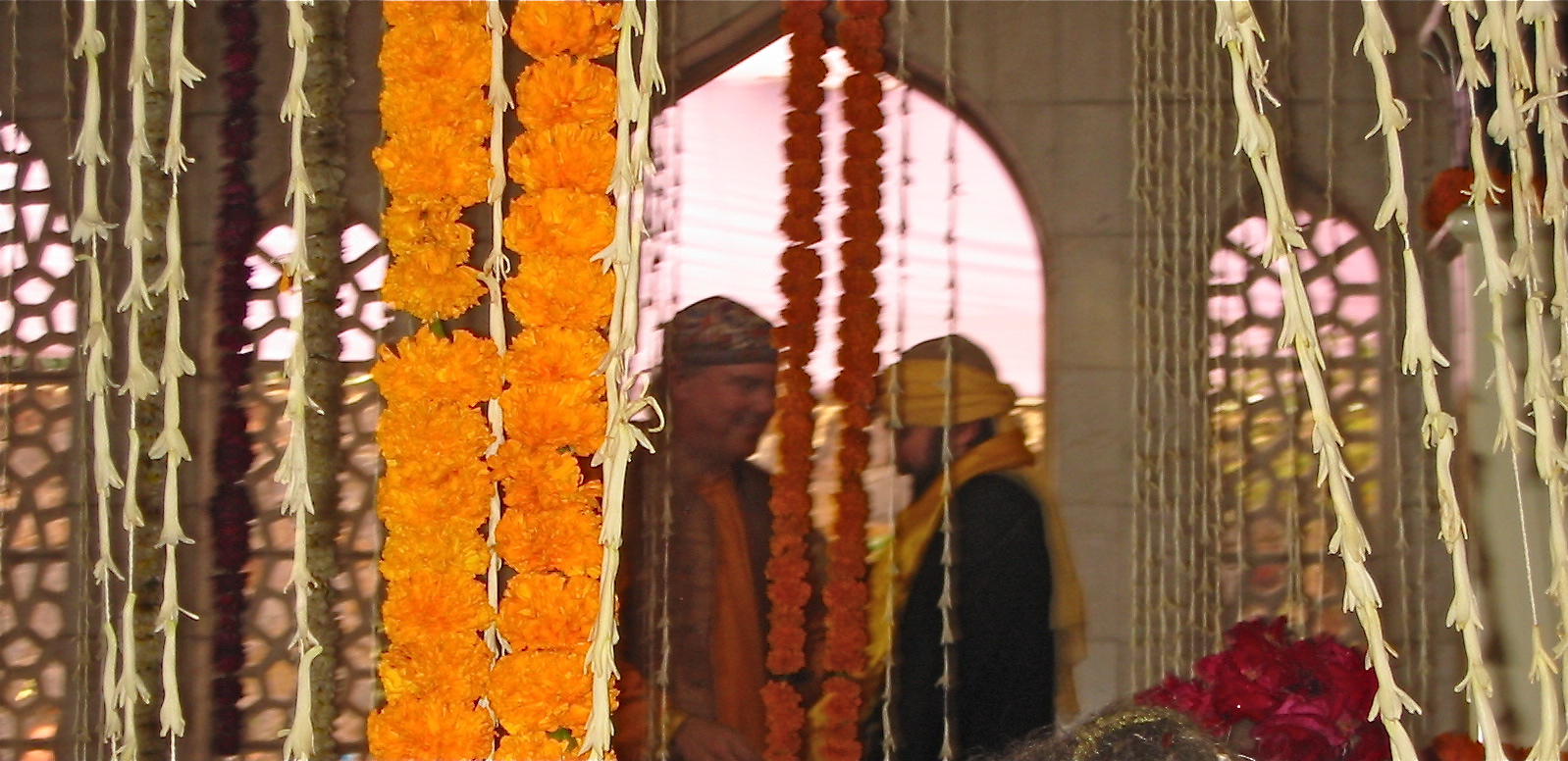
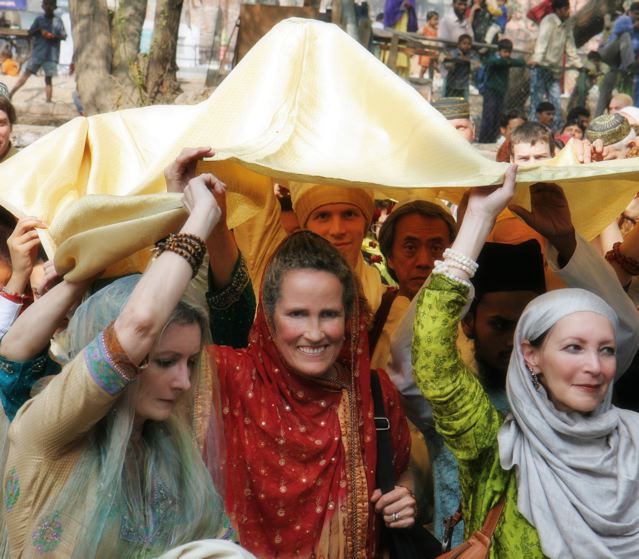
Pir Shabda was joined by Khawaja Hasan Sani Nizami, Pir Rashis ul Hasan Jili Kalimi, Pir Zia Inayat, Pir Sharif Baba, and Murshid Shahabuddin Less, Murshid Nawab Pasnak, and others. There was a strong women’s presence, with Dr. Farida Ali, guardian of the Hazrat Inayat Khan Trust advising Taj Inayat and myself what was the proper adab for women in a Sufi ceremony.The area, called Nizammudin, is open to devotees from all over India, as well as those who were there for the celebration. The qawwalis (dargah musicians who offer spirited devotional songs) began to sing, as they have for many years, and sweets were offered to all.  <>  Soon the Fateha (verse from the Qu’ran) was recited, the chaadar (cloth tomb cover) was blessed, then it was lifted and Taj and I each held an edge as the chaadar-carrying procession squeezed through the narrow lanes of the dargah onto the street while following the qawwalis to Hazrat Inayat Khan’s dargah several blocks away. Soon it was Taj, myself, Zuleika, and Zarifa in the front. Traditionally, it was a man’s privilege to lead, so we felt exhilarated breaking new ground. At the dharga steps, a European man darted in front of me to take the right corner. “Excuse me,” I said, “this year the women are leading, please step behind!” Shabda joined us and we placed the beautiful brocade cloth on the tomb, under the strings of marigolds and tuberoses. The qawwalis sang on, followed by a beautiful short kirana style vocal concert by Shabda, some words from Pir Zia and Taj, and finalized by everyone joining in Hazrat Inayat Khan’s sung zikr.  <>
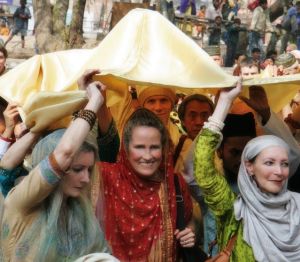
<>   That afternoon, Khadija Goforth led a luminous Universal Worship service. After a courtyard meal for two-hundred or so devotees, we celebrated with Dances of Universal Peace in a long double oval just in front of the entrance to the tomb. Mevlevi dervishes whirled inside by the tomb. It was an amazing and fulfilling moment where Murshid Sam’s family brought music, dance, and joy in great measure, and many were carried by the wave of “love, harmony, and beauty.”

Like all beautiful Indian “weddings” this one seemed to go on and on. Tai Situ Rinpoche changed his schedule to come back a second time, Saraswati and Zuleika wowed us with beautiful dance performances, The Hope Project and The Memorial Trust school children performed theater and music. At the end, it began to rain.

Taj teaching

Taj opened her last morning talk with, “It’s good to see your bedraggled, glowing faces.” She went on. “How do we live a life that characterizes Love Harmony and Beauty? …You are the embodiment of the answer”. Her words were the small piece of cake we took away from the wet tent on careful plates, certain that we would hold the sweetness of this celebration for now and time to come.

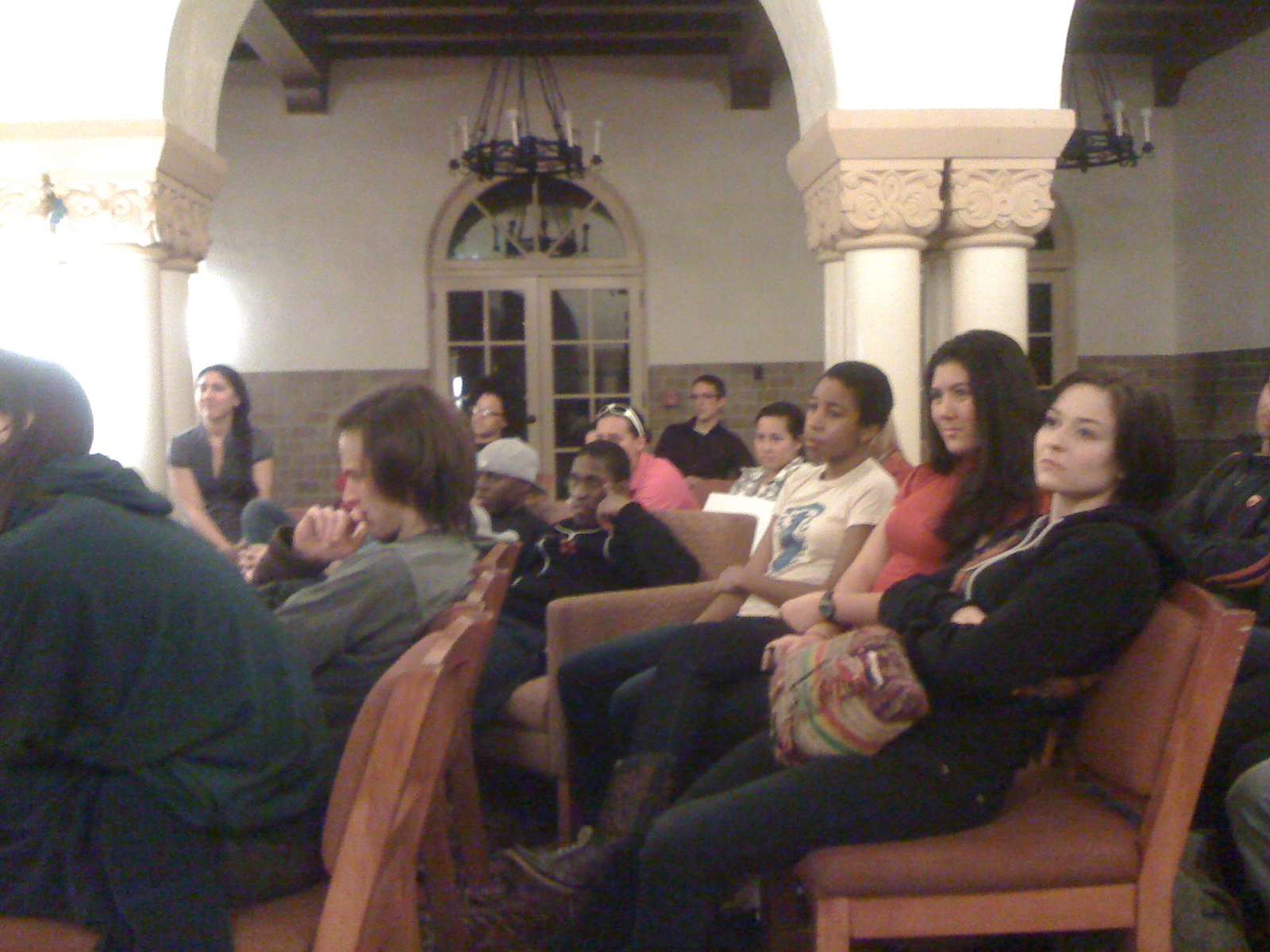
Aloha Untold!

20 Wednesday Jan 2010

Posted by Tea-mahm in Hanalei Bay, Matthea Harvey

≈ Leave a comment

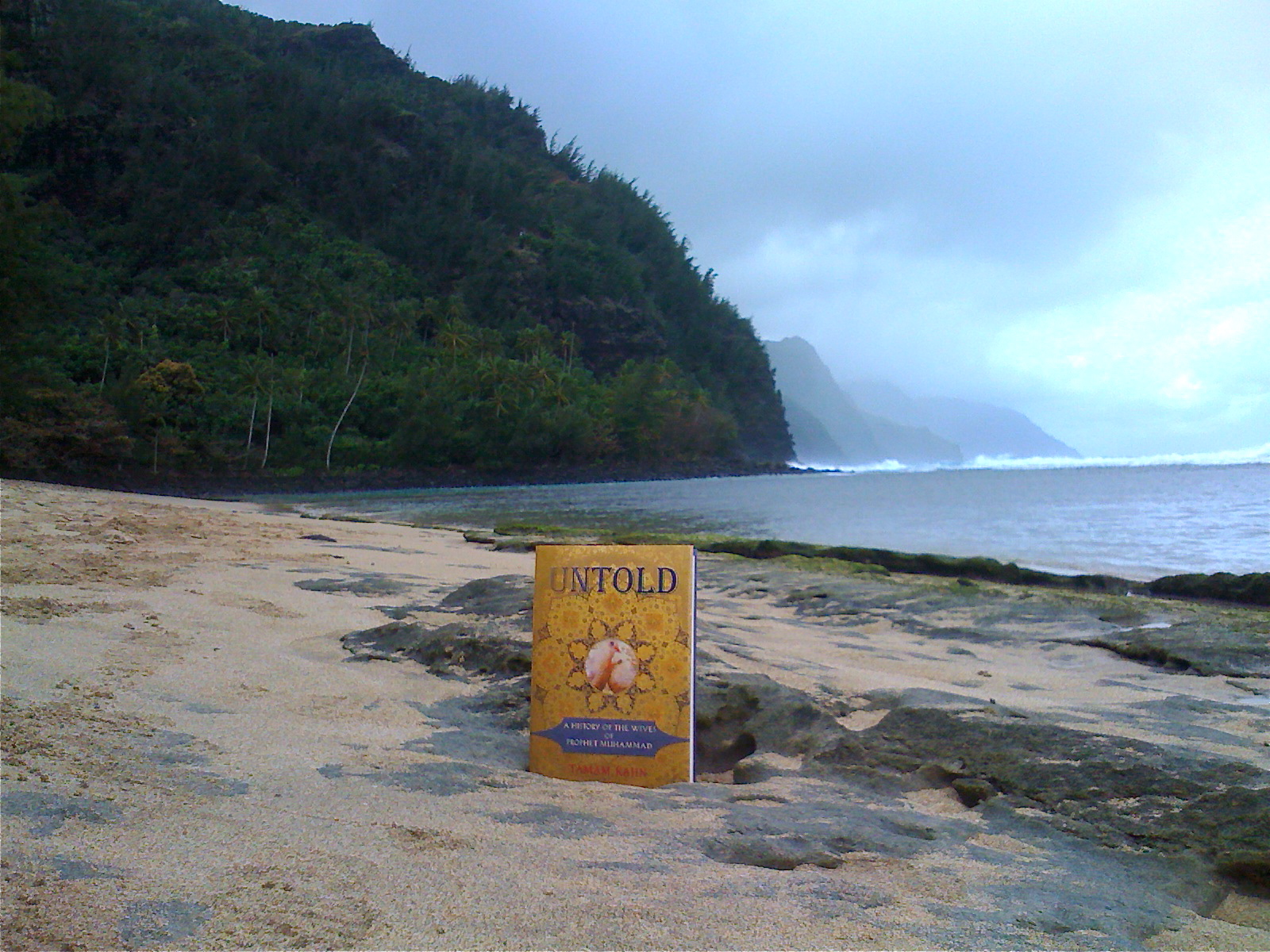
I am staying somewhere on the bluff above Hanalei Bay in Hawaii. The book has taken a much needed vacation after all the drama and hard work around it’s arrival a couple weeks ago. There was the signing and shipping, the readings, the E-mails and phone calls; bookbookbookbook.

Hanalei Bay

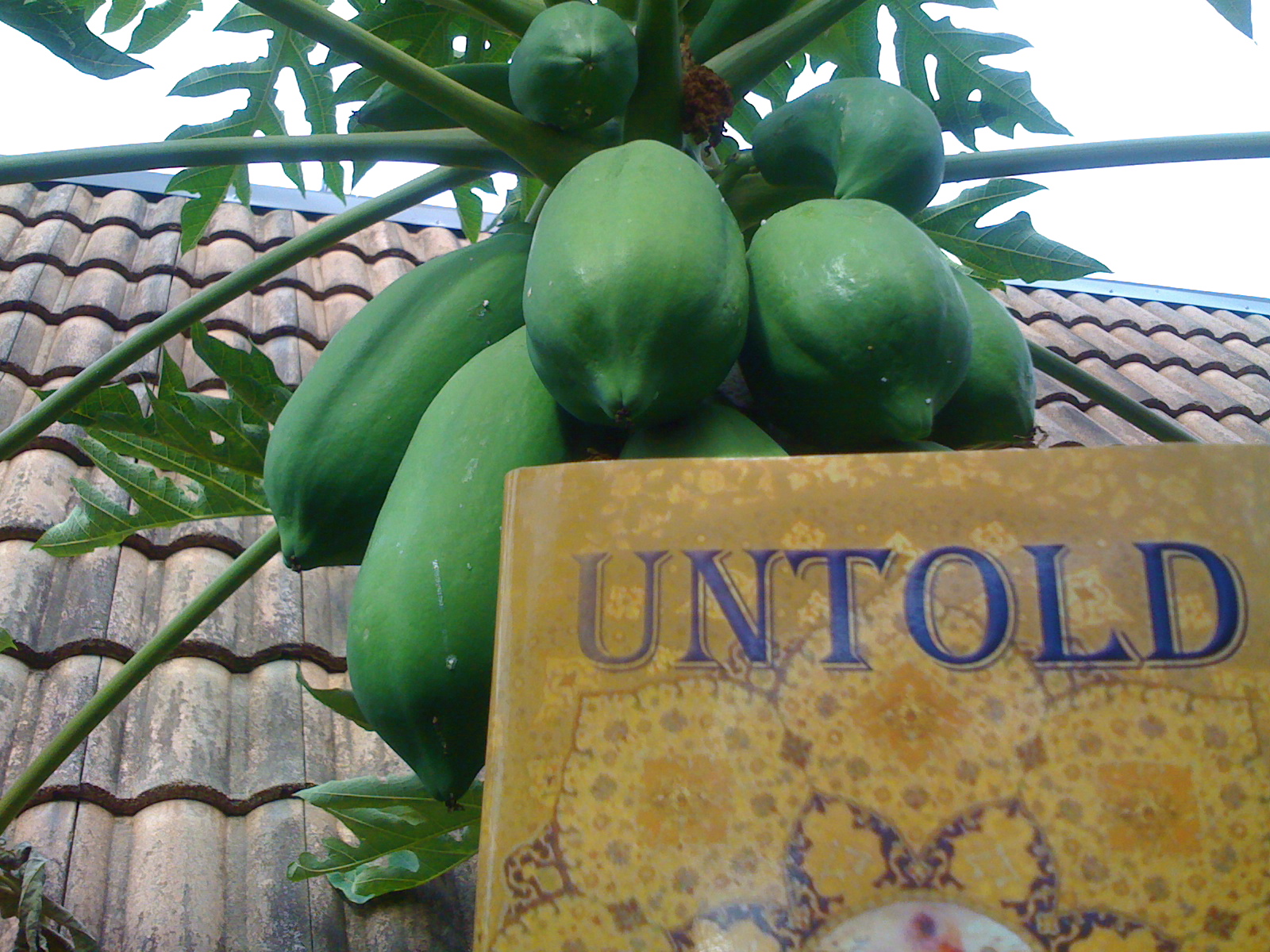
So I’ve followed it here to a place with untold numbers of birds and tropical flowers – but  no bookstore….. Lucky for me Shabda taught a retreat here last weekend and I had a ticket. Now the job is to keep each shiny volume from  dampness, sand or fading from the sun. For those of you that are thinking, “Ah, the easy life….” just know that I return

book and papaya tree

to the business of books, and so do these untold volumes of words. Soon it will be all about promotion and merchandizing, planning and E-mails and those endless small corrections, the mind clutter of planning and doing, so be happy for me and these books-on-holiday.  After all, for any poets reading this,  it will be a good while until I will be writing poetry again. So in the mean time here is Matthea Harvey, who writes wonderful prose poetry!

From Word Park by Matthea Harvey

CHOCOLATING made it half way across the country, hopping from schoolyard to schoolyard in a convincing coat of mud, and last week VERYING was spotted hiding in the wake of a ferry. One watcher got a picture before the authorities harpooned it. In the photograph the water is bluer than blue.


<><>     <>     <>     <>     <>     <><>     <>     <>      <>     <>     <><>     <>     <>

“Untold” is here!

11 Monday Jan 2010

Posted by Tea-mahm in Untold

≈ 1 Comment

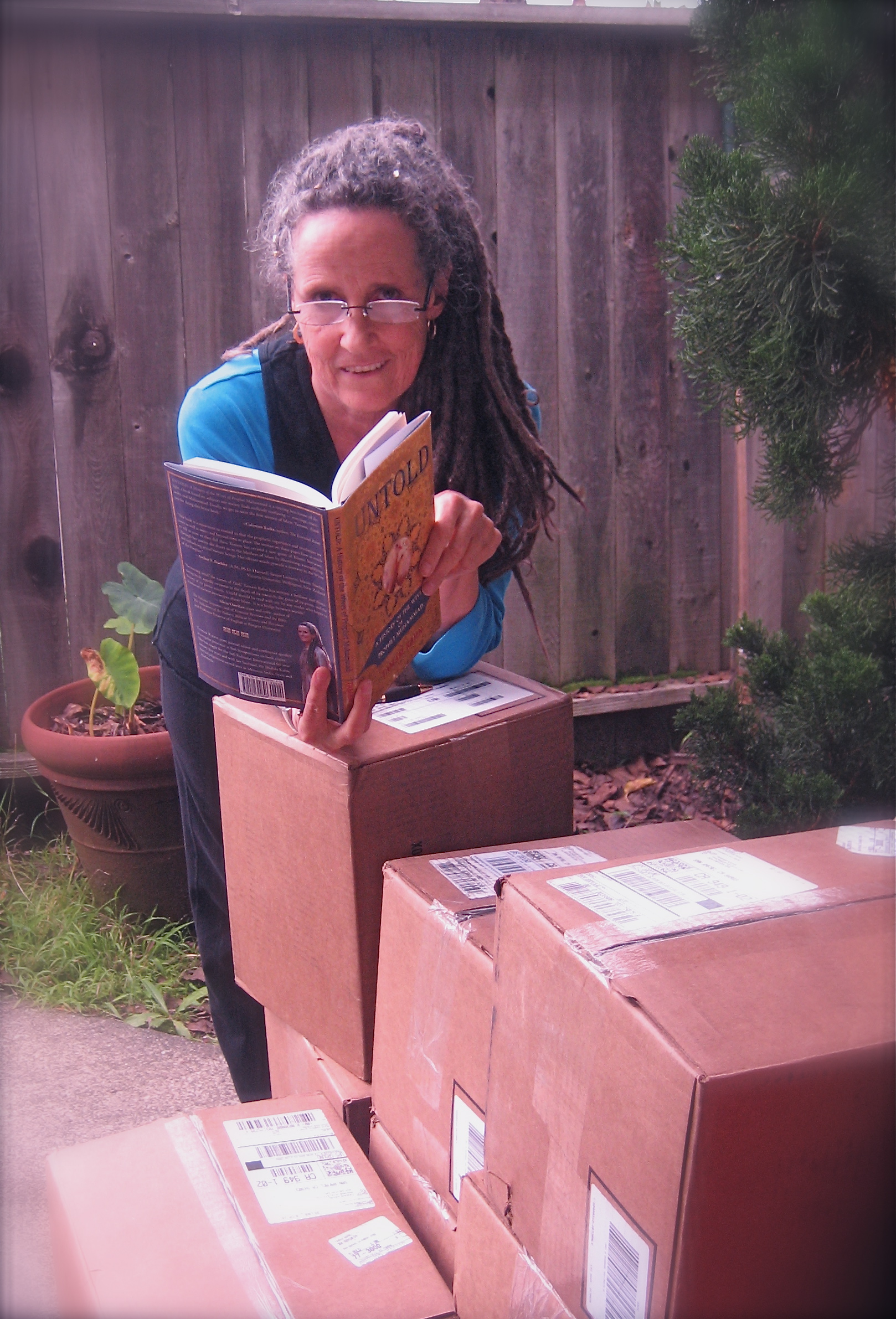
On Wednesday at 3:30 the UPS driver rang the doorbell and three of us opened the door, Kyra, Rachel and me. There was a pile of fourteen boxes almost too heavy to lift. Kyra cut the tape and lifted out the first one. Untold, A History of the Wives of Prophet Muhammad, had arrived. Beautiful to look at and  just the right size. Rachel had printed out the paypal orders – except for international – and I practiced signing various greetings on yellow lined paper. By the time I arrived at the retreat at dinner time, the experience felt more real to me. The manuscript had strangely turned into a book, and I was invited to read from it at the evening program. It felt like falling asleep in a bluebird costume and waking with the wings and body of a bird.

People seemed to believe I am an author and asked for signed copies. Lots of copies. Now  the retreat is over and I will send out more book orders in the next few days. In case you want to have one, here is the information for ordering: http://tinyurl.com/yawrm2u …I’m still amazed.

<>      <>      <>      <>      <>

thoughts while on retreat

04 Monday Jan 2010

Posted by Tea-mahm in jahiliyya

≈ Leave a comment

I am on a short break from a ten-day meditation retreat. An “aha” moment  occurred that seemed to tie in with my forthcoming book, so here it is: The term Jahiliyya seems to apply here. When I begin to still the mind over several days, a primitive part of the ego begins to arise and demand attention. In every-day life this is generally suppressed as inappropriate, or anti social. It is the root of the “me me me!” impulse. Add cultural encouragement and a healthy infusion of camel-riding machismo and you get a sense of early seventh century Arabia. From Untold: A History of the Wives of Prophet Muhammad...

There is a term for the time before Islam, which is often misunderstood. Jahiliyya is known as the “Era of Ignorance,” although brutality, arrogance, and retaliation are more faithful to the Arabic. Muhammad’s approach was one of mild manner, calm deliberation, and gentleness, known as halim, an attribute of Allah as well as an antidote to this kind of attitude and behavior:

instructions for Jahiliyya

…the jahil, a wild, violent and impetuous character who follows
the inspiration of unbridled passion and is cruel by following his
animal instincts; in one word, a barbarian.
Ignaz Goldziher

Know you are right.
Think fist and knife-edge.
Do not appear
foolish, no matter what.

Control your woman
and your guests; keep them
a little afraid, and thankful
for your protection.

Guard your clan’s
honor. Carve a notch
on your weapon of choice
for each successful pay-back.

If someone calls you animal,
smile and answer — lion,
hyena, crocodile, fighting cock—
the meek are the pack animals of the ferocious.*


* Jahiliyya is an important term, usually mistranslated as “the time of ignorance,” instead, Ignaz Goldziher argues, He sees it as barbarism, not ignorance, citing halim (mild), not ‘ilm (knowing) as the opposite term. He quotes an old Arab proverb: The meek is the pack animal of the ferocious (al-halim matiyyat al-jahul.) He devotes an entire chapter of his cited book to this subject.

From the lexicon:  Ha La Ma (Ar. root) means, “to dream, muse, reflect, meditate…” hilm means gentleness, patience, discernment. halam can refer to the nipple or teat, the opening to the source! And more about this from Imam Bilal and Wali ali Meyer in their Wazifa Project: “Al-Halim is tender love, gentle and kind love.  The tenderness of al-Halim is physical, emotional, and nurturing.”

<>     <>     <>     <>

Solomon Posts

Untold Book

Enter your email address to follow this blog and receive notifications of new posts by email.

Join 157 other subscribers

Tamam’s Links

- Poetry Group - Oracular Pear

- Youth Speaks: Poetry Slam

Links

  • Book: Physicians of the Heart the 99 Names of God – amazing book
  • Fred Chappell: short review
  • Gulf Coast Poems Poets for Living Waters
  • How a Poem Happens
  • Jamaica Osorio's website
  • Mari L'Esperance, poetry
  • Mark Doty, amazing poet read and listen to this poet
  • New Formalism Where is formal poetry today?
  • Oona and Maeve Granddaughters Oona Beatrix and Maeve Clementine
  • PoemShape Formalist Poetry
  • Poetry Out Loud! supporting the next generation!
  • Seven Pillars Book Review by Tamam Mother of The Believers by Kamran Pasha
  • Seven Pillars, POETRY poetry on Pir Zia’s blog/7 Pillars
  • Sufi Ruhaniat International Ruhaniat web site!
  • The Accidental Theologist Lesley Hazelton – a favorite writer and author…
  • The Sound Journal Tamam edits this Journal: NEW!
  • very like a whale good poetry reviews
  • West Marin radio show Sufism: The Heart of Islam, with Wendy McLaughlin

Archives

Blog at WordPress.com.

  • Subscribe Subscribed
    • CompleteWord
    • Join 157 other subscribers
    • Already have a WordPress.com account? Log in now.
    • CompleteWord
    • Subscribe Subscribed
    • Sign up
    • Log in
    • Report this content
    • View site in Reader
    • Manage subscriptions
    • Collapse this bar
 

Loading Comments...